Ozempic & Wegovy Shortage Over: FDA Announces Supply Resolved
The Ozempic and Wegovy Shortage Is Officially Over: What It Means for You — and Why It's Too Soon to Celebrate
Peptides & Metabolic Health
For nearly three years, millions of Americans lived in a "if it's in stock, you're lucky" reality. Armed with prescriptions, they called pharmacy after pharmacy, sat on waiting lists, and accepted half-doses just to get something. For people with type 2 diabetes, this wasn't just an inconvenience — it was a health crisis.
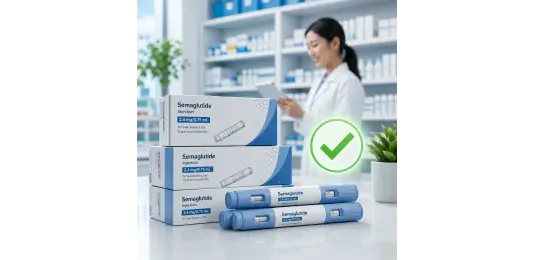
Then, on February 21, 2025, the FDA made it official: the shortage of semaglutide — the active ingredient in Ozempic and Wegovy — was resolved. Novo Nordisk had finally caught up with demand.
Great news? Yes. But it comes with a string of consequences that everyone taking these medications — or thinking about starting — needs to understand.
What Actually Happened
The FDA declared that the shortage of semaglutide injections — Ozempic and Wegovy from Novo Nordisk — was officially over, closing the book on a nearly three-year saga that began in 2022.
Why did it take so long? Demand for GLP-1 agonists drove a 442% surge in prescriptions between January 2021 and December 2023. Manufacturing simply couldn't keep up. Novo Nordisk built new facilities and expanded its supply chain, but the demand machine was spinning faster.
Now, according to the company, supply "meets or exceeds current and projected national demand." Inventory exists. You no longer have to wait weeks to fill a prescription.
Who Wins — and Who Loses
For patients with diabetes and obesity, this is unambiguously good news. For most patients in 2026, filling an Ozempic prescription should no longer mean a weeks-long search across pharmacies the way it did during the shortage era.
But there's one group of players for whom this news is a genuine disaster: compounding pharmacies — the ones that legally made their own versions of semaglutide during the shortage and sold them for significantly less than the brand-name drugs.
Once the shortage ended, the FDA set firm deadlines for compounders to stop: 503A pharmacies had to halt by April 22, 2025; 503B outsourcing facilities by May 22, 2025. Both deadlines have passed.
In other words, if you were buying cheaper compounded semaglutide — that chapter is over. If you were receiving compounded semaglutide, you'll likely need to switch to Ozempic or Wegovy to continue treatment. That means a new prescription.
The Price Question: Good News and Bad News
Here's where things get painful. Ozempic and Wegovy didn't get cheaper just because they're available again.
As of early 2026, the list price runs about $935 per month. Out-of-pocket retail cost without insurance ranges from $800 to $1,100 per month depending on the pharmacy and dose.
There's better news for those with insurance: with commercial coverage, copays typically run $25 to $150 per month. With the new NovoCare Savings Card, as low as $25 per month.
For self-pay patients: Novo Nordisk offers $349 per month for 0.25 mg, 0.5 mg, or 1 mg pens, and $499 for 2 mg pens. New patients can access an introductory price of $199 for the first two months.
Still expensive? Yes. But GLP-1 market competition is already pushing prices down — and this is just the beginning.
The Legal Battle: Compounders Aren't Going Quietly
If you thought the FDA made its announcement and everyone calmly moved on — think again.
The Outsourcing Facilities Association filed suit in the U.S. District Court for the Northern District of Texas against the FDA even before the official announcement, calling the decision "reckless and arbitrary."
Among their arguments: the shortage-end determination was made without notice, without input from stakeholders, and without meaningful justification.
On one level, this looks like a fight to protect business interests. On another, there are real patients behind that lawsuit — people who relied on compounded versions, can't afford the brand-name drug, and are now facing a choice between paying $800+ or going without treatment.
Compounders have also found a workaround. They can continue making alternative versions of the drugs if they modify dosing, add other ingredients, or change the delivery method — within FDA rules.
It's not the same product, but it's similar. And as long as the litigation continues, that gray zone stays alive.
What About the Quality of Compounded Versions?
This is the question that often gets glossed over in debates about price and access.
The downside of compounded drugs is that they don't go through the same rigorous safety and quality checks as brand-name or generic medications. Some state-level regulators have joined Novo and Lilly in raising safety concerns about certain compounded versions.
Novo Nordisk has filed more than 100 lawsuits against sellers of counterfeit versions. Eli Lilly sent cease-and-desist letters to telehealth companies and medical spas as far back as 2024.
Where exactly is the line between "affordable alternative" and "dangerous knockoff"? That question remains open — and it will sit at the center of legal battles for years to come.
The Bigger Picture: The GLP-1 Market Isn't Standing Still
While the FDA and compounders sort out their differences, the market is moving at a breakneck pace.
Eli Lilly is bringing an oral GLP-1 agonist to market — a pill with no food or water restrictions. The price through LillyDirect is reportedly $149 to $399 per month. If that holds, Novo Nordisk will need to seriously rethink its pricing strategy.
Novo Nordisk isn't sitting still either: Amycretin/Zenagamtide, a dual GLP-1 and amylin agonist, is already in Phase 3 trials with a preliminary weight-loss figure of around 22%.
The real win in this game comes when there's genuine competition in the market. And it's already arriving.
What to Do Right Now: A Practical Checklist
If you're a patient who was on — or is planning to start — Ozempic or Wegovy, here's what to do:
- If you were on compounded semaglutide — contact your doctor for a new prescription for the brand-name drug. Look into the NovoCare card or patient assistance programs.
- If you have insurance — check with your insurer whether Wegovy or Ozempic is covered. Weight management coverage improved significantly in 2024–2025.
- If you're paying out of pocket — compare prices through GoodRx, NovoCare, and newer telehealth platforms. The $199 introductory price for new patients is real and official.
- If availability is still an issue — local shortages are possible even after a national shortage ends. Check availability through Medfinder or ask your pharmacy to place an advance order.
The Bottom Line: The End of the Shortage Isn't the End of the Conversation
The FDA removing semaglutide from the shortage list is genuinely good news. But it opens a new chapter rather than closing the book.
The question of affordability — financial, not logistical — hasn't gone anywhere. The legal fight between the FDA and compounders is ongoing. The GLP-1 market is on the verge of a pricing shakeup thanks to new competitors. And millions of patients who relied on cheap compounded semaglutide are now scrambling for alternatives.
The shortage is over. But access is a completely different conversation. And it's only just beginning.
Sources: FDA Drug Shortage Database, GoodRx, Pharmacy Times, CNN Health, Fortune, Medfinder (2025–2026)