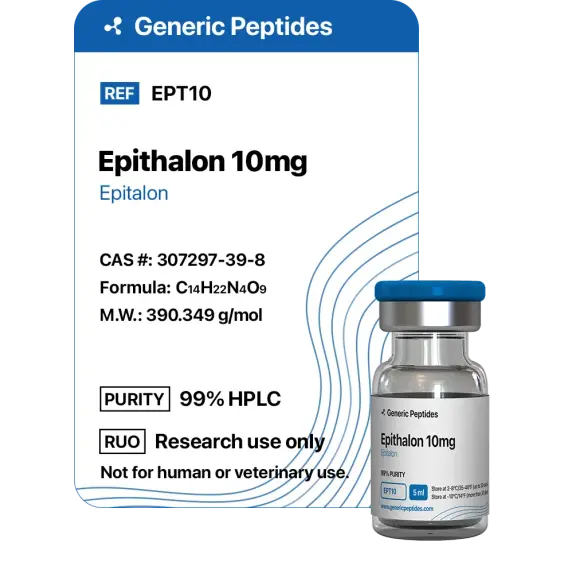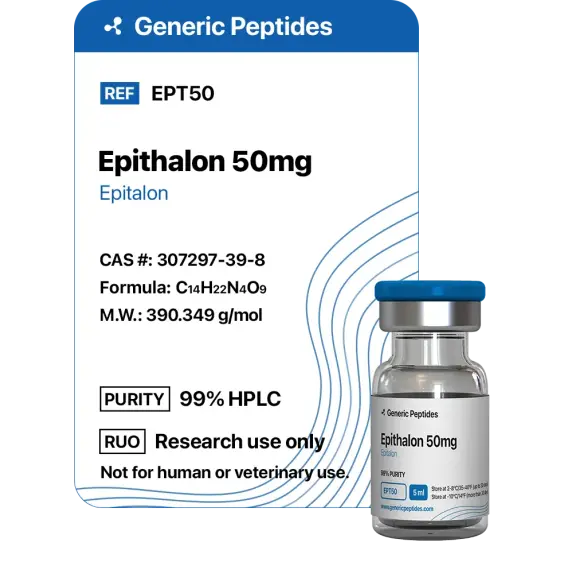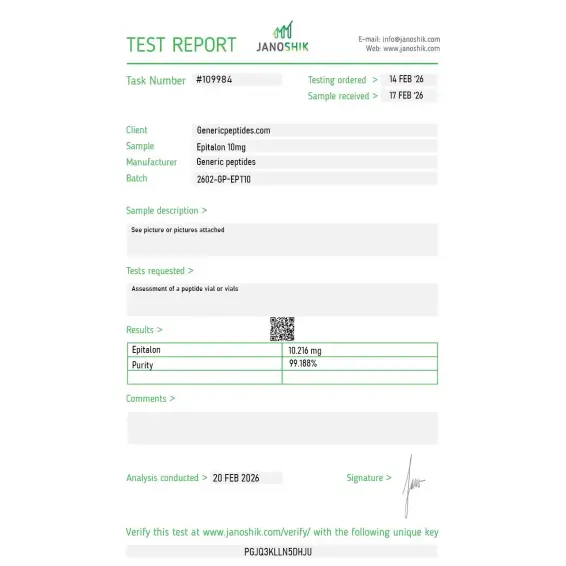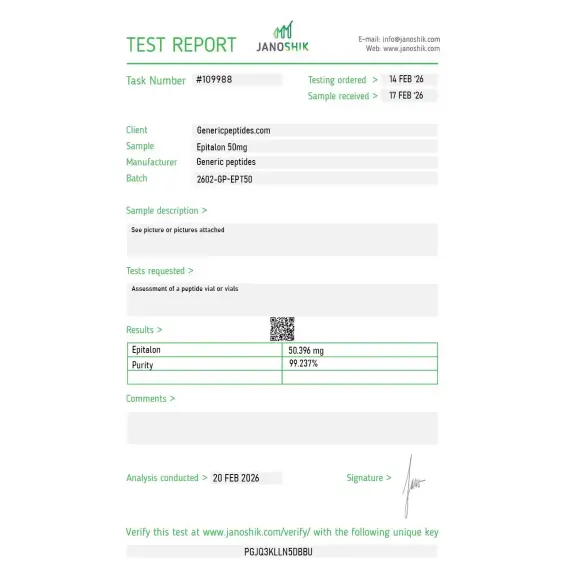
- For in vitro testing and laboratory use only.
- Not for human or animal consumption.
- Bodily introduction is illegal.
- Handle only by licensed professionals.
- Not a drug, food, or cosmetic.
- Educational use only.
- Adults 40+ focused on longevity, cellular ageing, sleep quality, and reducing cancer and mortality risk over time.
- It reactivates the enzyme that rebuilds chromosome caps (telomeres), slowing one of the core mechanisms of cellular ageing.
- Unlike GH peptides or metabolic boosters, it targets the cellular ageing clock itself rather than any single hormone or pathway.
- Epitalon does not affect testosterone, GH, or IGF-1 — no PCT is needed after a cycle.
- Not approved by the FDA or EMA; classified Category 2 for compounding; clinically approved in Russia only.
- Inject 5–10 mg subcutaneously once daily for 10 consecutive days per cycle.
- Run one 10-day cycle twice per year — monthly dosing is not supported and may be counterproductive.
- Anyone with a cancer history must consult an oncologist first — it activates the same enzyme that cancer cells exploit to survive.
Epitalon: The Complete Guide to the Pineal Tetrapeptide That Activates Telomerase — What the Science Really Says
There are very few compounds in the entire anti-ageing research landscape that can claim the following: published evidence of telomere elongation in human cells, lifespan extension across multiple animal species including fruit flies, rats, and mice, a 1.6–4.1-fold reduction in six-year mortality in a human prospective study, a 90% clinical response rate in a human retinitis pigmentosa trial, and spontaneous tumour reduction in cancer-prone mouse strains — all from a peptide with just four amino acids. Epitalon is that compound. It is simultaneously one of the most scientifically compelling and most critically under-replicated peptides in longevity research. Nearly every significant finding comes from a single Russian research institute. No major Western pharmaceutical company has developed it. No regulatory authority has approved it as a drug. And yet its biology is mechanistically coherent, its safety record across decades of human use is notably clean, and a 2025 paper from Brunel University London — independent of the original Russian group — confirmed its ability to extend telomere length in human cell lines. This article gives you the complete story, without exaggeration in either direction.
What It Is and Where It Comes From
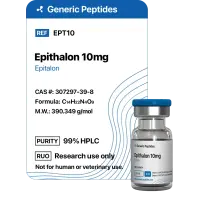
Epitalon — also spelled Epithalon, Epithalone, or Epithalamin-derived tetrapeptide — is a synthetic tetrapeptide with the amino acid sequence Ala-Glu-Asp-Gly, often written in one-letter code as AEDG. It has the molecular formula CââHââNâOâ and a molecular weight of 390.35 daltons. Four amino acids. A remarkably simple structure for a compound with such wide-ranging documented biological effects.
The story begins not with Epitalon itself but with its natural parent compound: Epithalamin. In the early 1970s, Soviet scientists began investigating the biological effects of extracts from the pineal gland of cattle, observing that pineal polypeptide preparations appeared to have geroprotective (anti-ageing) properties in animal models. The researcher who would dedicate most of his career to this question was Dr. Vladimir Khavinson, who founded and led the St. Petersburg Institute of Bioregulation and Gerontology, accumulating over 775 scientific papers, 196 patents, and developing six peptide drugs that reached clinical use in Russia before his death in 2024 at the age of 77.
Epithalamin is a crude polypeptide extract from bovine pineal glands — a complex mixture of many peptides. In 2000, Khavinson's group synthesised a pure, defined tetrapeptide based on the amino acid composition of the active fraction of Epithalamin: AEDG. This became Epitalon, with its synthesis patented in 2000. In 2017, researchers confirmed that the AEDG sequence exists naturally in human pineal tissue — meaning Epitalon is not purely synthetic invention but a synthetic version of an endogenously produced peptide that declines with age as the pineal gland undergoes calcification.
The pineal gland's relevance to ageing is significant. This small endocrine organ — deep within the epithalamus between the brain's two hemispheres — is the body's primary producer of melatonin. Melatonin regulates circadian rhythm, has antioxidant properties, and has itself been associated with anti-tumour and geroprotective effects. Progressive calcification of the pineal gland with age reduces melatonin output and disrupts circadian regulation. Epitalon was specifically designed to counteract this age-related decline by restoring pineal function.
How It Works in the Body — Mechanisms of Action
Epitalon's mechanisms are multiple, interconnected, and — as the 2025 comprehensive review in International Journal of Molecular Sciences acknowledged — not yet fully elucidated despite 25 years of intensive study. Here is the current state of mechanistic knowledge:
Primary Mechanism: Telomerase Activation and Telomere Elongation
This is the headline finding that has made Epitalon famous in longevity circles. To understand its significance, a brief primer is necessary.
Telomeres are repetitive DNA sequences (TTAGGG in humans) that cap the ends of chromosomes, protecting them from degradation and fusion during cell division. With every cell division, telomeres shorten slightly — a process governed by the "end replication problem." When telomeres become critically short, the cell enters replicative senescence (permanent growth arrest) or apoptosis (programmed death). This limit to cellular division is called the Hayflick limit and is one of the core mechanisms driving organismal ageing. Telomerase is the ribonucleoprotein enzyme that adds telomeric repeats back onto chromosome ends, counteracting this shortening. In most adult somatic (body) cells, telomerase activity is silenced — the hTERT gene (which encodes the catalytic subunit of telomerase) is transcriptionally repressed. This silencing is what makes normal cells age.
The critical finding from Khavinson et al. (2003): treatment of human fetal fibroblast cultures — cells that were telomerase-negative at baseline — with Epitalon activated hTERT expression, switched on measurable telomerase enzymatic activity, and extended telomere length. The proliferative lifespan of control cells terminated at the 34th passage (the Hayflick limit for this cell type); Epitalon-treated cells continued dividing beyond the 44th passage. This was the first demonstration that a simple tetrapeptide could reactivate a transcriptionally silenced enzyme in a somatic cell.
The replication: in September 2025, researchers at Brunel University London published a study in Biogerontology (Al-Dulaimi et al.) that independently confirmed Epitalon's ability to extend telomere length in human cell lines. Using breast cancer cell lines and normal epithelial and fibroblast cells, they demonstrated dose-dependent telomere length extension. In normal fibroblast and epithelial cells, the mechanism was upregulation of hTERT mRNA expression and increased telomerase activity. In cancer cells, Epitalon appeared to work through a different, AMPK-independent mechanism — potentially through ALT (Alternative Lengthening of Telomeres) activation via H1 histone binding and H19 lncRNA derepression. This is the first independent Western replication of Epitalon's telomere effects in human cells.
How Epitalon activates hTERT: Epitalon binds to an ATTTG/ATTTC DNA sequence — and this specific sequence appears in the promoter region of the telomerase gene multiple times. By binding this promoter sequence, Epitalon appears to modulate chromatin remodelling and epigenetic regulation of hTERT transcription. Additionally, Epitalon has been shown to bind to H1 histone proteins — linker histones that play a key role in chromatin compaction — providing another mechanism for its gene regulatory effects.
Melatonin Synthesis Restoration
Epitalon stimulates melatonin synthesis in the pineal gland. This was demonstrated in human cell cultures (pinealocyte cultures), in aged rhesus monkeys, and in elderly humans. In senescent monkeys, Epitalon significantly stimulated melatonin production in the evening — restoring the nocturnal melatonin peak that is reduced in aged animals — and normalised the circadian rhythm of cortisol secretion. This melatonin-restoring property may mediate several of Epitalon's downstream effects, since melatonin itself has antioxidant, anticarcinogenic, and circadian-regulatory properties.
Antioxidant Enzyme Enhancement
Multiple studies in ageing rats and mice documented that Epitalon increases the activities of superoxide dismutase (SOD), glutathione peroxidase (GPx), and glutathione-S-transferase (GST) — the primary enzymatic antioxidant defence systems. It also reduces levels of 8-hydroxydeoxyguanosine (8-OHdG), a key marker of oxidative DNA damage that accumulates in ageing neurons and is elevated in Alzheimer's and Parkinson's disease. Enhanced antioxidant defences reduce oxidative stress, which is both a driver of telomere shortening and a fundamental mechanism of ageing-associated pathology.
Chromosomal Stability / Antimutagenic Effects
Epitalon significantly reduced the incidence of chromosomal aberrations in bone marrow cells of ageing mice — both wild-type and mice with an accelerated ageing phenotype. This antimutagenic effect is consistent with its telomere-stabilising and antioxidant properties, since both short telomeres and oxidative DNA damage are major causes of chromosomal instability.
Immune System Modulation: Thymus and T-Cell Function
Epitalon increases the proliferation of lymphocytes in the thymus and appears to boost production of interferon-gamma by T-cells. In chickens subjected to neonatal hypophysectomy (removal of the pituitary), Epitalon promoted recovery of thymic morphological structure as well as thyroid gland structure and function. These effects are relevant to immunosenescence — the progressive deterioration of immune function with age — and the thymic involution that reduces T-cell maturation capacity in older individuals.
MAPK Pathway Interaction
Epitalon has been shown to affect several intracellular signalling cascades including MAPK (mitogen-activated protein kinase) pathways and to increase levels of phospho-CREB (a DNA-binding protein important in learning, memory, and neuronal plasticity). These effects contribute to its neuroprotective and cognitive-protective properties.
Retinal and Neuroendocrine Regulation
Epitalon was designed to be active for both the pineal gland and the eye retina — reflecting these organs' common embryological origin (both derive from neuroepithelium). Epitalon has documented effects on retinal cell proliferation and preservation of retinal morphological structure, which informed its clinical use in retinitis pigmentosa.
Mitochondrial Health
A 2025 study demonstrated that Epitalon enhanced mitochondrial health in bovine cumulus cells and cumulus-oocyte complexes (used as an ageing model for reproductive biology), reducing intracellular reactive oxygen species. This mitochondrial protective effect is consistent with its broader antioxidant and anti-ageing profile.
What It Was Studied For and What Effects It Showed
Lifespan Extension in Animals
The animal evidence for lifespan extension is consistent across multiple species. In Drosophila melanogaster (fruit flies), Epitalon increased lifespan of imago flies by up to 16%, affecting both genders and primarily influencing mature and old individuals. Notably, the effective dose was 16,000-fold lower than the melatonin dose required for comparable lifespan extension in flies. In female SHR mice (Anisimov, Khavinson et al., 2003), Epitalon increased mean lifespan by 13.3% compared to untreated controls. In rats subjected to constant illumination (a known accelerator of ageing through circadian disruption), Epitalon extended lifespan compared to controls.
Spontaneous Tumour Reduction in Cancer-Prone Animals
Epitalon reduced the number of spontaneous tumours and metastases in ageing female mice of the C3H/He inbred strain. In HER-2/neu transgenic mice — a model of human breast cancer — Epitalon reduced mammary tumour incidence and extended lifespan. A separate study found a 6-fold decrease in leukaemia incidence in Epitalon-treated animals. These findings position Epitalon as having oncostatic (tumour-inhibiting) properties, which is counterintuitive for a telomerase activator — addressed in detail in the cancer risk section.
Telomere Lengthening in Human Blood Cells — Clinical Studies
Khavinson's group conducted clinical studies in patients aged 60–65 and 75–80, measuring telomere lengths in blood cells before and after treatment with both Epithalamin and Epitalon. Both significantly increased telomere lengths compared to controls, and their efficacy was comparable to one another. This is published clinical evidence of telomere lengthening in elderly human patients — not merely cell culture data.
Mortality Reduction — The Prospective Cohort Study
One of the most remarkable findings in the entire Epitalon evidence base is a human prospective cohort study on 266 people over age 60. Treatment with Epithalamin (the parent extract) produced a 1.6–1.8-fold reduction in mortality over the following 6 years. When combined with Thymalin (a thymus-derived peptide), the mortality reduction increased to 2.5-fold. When combined with Thymalin and administered annually rather than only once, the mortality reduction reached 4.1-fold compared to controls. These are extraordinary numbers. They require independent replication to be accepted by mainstream medicine — which they have not yet received. But the scale and duration of the observation (6 years, 266 participants) places this above typical small pilot studies.
Retinitis Pigmentosa — The Most Compelling Human Clinical Trial
A human clinical trial published in Neuroendocrinology Letters (2002) studied the effect of Epitalon in patients with retinitis pigmentosa — a progressive inherited degenerative disease of the retina that leads to blindness. Epitalon produced a positive clinical effect in 90% of treated cases. Parallel animal studies in Campbell rats with hereditary retinal dystrophy showed intensified bioelectric and functional activity of the retina attributable to preservation of morphological retinal structure. This is one of the most concrete clinical efficacy findings in the Epitalon literature.
Melatonin Restoration in Aged Primates and Humans
Epitalon and Epithalamin both restored melatonin secretion by the pineal gland in aged rhesus monkeys and elderly humans. In the monkey study, Epitalon significantly stimulated evening melatonin production, normalising the circadian rhythm of cortisol secretion. This documented restoration of the most fundamental circadian regulatory signal in ageing organisms is biologically significant given melatonin's multiple anti-ageing and anti-carcinogenic roles.
Pulmonary Tuberculosis and Chromosomal Protection
A human clinical trial in pulmonary tuberculosis patients found that Epitalon did not correct pre-existing chromosomal aberrations associated with telomere degradation, but did exert a protective effect against the future development of additional chromosomal aberrations — consistent with its antimutagenic properties.
Neuroprotection and Recovery
In neuroblastoma cells, Epitalon reduced oxidative DNA damage (8-OHdG), increased primary and terminal dendrite counts, augmented total dendritic length, and increased the quantity of junctions. In a 2024 diabetic retinopathy wound healing model, Epitalon restored impaired wound healing in high-glucose-injured retinal cells by inhibiting hyperglycaemia-induced epithelial-to-mesenchymal transition and fibrosis. In children aged 3–16 years after chemotherapy, preparations including Epitalon were used to normalise bioelectric brain activity, with improvement documented in 9 of 10 children.
Long-Term Human Geroprotection Studies
Two three-year clinical trials of Epithalamin (the parent preparation) with a twelve-year follow-up, as reviewed by the Alzheimer's Drug Discovery Foundation (ADDF, 2015), reported no severe adverse events in older adults and supported improvements across cardiovascular, endocrine, immune, and nervous system indices alongside lower all-cause and cardiovascular mortality. These multi-year cohort observations provide the most substantial human safety and efficacy evidence for the Epithalamin/Epitalon class.
Forms and Methods of Administration
Subcutaneous Injection
The primary route used in Khavinson's clinical protocols and in most research. Typical practice uses once-daily subcutaneous injection in the lower abdomen or thigh during a treatment cycle. This provides reliable systemic bioavailability and bypasses digestive degradation.
Intramuscular Injection
Used in some research protocols. Less commonly used in modern practice compared to subcutaneous.
Nasal Spray
Available from some suppliers but with no published human pharmacokinetic data. The rationale is intranasal delivery to the olfactory-CNS pathway — for a compound targeting the pineal gland and CNS, intranasal delivery has theoretical appeal, but the evidence is purely anecdotal.
Oral (Capsules/Sublingual)
Oral Epitalon capsules are sold by some research suppliers. Epitalon's stability against enzymatic degradation is not as well-characterised as DSIP's, but the small tetrapeptide structure may allow some gut absorption. The 2025 IJMS review noted that oral forms lack clinical validation. Subcutaneous injection remains the route with the most published evidence.
Dosage: Research Findings vs Real-World Practice
Khavinson's Clinical Protocols
The research protocols from the St. Petersburg institute used Epitalon at doses of 10 mg per day via subcutaneous or intramuscular injection, administered as a 10-day course. The longevity cohort studies used courses of 10 consecutive days, typically once or twice per year. The retinitis pigmentosa study and other clinical trials used similar 10-day course structures.
Real-World Wellness Protocols
Common practitioner-guided protocols reference 5–10 mg per day via subcutaneous injection for cycles of 10–20 days, repeated 2–4 times per year. A conservative starting protocol might be 5 mg/day for 10 days twice per year. More intensive anti-ageing protocols use 10 mg/day for 20 days, 2–3 times per year. The spacing between cycles — typically 4–6 months — reflects both the biology (cell cycle time and telomere biology timescales) and a precautionary principle given limited long-term data.
Cycles and Protocols
Unlike body composition peptides that are cycled to avoid receptor downregulation, Epitalon's cycling reflects the logic of episodic telomere maintenance rather than continuous receptor agonism. The pineal peptide bioregulator model — as developed by Khavinson — uses periodic pulse treatment: short, intensive courses followed by long rest periods, mimicking a kind of scheduled cellular maintenance rather than continuous pharmacological pressure.
The standard Khavinson protocol is 10 days on, approximately 4–6 months off, twice per year. This mirrors the 5-consecutive-days-per-month structure used in the DSIP Deltaran longevity mouse studies and reflects a common philosophy in Russian peptide bioregulator research: episodic administration is preferred over chronic daily use, and longer off periods allow the biological response to integrate fully.
What It Is Combined With and Why
Thymalin (Thymus peptide bioregulator)
The mortality reduction data showed a 2.5-fold reduction when Epitalon (as Epithalamin) was combined with Thymalin, compared to 1.6–1.8-fold for Epithalamin alone. This synergy is mechanistically logical: Epitalon addresses cellular ageing via telomere maintenance and pineal/circadian restoration; Thymalin addresses immune system ageing via thymic regeneration and T-cell competence. The two compounds target complementary hallmarks of ageing.
DSIP (Delta Sleep-Inducing Peptide)
A natural pairing given their overlapping circadian and CNS regulatory functions. DSIP promotes deep-wave sleep and stress resilience; Epitalon restores melatonin production and circadian rhythm. Together they target the nocturnal restorative cycle from two complementary angles.
Melatonin
Epitalon stimulates endogenous melatonin production. High-dose exogenous melatonin (as used in the Fight Aging experiment, at 20 mg/day) may interact with this — the combination produced unexpected thymic changes in that experiment. Standard-dose melatonin (0.5–3 mg) for sleep timing support combined with Epitalon for pineal restoration is more commonly referenced.
BPC-157
Combined in comprehensive longevity and recovery protocols for complementary mechanisms: BPC-157 for tissue repair, gut, and vascular healing; Epitalon for cellular longevity and chromosomal stability.
NAD+ precursors (NMN, NR)
Combined in modern longevity stacks alongside Epitalon for complementary mechanisms: NAD+ restoration for mitochondrial function, sirtuin activity, and DNA repair; Epitalon for telomere maintenance and circadian restoration.
The Science: What Is Proven and What Is Not
What is supported by published evidence:
- Telomere elongation via hTERT activation in human somatic cell cultures — originally from Khavinson (2003), independently replicated at Brunel University London (2025)
- Human fetal fibroblasts surpassing the Hayflick limit (34 → 44+ passages) in Epitalon-treated cultures
- Telomere length increase in blood cells of elderly human patients (aged 60–65 and 75–80) in clinical studies
- Lifespan extension in fruit flies (up to 16%), rats (13.3% mean lifespan increase), and mice in multiple experiments
- Spontaneous tumour reduction in ageing mice — C3H/He strain and HER-2/neu transgenic mice
- Reduced chromosomal aberrations in ageing mouse bone marrow cells
- Melatonin restoration in aged rhesus monkeys and elderly humans
- Cortisol circadian rhythm normalisation in aged primates
- 90% clinical response rate in retinitis pigmentosa patients
- 1.6–4.1-fold mortality reduction in 6-year prospective cohort (Epithalamin/Thymalin combinations)
- Antioxidant enzyme upregulation (SOD, GPx, GST) in ageing animals
- Reduced oxidative DNA damage (8-OHdG) in neuronal cells
- Neuroprotective effects including enhanced dendritic growth and DNA damage reduction
- Thymic lymphocyte proliferation and immune enhancement
What is NOT established:
- Human lifespan or healthspan extension in large-scale, independently conducted, randomised controlled trials
- Clinical efficacy for any indication in Western regulatory frameworks
- Mechanism of hTERT reactivation in full molecular detail
- Whether telomere lengthening in elderly blood cells translates to measurable healthspan improvement
- Long-term effects of repeated Epitalon cycling over years
- Safety in specific populations (cancer patients, young adults, pregnant women)
- Optimal dose, cycle structure, and frequency for maximum benefit with minimal risk
Side Effects and Real Risks
From Published Clinical Literature
The safety record of Epitalon in the Russian clinical literature is exceptionally clean:
- Injection site irritation or redness — the most commonly reported adverse effect, mild and transient
- Mild headache or dizziness — occasionally reported
- Mild nausea — occasionally reported
- No serious adverse events reported across any published Epitalon or Epithalamin study
- Two 3-year clinical trials with 12-year follow-up reported no severe adverse events in older adults
The FDA's Concern: Immunogenicity
The FDA includes Epitalon in its list of bulk drug substances posing a risk of immunogenicity — the possibility that the immune system could mount an antibody response against the synthetic peptide. No such response has been documented clinically, but it remains a theoretical concern for any synthetic peptide, particularly with repeated administration. The FDA's concern reflects absence of comprehensive safety characterisation rather than a specific identified harm.
The Thymic Overactivation Concern
The Fight Aging self-experiment found unexpected worsening of thymic tissue after a nine-month monthly-dosing regimen (10 mg/day for 10 days each month, with Thymalin and Vilon alongside Epitalon and 20 mg/day melatonin). While this is an n=1 report and the high-dose monthly administration differs from standard protocols, it raises a real question about potential overactivation of immune and thymic pathways with more intensive dosing than Khavinson's standard biannual protocol. Respecting the intended cycle structure — twice per year rather than monthly — appears prudent.
Long-Term Unknowns
Long-term safety in humans with repeated annual cycles over many years remains uncharacterised outside the Russian cohort studies. The effects of telomerase reactivation over very long time horizons — decades — in diverse patient populations are unknown.
Effects on Hormones and the Endocrine System
Melatonin
Epitalon's most documented endocrine effect is restoration of melatonin production. In aged monkeys and elderly humans, Epitalon normalises the nocturnal melatonin peak — the physiological darkness signal that regulates sleep, circadian biology, and multiple downstream endocrine processes. Since melatonin production declines with age (linked to pineal calcification), this effect is directly anti-ageing in endocrine terms.
Cortisol Circadian Rhythm
By restoring melatonin synthesis, Epitalon normalises the cortisol circadian rhythm — which is regulated reciprocally with melatonin. Elevated evening cortisol (flattened cortisol rhythm) in older adults is associated with cognitive decline, immune dysfunction, and metabolic disease. Epitalon's normalisation of this rhythm has potential anti-ageing effects well beyond simple sleep improvement.
Reproductive Hormones and Reproductive Ageing
Epithalamin and Epitalon have been shown to slow age-related switching-off of oestrous function in female mice and rats. This suggests effects on the hypothalamic-pituitary-gonadal axis — specifically on the circadian drive to GnRH neurons in the hypothalamus, which are regulated by the suprachiasmatic nucleus and influenced by melatonin. Epitalon appears to preserve reproductive hormonal cycling into older age in animals.
Thyroid Function
Studies in chickens subjected to neonatal hypophysectomy found that Epitalon promoted recovery of thyroid gland structure and function. The mechanism likely involves restoration of pituitary and hypothalamic regulatory function through pineal-circadian-HPT axis interactions.
Growth Hormone and IGF-1
Unlike GH secretagogues (CJC-1295, ipamorelin, etc.), Epitalon does not directly stimulate growth hormone secretion or raise IGF-1. Its effects on the GH axis, if any, would be indirect through circadian rhythm restoration (deep-wave sleep timing improves the nocturnal GH pulse). This is an important distinction: Epitalon is not a GH-axis compound and does not carry the cancer risk concern associated with IGF-1 elevation.
Cancer Risk — A Direct Answer
This is the most pharmacologically complex and counterintuitive question in Epitalon research. Telomerase activation is simultaneously one of the hallmarks of cancer cells (cancer cells exploit telomerase to become "immortal" and divide indefinitely) and, in Epitalon's case, apparently associated with reduced cancer incidence. How is this possible?
The Cancer Concern — Mechanistic Basis
Telomerase is overactive in approximately 85–90% of human cancers. It is what allows cancer cells to bypass the Hayflick limit and proliferate indefinitely. Any compound that activates telomerase is therefore, on mechanistic grounds, potentially concerning from a cancer promotion standpoint. This concern is widely raised and is legitimate.
The Anti-Cancer Evidence
However, the published evidence from Epitalon studies consistently shows the opposite effect: in ageing female mice of the C3H/He strain, Epitalon reduced the number of spontaneous tumours and metastases; in HER-2/neu transgenic mice, Epitalon reduced mammary tumour incidence; a 6-fold decrease in leukaemia incidence was documented in Epitalon-treated animals; and the 2025 Brunel study found that in breast cancer cell lines, Epitalon may actually downregulate conventional telomerase activity and instead activate ALT (Alternative Lengthening of Telomeres) through H1 binding that upregulates H19 — a long non-coding RNA that inhibits telomerase in cancer cells.
Why Might Telomerase Activation Be Protective Against Cancer?
Several mechanisms have been proposed. First, shortening telomeres in normal ageing cells actually increase chromosomal instability, DNA breaks, and cell fusion events that drive cancer initiation — so maintaining telomere length in normal cells may reduce the genomic chaos that initiates malignant transformation. Second, Epitalon's immune-enhancing effects (thymic function, T-cell and NK cell activity, interferon-gamma production) may improve tumour immune surveillance, enabling earlier elimination of pre-cancerous cells. Third, Epitalon's antioxidant effects reduce oxidative DNA damage, which is a primary driver of carcinogenic mutations.
Contraindications
- Active cancer or personal history of cancer (precautionary given telomerase mechanism, even though animal evidence shows anticarcinogenic effects)
- Autoimmune conditions (Epitalon modulates immune system activity; immune stimulation could theoretically worsen autoimmune disease)
- Pregnancy and breastfeeding (no safety data)
- Paediatric patients (no data; Epitalon is relevant to ageing processes that have not occurred in young people)
- Known peptide hypersensitivity
- Concurrent intensive immunomodulatory therapy (potential for unpredictable additive effects on immune regulation)
- Monthly dosing frequency more intensive than biannual is not recommended based on the available evidence and the Fight Aging observation
Interactions With Drugs and Other Substances
- Immunosuppressants (cyclosporine, tacrolimus, methotrexate, corticosteroids): Epitalon's immune-enhancing effects could potentially work against immunosuppressive therapy used for organ transplant or autoimmune disease management. The directional opposition creates theoretical concern.
- Melatonin (high-dose): The Fight Aging experiment combined Epitalon with 20 mg/day melatonin and observed unexpected negative thymic effects. Standard melatonin doses appear safe; high-dose melatonin combined with Epitalon should be approached cautiously until better characterised.
- Other telomerase-activating compounds (TA-65, astragalus extracts): Combining multiple telomerase activators is pharmacologically unstudied. Whether additive effects would be beneficial or could exceed a safe range of telomerase activity is unknown.
- Chemotherapy and radiation: The neuroprotective effects of Epitalon in children after chemotherapy suggest potentially beneficial interactions, but formal studies are absent. Any use alongside cancer treatment requires oncologist oversight.
- GH-axis peptides (CJC-1295, ipamorelin, MK-677): No specific interactions, but the combination of IGF-1 elevation (from GH secretagogues) with telomerase activation (from Epitalon) creates a theoretically concerning combination from a cancer proliferation standpoint given IGF-1's mitogenic properties.
Legal Status: EU and USA
United States
Epitalon is not FDA-approved for any therapeutic indication. The FDA includes it in its Category 2 list of bulk drug substances that may present safety risks for compounding, citing potential immunogenicity and limited safety data. This restricts compounding pharmacies from preparing injectable Epitalon formulations for patients. The compound is not a DEA-scheduled controlled substance — possession is not a criminal offence. It is available as a research chemical from grey-market and overseas suppliers. The PCAC review process initiated in late 2024 may affect the compounding status of Epitalon alongside other peptides, with outcomes pending as of early 2026.
European Union
No EMA approval. Available through grey-market research chemical suppliers. Selling for therapeutic human use without marketing authorisation is illegal in all EU member states.
Russia and Eastern Europe
Epitalon occupies a fundamentally different position in Russia, where Khavinson's six peptide drugs have received Russian regulatory approval and are used in clinical practice. The broader Epithalamin/peptide bioregulator tradition is embedded in Russian geriatric and preventive medicine in a way that has no equivalent in Western healthcare systems. Various Khavinson peptide preparations including Epitalon are used in Russian anti-ageing clinics with physician oversight.
United Kingdom
Not listed in the Misuse of Drugs Act. Personal possession not specifically criminalised. Sale for human therapeutic use without MHRA authorisation is illegal under The Human Medicines Regulations 2012.
Sports Status — WADA Position
Epitalon is not currently explicitly named on the WADA Prohibited List as a specific compound. Unlike AICAR (S4), CJC-1295 (S2), or BPC-157 (S0), it does not appear by name in the current prohibited categories.
The WADA S0 category (Non-Approved Substances) could theoretically apply since Epitalon has no approved therapeutic use in any WADA-recognised regulatory framework. However, WADA has not issued specific guidance or warnings about Epitalon. Its primary claimed benefits — cellular longevity, telomere maintenance, sleep quality, immune function — are not direct performance enhancers in the way that GH secretagogues, EPO, or metabolic modulators are, which may partly explain its absence from the explicit prohibited list.
Tested athletes should approach any unapproved research peptide cautiously and seek specific anti-doping guidance. The absence of explicit naming does not guarantee absence of prohibition under broader S0 criteria.
Storage and Solution Preparation
Storage of Lyophilised Powder
Epitalon lyophilised powder is stable at −20°C for 2+ years in sealed vials away from light and moisture. Refrigerator storage (2–8°C) is appropriate for short-term storage of unopened vials. Avoid repeated freeze-thaw cycles — aliquot into single-use volumes before freezing.
Reconstitution
Standard reconstitution uses bacteriostatic water (0.9% benzyl alcohol). For a 10 mg vial with 4 mL bacteriostatic water: 2.5 mg/mL = 2,500 mcg/mL. For a 5 mg dose: 2 mL = 200 units on a U100 insulin syringe. For a 10 mg dose: 4 mL (entire vial). This is a larger injection volume than many research peptides and is typically split across multiple injection sites or reduced by reconstituting in less water for a more concentrated solution (e.g., 2 mL for a 5 mg/mL concentration, giving 1 mL per 5 mg dose). Inject water slowly along the inner wall of the vial; roll gently — never shake. The solution should be clear and colourless.
Storage of Reconstituted Solution
Refrigerate at 2–8°C and use within 28–30 days when reconstituted with bacteriostatic water. The tetrapeptide AEDG is relatively stable in solution but should be protected from light. Discard any solution that appears cloudy, discoloured, or contains particles.
Who Uses It and For What Purpose
Longevity and Anti-Ageing Community
By far the most active user group. Epitalon is central to the serious longevity biohacking community precisely because it addresses one of the most mechanistically compelling theories of ageing (telomere shortening) with both cell-level evidence and animal lifespan data. Users are typically in their 40s–70s, self-experimenting or working with integrative medicine physicians, using biannual 10-day cycles as described in the Khavinson protocols. This is a more evidence-literate user group than is typical for grey-market peptides — many users have read the primary literature and specifically chose Epitalon over less-characterised compounds.
Anti-Ageing Clinics (Russian/Eastern European)
In Russia, Epitalon has a clinical tradition extending 30+ years under Khavinson's guidance. Russian anti-ageing and preventive medicine clinics administer Epitalon as part of comprehensive peptide bioregulator protocols to elderly patients for general geroprotection, cardiovascular risk reduction, and maintenance of functional status.
Ophthalmology Applications
The documented retinitis pigmentosa data has led some integrative ophthalmologists and retina specialists to consider Epitalon for progressive retinal degeneration conditions. Related preparations (Retinalamin) are used in Russian clinical practice for retinal indications.
Researchers and Scientists
Epitalon is used as a research tool in telomere biology, ageing research, and reproductive biology (given its mitochondrial and telomerase effects in oocyte models). The 2025 Brunel study marks an important expansion of independent academic research on the compound.
Comparison With Alternatives and Similar Products
Epitalon vs Epithalamin
Epithalamin is the crude bovine pineal extract from which Epitalon was derived. Epithalamin contains multiple peptides and is a complex mixture; Epitalon is the pure, defined synthetic tetrapeptide. In human clinical studies, their efficacy for telomere lengthening was comparable. Epithalamin carries additional uncertainty about composition consistency between batches and the safety implications of using a bovine-derived glandular extract. Epitalon's defined synthetic structure makes it more amenable to quality control and pharmacological characterisation.
Epitalon vs TA-65 (Cycloastragenol)
TA-65 is a plant-derived small molecule (from astragalus root) that activates telomerase through a different mechanism. It has undergone more Western independent research, including a published human study (the Product B trial by Harley et al., 2011) showing reduced percentage of short telomeres and some immune markers. TA-65 is commercially available as a dietary supplement at high cost. Direct comparison data between Epitalon and TA-65 in the same model system does not exist. TA-65 has more independent Western research; Epitalon has more extensive evidence from its development group including animal lifespan data and human clinical observations.
Epitalon vs Rapamycin
Rapamycin (an mTOR inhibitor) is currently the most evidence-rich pharmacological longevity intervention, with replicated lifespan extension in multiple animal models and multiple laboratories. Its mechanism (mTOR pathway inhibition) is orthogonal to Epitalon's (telomere maintenance, circadian regulation). They address different hallmarks of ageing. Rapamycin has far more independent validation than Epitalon but also carries more significant side effects (immune suppression) in the doses used for anti-ageing. The two are sometimes combined in longevity protocols targeting multiple ageing pathways simultaneously.
Epitalon vs Metformin
Metformin (AMPK activation, anti-inflammatory) has FDA approval for diabetes and a substantial evidence base suggesting anti-ageing properties in observational human data, with the TAME (Targeting Aging with Metformin) trial ongoing. Like rapamycin, it addresses different ageing mechanisms than Epitalon. Metformin is far better characterised, widely prescribable, and inexpensive.
Epitalon vs DSIP
Both are Russian peptide bioregulators with overlapping application areas (circadian restoration, geroprotection, anticarcinogenic effects in animal models). Their mechanisms are complementary: DSIP primarily through stress axis modulation, GABAergic/NMDA sleep architecture, and antioxidant enhancement; Epitalon primarily through telomere biology and pineal-melatonin restoration. They are frequently combined in Russian anti-ageing protocols precisely because they address adjacent but distinct biological mechanisms.
What Doctors and Official Medicine Say
Western mainstream medicine largely does not address Epitalon — it is unknown to most physicians outside Russia, anti-ageing medicine specialists, and longevity researchers. No approved indication exists in any Western jurisdiction. No Western medical guideline includes it.
The ADDF Cognitive Vitality Report (2015) — one of the most thorough independent Western analyses available — concluded that while preclinical studies support a favourable safety profile, "a well-conducted Phase I safety trial and independent validation is needed to confirm safety." It also noted the fundamental limitation of all findings originating from a single research group.
In Russia, the assessment is entirely different. Khavinson's career produced 775 papers, 196 patents, six approved drugs, and international recognition in gerontology. His peptide bioregulators are used clinically in Russian preventive medicine for elderly patients. The Russian perspective represents a 30-year clinical tradition with observational human data showing mortality benefit — not the double-blind RCT standard required by Western regulatory agencies, but a substantial real-world evidence base that cannot simply be dismissed.
The honest synthesis: Epitalon is too important to ignore and too poorly replicated to recommend confidently. The 2025 Brunel study begins to address the replication gap. If the mortality cohort data could be independently confirmed in a prospectively designed RCT in any Western population, Epitalon's status in evidence-based medicine would change substantially. Until then, it remains a compound with compelling but non-replicated evidence — appropriate for cautious investigation, not routine clinical recommendation.
The Future: Clinical Trials and Prospects
Epitalon is at an inflection point in its research history. For over two decades it was essentially a Russian scientific curiosity known primarily through limited-circulation Russian literature and a small English-language paper in the Bulletin of Experimental Biology and Medicine. The 2025 Brunel study represents the first crack in the single-source limitation — independent Western researchers at a respected UK university confirming the core telomere claim using modern molecular methods.
The most important next steps for Epitalon's scientific legitimacy would be: independent replication of the telomere lengthening in elderly blood cells in a prospective design; a Phase I safety study conducted under GCP (Good Clinical Practice) standards by an independent Western institution; and a properly powered, randomised, controlled study of any clinically meaningful endpoint — retinal function, cardiovascular outcomes, all-cause mortality in elderly populations, or immune function markers.
The telomerase activation mechanism, if confirmed and mechanistically elucidated, represents a genuine scientific breakthrough with implications extending well beyond Epitalon itself. The finding that Epitalon may differentially activate normal cell telomerase while potentially suppressing conventional telomerase in cancer cells through H1/H19 biology is particularly intriguing — if confirmed, it would suggest a tissue-context-dependent precision that is unusual for a simple tetrapeptide and would significantly address the cancer concern.
The death of Vladimir Khavinson in 2024 creates uncertainty about the continuation of the Russian research programme in its original form. It also creates an opportunity: with the primary source figure no longer active, independent researchers may feel freer to revisit the most significant claims with contemporary methods and without the reputational complications of entering a field dominated by one prominent scientist.
Summary — The Key Takeaways
Epitalon is the most scientifically sophisticated anti-ageing peptide in this guide. Its mechanism — selective reactivation of telomerase in somatic cells, extension of telomere length, restoration of pineal melatonin production, and enhancement of antioxidant defences — addresses multiple established hallmarks of cellular ageing in a mechanistically coherent way. Its evidence base, despite the single-source limitation, extends from cell culture through fruit flies to rats, mice, and primates, and includes human clinical data showing mortality reduction in elderly cohorts, telomere lengthening in elderly blood cells, and clinical efficacy in retinitis pigmentosa.
The single-source limitation is real and important. Nearly all primary findings originate from Khavinson's institute. The 2025 Brunel University study begins to address this gap with independent confirmation of the core telomere claim — an important development.
The safety record is among the cleanest of any research peptide: no serious adverse events across decades of clinical use in Russia, clean preclinical toxicology, and a straightforward tetrapeptide structure with a well-characterised natural endogenous equivalent. The FDA's immunogenicity concern is a general class concern, not a specific documented harm.
The cancer question is genuinely complex. Mechanistically, telomerase activation raises concern. Empirically, the published data shows the opposite — anticarcinogenic effects in animal models, possibly through improved immune surveillance, reduced genomic instability in normal cells, and a context-dependent mechanism in cancer cells themselves. Independent confirmation is needed before drawing conclusions.
In 2025, Epitalon occupies the most credible position of any anti-ageing research peptide in the longevity medicine space. It is not a proven treatment for any condition in Western medicine. It is a scientifically grounded, biologically compelling, and practically accessible research compound that is used responsibly by an informed longevity community — with appropriate caution, appropriate cycle spacing, and appropriate physician involvement.
Epitalon (Epithalamin) Dosage & Usage Guide: Complete Protocols for Longevity, Anti-Aging, and Telomere Support
Introduction
Epitalon dosage and usage has become one of the most discussed topics in longevity and anti-aging peptide research, driven by its unique ability to activate telomerase — the enzyme responsible for lengthening telomeres and potentially slowing cellular aging — along with its well-documented effects on the pineal gland, melatonin regulation, and neuroendocrine restoration. Developed by Professor Vladimir Khavinson at the St. Petersburg Institute of Bioregulation and Gerontology over four decades of research, Epitalon (tetrapeptide Ala-Glu-Asp-Gly) has more published human and animal longevity data behind it than almost any other research peptide. This guide consolidates that research alongside real-world protocols into one practical reference.
What Research Says About Dosage
Epitalon has an unusually deep research base, primarily from Russian/Soviet institutions, spanning animal studies, human clinical trials, and long-term follow-up data going back to the 1980s.
| Study / Source | Dose Used | Goal | Population |
|---|---|---|---|
| Khavinson et al. (2003, Bulletin of Experimental Biology) | 0.1–1 mcg/kg IV | Telomerase activation, telomere elongation | Human somatic cells (in vitro + elderly patients) |
| Khavinson & Morozov (2003) | 10 mg/day IV × 10 days | Neuroendocrine restoration, longevity markers | Elderly humans (60–80 yrs) |
| Anisimov et al. (2003, Mechanisms of Ageing and Development) | 0.1 mg/kg/day SubQ | Lifespan extension, tumor suppression | Mice |
| Khavinson et al. (2012) | 10 mg/day IV × 10–20 days | Retinal function restoration | Retinitis pigmentosa patients |
| Goncharova et al. (2002) | 10 mg/course IV | Melatonin normalization, immune restoration | Elderly humans |
| Khavinson long-term follow-up (15-year study) | 10 mg/course, 2 courses/year | Mortality reduction (~28% vs control) | Elderly humans (n=266) |
| Community SubQ equivalent | 5–10 mg/day flat dose | Anti-aging, longevity, sleep | Human anecdotal / practitioner |
Real-World Dosage Protocols
| Experience Level | Dose | Frequency | Notes |
|---|---|---|---|
| Beginner | 5 mg/day | Once daily SubQ | Conservative starting point; used in many practitioner protocols |
| Standard | 5–10 mg/day | Once daily SubQ | Most commonly used real-world range |
| Clinical reference | 10 mg/day | Once daily (IV in research) | Matches published human trial doses |
| High / intensive | 10–20 mg/day | Once daily SubQ | Upper practical range; used in aggressive longevity protocols |
| Intranasal | 2–3 mg/day | Once or twice daily | Lower systemic dose; convenient alternative |
| Oral | Not recommended | — | Rapidly degraded; negligible bioavailability |
Dosage by Goal
| Goal | Recommended Daily Dose | Frequency | Cycle Length |
|---|---|---|---|
| General anti-aging / longevity | 5–10 mg | Once daily | 10–20 days, 2–4x per year |
| Telomere support / telomerase activation | 10 mg | Once daily | 20 days, twice yearly |
| Pineal gland / melatonin restoration | 5–10 mg | Once daily (evening) | 10–20 days |
| Sleep quality improvement | 5 mg | Once daily (pre-bed) | 10–20 days |
| Immune system restoration | 5–10 mg | Once daily | 10–20 days |
| Retinal / vision support | 10 mg | Once daily | 10–20 days (clinical data supports this) |
| Neuroendocrine normalization | 5–10 mg | Once daily | 10–20 days |
| Cancer risk reduction (longevity context) | 10 mg | Once daily | 10–20 days, twice yearly |
| Stress resilience / cortisol normalization | 5 mg | Once daily (evening) | 10–20 days |
Forms of Administration
| Form | Bioavailability | Ease of Use | Best For |
|---|---|---|---|
| Subcutaneous injection | High | Moderate | Standard practical route; most common |
| Intravenous injection / infusion | Highest | Difficult (clinical) | Used in all major human research; not standard for self-use |
| Intranasal spray | Moderate | Easy | Convenient alternative; CNS delivery advantage |
| Oral capsule / powder | Very low | Easy | Not recommended — tetrapeptide rapidly degraded in GI tract |
| Intramuscular injection | High | Moderate | Acceptable; not standard |
Injection Guide
Reconstitution
- Common vial size: 10 mg lyophilized powder
- Add 2 mL bacteriostatic water → 1 mL = 5,000 mcg (5 mg) → 0.2 mL = 1 mg → 1 mL = 5 mg dose
- For 10 mg/day dosing: draw full 2 mL (entire vial per day at this concentration) — consider larger BW volume
- Alternatively: add 1 mL BW → 1 mL = 10 mg (entire daily dose in one draw)
- Swirl gently — never shake
- Refrigerate reconstituted vial; use within 4–6 weeks
- Store lyophilized vials frozen or refrigerated; protect from light
| Injection Type | Site | Needle Size | Notes |
|---|---|---|---|
| Subcutaneous | Belly fat, love handles, upper thigh | 27–31G, 0.5 inch | Rotate daily throughout 10–20 day course |
| Intramuscular | Deltoid, glute | 23–25G, 1–1.5 inch | Faster absorption; not necessary |
| Intravenous | Forearm vein | Clinical only | Used in Khavinson research; not for self-administration |
SubQ injection steps
- Wipe vial septum and injection site with alcohol; allow to dry
- Draw correct volume into insulin syringe; verify dose
- Pinch skin; insert at 45°
- Aspirate lightly — resite if blood appears
- Inject slowly and steadily; withdraw; apply light pressure
- Rotate injection site each day of course
Intranasal preparation
- Reconstitute with sterile saline (not bacteriostatic water) for nasal use
- Target concentration: 1 mg per 0.1 mL per nostril spray
- Use sterile nasal atomizer (LuerLok type)
- Refrigerate; use within 2–3 weeks
- Administer 30–60 minutes before bed for sleep / pineal goals
Cycle Length and Timing
| Protocol | Cycle Length | Frequency per Year | Timing | Notes |
|---|---|---|---|---|
| Standard longevity (matches research) | 10–20 days | 2x per year | Morning or evening | Closest to published human trial design |
| Aggressive anti-aging | 20 days | 3–4x per year | Evening preferred | Used by longevity-focused practitioners |
| Short maintenance course | 10 days | 4x per year (quarterly) | Evening | Lower total annual dose; convenient |
| Sleep / pineal reset | 10 days | 2–4x per year | 30–60 min pre-bed | Timed to circadian disruption or seasonal change |
| Extended continuous (rare) | 30 days | 1–2x per year | Morning | Some practitioners use; less studied |
| Monthly micro-course | 5 days | Monthly | Evening | Gaining popularity; less research support |
Beginner Protocol
- Starting dose: 5 mg/day SubQ once daily
- Course length: 10 days for first course
- Timing: Evening injection, 30–60 minutes before bed — aligns with pineal / melatonin goals
- First course expectations: Improved sleep quality often reported within days 3–7; energy and mood improvements typically emerge toward end of course and post-course
- After first course: Take minimum 1–2 months off; assess changes in sleep, energy, recovery
- Second course: 10–20 days at 5–10 mg/day; 2–3 months later
- Annual rhythm: 2–4 courses per year is the standard sustainable protocol
- Bloodwork (optional but recommended): Melatonin levels, IGF-1, telomere length testing (commercial labs available) at baseline and after 2–3 courses
- What to watch: Unusually vivid dreams (common and expected), mild fatigue in first 2–3 days, improved morning alertness as course progresses
Common Dosage Mistakes
| Mistake | Why It Happens | How to Avoid |
|---|---|---|
| Daily year-round continuous dosing | Treating like other daily peptides | Epitalon is course-based; continuous dosing not supported by research |
| Using oral capsules | Wanting to avoid injections | Tetrapeptide has negligible oral bioavailability; SubQ or intranasal only |
| Running only a single 5-day course and expecting permanent results | Impatience | Benefits accumulate across multiple courses over months/years; commit to annual protocol |
| Ignoring evening / pre-bed timing | Taking at arbitrary times | Pineal and melatonin effects are circadian-dependent; evening timing matters |
| Confusing with Epithalamin (pineal extract) | Similar names; different products | Epithalamin is a crude pineal polypeptide extract; Epitalon is the purified synthetic tetrapeptide — different product |
| Expecting immediate dramatic effects | Used to fast-acting compounds | Epitalon's primary benefits (telomere support, longevity) are cumulative and long-term |
| Shaking vial during reconstitution | Habit | Swirl only — peptide bond degradation risk |
| Not cycling with adequate breaks | Wanting continuous benefit | Course-based design with breaks is how the research was conducted; mimic the protocol |
Safety and Maximum Dose
Epitalon has an outstanding safety profile across four decades of research and no serious adverse events have been documented in published literature at any tested dose.
| Dose Range | Category | Notes |
|---|---|---|
| < 5 mg/day SubQ | Sub-therapeutic / low | May produce partial effects; used in conservative protocols |
| 5–10 mg/day SubQ | Safe / therapeutic | Standard range; mirrors published human trial doses |
| 10–20 mg/day SubQ | Acceptable upper range | No safety concerns documented; used in aggressive longevity protocols |
| > 20 mg/day SubQ | Unnecessary | No research support for additional benefit above 20 mg |
| 10 mg/day IV (clinical) | Safe in research context | Used in Khavinson trials; IV not required or recommended for self-use |
Full side effect profile
| Side Effect | Frequency | Severity | Notes |
|---|---|---|---|
| Vivid / enhanced dreams | Common | Mild | Expected; reflects pineal / melatonin activation |
| Mild fatigue (days 1–3) | Occasional | Mild | Resolves as course progresses |
| Improved sleep quality | Very common (desired) | Positive | One of most consistently reported effects |
| Injection site redness | Occasional | Mild | Rotate sites; resolves within hours |
| Headache | Rare | Mild | Self-resolving; reduce dose if persistent |
| Hormonal disruption | Not documented | — | No androgenic, estrogenic, or thyroid effects reported |
| Tumor promotion | Not observed | — | Research suggests opposite — anti-tumor effects in animal studies |
| Dependency / withdrawal | Not documented | — | No addiction potential; can stop at any time |
Epitalon vs Related Compounds
| Compound | Type | Mechanism | Best For | Key Difference |
|---|---|---|---|---|
| Epitalon | Synthetic tetrapeptide (Ala-Glu-Asp-Gly) | Telomerase activation, pineal regulation | Longevity, sleep, anti-aging | Purified, standardized, most studied |
| Epithalamin | Crude pineal polypeptide extract | Broader pineal peptide signaling | Similar to Epitalon | Natural extract; less standardized; original Khavinson compound |
| Thymalin | Thymic peptide extract | Immune restoration | Immune aging, thymus support | Often stacked with Epitalon in Russian protocols |
| DSIP | Neuropeptide | Delta sleep induction, HPA modulation | Sleep, stress | Shorter acting; more sleep-specific |
| Pinealon | Tripeptide (Glu-Asp-Arg) | CNS / neuronal protection | Neuroprotection, cognitive aging | Newer; brain-specific focus |
Stacking Protocols
| Stack Partner | Epitalon Dose | Partner Dose | Goal | Notes |
|---|---|---|---|---|
| Thymalin | 5–10 mg/day | 10 mg/day × 10 days | Immune + longevity (classic Russian protocol) | Gold standard anti-aging stack from Khavinson research |
| DSIP | 5–10 mg/day | 100–300 mcg/night | Sleep + longevity | Complementary mechanisms; no interaction concerns |
| BPC-157 | 5–10 mg/day | 400–500 mcg/day | Longevity + tissue repair | Popular combined longevity and healing stack |
| Semax | 5–10 mg/day | 200–600 mcg/day intranasal | Cognitive aging + longevity | Both have Russian research pedigree |
| Pinealon | 5 mg/day | 1–2 mg/day intranasal | Neuroprotection + longevity | Synergistic pineal / CNS focus |
| GHK-Cu | 5–10 mg/day | Topical or SubQ | Skin aging + systemic longevity | Popular anti-aging cosmetic + systemic stack |
Quick Reference Summary
| Goal | Dose | Frequency | Cycle Design | Form | Key Note |
|---|---|---|---|---|---|
| General longevity | 5–10 mg | Once daily | 10–20 days, 2x/year | SubQ injection | Matches published human trial protocol |
| Telomere support | 10 mg | Once daily | 20 days, 2x/year | SubQ injection | Requires long-term commitment across years |
| Sleep / pineal reset | 5 mg | Once daily (pre-bed) | 10 days, 2–4x/year | SubQ or intranasal | Evening timing essential |
| Immune restoration | 5–10 mg | Once daily | 10–20 days, 2x/year | SubQ injection | Stack with Thymalin for best results |
| Retinal / vision support | 10 mg | Once daily | 10–20 days | SubQ injection | Clinical trial validated for retinitis pigmentosa |
| Neuroendocrine normalization | 5–10 mg | Once daily (evening) | 10–20 days, 2–3x/year | SubQ injection | Cortisol, melatonin, GH axis effects |
| Beginner first course | 5 mg | Once daily (evening) | 10 days | SubQ injection | Assess sleep and energy changes |
| Aggressive anti-aging | 10–20 mg | Once daily | 20 days, 3–4x/year | SubQ injection | Upper range; no safety concerns documented |
Epitalon Storage Guide: Lyophilized Powder and Reconstituted Solution
Epitalon is a short tetrapeptide that is stable and easy to store in its dry form — handle it carefully in solution, keep it cold and away from light, and it will maintain full potency throughout its shelf life.
Lyophilized Powder (Unreconstituted Vial)
| Parameter | Details | Notes |
|---|---|---|
| Storage temperature | 2–8°C (36–46°F) — refrigerator preferred; up to 25°C (77°F) acceptable short-term | Shelf life: up to 24 months refrigerated; 3–6 months at room temperature |
| Freezing | Allowed — –20°C (–4°F) or below is acceptable for dry powder | Avoid repeated freeze-thaw cycles; let vial warm to room temperature before opening to prevent condensation |
| Light sensitivity | Yes — protect from light | Keep in original packaging or a dark container; away from UV and direct sunlight |
| Signs of degradation | Yellow or brown discoloration; visible clumping or caking; unusual odor after reconstitution | Fresh powder is white to off-white and completely dry; discard if discolored or clumped |
| Common mistakes | Storing in an unsealed vial; exposing to humidity; leaving on a countertop for extended periods | Keep vials sealed; return to fridge immediately after handling |
Reconstituted Solution (After Mixing with Bacteriostatic or Sterile Water)
| Parameter | Details | Notes |
|---|---|---|
| Storage temperature | 2–8°C (36–46°F) — refrigerator only; do not leave at room temperature for more than a few hours | Shelf life: up to 14–21 days with bacteriostatic water; use plain sterile water within 5–7 days. As a tetrapeptide, Epitalon has a smaller molecular structure and degrades faster in solution than larger peptides |
| After reconstitution — freezing | Not recommended — freezing damages the peptide structure; refrigerator only, no exceptions | Keep powder unreconstituted if longer storage is needed; mix only what you need per cycle |
| Light sensitivity | Yes — protect from light | Store vial wrapped in foil or in a dark container inside the fridge; short-chain peptides are particularly vulnerable to UV degradation in liquid form |
| Signs of degradation | Cloudiness; particulates; color change to yellow or brown; unusual odor | A properly reconstituted solution is clear and colorless; discard if anything looks off |
| Common mistakes | Leaving reconstituted vial at room temperature; preparing large batches that sit unused for weeks; shaking vigorously | Always swirl gently, never shake; use bacteriostatic water for multi-dose vials; label with the date of reconstitution; prepare smaller batches more frequently given the shorter solution stability |
Shipping & Product Authenticity
Every order is processed quickly and shipped with full tracking. All products come directly from the official Dragon Pharma supply chain — in original manufacturer packaging, handled discreetly from warehouse to door.
Shipping Times
| Destination | Delivery Time | Notes |
|---|---|---|
| USA Domestic | 4–5 business days | Faster when local warehouse stock is selected at checkout |
| International | 13–15 business days | Tracking included; update frequency may vary by destination country |
| Order Processing | 24–48 business hours | Processing begins after payment confirmation |
| Tracking | Provided on all orders | Tracking number sent after dispatch; multiple warehouses may result in separate shipments |
Direct Supply & Discreet Delivery
This product is supplied through the official Dragon Pharma distribution chain and shipped in original manufacturer packaging. The outer shipping package remains discreet, with privacy-focused handling and no unnecessary external product details.
What to Expect
- Orders are processed after payment confirmation
- USA domestic shipping is typically faster when local stock is selected
- International orders include tracking, though update frequency may vary by destination
- Multiple warehouses may result in separate shipments when applicable
Authenticity & Verified Supply
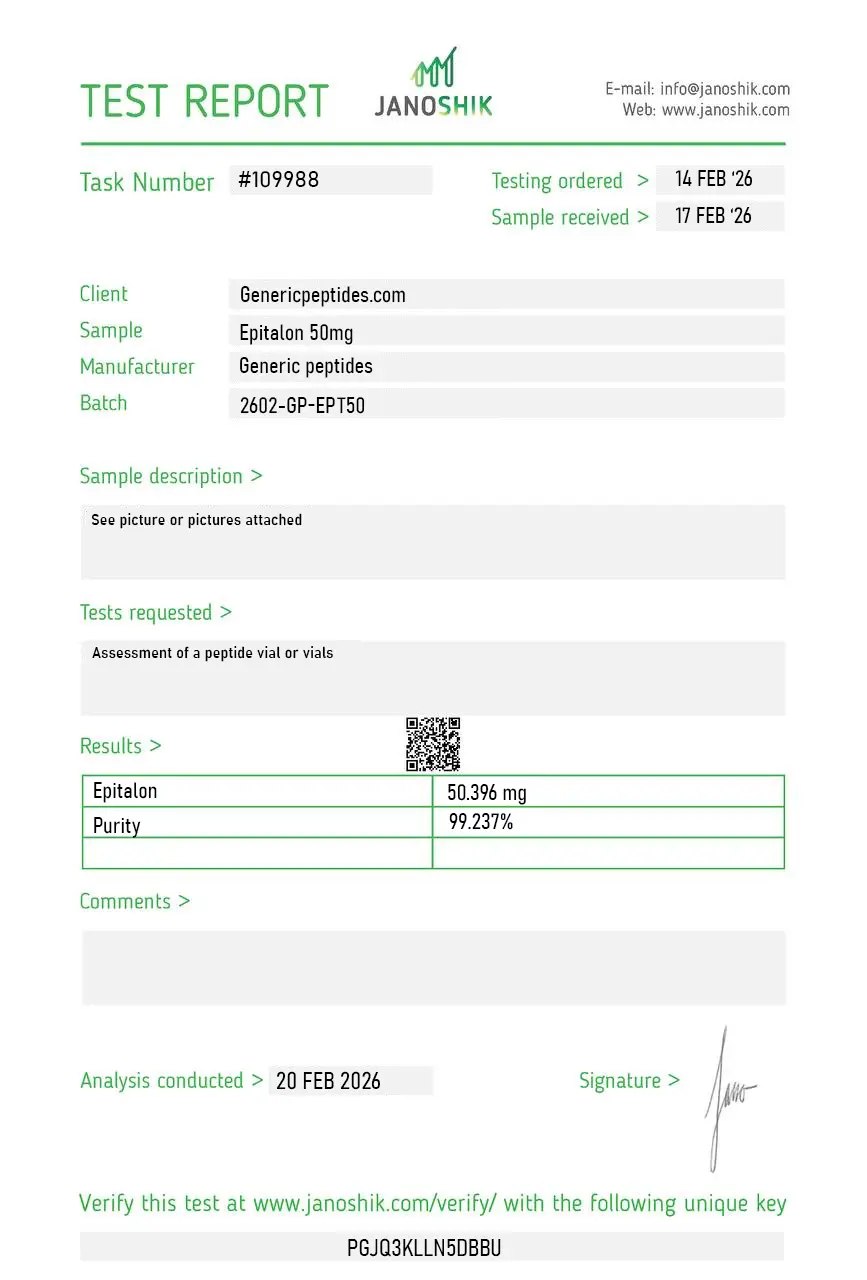
Authenticity support includes official Dragon Pharma presentation, batch-linked lab proof, and original packaging — all of which help reinforce product legitimacy and buyer confidence.
| Authenticity Feature | Details |
|---|---|
| Packaging | Original manufacturer packaging — sealed and unaltered |
| Lab Proof | Batch-linked certificate of analysis available on request |
| Supply Chain | Sourced exclusively through official Dragon Pharma distribution |
Epitalon (also spelled Epithalon or Epithalone, and sometimes called emideltide) is a synthetic tetrapeptide — meaning it consists of just four amino acids: alanine, glutamic acid, aspartic acid, and glycine (sequence: Ala-Glu-Asp-Gly). It was developed by Professor Vladimir Khavinson and colleagues at the St. Petersburg Institute of Bioregulation and Gerontology in Russia, who synthesized it based on the amino acid composition of epithalamin, a natural peptide extract isolated from bovine pineal glands. The pineal gland — a small endocrine organ in the brain — is responsible for producing melatonin and regulating circadian rhythms, and its function declines significantly with age. Epitalon was designed to replicate and amplify the bioregulatory properties of this natural extract in a stable, reproducible synthetic form. Most research on it spans the past 25 years and originates predominantly from Khavinson's group in Russia.
Epitalon's primary and most studied mechanism is the activation of telomerase — an enzyme that rebuilds the protective caps at the ends of chromosomes called telomeres. Every time a cell divides, telomeres shorten slightly. When they become critically short, the cell can no longer divide and enters senescence (a state of dormancy) or dies — a phenomenon called the Hayflick limit. In most adult human cells, telomerase is silenced. Epitalon appears to reactivate it, stimulating the addition of new telomeric repeats and extending the cell's replicative lifespan. Beyond telomeres, Epitalon also appears to remodel chromatin structure — loosening the packaging of DNA in ways that may restore more youthful patterns of gene expression — and increases antioxidant enzyme activity, reducing oxidative damage to cells. It also directly stimulates the pineal gland to restore melatonin production that naturally declines with age.
The evidence exists at multiple levels, each with its own weight. In cell studies, Epitalon has demonstrated a 2.4-fold increase in telomerase activity in human fetal fibroblasts, with telomere elongation sufficient to surpass the Hayflick limit — a finding recently replicated by a Western laboratory in 2025, providing the first independent confirmation of the core mechanism. In animal studies, long-term administration in aging mice increased maximum lifespan by approximately 12–13%, reduced chromosomal aberrations, inhibited leukemia development 6-fold, and restored estrous function in aging females. In the limited human data — which comes primarily from Khavinson's group — Epitalon and epithalamin both significantly increased telomere lengths in blood cells of patients aged 60–80, and a 12-year study in elderly patients reportedly showed a 28% lower mortality rate in the treated group versus controls. These results are intriguing, but the lack of independent replication by Western research groups in large-scale trials is the central limitation.
This is the most important safety question about Epitalon, and it requires an honest, nuanced answer. Telomerase is indeed active in most cancer cells, helping them divide indefinitely — so the concern that activating telomerase could feed existing or hidden tumors is biologically legitimate. However, the available animal data consistently points in the opposite direction: long-term Epitalon treatment in mice did not increase spontaneous tumor incidence and actually inhibited leukemia development significantly. A 2025 cell study found a potentially protective mechanism — in cancer cell lines, Epitalon appeared to work through a different pathway called ALT rather than direct telomerase activation, while in normal healthy cells it upregulated telomerase. That said, a 2025 peer-reviewed systematic review concluded that the information on Epitalon's carcinogenic potential is still missing, and definitive resolution of this question requires independent human trials that have not yet been conducted. The current bottom line: animal data is reassuring, but anyone with active cancer, a history of cancer, or high cancer risk should not use Epitalon without specialist oversight.
Epitalon is described by researchers as a multi-pathway geroprotector, meaning it addresses several hallmarks of aging simultaneously. Its pineal gland stimulation restores melatonin secretion that declines from the twenties onward, improving sleep architecture, circadian rhythm regulation, and hormonal balance. It also stimulates release of growth hormone and normalizes age-related hormonal shifts. In a human clinical trial involving patients with retinitis pigmentosa (a progressive retinal disease), Epitalon produced a positive clinical effect in 90% of treated patients. In tuberculosis patients, it protected against the development of new chromosomal aberrations. Animal research also demonstrated neuroprotective effects, reduced DNA damage in neurons, and improved dendritic structure. Users and some clinicians additionally report improvements in skin elasticity and wound healing — consistent with improved cellular proliferative capacity — though these reports are mostly anecdotal.
The reported side effect profile is generally mild. The most common effects across studies and user reports include injection site redness, mild itching, or soreness — typically resolving within one to two hours. Some people experience vivid dreams or changes in sleep patterns in the first few days, which researchers attribute to the peptide's influence on melatonin production and circadian rhythms. Mild headaches and occasional lightheadedness have been reported, particularly in the first few days of a new cycle. Some users notice mild flu-like symptoms during their first cycle, possibly related to immune system modulation. In a 2002 human trial involving 162 patients, no one in the Epitalon group reported serious side effects. However, a 2025 systematic review confirmed that comprehensive safety information — including genotoxic potential, carcinogenic risk assessment, and drug interaction data — is still formally missing from the published record.
Research protocols most commonly use 5–10 mg per day administered via subcutaneous injection for a course of 10–20 consecutive days. This short cycle is considered sufficient to activate telomerase, restore melatonin secretion, and influence immune markers, with effects reportedly persisting beyond the active dosing period. For longevity applications, cycles are typically repeated once or twice per year rather than used continuously — a critical distinction, as daily long-term dosing has not been shown to produce better outcomes and may over-stimulate regulatory pathways. Evening injection is often recommended to align with melatonin's natural nocturnal cycle. Some clinics also offer nasal spray formulations, though injectable administration has far stronger research support. There are no FDA-approved dosing guidelines, and all use should be discussed with and overseen by a qualified physician.
Each of these interventions targets different aging mechanisms, and they are best understood as complementary rather than competing. NAD+ precursors such as NMN and NR support mitochondrial energy metabolism and sirtuin activity but do not address telomere length directly. Rapamycin inhibits the mTOR pathway to promote autophagy and reduce cellular senescence but has significant immunosuppressive effects at higher doses. Epitalon's distinguishing feature is its multi-pathway reach — targeting telomere maintenance, epigenetic remodeling, oxidative stress, immune recalibration, and circadian restoration simultaneously, while appearing well-tolerated. However, it has far less independent Western research behind it than rapamycin or NAD+ precursors, and a significant portion of its evidence base comes from a single Russian research group whose studies have not always been replicated by independent laboratories using contemporary standards.
Epitalon is not approved by the FDA or any Western regulatory agency as a pharmaceutical drug or dietary supplement for human use. The FDA has flagged it as a peptide that may pose a risk of immunogenicity — meaning the body could theoretically mount an immune response against it — and has classified it among peptides with potential significant safety risks for compounding purposes. This means it cannot be legally prepared by licensed US compounding pharmacies for patient use. It is sold online as a research chemical, and products vary widely in purity and quality. It is not currently on the WADA Prohibited List for athletes. In Russia, peptide bioregulators including Epitalon have a longer history of clinical use and a different regulatory pathway, which partly explains the concentration of research in that country.
Several groups should approach Epitalon with particular caution or avoid it entirely. Anyone with active cancer or a personal history of cancer should not use it without consulting their oncologist, given the unresolved theoretical telomerase-cancer question. People with autoimmune conditions should be cautious because of Epitalon's immune-modulating effects. Pregnant and breastfeeding women should avoid it entirely due to the complete absence of safety data in these populations. Children and adolescents have no indication for use — telomere maintenance is not relevant in young, actively dividing cells. Finally, anyone buying Epitalon from unregulated online suppliers faces unknown contamination and dosing inaccuracies, which introduce risks entirely separate from the peptide itself.
Being honest about what we don't know is as important as what we do. Virtually all published efficacy and safety data originates from one research group in Russia, and large-scale independent multicenter replication using modern clinical trial standards does not yet exist. The human trials that have been conducted are small and predominantly enrolled elderly patients with existing conditions — a population that may not represent the broader population of younger, healthier individuals who are increasingly interested in longevity peptides. A comprehensive 2025 peer-reviewed systematic review explicitly stated that critical safety information including genotoxic activity, carcinogenic potential, and drug interaction profiles remains missing. Epitalon is genuinely one of the most scientifically interesting longevity compounds available, but it sits squarely in the category of promising but unfinished science.