AICAR: Exercise Mimetic AMPK Activator With Stalled Clinical Development
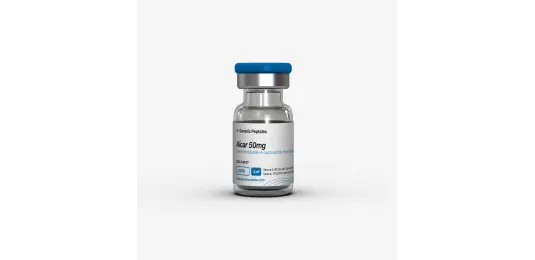
AICAR Mechanism, Side Effects, Legal Status in 2026: Complete Clinical Review of the AMPK Activator, Exercise Mimetic Pharmacology, RED-CABG Phase III Failure, and WADA Prohibition
By Medical Team of Generic Peptides
AICAR (acadesine) is a small synthetic molecule that mimics one of your cells' natural energy signals. When it gets inside a cell, it switches on AMPK — the master enzyme that tells your body to burn fat, use glucose, and build more mitochondria, as if you'd just finished a workout. It's not a peptide. It's a purine nucleoside analog. And despite seventeen years as the original "exercise in a pill," it's never been approved for any medical use.
Here's the strange thing about AICAR. It's been studied in humans more extensively than almost anything else in this article series — a 7,500-patient Phase III trial, multiple leukemia studies, decades of cardiac research. And yet, if you walk into your doctor's office tomorrow and ask for it, nobody can prescribe it. Somewhere between the lab bench and the pharmacy, this compound got stuck.
What it does mechanistically is similar to MOTS-c. Both end with AMPK activation, but they get there from opposite directions. MOTS-c elegantly redirects folate metabolism so that your own cells accumulate AICAR. Exogenous AICAR skips the detour entirely — you take the nucleoside, it gets phosphorylated to ZMP inside your cells, ZMP looks enough like AMP to activate AMPK, and your metabolism shifts into workout mode whether or not you actually exercised. The compound has been tested in thousands of humans. The clinical results, honestly, have mostly underwhelmed.
What AICAR Is: Chemistry and Naming
The proper chemistry name is 5-aminoimidazole-4-carboxamide-1-β-D-ribofuranoside. The INN is acadesine. Molecular weight around 258 Da. CAS number 2627-69-2. Chemically very similar to adenosine — which matters for two reasons: the similarity is what separates AICAR's biological effects from adenosine's direct effects, and it also means AICAR can raise extracellular adenosine levels by competing for nucleoside transporters and inhibiting adenosine deaminase.
The naming convention is genuinely confusing, and I think this trips up a lot of people reading the literature for the first time. "AICAR" is what most people say. Strictly, AICAR refers to the phosphorylated intracellular form (also called ZMP). The unphosphorylated compound you actually buy or inject is AICA riboside, or AICAr (lowercase r). Once it enters the cell through adenosine transporters, adenosine kinase phosphorylates it, and now you have ZMP — the AMP mimetic that activates AMPK. Nearly everyone — including the WADA Prohibited List — uses "AICAR" for the whole thing. I'll do the same. When you read "AICAR" anywhere, it's shorthand for the compound you take and what it becomes inside your cells, even though technically those are two different molecules.
The acadesine name comes from AICAR's earliest clinical development as an adenosine-regulating agent for cardiac surgery in the 1980s and 1990s. The compound has had essentially two scientific lives. The first, roughly 1985 to 2010, was about cardiac ischemia-reperfusion and blood cancers. The second, from 2008 to today, is about AMPK activation, metabolism, exercise mimetics, and doping. Same molecule, different research communities, completely different framings.
AICAR Mechanism of Action: How AMPK Gets Switched On
AICAR gets into cells through adenosine transporters. Adenosine kinase phosphorylates it to ZMP, the monophosphorylated form. ZMP binds to AMPK in the way AMP does, triggering phosphorylation at Thr172 by upstream kinases (LKB1 primarily, CaMKKβ in some contexts), which activates the catalytic subunit. Once AMPK is on, it does what AMPK always does: drives glucose uptake via GLUT4 translocation, inactivates acetyl-CoA carboxylase to promote fatty acid oxidation, suppresses hepatic gluconeogenesis, activates mitochondrial biogenesis through PGC-1α, and shifts your cellular energy balance toward catabolism. Your cells start behaving metabolically like you're mid-workout, even if you're sitting still.
The 2008 Narkar paper in Cell (from Ron Evans's lab at Salk) showed that AICAR given to sedentary mice for four weeks at 500 mg/kg daily increased endurance running capacity by about 44% versus sedentary controls [1]. The PPARδ-AMPK pathway was the proposed mechanism. Combined with GW501516 (a PPARδ agonist), the stack activated roughly 40% of the gene program that exercise alone produces in trained mice. This was the "exercise in a pill" paper. It's still what most biohackers cite when they bring AICAR up.
But here's where the story gets messier. AICAR has substantial AMPK-independent effects, and a 2021 systematic review in International Journal of Molecular Sciences [2] is pretty direct about this. The compound is roughly 40 to 50 times less potent than AMP at activating AMPK, which means people often use it at concentrations (250 μM to millimolar ranges in cell culture) where a lot of off-target effects kick in.
So what is AICAR actually doing in cells beyond AMPK?
The Mondésert 2018 paper found AICAR activates the Hippo pathway tumor suppressors LATS1 and LATS2 independently of AMPK [6]. Other work has documented direct effects on NF-κB DNA binding (also AMPK-independent), Akt/PI3K signaling, and both induction and inhibition of autophagy depending on context. A 2025 paper showed AICAR attenuates nigrostriatal dopaminergic degeneration in MPTP-exposed mice — a Parkinson's model — with the authors framing AMPK activation as a potential disease-modifying target for PD [15]. The mechanism is characterized, but it keeps getting more complicated the more people look. Some of the user claims about AICAR assume a cleaner, purely AMPK-driven mechanism than the compound actually delivers.
AICAR Human Trials: Cardiac, Leukemia, and the RED-CABG Failure
The biggest human trial of AICAR was a Phase III for cardiac surgery that enrolled about 7,500 patients and missed its primary endpoint. That failure, more than anything else, explains why the compound never became a pharmaceutical product.
The cardiac surgery story was the original AICAR clinical application. The hypothesis: by raising adenosine levels during ischemia-reperfusion, AICAR could reduce myocardial infarction size in patients undergoing CABG (coronary artery bypass grafting). Early studies in the 1990s suggested about a 25% reduction in peri-operative MI. The Mangano 2006 paper in JACC looked at long-term survival in patients who'd received acadesine during CABG and reported improvements [3]. This was enough to justify a Phase III registrational trial.
The RED-CABG trial started in 2009, designed to enroll roughly 7,500 patients undergoing CABG, with acadesine given intraoperatively to reduce post-reperfusion MI and all-cause mortality. It was terminated in 2010 for futility after interim analysis showed no benefit [4]. Merck, which was running the trial, discontinued the program. That's the single largest human data point we have for AICAR — a 7,500-patient Phase III that simply didn't work. For a compound that had been in development for roughly 25 years by that point, RED-CABG was the make-or-break moment. And it broke.
The leukemia story has been slightly better. Phase I/II trials in chronic lymphocytic leukemia (Van Den Neste 2013, Cancer Chemotherapy and Pharmacology) showed acadesine had some activity in relapsed/refractory CLL at high IV doses [5]. Subsequent preclinical work in mantle cell lymphoma (2014) [14], chronic myelogenous leukemia, and acute myeloid leukemia has shown synergy with rituximab and other agents. Acadesine is still occasionally mentioned in hematologic malignancy research, though no registrational program is currently active.
The metabolic and endurance story is where AICAR's commercial interest lives. Narkar 2008 is the anchor — 44% endurance increase in sedentary mice. Additional preclinical work has shown improvements in glucose tolerance, insulin sensitivity in diabetic models, fatty acid oxidation, mitochondrial biogenesis in skeletal muscle. What's missing is human efficacy data for these applications. There's essentially no published human exercise-enhancement trial of AICAR. The endurance claims extrapolate from the Narkar mouse data and related preclinical work, which in seventeen years hasn't been translated into controlled human studies.
The Parkinson's angle is newer. The 2025 MPTP mouse study I mentioned showed AICAR reduced α-synuclein phosphorylation and preserved tyrosine hydroxylase expression. Preclinical PD research, and it fits with broader interest in AMPK activation as a neuroprotective strategy. Interesting, but far from clinical.
Why AICAR Development Stalled
RED-CABG wasn't a small effort — 7,500 patients, multinational, Merck-backed — and the failure closed the commercial pharmaceutical pathway for AICAR as a cardiac drug.
WADA got to AICAR fast too. Within a year of the 2008 Narkar paper, WADA added acadesine to the Prohibited List (effective 2009). Evans's lab at Salk actually helped develop the urine detection method. The Cologne anti-doping laboratory set a threshold for distinguishing exogenous administration from endogenous baseline levels. This regulatory move happened before any significant human efficacy work could accumulate in the performance space. Picture the sequence: the paper shows mice can run further, journalists call it "exercise in a pill," WADA prohibits the compound within months, and by the time anyone thinks about running a proper human endurance trial, AICAR is officially a doping agent. That sequence matters for understanding why the human performance data never got generated.
So what you end up with is a compound that failed its one major registrational trial, got flagged as a doping agent before it could be commercially developed for metabolic or endurance indications, and has since lived mostly in academic research and research-chemical markets. It's also very hard to patent at this point — the structure and basic applications have been public for decades.
Why has nobody run a modern Phase II of AICAR in metabolic syndrome or type 2 diabetes? I genuinely don't know. The mouse data is strong, the safety profile from the cardiac program was acceptable, and metabolic medicine has plenty of money flowing around. Maybe the pharmacokinetic profile (short half-life, need for high doses, IV administration for clinical work) makes commercial development unattractive. Maybe the RED-CABG failure left a lingering stigma. Maybe metformin and the GLP-1 agonists captured the commercial interest. I don't have a confident answer.
AICAR Dosing and Administration: What Research Shows
AICAR is supplied as a white crystalline powder. In clinical research, it's been given IV at doses up to 100 mg/kg over extended infusions — cardiac surgery dosing, not recreational dosing. In research-chemical markets it's typically sold as powder for reconstitution, with off-label protocols ranging widely. The Narkar mouse dose of 500 mg/kg daily doesn't translate directly to humans — allometric scaling would suggest human doses in the grams-per-day range, which is impractical for oral use and generally outside what off-label users actually do.
The dose that made sedentary mice endurance-trained in the 2008 paper is not a dose anyone has shown works or is safe in humans at equivalent scale. The off-label user doses are substantially lower, and whether they reproduce any of the mouse effects is genuinely unclear.
AICAR Safety Profile and Cancer Considerations
Human safety data comes primarily from the cardiac surgery program. AICAR at IV doses used in CABG trials was generally well-tolerated. Reported effects included hyperuricemia (from the purine metabolism effects — AICAR is a precursor in purine synthesis), increased serum creatinine in some patients, hypotension during infusion, and various mild transient effects. The 1991 safety and tolerance study and subsequent cardiac trials established a reasonable short-term safety profile at clinical doses.
What we don't really know is chronic safety. Nobody has given AICAR to humans daily for months in a controlled published study. The doping-use patterns aren't well-documented but appear to involve intermittent high-dose administration. Research-chemical users experiment with protocols that have no clinical validation.
The AMPK-cancer question applies here just as it does to MOTS-c. AMPK activation has complex, context-dependent effects on cancer biology. For AICAR specifically, preclinical research shows antitumor activity in several leukemia and lymphoma models, and the compound has been in Phase I/II trials specifically for CLL. But the AMPK-independent effects on LATS1/2, Hippo pathway, and NF-κB mean the cancer-relevant pharmacology is broader than just "activates AMPK," and I don't think anyone has fully mapped whether that broader profile is net protective or net risk-elevating across cancer types.
Hypoglycemia risk applies for the same reason as with MOTS-c — AICAR increases insulin-independent glucose uptake via GLUT4, so combining with insulin or oral hypoglycemics requires attention. The main drug-interaction considerations are with other AMPK activators (metformin, berberine, MOTS-c — redundant mechanisms), adenosine modulators (dipyridamole potentiates adenosine effects, which AICAR also enhances, with theoretical risk of excessive adenosine signaling), and antiplatelet or anticoagulant drugs (AICAR has effects on platelet function and thrombus formation via the PI3K/Akt pathway).
AICAR Legal Status and WADA Classification
AICAR is not FDA-approved for any indication. The RED-CABG failure closed the cardiac approval pathway. The CLL development never reached Phase III. No current registrational program is active in the US or EU.
AICAR isn't on the FDA 503A Category 2 bulks list alongside the peptides we've covered. It has different regulatory treatment because it's not a peptide and its pharmaceutical development history is different. It exists in the US primarily as a research reagent, not as an approved drug or a compoundable bulk substance. Selling or distributing AICAR as a performance enhancement product for human use would run into FDA enforcement issues around unapproved drugs.
WADA is where the regulatory picture is most concrete. AICAR is explicitly listed under S4.4.1 (Metabolic Modulators — Activators of AMPK) alongside BAM15 and MOTS-c [10]. Prohibited at all times, both in and out of competition. Added effective January 1, 2009 — one of the faster WADA additions to the Prohibited List in response to emerging doping use. The detection methodology was developed at the Cologne laboratory and involves distinguishing exogenous AICAR from endogenous ZMP baseline levels via liquid chromatography-mass spectrometry [12]. The threshold was specifically set because everyone has some endogenous AICAR in their urine — it's an intermediate in purine metabolism.
The doping history is substantial enough to mention, and it's not only a cycling story even though cycling produces the most headlines. The 2009 Tour de France generated suspicions of AICAR use in the peloton — British Medical Journal covered this. Cycling authorities flagged further suspicions in 2012. In 2019 there were again reports of AICAR detection in cycling. Every few years a new case surfaces. USADA has issued advisories specifically about AICAR as an endurance doping agent, and anti-doping organizations across other endurance sports — cross-country skiing, triathlon, distance running — have screened for it. Any athlete subject to WADA testing should treat AICAR as a compound that will be detected and will result in sanctions.
AICAR vs Metformin, MOTS-c, and Exercise: How It Compares
Metformin activates AMPK through complex I inhibition of the electron transport chain rather than direct AMP mimicry. It's FDA-approved, cheap, orally bioavailable, and has substantially more human efficacy data than AICAR for metabolic indications. Over 150 million people worldwide take metformin for diabetes, and the longevity research community has enough interest in it that the TAME trial (Targeting Aging with Metformin) is pending. MOTS-c reaches the same endpoint (AMPK activation via AICAR accumulation) through endogenous folate-pathway manipulation. AICAR is the direct, less elegant, more pharmacologically complicated route. And exercise activates AMPK through genuine energy demand and produces the complete physiological adaptation package that no single compound matches. The AICAR story has always been about replacing or supplementing exercise; seventeen years after the Narkar paper, exercise remains the better-evidenced option.
The main off-label users are endurance-focused athletes (outside regulated sport), metabolic-health-focused biohackers drawn by the exercise mimetic framing, and researchers using AICAR as a pharmacological tool for AMPK studies. The doping-context users are a smaller but persistent group, concentrated in cycling and endurance sports, willing to accept the detection risk for what they perceive as performance benefit — though the translation from mouse endurance effects to human elite-athlete performance benefit is genuinely unclear.
What Comes Next for AICAR
Honestly, I'm not sure there's much coming next for AICAR as a pharmaceutical product. The cardiac pathway is closed. The CLL pathway is inactive. The metabolic and endurance indications don't have a commercial sponsor. The Parkinson's preclinical work is interesting but years from translation. The AMPK-independent effects keep generating academic papers, which is good for understanding but doesn't move registration forward.
Seventeen years after the "exercise in a pill" headlines, sixteen years after WADA prohibition, fifteen years after RED-CABG failure, AICAR is what it is — a well-characterized research tool, a doping agent in endurance sports, and a research-chemical market compound with a substantial user community outside regulated contexts. The MOTS-c discovery has in some ways inherited AICAR's conceptual space — a cleaner, more elegant AMPK activator with actual pharmaceutical development behind it. Which is an interesting irony, given that MOTS-c works essentially by producing endogenous AICAR.
I'll admit this article has been harder to write with enthusiasm than the MOTS-c one. The science is real, the mechanism is well-characterized, and the 2008 Narkar finding was genuinely exciting. But the seventeen-year arc since then has been mostly about what AICAR didn't become. That matters when users are weighing whether to incorporate it into protocols — the compound is studied, but the human efficacy story hasn't materialized the way the early preclinical work suggested it might.
References
[1] Narkar VA, Downes M, Yu RT, Embler E, Wang YX, Banayo E, Mihaylova MM, Nelson MC, Zou Y, Juguilon H, Kang H, Shaw RJ, Evans RM. AMPK and PPARdelta agonists are exercise mimetics. Cell. 2008;134(3):405-415. PMID: 18674809. DOI: 10.1016/j.cell.2008.06.051.
[2] Višnjić D, Lalić H, Dembitz V, Tomić B, Smoljo T. AICAr, a Widely Used AMPK Activator with Important AMPK-Independent Effects: A Systematic Review. International Journal of Molecular Sciences. 2021;22(9):4655. PMID: 33925055. PMC: PMC8147799. DOI: 10.3390/ijms22094655.
[3] Mangano DT, Miao Y, Tudor IC, Dietzel C. Post-reperfusion myocardial infarction: long-term survival improvement using adenosine regulation with acadesine. Journal of the American College of Cardiology. 2006;48(1):206-214. PMID: 16814668. DOI: 10.1016/j.jacc.2006.04.044.
[4] Newman MF, Ferguson TB, White JA, Ambrosio G, Koglin J, Nussmeier NA, Pearl RG, Pitt B, Wechsler AS, Weisel RD, Reece TL, Lira A, Harrington RA; RED-CABG Steering Committee and Investigators. Effect of adenosine-regulating agent acadesine on morbidity and mortality associated with coronary artery bypass grafting: the RED-CABG randomized controlled trial. JAMA. 2012;308(2):157-164. PMID: 22782417. DOI: 10.1001/jama.2012.7633.
[5] Van Den Neste E, Cazin B, Janssens A, Gonzalez-Barca E, Terol MJ, Levy V, Perez de Oteyza J, Zachee P, Saunders A, de Frias M, Campàs C. Acadesine for patients with relapsed/refractory chronic lymphocytic leukemia (CLL): a multicenter phase I/II study. Cancer Chemotherapy and Pharmacology. 2013;71(3):581-591. PMID: 23228968. DOI: 10.1007/s00280-012-2033-5.
[6] Mondésert E, Bossuyt J, Dupont E, Hofmann B. The AICAR monophosphate derivative ZMP mediates AMPK-independent activation of LATS1 and LATS2 tumor suppressor kinases. Cell Signal. 2018;49:85-94. PMID: 29852203. DOI: 10.1016/j.cellsig.2018.05.012.
[7] Katerelos M, Mudge SJ, Stapleton D, Auwardt RB, Fraser SA, Chen CG, Kemp BE, Power DA. 5-aminoimidazole-4-carboxamide ribonucleoside and AMP-activated protein kinase inhibit signalling through NF-κB. Immunology and Cell Biology. 2010;88(7):754-760. PMID: 20404840. DOI: 10.1038/icb.2010.44.
[8] Zhang W, Zhang X, Zhang YH, Strokin ML, Reiser G. Acadesine inhibits tissue factor induction and thrombus formation by activating the phosphoinositide 3-kinase/Akt signaling pathway. Arteriosclerosis, Thrombosis, and Vascular Biology. 2010;30(5):1000-1006. PMID: 20185791. DOI: 10.1161/ATVBAHA.110.203828.
[9] Corton JM, Gillespie JG, Hawley SA, Hardie DG. 5-aminoimidazole-4-carboxamide ribonucleoside. A specific method for activating AMP-activated protein kinase in intact cells? European Journal of Biochemistry. 1995;229(2):558-565. PMID: 7744080. DOI: 10.1111/j.1432-1033.1995.tb20498.x.
[10] World Anti-Doping Agency. The Prohibited List, 2025 Edition. Category S4.4.1 (Metabolic Modulators — Activators of AMPK) explicitly lists AICAR alongside BAM15 and MOTS-c. Prohibited effective January 1, 2009. https://www.wada-ama.org/en/prohibited-list.
[11] U.S. Anti-Doping Agency (USADA). Advisory statements on AICAR and endurance doping. Multiple issuances 2009-2024.
[12] Thevis M, Möller I, Thomas A, Beuck S, Rodchenkov G, Bornatsch W, Geyer H, Schänzer W. Characterization of two major urinary metabolites of the PPARδ-agonist GW1516 and implementation of the drug in routine doping controls. Analytical and Bioanalytical Chemistry. 2010;396(7):2479-2491. PMID: 20069278. DOI: 10.1007/s00216-009-3407-3.
[13] Thomas A, Geyer H, Schänzer W, Crone C, Kellmann M, Moehring T, Thevis M. Sensitive determination of prohibited drugs in dried blood spots (DBS) for doping controls by means of a benchtop quadrupole/Orbitrap mass spectrometer. Analytical and Bioanalytical Chemistry. 2012;403(5):1279-1289. PMID: 22484871.
[14] Montraveta A, Xargay-Torrent S, López-Guerra M, Rosich L, Pérez-Galán P, Salaverria I, Beà S, Kalko SG, de Frias M, Campàs C, Roué G, Colomer D. Synergistic anti-tumor activity of acadesine (AICAR) in combination with the anti-CD20 monoclonal antibody rituximab in in vivo and in vitro models of mantle cell lymphoma. Oncotarget. 2014;5(3):726-739. PMID: 24519895. DOI: 10.18632/oncotarget.1455.
[15] 2025 MPTP/Parkinson's disease preclinical study. AICAR attenuates nigrostriatal dopaminergic degeneration in MPTP-exposed mice; AMPK activation mitigates α-synuclein pathology and preserves tyrosine hydroxylase expression. Published 2025.
[16] Cluzeau T, Furstoss N, Savy C, El Manaa W, Zerhouni M, Blot L, Calleja A, Dufies M, Dubois A, Ginet C, Auberger P. Acadesine research in acute myeloid leukemia and myelodysplastic syndromes. Multiple publications 2015-2020.
[17] Robert G, Ben Sahra I, Puissant A, Colosetti P, Belhacene N, Gounon P, Hofman P, Bost F, Cassuto JP, Auberger P. Acadesine kills chronic myelogenous leukemia (CML) cells through PKC-dependent induction of autophagic cell death. PLoS One. 2009;4(11):e7889. PMID: 19924237. DOI: 10.1371/journal.pone.0007889.
[18] Ly P, Kim SB, Kaisani AA, Marian G, Wright WE, Shay JW. Aneuploid human colonic epithelial cells are sensitive to AICAR-induced growth inhibition through EGFR degradation. Oncogene. 2013;32(26):3139-3146. PMID: 22824791. DOI: 10.1038/onc.2012.339.
[19] Sullivan JE, Brocklehurst KJ, Marley AE, Carey F, Carling D, Beri RK. Inhibition of lipolysis and lipogenesis in isolated rat adipocytes with AICAR, a cell-permeable activator of AMP-activated protein kinase. FEBS Letters. 1994;353(1):33-36. PMID: 7926017. DOI: 10.1016/0014-5793(94)01006-4.
[20] Vincent EE, Coelho PP, Blagih J, Griss T, Viollet B, Jones RG. Differential effects of AMPK agonists on cell growth and metabolism. Oncogene. 2015;34(28):3627-3639. PMID: 25241895. DOI: 10.1038/onc.2014.301.