Retatrutide: Triple Incretin Agonist With 28.7% Phase 3 Weight Loss and Dysesthesia Signal
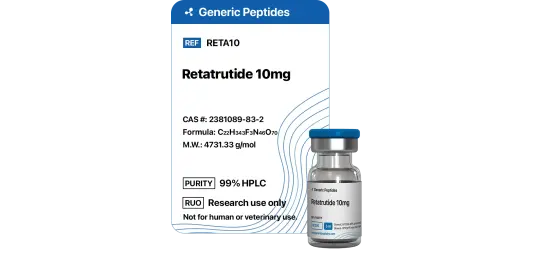
Retatrutide (LY3437943): The Investigational First-in-Class Triple GIP/GLP-1/Glucagon Receptor Agonist With 28.7% Weight Loss in Phase 3 TRIUMPH-4 and the Dysesthesia Signal Defining Its Safety Profile
By Medical Team of Generic Peptides
Retatrutide (LY3437943) is an investigational synthetic peptide that activates three hormone receptors as a single molecule: glucose-dependent insulinotropic polypeptide (GIP), glucagon-like peptide-1 (GLP-1), and glucagon receptors. The compound is built on a GIP peptide backbone with fatty acid conjugation that extends plasma half-life to approximately 6 days, supporting once-weekly subcutaneous administration. Within the triple receptor profile, retatrutide has highest potency at the GIP receptor, moderate potency at GLP-1, and somewhat milder activation at the glucagon receptor — a deliberately balanced pharmacological profile designed to provide GLP-1's appetite suppression, GIP's insulinotropic and metabolic effects, and glucagon's energy expenditure and hepatic effects. Eli Lilly and Company developed retatrutide as a next-generation extension of its tirzepatide success, with the additional glucagon receptor component providing mechanistic rationale for greater weight loss than dual GIP/GLP-1 receptor agonism produces.
Retatrutide occupies a uniquely defined position in the contemporary peptide therapy landscape — it represents the most promising investigational compound in obesity medicine and likely the next pharmaceutical to fundamentally reshape metabolic disease treatment, but it is not FDA-approved as of April 2026. The compound is available only through Eli Lilly clinical trials, with multiple Phase 3 trials ongoing across obesity (TRIUMPH program), type 2 diabetes (TRANSCEND program), and metabolic dysfunction-associated steatotic liver disease (SYNERGY program). The contrast with semaglutide (FDA-approved 2017 onwards) and tirzepatide (FDA-approved 2022) is straightforward — retatrutide is at the regulatory pathway stage where those compounds were 2-4 years before their commercial launches, with potential FDA approval timeline 2026-2027 if Phase 3 data continues favorably. Despite the investigational status, an underground research-chemical market for retatrutide exists, with FDA warning letters issued regarding unapproved products. Patients seeking retatrutide should obtain it only through legitimate clinical trial enrollment.
The 2023-2026 clinical evidence development has produced substantial findings. Phase 2 obesity trial published in NEJM in June 2023 (Jastreboff et al., DOI 10.1056/NEJMoa2301972) enrolled 338 adults across multiple dose levels, demonstrating dose-dependent weight loss reaching 24.2% (12 mg dose) at 48 weeks versus 2.1% placebo — exceeding all previous obesity medication results at that timepoint. Phase 2 type 2 diabetes trial published in Lancet 2023 (Rosenstock et al.) demonstrated HbA1c reduction with 82% achieving HbA1c <6.5% at higher doses. Phase 2a MASLD trial published in Nature Medicine 2024 (Sanyal et al.) demonstrated 82% liver fat reduction. Phase 3 TRIUMPH-4 results announced December 11, 2025 demonstrated 28.7% weight loss at 12 mg dose over 68 weeks in 445 adults with obesity and knee osteoarthritis, plus substantial knee OA pain relief — the first successful Phase 3 readout for retatrutide and the largest weight loss documented in any obesity Phase 3 trial to date. Phase 3 TRANSCEND-T2D-1 results announced March 19, 2026 demonstrated A1C reductions up to 2.0% and weight loss 16.8% in T2DM monotherapy at 40 weeks, with notably dramatically lower dysesthesia rates (2.3-4.5%) compared to TRIUMPH-4 (20.9% at 12 mg).
I'll be direct about my assessment of retatrutide from the start. The compound has produced the most impressive weight loss efficacy of any obesity medication ever tested in Phase 3 trials — 28.7% mean weight reduction in TRIUMPH-4 substantially exceeds tirzepatide's 20.9% in SURMOUNT-1 and semaglutide's 13.7% in SURMOUNT-5 head-to-head comparison. The triple receptor mechanism provides genuine pharmacological innovation through glucagon receptor activation that drives additional energy expenditure beyond what dual GIP/GLP-1 mechanisms produce. The Phase 2 cardiometabolic improvements (blood pressure, lipids, glucose, HbA1c) were substantial. The TRANSCEND-T2D-1 March 2026 results extend the evidence base into T2DM monotherapy applications. The honest limitations are equally substantial. The compound is not FDA-approved with NDA filing expected late 2025/early 2026 and earliest possible approval 2026-2027. The TRIUMPH-4 trial revealed a new dysesthesia safety signal (abnormal skin sensations affecting 20.9% of 12 mg participants vs 0.7% placebo) not prominent in earlier Phase 2 data — likely related to glucagon receptor component. Discontinuation rates were higher than tirzepatide trials (18.2% at 12 mg in TRIUMPH-4). Heart rate increases of 5-10 bpm reflect glucagon component effects. The cardiovascular outcomes (TRIUMPH-Outcomes, 10,000 patients) and MASH outcomes (SYNERGY-Outcomes, 4,500 patients) are pending. The underground research-chemical market for unapproved retatrutide creates substantial safety concerns for patients seeking access outside legitimate clinical trial enrollment.
This article walks through what retatrutide actually is and how its triple receptor mechanism distinguishes it from tirzepatide and other incretin-based therapies, the well-characterized pharmacology with the unique glucagon receptor component, the substantial Phase 2 evidence base across obesity, T2DM, and MASLD, the emerging Phase 3 evidence from TRIUMPH-4 and TRANSCEND-T2D-1, the safety profile including the critical dysesthesia signal, the regulatory pathway and timeline expectations, and how to think about retatrutide decisions given the operational realities including the investigational status and the substantial underground market concerns.
What Retatrutide Is
Retatrutide's structural design represents the next generation of incretin-based peptide therapy — building on the success of dual GIP/GLP-1 receptor agonism through tirzepatide by adding glucagon receptor activation as a third mechanism in a single molecule.
The endogenous biology starts with three natural hormones with complementary metabolic effects. GLP-1 (glucagon-like peptide-1) produces glucose-dependent insulin secretion, glucagon suppression, slowed gastric emptying, and central appetite suppression. GIP (glucose-dependent insulinotropic polypeptide) produces glucose-dependent insulin secretion (more pronounced effect than GLP-1 in some contexts) and direct effects on adipose tissue. Glucagon is conventionally considered the counter-regulatory hormone to insulin, increasing hepatic glucose output and supporting energy mobilization during fasting — but glucagon also has effects on energy expenditure (increasing thermogenesis), lipolysis (mobilizing fat stores), and hepatic lipid metabolism that are distinct from its hyperglycemic effects.
The rational design of triple agonist therapy proposes that simultaneous activation of all three receptors produces complementary metabolic effects greater than dual or single receptor agonism. GIP and GLP-1 components provide the established appetite suppression and insulinotropic effects familiar from tirzepatide. The glucagon component provides additional weight loss through increased energy expenditure and direct lipolytic effects on adipose tissue. The complementary mechanisms collectively produce the substantial weight loss efficacy that distinguishes retatrutide in clinical trials.
The structural foundation involves a synthetic peptide based on the GIP backbone with strategic amino acid modifications optimizing receptor binding profile and metabolic stability. A C20 fatty acid moiety attached at lysine through gamma-glutamic acid linker provides albumin binding that extends plasma half-life from minutes (native peptides) to approximately 6 days. The amino acid substitutions optimize triple receptor binding affinity while preserving the desired potency ratio — most potent at GIP, moderate at GLP-1, mildest at glucagon. The careful balance is critical because excessive glucagon receptor activation could worsen hyperglycemia in T2DM patients despite GIP/GLP-1 effects opposing the glucagon-induced glucose elevation.
The pharmacokinetic profile reflects the long-acting design suitable for once-weekly subcutaneous dosing. After subcutaneous administration, peak plasma levels occur over hours, with steady-state concentrations achieved after approximately 4-6 weeks of weekly dosing. The compound is metabolized through proteolytic degradation pathways. The pharmacokinetic profile supports clinically practical dosing with each new dose level held for 4 weeks before stepping up — providing time for tissue adaptation to the dose-dependent effects.
The pharmaceutical formulation involves clear solution provided in pre-filled subcutaneous injection format suitable for clinical trial use. Five clinical doses are tested in TRIUMPH program: 2 mg, 4 mg, 6 mg, 9 mg, and 12 mg. Patients initiate at 2 mg weekly and step up every 4 weeks until reaching their target dose (4 mg, 9 mg, or 12 mg depending on trial protocol). The 4 mg dose represents the "maintenance" dose level intended for patients who can't tolerate higher doses, while 12 mg represents the maximum tested dose where the largest efficacy is observed.
The naming convention is straightforward in research and clinical trial contexts. Retatrutide is the international nonproprietary name. LY3437943 is the Eli Lilly development designation. No commercial brand name has been assigned because the compound is not yet FDA-approved. Patient-marketed brand naming will likely occur if and when FDA approval is obtained.
Retatrutide Mechanism of Action
The mechanism is substantially characterized through preclinical research and Phase 2 clinical investigation, with the triple receptor agonism producing complementary effects that drive efficacy beyond what dual or single receptor agonism produces.
GLP-1 receptor activation: Retatrutide binds and activates GLP-1 receptors on pancreatic β-cells, pancreatic α-cells, gastric smooth muscle, and central nervous system neurons. The GLP-1 receptor effects include glucose-dependent insulin secretion, glucagon suppression in glucose-elevated conditions, slowed gastric emptying, and central appetite suppression through hypothalamic GLP-1 receptor activation.
GIP receptor activation: Retatrutide also binds and activates GIP receptors on pancreatic β-cells, adipocytes, and central nervous system neurons. The GIP receptor effects include additional insulinotropic effects complementary to GLP-1, direct effects on adipocyte function and lipid metabolism, and additional central effects on appetite and food intake.
Glucagon receptor activation: Retatrutide's distinctive feature involves activation of glucagon receptors on hepatocytes, adipocytes, and other tissues. The glucagon receptor effects include increased hepatic glucose output regulation (which is normally counter-regulatory to insulin but is balanced by GLP-1's glucagon suppression and GIP/GLP-1's insulin enhancement), increased energy expenditure through thermogenesis, and direct lipolytic effects mobilizing adipose tissue fat stores.
The combined triple receptor mechanism produces several therapeutically important effects:
Weight reduction through complementary mechanisms: GLP-1 and GIP suppress appetite and food intake, while glucagon increases energy expenditure. The combined caloric deficit (reduced intake plus increased expenditure) produces greater weight loss than dual receptor mechanisms targeting only intake reduction. The Phase 2 and Phase 3 evidence demonstrates substantially greater weight loss than tirzepatide.
Metabolic improvement: The combined mechanisms improve insulin sensitivity, reduce hepatic fat accumulation, improve lipid profile, reduce blood pressure, and improve glycemic control. The cardiometabolic improvements documented in Phase 2 exceed what would be expected from weight loss alone, suggesting direct mechanistic effects beyond weight-mediated changes.
Hepatic effects: The glucagon component has direct effects on hepatic lipid metabolism beyond what weight loss produces, supporting the substantial liver fat reductions documented in Phase 2a MASLD trial (Sanyal et al. Nature Medicine 2024, with 82% liver fat reduction).
Energy expenditure increase: The glucagon receptor component increases resting energy expenditure and thermogenesis, providing weight loss mechanism complementary to appetite suppression. This distinguishes retatrutide from semaglutide and tirzepatide, which produce weight loss primarily through appetite reduction and intake reduction rather than expenditure increase.
Glucose-dependent effects: The triple mechanism preserves glucose-dependent insulin secretion (insulin only when blood glucose is elevated), limiting hypoglycemia risk in monotherapy contexts despite the substantial insulin enhancement effects.
The careful potency balance is important pharmacologically. If glucagon receptor activation were too strong relative to GIP/GLP-1, the hyperglycemic effects could overwhelm the insulin-enhancing and glucagon-suppressing effects, producing net glucose elevation rather than improvement. Retatrutide's design specifically calibrates the triple receptor activation to ensure favorable net metabolic effects despite the unconventional inclusion of glucagon receptor activation.
The mechanism contrasts with tirzepatide (dual GIP/GLP-1, no glucagon component) in producing additional effects through glucagon-mediated energy expenditure and lipolysis. The mechanism contrasts with semaglutide (single GLP-1, no GIP or glucagon) in producing more comprehensive metabolic effects through the additional receptor systems. The triple mechanism is the most pharmacologically innovative feature of retatrutide and the basis for the superior efficacy documented in clinical trials.
The pharmacokinetic profile supports the long half-life suitable for once-weekly dosing. Heart rate increases of 5-10 bpm at higher doses reflect the glucagon component effects (glucagon increases cardiac contractility and heart rate). The heart rate increase peaks around week 24 and declines thereafter, suggesting tachyphylaxis or compensatory mechanisms.
Retatrutide Phase 2 Evidence Base
The Phase 2 evidence base is genuinely substantial across three indications, with three landmark publications establishing the compound's pharmaceutical promise.
Phase 2 Obesity Trial (Jastreboff et al. NEJM 2023, NCT04881760):
Multicenter, double-blind, placebo-controlled trial enrolling 338 adults with BMI ≥30 or BMI 27-30 with weight-related conditions but without T2DM. Participants randomized 2:1:1:1:1:2:2 to retatrutide 1 mg, 4 mg (initial dose 2 mg or 4 mg), 8 mg (initial dose 2 mg or 4 mg), 12 mg (initial dose 2 mg), or placebo once weekly for 48 weeks.
Primary endpoint at 24 weeks (LS mean percentage change in body weight): 1 mg: -7.2%, combined 4 mg: -12.9%, combined 8 mg: -17.3%, 12 mg: -17.5%, placebo: -1.6%.
Secondary endpoint at 48 weeks: 1 mg: -8.7%, combined 4 mg: -17.1%, combined 8 mg: -22.8%, 12 mg: -24.2% (57.8 lb / 26.2 kg), placebo: -2.1%.
Weight reduction milestones at 48 weeks (12 mg dose): ≥5%: 100% of participants, ≥10%: 93%, ≥15%: 83%.
Critically important: weight loss curves had not yet plateaued at 48 weeks, suggesting continued weight loss with longer treatment duration.
Cardiometabolic improvements (exploratory endpoints) included reduced systolic and diastolic blood pressure, reduced triglycerides, reduced LDL-cholesterol, reduced total cholesterol, reduced HbA1c, reduced fasting glucose, reduced fasting insulin.
Starting dose comparison: groups beginning at 2 mg had fewer GI side effects than groups starting at 4 mg, with equivalent weight loss at 48 weeks. This finding informed Phase 3 protocol where all participants start at 2 mg.
Phase 2 T2DM Trial (Rosenstock et al. Lancet 2023, n=281):
Phase 2 trial in T2DM patients with active comparator dulaglutide 1.5 mg. HbA1c reduction profile substantially exceeded dulaglutide. HbA1c <6.5% achieved in up to 82% of participants at higher retatrutide doses — comparable to surgical interventions for diabetes resolution.
Phase 2a MASLD Trial (Sanyal et al. Nature Medicine 2024):
Phase 2a trial in MASLD/MAFLD patients. 82% liver fat reduction at higher doses — substantially greater than tirzepatide's effects in SYNERGY-NASH or resmetirom's effects in MAESTRO-NASH. Foundation for the SYNERGY program Phase 3 development.
What the Phase 2 evidence base supports with reasonable confidence: retatrutide produces substantially greater weight loss than tirzepatide or semaglutide in comparable patient populations; the triple receptor mechanism produces favorable cardiometabolic effects beyond weight reduction; HbA1c reductions in T2DM rival surgical interventions; substantial hepatic fat reduction supports MASH applications; the safety profile is consistent with incretin-based therapy class plus the emerging dysesthesia signal.
Retatrutide Phase 3 Evidence Development
Phase 3 development includes 19 clinical trials across three families.
TRIUMPH program (obesity):
The TRIUMPH Phase 3 global registrational program began in 2023 with 5,800+ enrolled participants across four trials. Five doses tested: 2 mg, 4 mg, 6 mg, 9 mg, and 12 mg. All participants start at 2 mg and step up every 4 weeks.
- TRIUMPH-1: Adults with obesity or overweight (without T2DM, without specific OSA/OA), main weight loss trial. Target doses: 4 mg, 9 mg, 12 mg. Results expected 2026.
- TRIUMPH-2: Adults with obesity and T2DM. Target doses: 4 mg, 9 mg, 12 mg. Results expected 2026.
- TRIUMPH-3: Adults with obesity and OSA. Target doses: 9 mg, 12 mg. Results expected 2026.
- TRIUMPH-4: Adults with obesity and knee osteoarthritis (445 patients). Target doses: 9 mg, 12 mg. Results announced December 11, 2025.
TRIUMPH-4 Phase 3 Results (Eli Lilly press release December 11, 2025):
The first successful Phase 3 readout for retatrutide. Topline efficacy:
- Weight loss at 12 mg: 28.7% (71.2 lb average) at 68 weeks
- Weight loss at 9 mg: substantial but not specified in topline
- Substantial knee OA pain relief (WOMAC scores)
- Discontinuation due to adverse events: 18.2% (12 mg), 12.2% (9 mg), 4.0% (placebo)
GI side effects (12 mg target dose): nausea 43.2% (vs 10.7% placebo), diarrhea 33.1% (vs 13.4%), constipation 25.0% (vs 8.7%), vomiting 20.9% (vs 0.0%).
Critical new finding: dysesthesia (abnormal skin sensations including tingling, burning, prickling) emerged as a new safety signal at 20.9% (12 mg), 8.8% (9 mg), 0.7% (placebo). This signal was not prominent in earlier Phase 2 data and likely relates to glucagon receptor component effects on sensory neurons.
TRANSCEND program (type 2 diabetes):
TRANSCEND-T2D-1 (40-week monotherapy trial, n≈480-537): Results announced March 19, 2026. A1C reduction up to 2.0% at 12 mg. Weight loss 16.8% at 12 mg. Dysesthesia rates 2.3-4.5% — dramatically lower than TRIUMPH-4. Discontinuation rates 2.2-5.1%. The substantially lower dysesthesia rates compared to TRIUMPH-4 suggest the signal may be patient population-dependent (T2DM patients vs obesity-without-diabetes patients) or related to other factors warranting investigation.
Additional TRANSCEND trials in development for T2DM with various comparator and combination regimens.
SYNERGY program (MASLD/MASH):
SYNERGY-Outcomes: 4,500 patients with biopsy-confirmed MASH. Long-term liver biopsy outcomes endpoint. Phase 3 trial supporting potential FDA approval for MASH indication.
Outcomes trials:
TRIUMPH-Outcomes: 10,000 patient cardiovascular outcomes trial. Long-term CV events endpoint. Will determine whether retatrutide produces cardiovascular benefits comparable to or exceeding semaglutide's SELECT findings.
What the Phase 3 evidence supports so far with reasonable confidence: retatrutide produces unprecedented weight loss (28.7% at 12 mg, 68 weeks) substantially exceeding all other obesity medications; substantial efficacy in T2DM with substantial HbA1c reduction; favorable safety profile in T2DM monotherapy with much lower dysesthesia rates than obesity context; the triple receptor mechanism translates from Phase 2 efficacy to Phase 3 efficacy at scale.
What the Phase 3 evidence supports less robustly: long-term safety beyond 68 weeks; cardiovascular outcomes (TRIUMPH-Outcomes pending); MASH outcomes (SYNERGY-Outcomes pending); efficacy in special populations not represented in primary trials; the explanation for the dysesthesia rate discrepancy between TRIUMPH-4 and TRANSCEND-T2D-1.
Retatrutide Safety Profile
The safety profile is being characterized through ongoing Phase 3 development with substantial accumulated evidence from Phase 2 plus early Phase 3 readouts.
Common adverse events (predominantly gastrointestinal, dose-dependent, occurring during dose escalation):
In Phase 2 (Jastreboff 2023): Nausea up to 60% (12 mg), vomiting 26%, diarrhea 15%, constipation 16%. Most cases mild to moderate, occurring during dose escalation phase, improving over time.
In Phase 3 TRIUMPH-4 (12 mg target dose): Nausea 43.2% (vs 10.7% placebo), diarrhea 33.1% (vs 13.4%), constipation 25.0% (vs 8.7%), vomiting 20.9% (vs 0.0%).
The discontinuation rate in TRIUMPH-4 was 18.2% at 12 mg, 12.2% at 9 mg, and 4.0% at placebo — somewhat higher than tirzepatide's discontinuation rates in comparable trials. The TRANSCEND-T2D-1 trial showed lower discontinuation rates (2.2-5.1%) suggesting possible population-dependent tolerability.
Dysesthesia signal (NEW):
The most distinctive new safety finding from Phase 3 development. Dysesthesia is abnormal skin sensation including tingling, burning, prickling, or altered touch perception. The signal emerged in TRIUMPH-4 at substantial rates: 20.9% (12 mg), 8.8% (9 mg), 0.7% (placebo). The signal was present in Phase 2 at lower rates (cutaneous hyperesthesia/skin sensitivity ~7% vs 1% placebo) but became more prominent at the higher Phase 3 doses.
The mechanism likely relates to glucagon receptor component effects on peripheral sensory neurons. Glucagon receptors are expressed in various tissues including peripheral nerves, and their activation may affect sensory neurotransmission. The TRANSCEND-T2D-1 trial showed dramatically lower dysesthesia rates (2.3-4.5%) — the explanation isn't clear but may relate to differences in patient population (T2DM vs obesity-without-diabetes), differences in trial design, differences in concurrent medications, or other factors warranting investigation.
The dysesthesia is generally mild and rarely causes treatment discontinuation per Eli Lilly reports. However, the substantial 20.9% rate in TRIUMPH-4 represents a meaningful new safety consideration that distinguishes retatrutide from other incretin-based therapies. Long-term effects of persistent dysesthesia on quality of life, sensation, and function are unknown.
Heart rate increase:
Retatrutide produces dose-dependent heart rate increases of 5-10 bpm at higher doses. The increase peaks around week 24 and declines thereafter, suggesting tachyphylaxis. The mechanism relates to glucagon component effects on cardiac function (glucagon increases heart rate and contractility). Whether the heart rate increase has long-term cardiovascular implications is unknown — TRIUMPH-Outcomes will provide definitive data.
Pancreatitis:
Standard concern with all incretin-based therapies. Retatrutide should not be used in patients with history of pancreatitis. Patients should report severe abdominal pain immediately.
Thyroid considerations:
GLP-1 receptor agonists carry boxed warning for thyroid C-cell tumors based on rat studies. Retatrutide likely will carry similar warning when FDA-approved. Contraindicated in patients with personal/family history of medullary thyroid carcinoma (MTC) or Multiple Endocrine Neoplasia syndrome type 2 (MEN 2).
Hypoglycemia:
Risk in patients receiving insulin or sulfonylureas. The glucose-dependent nature of insulin secretion limits hypoglycemia in monotherapy contexts.
Glycemic effects in T2DM:
The glucagon component theoretically could worsen hyperglycemia, but the GIP/GLP-1 components produce net favorable glycemic effects. Phase 2 and Phase 3 T2DM trials demonstrate substantial HbA1c reductions consistent with effective glycemic control.
Long-term safety:
Unknown beyond 68-week TRIUMPH-4 data. No post-marketing surveillance because compound isn't approved. The triple agonist mechanism is novel — glucagon receptor activation affects multiple organ systems and unforeseen effects may emerge with multi-year treatment. The TRIUMPH-Outcomes 10,000-patient trial and SYNERGY-Outcomes 4,500-patient trial will provide critical long-term safety data.
Pregnancy and breastfeeding:
Not studied. Investigational compound contraindicated outside clinical trial enrollment.
Drug interactions:
Not fully characterized. Standard incretin-based therapy considerations apply. The slowed gastric emptying may affect oral medication absorption.
Retatrutide Regulatory Status
Retatrutide is NOT FDA-approved and is NOT available for purchase or prescription as of April 2026. The compound is investigational and accessible only through Eli Lilly clinical trial enrollment.
FDA pathway timeline:
- TRIUMPH-4 Phase 3 results: December 11, 2025 (first successful Phase 3 readout)
- TRANSCEND-T2D-1 Phase 3 results: March 19, 2026 (second successful Phase 3 readout)
- Additional Phase 3 readouts (TRIUMPH-1, -2, -3, additional TRANSCEND trials): expected throughout 2026
- NDA submission for obesity indication: Pending positive Phase 3 results, likely Q3-Q4 2026
- FDA review: Expected 2026-2027
- Potential FDA approval: Earliest 2027, likely 2027-2028
EMA pathway:
- MAA submission for obesity indication: expected following or alongside FDA NDA
- Potential EMA approval: 2027-2028
Other major markets:
- Eli Lilly has indicated comprehensive global regulatory strategy for retatrutide following positive Phase 3 results
Underground research-chemical market situation:
A substantial underground market for unapproved retatrutide exists despite the investigational status. Research-chemical vendors sell products marketed as "retatrutide pen 30mg" and various other formats. These products are not from legitimate Eli Lilly clinical trial supply and have not been verified for purity, potency, sterility, or chemical identity. Quality is unknown and likely variable.
FDA has issued warning letters regarding unapproved retatrutide products. The agency has been actively addressing the underground market through enforcement actions targeting research-chemical vendors and compounding pharmacies preparing unapproved retatrutide products.
The underground market situation is more concerning for retatrutide than for some other research peptides because:
- Compound has investigational status with active FDA development pathway — using outside trials disrupts evidence development
- New safety signals (dysesthesia, heart rate) require careful clinical monitoring not available outside trial settings
- Quality control issues are particularly concerning given the substantial efficacy and the need for proper dose escalation
- Patients using underground retatrutide forfeit potential clinical trial enrollment opportunities and regulatory protections
- FDA approval timeline is now visible (2027-2028 likely) — patients can wait for legitimate access rather than risk underground products
The Department of Defense Operation Supplement Safety has issued advisories regarding unapproved peptides including retatrutide for service members.
For sports anti-doping, retatrutide will likely be classified similarly to tirzepatide and semaglutide once approved — not specifically prohibited as a metabolic medication rather than performance enhancer, though athletes should consult current WADA documentation.
Who Uses Retatrutide and How It Compares to Alternatives
The user base for retatrutide in 2026 is genuinely narrower than for the compounds covered elsewhere in this article series, reflecting the investigational status that limits legitimate access to clinical trial participants.
Clinical trial participants represent the only legitimate user population. Eli Lilly's TRIUMPH, TRANSCEND, and SYNERGY trials have enrolled 5,800+ participants in TRIUMPH alone, plus thousands more across other Phase 3 trials. Patients meeting trial inclusion criteria (specific BMI, comorbidity profiles, etc.) and accepted into the trials receive retatrutide through the clinical trial supply chain with comprehensive monitoring and standard-of-care medical oversight.
Underground research-chemical users represent a substantial but problematic population accessing unapproved retatrutide through gray market vendors. The substantial efficacy potential combined with the public visibility of Phase 2 and Phase 3 results has driven demand that legitimate channels can't currently supply. Patients in this category face all the operational concerns described above plus the risk of products that may not contain genuine retatrutide at the labeled potency.
Compounding pharmacy access has been substantially restricted. While compounded versions of FDA-approved drugs on shortage list are sometimes legal (per recent semaglutide/tirzepatide situations), retatrutide is not FDA-approved and therefore cannot be legitimately prepared by compounding pharmacies under standard 503A or 503B provisions.
The relevant comparisons in 2026:
Tirzepatide (Mounjaro/Zepbound) is the most direct comparator and current standard of care for FDA-approved dual receptor agonist therapy. Tirzepatide is FDA-approved for T2DM, obesity, and OSA; retatrutide is investigational. Tirzepatide produces 20.9% weight loss at 15 mg in SURMOUNT-1 (72 weeks); retatrutide produces 28.7% at 12 mg in TRIUMPH-4 (68 weeks). The 7-8 percentage point greater weight loss represents substantial efficacy advantage if confirmed across remaining Phase 3 trials and translated to FDA approval. Tirzepatide has established commercial pathway, insurance coverage, and post-marketing safety experience; retatrutide has none of these. For patients seeking FDA-approved therapy now, tirzepatide is the clear choice with substantial evidence base. For patients willing to wait 1-2 years for potential retatrutide approval, the additional weight loss efficacy may justify waiting if remaining Phase 3 trials confirm Phase 2/Phase 3 findings.
Semaglutide (Ozempic, Wegovy, Rybelsus) is the older single-receptor (GLP-1) standard. Substantially less effective than retatrutide for weight management. SURMOUNT-5 demonstrated tirzepatide superior to semaglutide; retatrutide is even more potent than tirzepatide in available evidence. Semaglutide has more established cardiovascular outcomes evidence (SELECT trial 2023) and FDA-approved MASH indication (August 2025). Retatrutide's cardiovascular outcomes data is pending (TRIUMPH-Outcomes).
Other investigational compounds:
- MariTide (maridebart cafraglutide): Amgen's investigational GIP receptor antagonist + GLP-1 agonist — different mechanism, also in Phase 3
- CagriSema (cagrilintide + semaglutide): Novo Nordisk combination amylin analog + semaglutide — Phase 3 program
- Survodutide: Boehringer Ingelheim/Zealand glucagon/GLP-1 dual agonist — different from retatrutide (no GIP component) — Phase 3 in MASH
Other obesity therapies:
- Bariatric surgery remains gold standard for substantial sustained weight loss (25-30% reduction comparable to retatrutide's potential effects)
- Setmelanotide for rare obesity syndromes (different mechanism, niche application)
- Older GLP-1 monotherapy (liraglutide, semaglutide) substantially less effective
For patients in 2026 considering retatrutide options, the operational decision reflects timing and risk tolerance considerations. Patients meeting clinical trial inclusion criteria and willing to accept randomization (potential placebo) have legitimate access through trial enrollment with comprehensive monitoring. Patients seeking FDA-approved therapy now should use tirzepatide or semaglutide, with potential transition to retatrutide if/when approved. Patients considering underground market retatrutide face substantial risks including unknown product quality, no clinical monitoring, potential contamination, dose uncertainty, and exclusion from future legitimate access pathways.
Honest Assessment of Retatrutide in 2026
I'll be direct about retatrutide's positioning in current practice.
The compound represents the most promising investigational obesity medication in active development, with Phase 2 evidence substantially exceeding all prior obesity medications, Phase 3 TRIUMPH-4 results in December 2025 demonstrating 28.7% weight loss (the largest documented in any obesity Phase 3 trial), Phase 3 TRANSCEND-T2D-1 results in March 2026 demonstrating substantial T2DM efficacy with much lower dysesthesia rates, and a triple receptor mechanism providing genuine pharmacological innovation through glucagon receptor activation that drives additional energy expenditure beyond what dual GIP/GLP-1 mechanisms produce. The compound is on track to potentially reshape obesity treatment if remaining Phase 3 trials (TRIUMPH-1, -2, -3 plus TRIUMPH-Outcomes plus SYNERGY-Outcomes) confirm the early findings and FDA approval is obtained.
The honest limitations dominate practical positioning in 2026. The compound is NOT FDA-approved and is NOT available for legitimate prescription. The only legitimate access is through Eli Lilly clinical trial enrollment. The TRIUMPH-4 trial revealed a new dysesthesia safety signal affecting 20.9% of 12 mg participants — substantially higher than tirzepatide's safety profile and representing a novel adverse effect that requires monitoring and characterization. Discontinuation rates were higher than tirzepatide trials (18.2% at 12 mg). Heart rate increases reflect glucagon component effects with unclear long-term cardiovascular implications. The cardiovascular outcomes (TRIUMPH-Outcomes 10,000 patients) and MASH outcomes (SYNERGY-Outcomes 4,500 patients) are pending and will provide critical long-term data. The substantial underground research-chemical market for unapproved retatrutide creates safety concerns through unknown product quality. The FDA approval timeline of 2027-2028 means patients seeking effective therapy now have to use FDA-approved alternatives (tirzepatide, semaglutide).
What's genuinely uncertain about retatrutide in 2026 includes whether remaining TRIUMPH Phase 3 trials (TRIUMPH-1, -2, -3) will confirm the TRIUMPH-4 efficacy findings, whether TRIUMPH-Outcomes will demonstrate cardiovascular benefits comparable to tirzepatide and semaglutide, whether SYNERGY-Outcomes will support MASH approval, whether the dysesthesia signal will resolve or persist with extended treatment, whether long-term safety beyond 68-week trial duration will produce unexpected effects, and how the TRANSCEND-TRIUMPH dysesthesia rate discrepancy will be explained mechanistically. The underground market situation and FDA enforcement responses will likely evolve substantially as approval approaches.
For patients navigating retatrutide considerations in 2026, the framing reflects the compound's specific positioning. Patients meeting clinical trial inclusion criteria and willing to accept the protocols (randomization, monitoring requirements, time commitment) have legitimate access through trial enrollment — this is the only safe and ethical pathway. Patients with severe obesity seeking effective therapy should currently use FDA-approved options (tirzepatide preferred for substantially superior efficacy to semaglutide) with potential future transition to retatrutide if approved. Patients tempted by underground market retatrutide should recognize the substantial risks: unknown product quality, no clinical monitoring, potential contamination, dose uncertainty without proper escalation protocols, FDA enforcement scrutiny, and exclusion from future legitimate access channels through formal medical history of unapproved compound use.
For clinicians considering retatrutide in 2026, the appropriate response involves clinical trial referral for eligible patients, FDA-approved alternative prescribing for non-trial patients, and active discouragement of underground market access. The compound's promising Phase 3 efficacy doesn't justify clinical use outside legitimate trial enrollment given the available alternatives and the regulatory pathway that will likely produce approval within 1-2 years.
Retatrutide's place in the broader peptide therapy landscape represents the next generation of obesity medicine that follows the semaglutide → tirzepatide → retatrutide development trajectory. Each generation has produced substantially greater efficacy through expanded receptor targeting (single GLP-1 → dual GIP/GLP-1 → triple GIP/GLP-1/glucagon). The compound demonstrates how rational pharmacological design building on incretin biology continues to produce more effective metabolic therapies. The FDA approval, if obtained, will likely make retatrutide the standard of care for obesity treatment, potentially displacing tirzepatide for patients seeking maximum efficacy. The compound also validates the broader pharmaceutical investment in incretin-based therapy that has produced the most successful chronic disease therapeutic class in recent decades.
The next 12-24 months will produce critical evidence and regulatory developments. Remaining TRIUMPH Phase 3 readouts (TRIUMPH-1, -2, -3) expected throughout 2026 will determine whether the TRIUMPH-4 efficacy generalizes across patient populations. Additional TRANSCEND trials will refine the T2DM positioning. SYNERGY trials will support potential MASH approval. The NDA filing expected late 2026/early 2027 will initiate FDA review with potential approval 2027-2028. The pharmacological foundation won't change — retatrutide is what it has been: an investigational synthetic peptide triple agonist of GIP, GLP-1, and glucagon receptors with substantial Phase 2 and emerging Phase 3 evidence supporting unprecedented obesity efficacy. Whether retatrutide's promise translates to FDA approval and standard-of-care positioning depends on continued positive Phase 3 readouts, favorable long-term outcomes data, and successful regulatory review through standard pharmaceutical development pathways.
References
[1] Jastreboff AM, Kaplan LM, Frías JP, Wu Q, Du Y, Gurbuz S, Coskun T, Haupt A, Milicevic Z, Hartman ML; Retatrutide Phase 2 Obesity Trial Investigators. Triple-Hormone-Receptor Agonist Retatrutide for Obesity — A Phase 2 Trial. New England Journal of Medicine. 2023;389(6):514-526. PMID: 37366315. DOI: 10.1056/NEJMoa2301972. Foundational Phase 2 obesity evidence.
[2] Rosenstock J, Frias JP, Rodbard HW, Tofé S, Sears E, Huh R, Fernández Landó L, Patel H. Retatrutide, a GIP, GLP-1 and glucagon receptor agonist, for people with type 2 diabetes: a randomised, double-blind, placebo and active-controlled, parallel-group, phase 2 trial conducted in the USA. Lancet. 2023;402(10401):529-544. Phase 2 T2DM evidence with HbA1c <6.5% in 82% of participants.
[3] Sanyal AJ, Bedossa P, Engel S, et al. Triple hormone receptor agonist retatrutide for metabolic dysfunction-associated steatotic liver disease: a randomized phase 2a trial. Nature Medicine. 2024;30:2037-2048. Phase 2a MASLD evidence with 82% liver fat reduction.
[4] Coskun T, Urva S, Roell WC, Qu H, Loghin C, Moyers JS, O'Farrell LS, Briere DA, Sloop KW, Thomas MK, Pirro V, Wainscott DB, Willard FS, Abernathy M, Morford L, Du Y, Benson C, Cox RL, Syring K, Owen A, Briley S, Boutwell L, Reder SM, Boes A, Cohrs J, Plekan A, Coskun T, Haupt A, Hartman ML. LY3437943, a novel triple glucagon, GIP, and GLP-1 receptor agonist for glycemic control and weight loss: from discovery to clinical proof of concept. Cell Metabolism. 2022;34(9):1234-1247.e9. Foundational mechanism research.
[5] Urva S, Coskun T, Loh MT, Du Y, Thomas MK, Gurbuz S, Haupt A, Benson CT, Hernandez-Illas M, D'Alessio DA, Milicevic Z. LY3437943, a novel triple GIP, GLP-1, and glucagon receptor agonist in people with type 2 diabetes: a phase 1b, multicentre, double-blind, placebo-controlled, randomised, multiple-ascending dose trial. Lancet. 2022;400(10366):1869-1881. Phase 1b T2DM evidence.
[6] Eli Lilly and Company. Lilly's triple agonist, retatrutide, delivered weight loss of up to an average of 71.2 lbs along with substantial relief from osteoarthritis pain in first successful Phase 3 trial. Press release December 11, 2025. TRIUMPH-4 Phase 3 topline results.
[7] Eli Lilly and Company. TRANSCEND-T2D-1 Phase 3 results announcement. March 19, 2026. A1C reductions up to 2.0% and weight loss 16.8% in T2DM monotherapy.
[8] Eli Lilly and Company. Lilly's phase 2 retatrutide results published in The New England Journal of Medicine show the investigational molecule achieved up to 17.5% mean weight reduction at 24 weeks. Press release June 26, 2023.
[9] Alshehri AA, et al. Efficacy and safety of retatrutide, a novel GLP-1, GIP, and glucagon receptor agonist for obesity treatment: a systematic review and meta-analysis of randomized controlled trials. Frontiers in Pharmacology. 2024. Systematic review of accumulated retatrutide evidence.
[10] ClinicalTrials.gov. NCT04881760. Phase 2 obesity trial. NCT05275998 and others. TRIUMPH program clinical trial registration.
[11] Day JW, Ottaway N, Patterson JT, et al. A new glucagon and GLP-1 co-agonist eliminates obesity in rodents. Nature Chemical Biology. 2009;5:749-757. Foundational dual glucagon/GLP-1 agonist research.
[12] Finan B, Yang B, Ottaway N, et al. A rationally designed monomeric peptide triagonist corrects obesity and diabetes in rodents. Nature Medicine. 2015;21:27-36. Foundational triagonist research.
[13] Novikoff A, Müller TD. The molecular pharmacology of glucagon agonists in diabetes and obesity. Peptides. 2023;165:171003. Mechanistic review of glucagon agonists.
[14] Aronne LJ, Sattar N, Horn DB, et al. Tirzepatide as Compared with Semaglutide for the Treatment of Obesity. New England Journal of Medicine. 2025;392(16):1543-1554. SURMOUNT-5 head-to-head context comparing tirzepatide to semaglutide (provides comparison context for retatrutide vs current standard).
[15] Jastreboff AM, Kushner RF. New frontiers in obesity treatment: GLP-1 and nascent nutrient-stimulated hormone-based therapeutics. Annual Review of Medicine. 2023;74:125-139. Comprehensive review of incretin-based therapy development including triple agonist trajectory.
[16] Wilding JPH, Batterham RL, Davies M, et al. Weight regain and cardiometabolic effects after withdrawal of semaglutide. Diabetes, Obesity and Metabolism. 2022;24(8):1553-1564. Comparison context for chronic therapy positioning.
[17] U.S. Food and Drug Administration. Warning letters regarding unapproved retatrutide products. 2024-2026 enforcement actions targeting research-chemical vendors and unauthorized compounding.
[18] Department of Defense Operation Supplement Safety. Advisory pages on investigational peptides including retatrutide for service member compliance.
[19] Eli Lilly and Company. TRIUMPH Phase 3 program ongoing trials update. Comprehensive trial program with 5,800+ participants enrolled across four registrational obesity trials plus additional trials in TRANSCEND (T2DM) and SYNERGY (MASLD) programs.
[20] Phase 3 retatrutide safety update. TRIUMPH-4 dysesthesia signal characterization. Discontinuation rates (18.2% at 12 mg, 12.2% at 9 mg, 4.0% placebo) and detailed adverse event profile.
[21] World Anti-Doping Agency. Investigational peptide compounds including retatrutide will likely be categorized similarly to other incretin-based therapies (semaglutide, tirzepatide) once approved — not specifically prohibited as metabolic medications. https://www.wada-ama.org/en/prohibited-list.
[22] FDA pathway analysis. Retatrutide investigational new drug development. NDA filing expected following completion of TRIUMPH Phase 3 program. Potential approval timeline 2027-2028 contingent on continued positive Phase 3 results and standard FDA review process.
[23] Coskun T et al. Retatrutide pharmacological profile characterization. C20 fatty acid conjugation, GIP backbone, balanced triple receptor activation profile (most potent at GIP, moderate at GLP-1, mildest at glucagon).
[24] Long-term retatrutide safety considerations. TRIUMPH-Outcomes 10,000 patient cardiovascular outcomes trial. SYNERGY-Outcomes 4,500 patient liver biopsy MASH outcomes trial. Critical for establishing long-term safety beyond current 68-week TRIUMPH-4 evidence.
[25] Underground research-chemical market analysis. Phase 3 retatrutide evidence has driven substantial demand outside clinical trial enrollment. Quality control concerns include unverified purity, potency, sterility, and chemical identity. FDA enforcement actions targeting unauthorized retatrutide products. Patient safety implications include unknown adverse event profiles outside clinical trial monitoring framework.