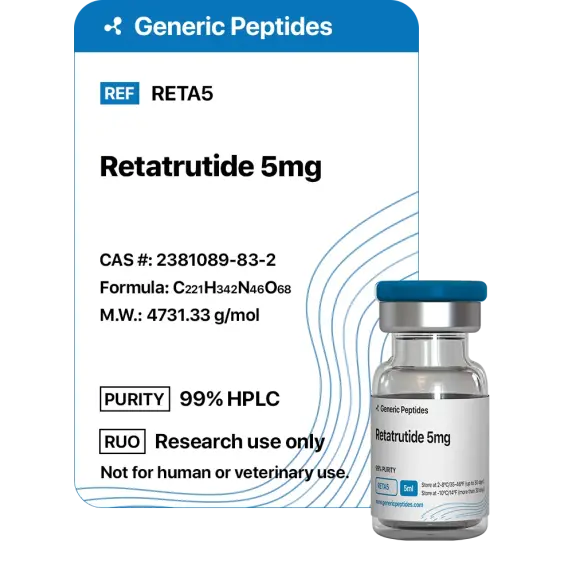
Retatrutide 5mg
Certificate of Analysis available
In December 2025, Eli Lilly reported the first Phase 3 trial results for a single peptide that simultaneously activates three different metabolic receptors. Patients lost an average of 71.2 pounds over 68 weeks. That's 28.7% of body weight — substantially exceeding tirzepatide's SURMOUNT-5 results (20.2%) and almost doubling semaglutide's STEP trial figures (~15%). The compound is retatrutide, and it represents what Lilly's research team calls "the third generation" of incretin-based metabolic medicine: not single-receptor, not dual-receptor, but triple.
Retatrutide (development code LY3437943) is a synthetic peptide engineered to activate three distinct metabolic receptors simultaneously as a single molecule:
GLP-1 receptor — the same target that semaglutide hits. Provides anorexigenic signaling and pancreatic insulin secretion.
GIP receptor — the second receptor that tirzepatide added. Enhances white adipose tissue function and amplifies central appetite signaling.
Glucagon receptor — the new addition specific to retatrutide. Adds energy expenditure effects on top of the appetite suppression and insulin secretion that the other two receptors provide.
That third receptor is what makes retatrutide mechanistically distinct from everything that came before. GLP-1 and GIP both work primarily by reducing caloric intake (appetite suppression, satiety, slowed gastric emptying). The glucagon receptor arm adds caloric expenditure — increased thermogenesis, enhanced lipolysis, and broader metabolic activation. The combination produces effects that neither dual nor single agonism can replicate.
Adding glucagon receptor agonism to a GLP-1/GIP backbone is harder than it sounds. Glucagon and GLP-1 are structurally related (both derived from the proglucagon precursor protein), but they work in opposite metabolic directions in some contexts. Glucagon raises blood sugar; GLP-1 enhances insulin secretion. The retatrutide design balances these effects through specific receptor binding ratios — somewhat greater activity at GLP-1 and GIP than at glucagon, with the glucagon component contributing energy expenditure without dominating glucose homeostasis.
The clinical results validated the mechanism. The 2023 Phase 2 paper in NEJM documented 24.2% mean weight loss at 48 weeks. The December 2025 TRIUMPH-4 Phase 3 trial (knee osteoarthritis + obesity) showed 28.7% weight loss at 68 weeks plus 75.8% reduction in osteoarthritis pain (4.5-point WOMAC reduction). The March 2026 TRANSCEND-T2D-1 Phase 3 trial demonstrated A1C reductions of up to 2.0% and 16.8% weight loss in type 2 diabetes patients at 40 weeks. The 2024 Sanyal paper in Nature Medicine documented 82% liver fat reduction at 24 weeks — the largest reduction ever reported for a metabolic drug.
Here's the most important fact, and one that's frequently misrepresented in the gray-market peptide trade: retatrutide is not FDA-approved. It's an investigational compound currently in Phase 3 clinical trials. As of May 2026, the only legitimate access pathway in the United States is participation in Eli Lilly's clinical trial program. FDA approval is anticipated in 2027-2028 if Phase 3 data continues to support it; commercial availability would follow approval. Anyone selling retatrutide as a finished pharmaceutical for human use is operating outside FDA-recognized regulatory pathways.
The side effect profile is consistent with the GLP-1 class but expanded by the glucagon component. Gastrointestinal effects (nausea, vomiting, diarrhea) are dose-dependent and pronounced during titration. The glucagon arm adds potential for cardiovascular effects (heart rate elevation, modest blood pressure changes) and theoretical concerns about hepatic glucose output that the Phase 3 trials are characterizing. The compound has the same thyroid C-cell tumor warning that other incretin agonists carry, plus pancreatitis and gallbladder considerations.
Regulatory note: Retatrutide is an investigational compound under FDA Investigational New Drug (IND) status. It's not on any 503A or 503B bulks list. It can't be legally compounded for human use because it's not yet an approved drug or component of an approved drug. Sales as a research compound for laboratory use exist in a separate regulatory channel. WADA's Prohibited List does not currently name retatrutide.
Here's a sourcing problem that's specific to retatrutide: it's a complex peptide with a fatty acid attachment (similar to tirzepatide's design) where the triple receptor selectivity depends on precise structural integrity. The compound's pharmacological balance — somewhat greater GLP-1 and GIP activity than glucagon activity — is engineered into specific receptor-binding affinities that depend entirely on correct synthesis. Cheap synthesis routes routinely deliver under-conjugated material with reduced fatty acid attachment, peptide impurities at the multiple structural elements, or compound that's structurally similar but pharmacologically off-balance. Without HPLC-MS verification specifically targeting the fatty acid conjugation and full sequence integrity, you may have a peptide labeled correctly but with shifted receptor selectivity that doesn't behave like the Lilly investigational compound clinical research describes. With an investigational drug at this stage of development, sourcing reliability matters more than for almost any other peptide currently in the research market.
Generic Peptides supplies research-grade Retatrutide for sale at 99% purity, manufactured in the USA. Domestic synthesis with verified fatty acid conjugation and full sequence integrity — the part that determines whether your retatrutide actually has the structural integrity that Phase 3 clinical research describes.
Order Retatrutide for sale in the USA — 99% purity, full sequence and fatty acid conjugation verified, manufactured domestically.
Yes for laboratory research use. Retatrutide is legally available as a research compound for non-clinical laboratory work in the United States. It's not FDA-approved for human use — it's an investigational compound currently in Phase 3 clinical trials. The only legitimate human-use access pathway is participation in Eli Lilly's clinical trial program. Commercial availability follows FDA approval, anticipated 2027-2028.
Number of receptors targeted. Tirzepatide is a dual receptor agonist (GLP-1 + GIP). Retatrutide adds glucagon receptor activation as a third target. The added glucagon arm contributes energy expenditure effects on top of appetite suppression and insulin secretion. The Phase 3 weight loss data shows retatrutide producing 28.7% weight loss vs tirzepatide's ~22% — a meaningful expansion of effect.
GLP-1 and GIP work primarily by reducing caloric intake. Glucagon receptor activation adds caloric expenditure through increased thermogenesis, enhanced lipolysis, and broader metabolic activation. Combining input reduction with output increase produces effects that neither approach achieves alone. The trade-off is the additional metabolic complexity that glucagon contributes — the compound is harder to balance pharmacologically than dual or single agonists.
Eli Lilly is conducting multiple Phase 3 trials under the TRIUMPH and TRANSCEND programs. Approval timing depends on completion of these trials and FDA review. Industry analysts project 2027 approval based on current trial timelines. The compound is being studied for obesity, type 2 diabetes, knee osteoarthritis, obstructive sleep apnea, chronic low back pain, cardiovascular outcomes, MASLD/MASH, and chronic kidney disease.
Almost certainly not at the same purity or with correct receptor balance. As an investigational compound, retatrutide doesn't have established compounding pathways or FDA-approved generic suppliers. The international gray market for unapproved GLP-1/GIP/glucagon agonists has grown substantially, but quality verification is essentially nonexistent. Without analytical confirmation of the structural integrity that defines triple agonist pharmacology, "retatrutide" labels frequently cover other compounds entirely.
Sources
Jastreboff AM et al. — "Triple-Hormone-Receptor Agonist Retatrutide for Obesity — A Phase 2 Trial." New England Journal of Medicine, 2023. The foundational Phase 2 data documenting 24.2% weight loss. https://pubmed.ncbi.nlm.nih.gov/37296292/
Sanyal AJ et al. — "Triple hormone receptor agonist retatrutide for metabolic dysfunction-associated steatotic liver disease: a randomized phase 2a trial." Nature Medicine, 2024. Documents 82% liver fat reduction at 24 weeks. https://pubmed.ncbi.nlm.nih.gov/?term=sanyal+retatrutide+nature+medicine+2024
Eli Lilly — "TRIUMPH-4 Phase 3 Trial Results," December 11, 2025. Documents 28.7% weight loss and osteoarthritis pain reduction in the first successful Phase 3 trial. https://investor.lilly.com/news-releases/news-release-details/lillys-triple-agonist-retatrutide-delivered-weight-loss-average
Eli Lilly — "TRANSCEND-T2D-1 Phase 3 Trial Results," March 19, 2026. Documents 2.0% A1C reduction and 16.8% weight loss in type 2 diabetes patients. https://investor.lilly.com/news-releases/news-release-details/lillys-triple-agonist-retatrutide-demonstrated-significant
Three receptors. One peptide. The triple balance is what defines the molecule.
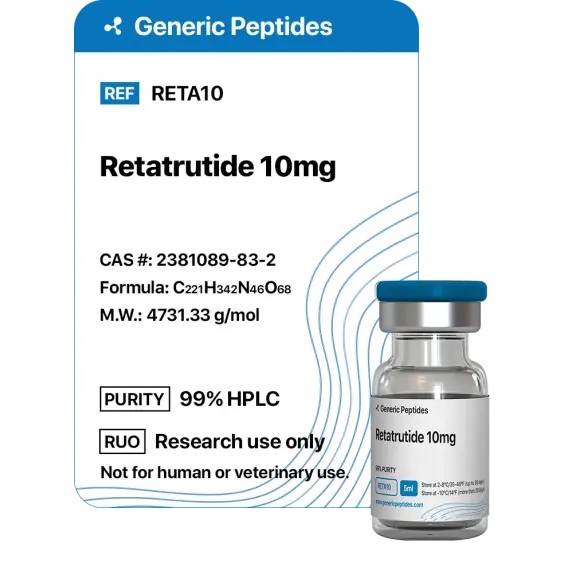
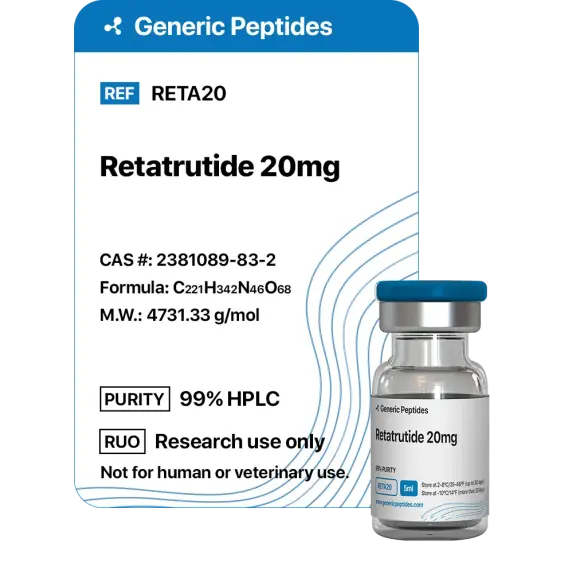
Retatrutide ships as a white lyophilized powder in a sealed glass vial, freeze-dried to preserve this 39-amino-acid triple-agonist structure and extend its shelf life. With a few simple habits — cold, dark, dry — the sealed vial stays in perfect condition for its full shelf life. Here's exactly how to store it.
| Parameter | Details | Notes |
|---|---|---|
| Storage Temperature | Freezer at −20°C (−4°F) for long-term storage up to 24 months. Refrigeration at 2–8°C (36–46°F) is fine for short-term use up to ~3 months. | Original sealed vial in the freezer is the safest default. |
| Light Sensitivity | Yes — retatrutide's tryptophan and tyrosine residues are prone to photo-oxidation. | Always keep in the original box or an opaque, amber container. |
| Freezing | Allowed and recommended for the unreconstituted powder. −20°C is standard for long-term storage; −80°C extends stability further if available. Never freeze a reconstituted solution — that damages the peptide. | Freeze from the start if you won't use it within 3 months. |
| Oxidation Sensitivity | Retatrutide contains methionine and tryptophan residues that are vulnerable to oxidation if the vial seal is broken or the powder is exposed to air. The C20 fatty acid side chain can also oxidize. | Keep the aluminum crimp cap intact until ready to reconstitute, and minimize air exposure during handling. |
| Signs of Degradation | Healthy powder is white to off-white and loose or cake-like. Watch for yellowing, browning, clumping, visible moisture, or a sticky texture. | Any color change, clumping, or moisture = discard the vial. |
| Common Mistakes | Leaving the vial at room temperature after delivery, storing in a humid kitchen or bathroom, or opening a cold vial and letting condensation form inside. | Put it in the freezer on arrival, and let sealed vials warm to room temperature before opening. |
Every order is processed quickly and shipped with full tracking. All products come directly from the official Generic Peptides supply chain — in original manufacturer packaging, carefully handled from warehouse to your door.
| Destination | Delivery Time | Notes |
|---|---|---|
| USA Domestic | 2–5 business days | Faster when local warehouse stock is selected at checkout |
| International | 10–15 business days | Tracking included; update frequency may vary by destination country |
| Order Processing | 24–48 business hours | Processing begins after payment confirmation |
| Tracking | Provided on all orders | Tracking number sent after dispatch; multiple warehouses may result in separate shipments |
This product is supplied through the official Generic Peptides distribution chain and shipped in original manufacturer packaging. Orders are packed securely to protect the contents during transit and to respect customer privacy as a standard practice.
Outer packaging is neutral and does not display product details on the exterior — a common approach to protect shipments from damage, tampering, and unnecessary exposure during delivery.
Every order includes full authenticity assurance: official Generic Peptides presentation, batch-linked lab documentation, and sealed original packaging — giving customers confidence in every purchase.
| Authenticity Feature | Details |
|---|---|
| Packaging | Original manufacturer packaging — sealed and unaltered |
| Lab Documentation | Batch-linked certificate of analysis available on request |
| Supply Chain | Sourced exclusively through official Generic Peptides distribution |
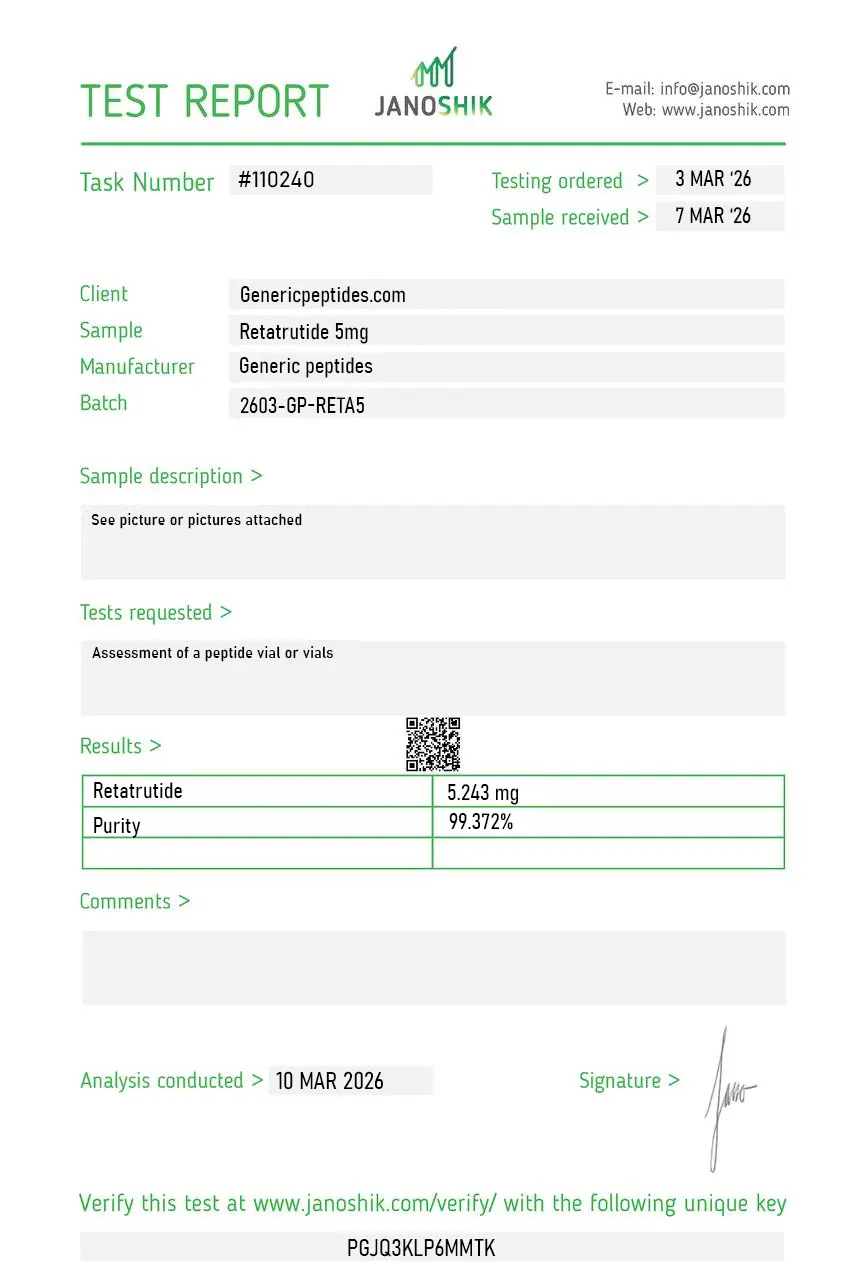
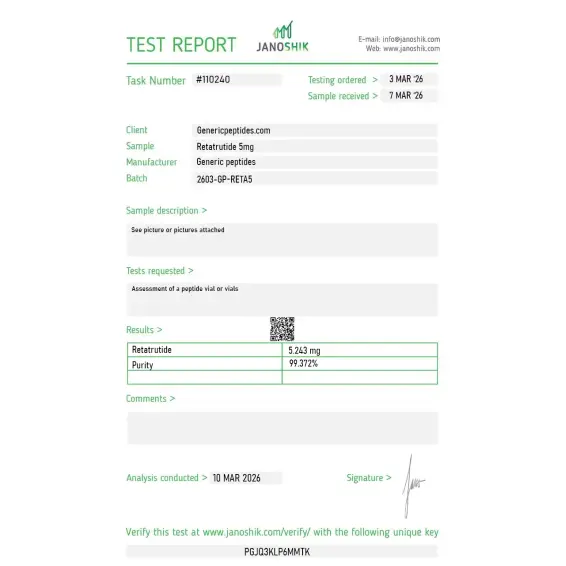
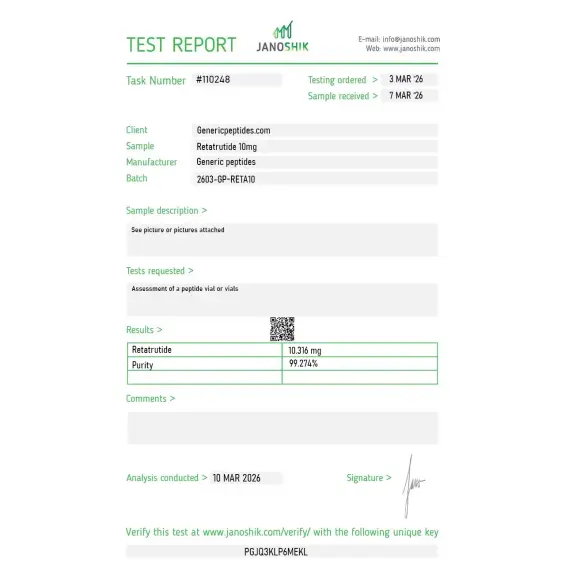
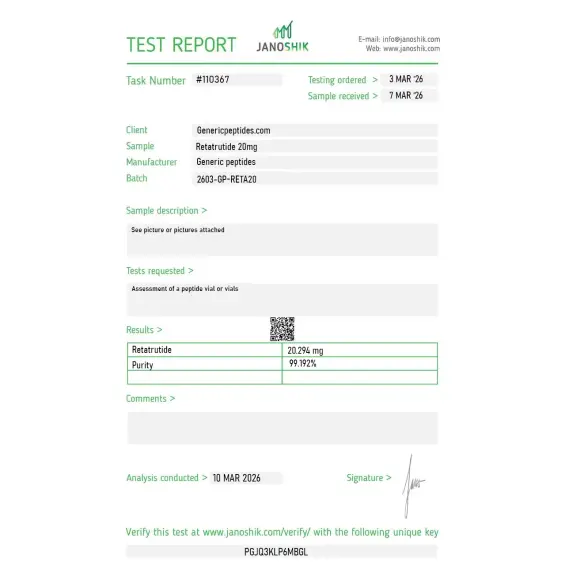
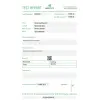
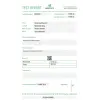
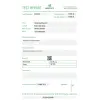
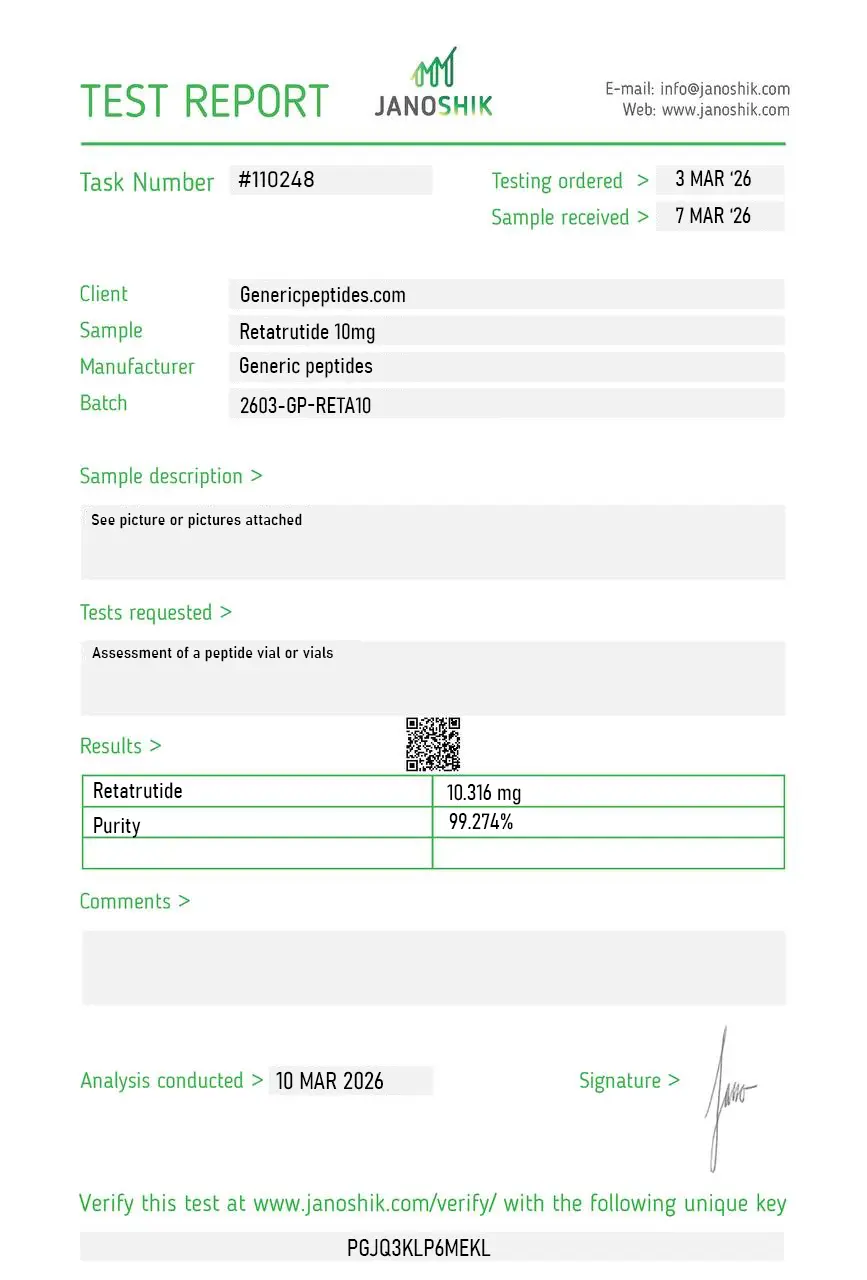
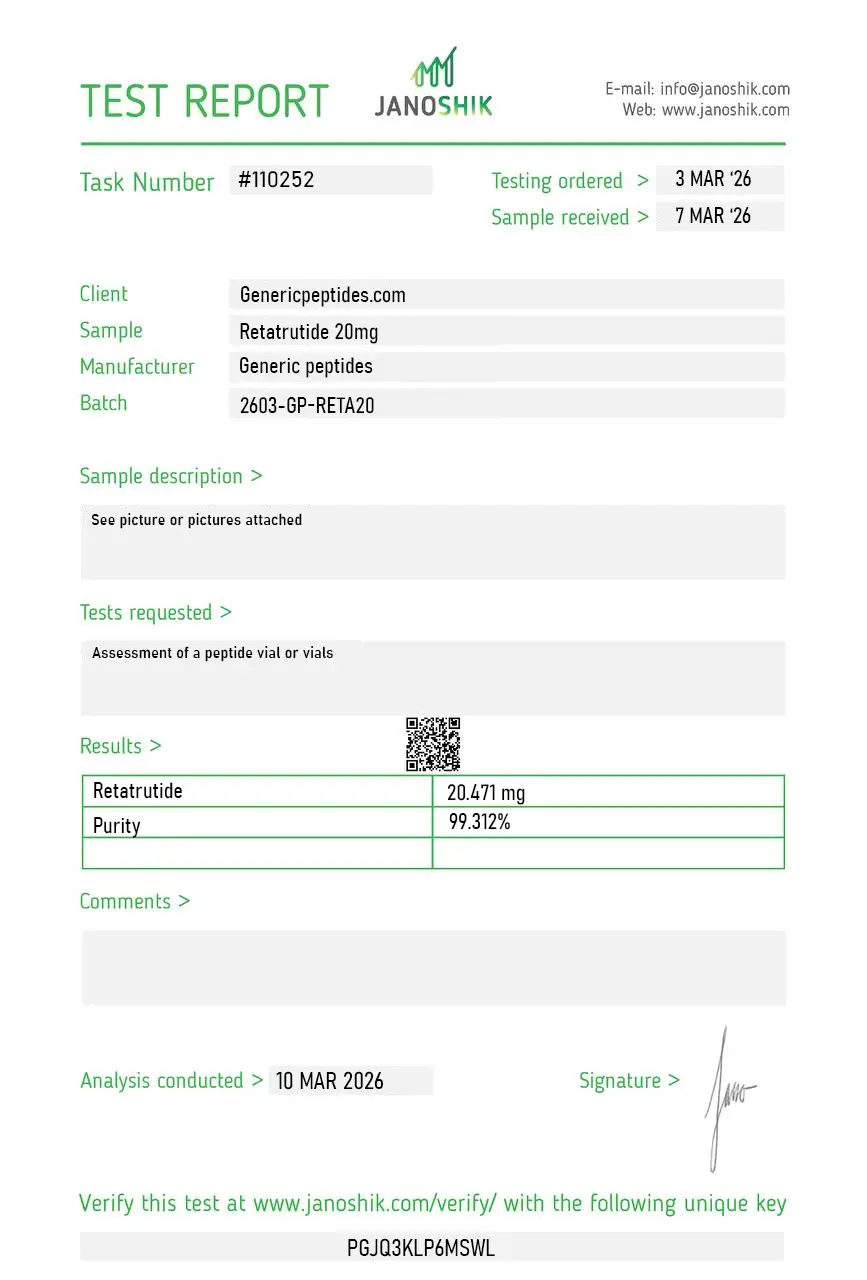
Independent lab test reports are available for Retatrutide 5mg, 10mg, and 20mg batches. Each certificate provides batch-level verification details, including measured content, purity result, analysis date, and report documentation.
Triple receptor cAMP assays across all three targets. Behaved as published.
The thing I appreciate is the product page actually says this is pre-approval and Phase 3 isn't done. Every other source acts like it's already a product. It's not. For honest research procurement that distinction matters and most vendors blur it deliberately.
For our GCGR pharmacology work the glucagon-receptor component is the whole point — most labs ignore the glucagon arm and just look at the incretin side. Material gave consistent activation at the glucagon receptor in our transfected line. Docking a star only because the COA didn't break out per-receptor bioactivity, which for a tri-agonist is exactly the data that matters.
Came in just after the TRANSCEND-T2D-1 readout hit the news, which made it a busy moment for anything tri-agonist. Order still shipped on schedule. Material matched our prior lot in the receptor binding profile.
Reorder for ongoing energy-expenditure mechanism work. The glucagon arm drives the thermogenic signal we study and the compound's been consistent. Sixth order.
Solid material. Reconstituted cleanly, the C20 lipidation makes it behave like tirzepatide and semaglutide in handling — the gamma-Glu spacer keeps it water-soluble enough. One practical note for others: we saw the dysesthesia-relevant pharmacology discussion in the literature and it shaped how we designed our peripheral-tissue experiments, so read the Phase 2 safety data before assuming this behaves like a clean incretin.
We run all three Lilly-lineage incretins side by side — semaglutide, tirzepatide, retatrutide — selective through dual through triple. Sourcing the set from one place is the only way the comparison stays clean. The retatrutide here slotted into that panel without introducing a vendor variable. That's the entire value proposition for comparative work.
The compound activates three receptors simultaneously: GLP-1R (anorexigenic signaling, insulin secretion), GIPR (white adipose function, central appetite amplification), and GCGR (energy expenditure, thermogenesis, lipolysis). The combined activation produces both reduced caloric intake (via GLP-1 and GIP) and increased caloric expenditure (via glucagon) — addressing both sides of the energy balance equation simultaneously. That's mechanistically distinct from any single or dual agonist available.
The third receptor target. Tirzepatide is a dual GLP-1/GIP agonist; Retatrutide adds glucagon receptor agonism. The added glucagon arm contributes energy expenditure effects beyond what GLP-1 and GIP can produce. Phase 3 weight loss data: tirzepatide produces ~22% mean weight loss; retatrutide produces 28.7% — meaningful incremental improvement attributable largely to the glucagon arm.
Glucagon receptor activation in metabolic tissue increases energy expenditure through enhanced thermogenesis, increased hepatic fatty acid oxidation, and broader metabolic activation. Historically, glucagon was considered counterproductive for diabetes management because it raises blood glucose. The retatrutide design balances glucagon's energy expenditure benefits against its glucose effects through specific receptor binding ratios favoring GLP-1 and GIP activity over pure glucagon agonism.
The compound is a complex peptide with a fatty acid attachment where triple receptor selectivity depends on precise structural integrity. As an investigational drug without established compounding pathways, the gray market for retatrutide has grown without quality verification infrastructure. Cheap synthesis routinely produces material with shifted receptor selectivity, under-conjugated fatty acid attachments, or peptide impurities that compromise the carefully engineered receptor binding ratios.
Eli Lilly developed retatrutide (LY3437943) through preclinical research in the late 2010s and early 2020s. Phase 1 trials started in 2020. The Phase 2 obesity trial published in NEJM in 2023 established the compound's weight loss profile. Phase 3 trials (TRIUMPH program for obesity, TRANSCEND program for diabetes) launched in 2022-2023, with first Phase 3 results reported in December 2025.
Retatrutide is not currently named on the WADA Prohibited List. The compound's mechanism — triple incretin/glucagon agonism affecting metabolism — doesn't fit standard performance-enhancing categories. As an investigational compound not yet in widespread use, anti-doping regulations may evolve as it approaches FDA approval. Athletes subject to drug testing should consult their governing body's specific rules.
LY3437943 (the Eli Lilly development code), GIP/GLP-1/Glucagon Triple Agonist, GLP-3 (a colloquial nickname — note that GLP-3 is not a real natural hormone, despite the name implication), and various commercial designations in the gray market. There is no FDA-approved brand name yet because the compound has not received regulatory approval.
Obesity and metabolic disease research lead clinical volume — the Phase 3 TRIUMPH trials cover obesity alone, obesity with knee osteoarthritis, and obesity with obstructive sleep apnea. Type 2 diabetes (TRANSCEND program), MASLD/MASH (with the 82% liver fat reduction data), chronic kidney disease, cardiovascular outcomes, and chronic low back pain are additional active research areas. The compound is being investigated across more indications than any prior incretin agonist at the same development stage.
Retatrutide is a single engineered peptide that mimics the receptor binding of three different natural hormones: GLP-1, GIP, and glucagon. All three are natural metabolic hormones with well-characterized receptors. The engineering challenge was creating a single molecule with appropriate affinities at all three receptors and adequate pharmacokinetic stability for once-weekly dosing. The fatty acid attachment provides the half-life extension; the peptide sequence determines receptor selectivity.
The glucagon receptor activation adds an energy expenditure component that pure incretin agonists can't produce. GLP-1 and GIP both work by reducing caloric intake — appetite, satiety, gastric emptying. Glucagon receptor activation increases caloric expenditure through thermogenesis and lipolysis. The combined input-reduction-plus-output-increase mechanism produces larger weight loss effects than dual incretin approaches achieve. The pharmacological balance between the three receptors is the key engineering distinction.
Researchers investigating triple incretin receptor pharmacology, GLP-1/GIP/glucagon co-agonism, and next-generation obesity biology consistently examine Retatrutide alongside compounds that span the full incretin receptor agonism spectrum or target complementary metabolic pathways. Tirzepatide is the most direct clinical comparison — removing the glucagon receptor arm from Retatrutide's triple mechanism produces Tirzepatide's dual GLP-1/GIP profile; researchers studying the specific pharmacological contribution of glucagon receptor activation to energy expenditure, weight loss magnitude, and metabolic outcomes beyond dual agonism examine both compounds in parallel to isolate the glucagon component's independent effects. Semaglutide anchors the single-receptor end of the spectrum — the three compounds together (Semaglutide, Tirzepatide, Retatrutide) represent the complete single/dual/triple incretin agonism progression, and researchers mapping the dose-response relationship between receptor breadth and metabolic effect examine all three simultaneously. AICAR activates AMPK through cellular energy sensing — a non-hormonal metabolic mechanism that researchers studying the relationship between receptor-driven and enzyme-driven approaches to energy expenditure sometimes examine alongside Retatrutide, particularly in research designs investigating glucagon receptor-mediated thermogenesis vs AMPK-mediated fat oxidation. 5-Amino-1MQ inhibits NNMT and addresses adipose tissue NAD+ metabolism peripherally — a complementary mechanism for researchers studying comprehensive obesity biology from multiple angles simultaneously. HGH Fragment 176-191 and AOD 9604 provide growth hormone-derived lipolysis reference points for researchers who need to compare receptor-mediated incretin effects against direct GH fragment activity on adipose tissue.