Somatropin vs GH Peptides: What the Research Shows
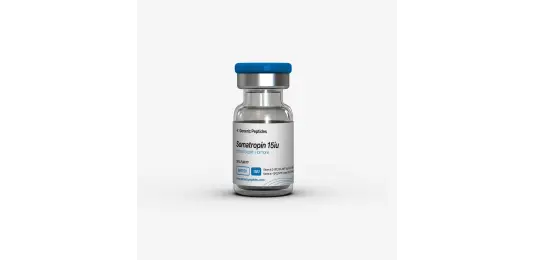
Somatropin vs GH Secretagogues: What the Research Shows
By Medical Team of Generic Peptides
Somatropin is the recombinant form of human growth hormone (hGH). It is often grouped with "growth hormone peptides" such as sermorelin and ipamorelin, but it is a different kind of molecule that works at a different point in the same hormonal system. This guide explains what somatropin is, how it differs from GH secretagogues, what clinical and animal studies have reported, and where it stands with regulators in 2026.
What Is Somatropin?
Somatropin is the international nonproprietary name for recombinant human growth hormone with the same amino acid sequence as the hormone made by the pituitary gland. The natural hormone is usually called somatotropin. The two names describe the same 191-amino-acid sequence; "somatropin" is used for the manufactured product.
Before recombinant DNA technology, growth hormone was extracted from human cadaver pituitary glands. That supply was withdrawn in the United States in 1985 after cases of Creutzfeldt–Jakob disease were linked to it. The same year, the FDA approved the first recombinant product, somatrem, which carried one extra methionine. Somatropin with the exact native sequence followed in 1987 [1].
Today somatropin is produced in bacteria (E. coli) or mammalian cells and is sold under several brand names as a prescription biologic.
Is HGH a Peptide?
Strictly speaking, hGH is a protein rather than a short peptide. It contains 191 amino acids, two disulfide bonds and has a molecular weight of about 22 kDa (22,124 Da). For comparison:
| Compound | Size | What it is |
|---|---|---|
| Somatropin (hGH) | 191 amino acids, ~22 kDa | The hormone itself |
| Sermorelin (GHRH 1-29) | 29 amino acids, ~3.4 kDa | Fragment of the releasing hormone |
| Ipamorelin | 5 amino acids, ~0.7 kDa | Synthetic ghrelin-receptor agonist |
This size difference matters in the lab. A 22 kDa protein folds into a defined three-dimensional structure and is more prone to aggregation, oxidation and deamidation than a small peptide. It also needs different analytical methods to confirm identity and purity (see the COA section below).
How Somatropin Works: GH Receptor, JAK2/STAT5 and IGF-1
Somatropin acts directly on the growth hormone receptor (GHR), which is found on liver, muscle, fat, bone and many other tissues. Binding of one GH molecule to a preformed receptor dimer changes the receptor's shape and activates the attached JAK2 kinase. JAK2 then switches on STAT5 and other signaling pathways [2].
The best-known downstream effect is production of insulin-like growth factor 1 (IGF-1), mainly by the liver. IGF-1 mediates many of GH's growth effects. GH also has direct metabolic actions: it promotes breakdown of stored fat and reduces insulin sensitivity, which is why glucose changes appear in clinical safety data.
The key point for comparison: somatropin is the end hormone. It does not need the pituitary gland to work.
Growth Hormone Secretagogues: GHRH Analogs and Ghrelin Mimetics
Growth hormone secretagogues (GHS) are compounds that make the pituitary release its own growth hormone. They fall into two groups:
GHRH analogs bind the GHRH receptor on pituitary cells. This group includes sermorelin, tesamorelin, MOD GRF 1-29 and CJC-1295 with DAC. They differ mainly in how long they last; we compare them in CJC-1295 DAC vs No DAC and Sermorelin vs Tesamorelin.
Ghrelin mimetics (GHRPs) bind the GHS-R1a receptor, the target of the hunger hormone ghrelin. This group includes ipamorelin, GHRP-2, GHRP-6 and hexarelin. In animal studies, ipamorelin stood out because it released GH without the rise in ACTH and cortisol seen with older GHRPs [3].
Because the two groups act on different receptors, researchers often study them together. We explain the reasoning in Ipamorelin vs Sermorelin. A review of the clinical data on secretagogues is available in Sigalos and Pastuszak (2018) [4].
Sermorelin vs HGH: Key Differences
"Sermorelin vs HGH" is one of the most common comparisons in this field. The two act at different levels of the same axis:
| Feature | Somatropin (HGH) | Sermorelin (GHRH analog) |
|---|---|---|
| Site of action | GH receptors in tissues | GHRH receptors in the pituitary |
| Needs a working pituitary | No | Yes |
| GH release pattern | Determined by the product's exposure profile, not by the body's rhythm | Pulses produced by the pituitary itself |
| Feedback control | Bypasses somatostatin and IGF-1 feedback on the pituitary; suppresses the body's own GH output | Remains subject to somatostatin and IGF-1 feedback |
| Molecule | 191-amino-acid protein | 29-amino-acid peptide |
| FDA status | Approved for several indications (prescription) | Geref approved in 1990 and 1997, discontinued in 2008 |
The physiological argument for secretagogues is that they work with the body's own regulation: if IGF-1 rises, feedback limits further GH release. Somatropin does not have that built-in ceiling. The argument for somatropin is reliability: it works even when the pituitary cannot respond, which is why it is the standard in growth hormone deficiency.
Walker (2006) argued that sermorelin may be a more physiological option for age-related decline in GH [5]. This was a commentary, not a trial, and direct head-to-head clinical comparisons of sermorelin and somatropin are scarce. For the regulatory history of sermorelin, see our sermorelin research guide.
HGH vs Peptides: What Clinical and Animal Studies Show
The evidence base for the two approaches is very different in size.
Somatropin has decades of randomized controlled trials in children and adults with diagnosed growth hormone deficiency and other approved conditions. Outside those conditions, the picture is less clear:
- In a 1990 clinical study, Rudman and colleagues gave GH to healthy men over 60 for six months. In the 12 treated men, lean body mass increased by about 9% and fat mass fell by about 14%; the 9 untreated men showed no significant change [6].
- A 2007 systematic review of 18 study populations (220 healthy older adults given GH) found small changes in body composition (about 2 kg more lean mass and 2 kg less fat) with no change in body weight. Side effects such as swelling, joint pain, carpal tunnel syndrome and breast enlargement in men were more common, and there was a trend toward diabetes and impaired fasting glucose. The authors concluded that GH cannot be recommended as an anti-aging therapy [7].
GHRH analogs have a smaller clinical base:
- In 11 healthy older men, nightly GHRH 1-29 for six weeks raised nocturnal GH secretion but did not change IGF-1 levels or body composition (small uncontrolled clinical study) [8].
- In healthy adults, a single administration of CJC-1295 with DAC raised GH levels 2–10-fold for six days or more and IGF-1 levels 1.5–3-fold for 9–11 days, with a half-life of roughly 6–8 days (placebo-controlled clinical studies) [9].
- Tesamorelin is the only GHRH analog currently FDA-approved, for a specific indication in HIV-associated abdominal fat.
Ghrelin mimetics such as ipamorelin have mostly been studied in animals and in small or early-phase human trials [3, 4].
In short, somatropin has the strongest evidence in deficiency states, and secretagogues have more limited data. Neither group has convincing trial evidence as an anti-aging intervention in healthy people. We summarize the muscle-related data in Peptides for Muscle Growth: What the Research Shows.
Long-Acting Growth Hormone: Somapacitan, Somatrogon, Lonapegsomatropin
The biggest change in GH therapy in recent years is the move from daily to weekly products. Three long-acting forms are FDA-approved, each using a different technology [10]:
- Lonapegsomatropin (Skytrofa) is a prodrug: somatropin is attached to a carrier through a linker that releases unmodified somatropin over a week. In the phase 3 heiGHt trial in children with GH deficiency, weekly lonapegsomatropin produced a higher annual height velocity than daily somatropin (11.2 vs 10.3 cm/year) [11].
- Somatrogon (Ngenla) is a fusion protein that carries extra peptide segments (CTP) to slow clearance. In its phase 3 trial, it was non-inferior to daily somatropin for height velocity at 12 months [12].
- Somapacitan (Sogroya) binds reversibly to albumin in the blood, which prolongs its action. It was first approved for adults with GH deficiency and later for children.
These products are relevant to researchers because they show three different ways of changing a protein's exposure profile, much as DAC does for CJC-1295 on the peptide side.
Safety Signals Reported in Trials
Clinical studies of somatropin have reported:
- fluid retention and swelling, joint and muscle pain, and carpal tunnel syndrome, especially in adults [7];
- reduced insulin sensitivity and higher fasting glucose;
- intracranial hypertension and slipped capital femoral epiphysis in children (rare, listed in product labeling).
A long-term question concerns mortality. The French part of the SAGhE cohort, which followed adults treated with GH in childhood, reported higher all-cause mortality than in the general population, with an association with higher exposure [13]. A parallel analysis from Belgium, the Netherlands and Sweden did not find the same increase [14]. The FDA announced a safety review in December 2010 and in August 2011 called the evidence inconclusive, leaving its recommendations unchanged. The question remains debated.
For secretagogues, safety data are thinner. GHRPs can raise appetite (via the ghrelin receptor) and, in older compounds, cortisol and prolactin. Data on long-term use are limited [4].
Regulatory Status in 2026
- FDA: somatropin products are approved prescription biologics for several pediatric and adult indications, including growth hormone deficiency, Turner syndrome, Prader–Willi syndrome, children born small for gestational age, idiopathic short stature and HIV-associated wasting (indications vary by brand).
- Federal law: distribution of hGH for human use outside FDA-authorized medical treatment is restricted under federal law (21 U.S.C. §333(e)), separately from general drug rules [15, 16]. Research-grade material is not for human use.
- WADA: growth hormone, its fragments and releasing factors (GHRH analogs and GHS) are on the Prohibited List under sections S2.2.3 and S2.2.4 [17].
Research-Grade Somatropin: What a COA Should Show
Because somatropin is a protein, a meaningful certificate of analysis looks different from one for a short peptide. When reviewing a COA for research-grade somatropin, researchers typically look for:
- Identity by mass spectrometry: intact mass close to 22,124 Da (the 191-amino-acid sequence with two disulfide bonds).
- Purity by HPLC: the main peak, plus related forms such as deamidated and oxidized variants.
- Size-exclusion chromatography (SEC): dimers and higher aggregates, which matter more for a protein than for a small peptide.
- Lot number and test date that match the vial.
Our guide to reading a peptide COA explains each section in more detail. Generic Peptides supplies somatropin and other growth hormone research compounds for laboratory research only, with a batch-specific COA.
FAQ
Is somatropin the same as HGH?
Yes. Somatropin is the recombinant form of human growth hormone, with the same 191-amino-acid sequence as the natural hormone (somatotropin).
Is HGH a peptide?
HGH is usually classed as a protein because of its size (191 amino acids, about 22 kDa). GH secretagogues such as sermorelin (29 amino acids) and ipamorelin (5 amino acids) are true peptides.
What is the difference between sermorelin and HGH?
Sermorelin stimulates the pituitary to release its own GH and remains under the body's feedback control. Somatropin is the hormone itself and acts directly on tissues, even without a working pituitary.
Are GH secretagogues FDA-approved?
Tesamorelin is FDA-approved for HIV-associated abdominal fat, and macimorelin (Macrilen), a ghrelin-receptor agonist, is approved as a diagnostic test for adult GH deficiency. Sermorelin (Geref) was approved but discontinued in 2008. Ipamorelin, GHRP-2, GHRP-6 and hexarelin are not FDA-approved drugs.
References
[1] Ayyar VS. History of growth hormone therapy. Indian J Endocrinol Metab. 2011;15(Suppl 3):S162–S165. PMID 22029019.
[2] Brooks AJ, Waters MJ. The growth hormone receptor: mechanism of activation and clinical implications. Nat Rev Endocrinol. 2010;6(9):515–525. PMID 20664532.
[3] Raun K, Hansen BS, Johansen NL, et al. Ipamorelin, the first selective growth hormone secretagogue. Eur J Endocrinol. 1998;139(5):552–561. PMID 9849822.
[4] Sigalos JT, Pastuszak AW. The safety and efficacy of growth hormone secretagogues. Sex Med Rev. 2018;6(1):45–53. PMID 28400207.
[5] Walker RF. Sermorelin: a better approach to management of adult-onset growth hormone insufficiency? Clin Interv Aging. 2006;1(4):307–308. PMID 18046908; PMC2699646.
[6] Rudman D, Feller AG, Nagraj HS, et al. Effects of human growth hormone in men over 60 years old. N Engl J Med. 1990;323(1):1–6. PMID 2355952.
[7] Liu H, Bravata DM, Olkin I, et al. Systematic review: the safety and efficacy of growth hormone in the healthy elderly. Ann Intern Med. 2007;146(2):104–115. PMID 17227934.
[8] Vittone J, Blackman MR, Busby-Whitehead J, et al. Effects of single nightly injections of growth hormone-releasing hormone (GHRH 1-29) in healthy elderly men. Metabolism. 1997;46(1):89–96. PMID 9005976.
[9] Teichman SL, Neale A, Lawrence B, Gagnon C, Castaigne JP, Frohman LA. Prolonged stimulation of growth hormone (GH) and insulin-like growth factor I secretion by CJC-1295, a long-acting analog of GH-releasing hormone, in healthy adults. J Clin Endocrinol Metab. 2006;91(3):799–805. PMID 16352683.
[10] Miller BS, Velazquez E, Yuen KCJ. Long-acting growth hormone preparations – current status and future considerations. J Clin Endocrinol Metab. 2020;105(6):e2121–e2133. PMID 31676901.
[11] Thornton PS, Maniatis AK, Aghajanova E, et al. Weekly lonapegsomatropin in treatment-naïve children with growth hormone deficiency: the phase 3 heiGHt trial. J Clin Endocrinol Metab. 2021;106(11):3184–3195. PMID 34272849.
[12] Deal CL, Steelman J, Vlachopapadopoulou E, et al. Efficacy and safety of weekly somatrogon vs daily somatropin in children with growth hormone deficiency: a phase 3 study. J Clin Endocrinol Metab. 2022;107(7):e2717–e2728. PMID 35405011.
[13] Carel JC, Ecosse E, Landier F, et al. Long-term mortality after recombinant growth hormone treatment for isolated growth hormone deficiency or childhood short stature: preliminary report of the French SAGhE study. J Clin Endocrinol Metab. 2012;97(2):416–425. PMID 22238382.
[14] Sävendahl L, Maes M, Albertsson-Wikland K, et al. Long-term mortality and causes of death in isolated GHD, ISS, and SGA patients treated with recombinant growth hormone during childhood in Belgium, The Netherlands, and Sweden: preliminary report of 3 countries participating in the EU SAGhE study. J Clin Endocrinol Metab. 2012;97(2):E213–E217. PMID 22238393.
[15] Perls TT, Reisman NR, Olshansky SJ. Provision or distribution of growth hormone for "antiaging": clinical and legal issues. JAMA. 2005;294(16):2086–2090. PMID 16249424.
[16] 21 U.S.C. §333(e). Prohibited distribution of human growth hormone. United States Code.
[17] World Anti-Doping Agency. The Prohibited List 2026, sections S2.2.3–S2.2.4. wada-ama.org.