NAD+: Coenzyme With Resolved NMN Status and Inconclusive Clinical Evidence
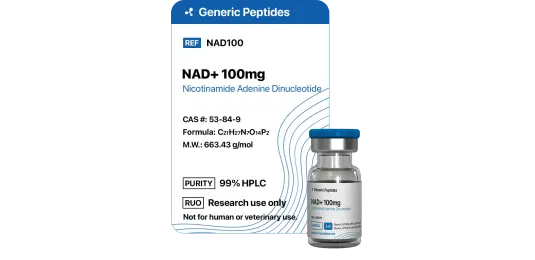
NAD+ (Nicotinamide Adenine Dinucleotide): The Endogenous Coenzyme With Established Biochemical Effects, FDA-Resolved NMN Regulatory Status as of September 2025, and Inconclusive Clinical Outcomes Evidence Despite Wellness Industry Marketing
By Medical Team of Generic Peptides
NAD+ (nicotinamide adenine dinucleotide) is an endogenous coenzyme that functions as a critical cofactor in cellular energy metabolism, DNA repair, and sirtuin activity. Chemical formula C₂₁H₂₇N₇O₁₄P₂, molecular weight 663.43 Da. The molecule consists of two nucleotides — nicotinamide and adenine — joined by phosphate groups. NAD+ exists in two forms: oxidized (NAD+) and reduced (NADH), with the redox cycling between these forms providing the basis for NAD+'s coenzyme function in hundreds of cellular metabolic reactions. Critical context for this article series: NAD+ is NOT a peptide — it's an endogenous nucleotide-based coenzyme that's marketed alongside peptides through research-peptide vendor channels and wellness clinics, but its chemical class is fundamentally different from peptides covered elsewhere in this series. The compound is included because the wellness industry positioning brings it into the same operational consideration framework as peptides covered elsewhere, though readers should understand the fundamental pharmacological distinction.
NAD+ supplementation strategies fall into several categories with substantially different evidence bases and regulatory positionings. Oral NAD+ precursors include nicotinamide riboside (NR), nicotinamide mononucleotide (NMN), nicotinamide (NAM, niacinamide), and nicotinic acid (NA, niacin). Intravenous NAD+ administration involves direct infusion of NAD+ in clinical or wellness settings. NNMT inhibition through compounds like 5-Amino-1MQ (covered separately in this article series) targets the degradation pathway. The compound NAD+ itself — as opposed to its precursors — is rarely supplemented orally because of poor oral bioavailability, with parenteral administration being the primary direct-NAD+ approach.
NAD+'s biological importance was established through foundational biochemistry research dating to the early 20th century with Arthur Harden and William Young's 1906 discovery of "cozymase" (later identified as NAD+) and Hans von Euler-Chelpin's 1929 Nobel Prize for fermentation work characterizing NAD+'s role. NAD+ research has subsequently expanded to encompass aging biology (NAD+ levels decline with age in human tissues including skin, blood, liver, muscle, and brain), DNA repair (NAD+ is consumed by PARP enzymes during DNA damage response), sirtuin function (NAD+ is a substrate for sirtuin deacetylases including SIRT1, SIRT3, SIRT6), and various other cellular pathways. The connection between age-related NAD+ decline and aging-related diseases motivated the development of NAD+ supplementation strategies that have generated substantial commercial interest and clinical research.
The 2024-2026 regulatory and research landscape for NAD+ supplementation includes substantial developments. September 29, 2025: FDA reversed its November 2022 position and confirmed that NMN is not excluded from the definition of dietary supplement, ending nearly three years of regulatory uncertainty. December 2025: FDA letters to SyncoZymes and Inner Mongolia Kingdomway formally reinstated NMN NDI status. 2026 systematic review in Ageing Research Reviews (PRISMA-guided, 113 studies through October 2025): documented that oral NR and NMN consistently demonstrate biochemical target engagement (NAD+ metabolite elevation) but that clinical effectiveness for anti-aging or wellness outcomes "remains inconclusive." No eligible outcomes trials evaluated intravenous or intramuscular NAD+ itself for anti-aging or wellness indications — a critical finding given the substantial wellness clinic IV NAD+ market that operates largely without supporting Phase III evidence.
I'll be direct about my assessment of NAD+ supplementation from the start. The compound (and its precursor strategies) has genuine biological merit at the molecular and biochemical level — NAD+ is fundamentally important to cellular function, age-related decline is well-documented, and oral precursor supplementation does increase circulating and intracellular NAD+ metabolites. The biochemistry is well-established and the mechanism is genuinely important. The honest limitations dominate practical clinical positioning. Clinical effectiveness for anti-aging or wellness outcomes "remains inconclusive" per the comprehensive 2026 systematic review of all available evidence through October 2025. Most evidence is biomarker-based (NAD+ levels rise with supplementation) rather than outcomes-based (clinical disease/aging endpoints). The NMN regulatory situation was uncertain from November 2022 until September 2025 with substantial commercial implications. The IV NAD+ wellness clinic market operates without Phase III clinical evidence supporting its therapeutic claims. The wellness industry marketing about anti-aging benefits substantially exceeds the documented clinical evidence. Quality control issues affect NAD+ supplement market with many products underdosed or mislabeled. Long-term safety beyond 12-24 months is largely uncharacterized. Theoretical concerns about NAD+ supporting cancer cell metabolism and high-dose effects warrant ongoing investigation.
This article walks through what NAD+ actually is and why it's fundamentally different from peptides covered elsewhere in this article series, the well-established biochemistry and aging biology context, the substantial human clinical evidence base for NMN and NR supplementation, the very limited evidence base for IV NAD+ administration despite wellness clinic prevalence, the September 2025 FDA regulatory reversal restoring NMN supplement status, and how to think about NAD+ supplementation decisions given the operational realities including substantial biochemical evidence combined with inconclusive clinical outcomes evidence.
What NAD+ Is
NAD+'s biological identity reflects its fundamental role as a cellular coenzyme rather than a pharmaceutical compound or signaling molecule.
NAD+ functions as a coenzyme in hundreds of enzymatic reactions involving cellular oxidation-reduction (redox) chemistry. The molecule transitions between its oxidized form (NAD+) and reduced form (NADH) by accepting or donating two electrons and one proton. This redox cycling makes NAD+ the central electron carrier in cellular metabolism. NAD+ accepts electrons from substrates being oxidized (typically in catabolic pathways like glycolysis, fatty acid oxidation, citric acid cycle) and donates electrons to oxygen via the electron transport chain (in mitochondria, generating ATP). Without functional NAD+, cellular energy metabolism would collapse.
Beyond classical redox cofactor function, NAD+ has additional consumed (rather than recycled) functions:
Sirtuin substrate: NAD+ is consumed by the seven mammalian sirtuin deacetylases (SIRT1-7), which use NAD+ to remove acetyl groups from various protein substrates. Sirtuin activity is dependent on NAD+ availability — when NAD+ levels decline, sirtuin activity decreases proportionally. SIRT1 in particular is implicated in aging biology, metabolic regulation, and longevity pathways.
PARP substrate: NAD+ is consumed by poly(ADP-ribose) polymerases (PARPs) during DNA damage response. PARPs add ADP-ribose units to target proteins to recruit DNA repair machinery. Substantial DNA damage activates PARP enzymes, consuming substantial NAD+ stores.
CD38 substrate: NAD+ is consumed by CD38, an NADase that's particularly active in aged tissues. CD38 expression increases with age, contributing to age-related NAD+ decline.
Other ADP-ribosyl transferases: Various other enzymes consume NAD+ for protein modification reactions.
The combined consumption pathways mean that maintaining adequate NAD+ levels requires ongoing biosynthesis to replace consumed molecules. NAD+ biosynthesis occurs through three main pathways:
De novo pathway: From dietary tryptophan through the kynurenine pathway. Produces approximately 1-3% of total NAD+ supply in most tissues.
Preiss-Handler pathway: From dietary nicotinic acid (niacin, NA). Significant in liver and kidney tissues.
Salvage pathway: From nicotinamide (NAM) regenerated from NAD+ consumption reactions. The dominant pathway in most tissues. Nicotinamide riboside (NR) and nicotinamide mononucleotide (NMN) are intermediates in the salvage pathway.
Age-related NAD+ decline: NAD+ levels in human tissues decrease substantially with age. Various studies have documented declines of approximately 50% or more in NAD+ levels in skin, blood, liver, muscle, and brain tissues comparing young adults to elderly individuals. The decline reflects multiple factors: increased CD38 expression, increased NNMT expression (degrading nicotinamide), decreased NAD+ biosynthesis efficiency, and increased PARP activation from accumulated DNA damage. The age-related decline contributes to mitochondrial dysfunction, sirtuin activity reduction, and other aging-related cellular changes.
The endogenous metabolic context is important for understanding supplementation strategies. The body maintains tight control over NAD+ levels through complex regulatory mechanisms involving biosynthesis, consumption, and tissue-specific compartmentalization. Direct oral NAD+ administration has poor bioavailability because the molecule is broken down in digestion. Effective supplementation strategies typically use precursor molecules (NR, NMN) that can be transported into cells and converted to NAD+ through the salvage pathway, or parenteral NAD+ administration that bypasses digestive degradation.
The pharmaceutical formulations available include:
Nicotinamide riboside (NR): Best-characterized NAD+ precursor in human clinical trials. Marketed primarily as Niagen (ChromaDex). FDA-recognized as GRAS (Generally Recognized as Safe) supplement. Substantial clinical evidence base for biomarker effects.
Nicotinamide mononucleotide (NMN): Beta-NMN, FDA-reinstated as lawful dietary supplement September 29, 2025. Substantial clinical evidence base accumulating since 2017 (when it was first marketed in US). Various commercial brands.
Nicotinamide (NAM, niacinamide): Long-established vitamin B3 form. Available as supplement and prescription. Clinical use in dermatology, kidney disease prevention, and various other applications.
Nicotinic acid (NA, niacin): Older vitamin B3 form, FDA-approved at high doses for dyslipidemia (Niaspan, others). Causes flushing as common side effect.
Intravenous NAD+: Clear solution for direct infusion. Compounded by various pharmacies. Used in wellness clinics for various claimed indications. No FDA approval for therapeutic use.
MIB-626: Investigational microcrystalline NMN formulation by MetroBiotech, the IND for which contributed to FDA's November 2022 NMN reversal. Phase 2 development for various aging-related indications.
The naming convention is consistent. NAD+ refers to the oxidized form. NADH refers to the reduced form. NAD typically refers to the molecule generally without specifying redox state. The various precursor abbreviations (NR, NMN, NAM, NA) are well-established.
NAD+ Mechanism of Action and Aging Biology
The mechanism connecting NAD+ supplementation to potential clinical benefits operates through multiple pathways linked to age-related biological changes.
Sirtuin activation: Increased NAD+ supports sirtuin activity, with SIRT1 being most studied. SIRT1 regulates multiple longevity-relevant pathways including mitochondrial function, DNA damage response, inflammation regulation, and metabolic homeostasis. The "NAD+/SIRT1 axis" represents a central anti-aging mechanism that has driven substantial research investment.
Mitochondrial function: NAD+ availability supports oxidative phosphorylation, mitochondrial biogenesis (through PGC-1α/SIRT1 signaling), and mitochondrial quality control through SIRT3-mediated deacetylation. Age-related mitochondrial dysfunction is partly attributed to NAD+ decline.
DNA repair: PARP-mediated DNA repair requires NAD+. Maintaining adequate NAD+ supports cellular DNA damage response capacity, potentially limiting accumulation of DNA damage that contributes to aging.
CD38 substrate availability: While CD38 consumes NAD+ contributing to its decline, providing precursor supplementation can offset CD38-mediated depletion in tissues where CD38 expression is high.
Metabolic regulation: NAD+/NADH ratio affects cellular metabolic state. Increased NAD+ availability supports oxidative metabolism, fatty acid oxidation, and overall cellular energy homeostasis. Connections to insulin sensitivity, body composition, and metabolic disease have been demonstrated in animal models.
Anti-inflammatory effects: SIRT1-mediated signaling can suppress NF-κB activation and inflammatory cytokine production. The age-related "inflammaging" pattern may be partly responsive to NAD+ restoration.
Stem cell function: NAD+ supports stem cell function in various tissues, with age-related NAD+ decline contributing to stem cell exhaustion.
Neurodegeneration: Brain NAD+ levels decline with age and in various neurodegenerative diseases. The connection to Alzheimer's, Parkinson's, and other neurodegenerative conditions has motivated clinical investigation, though definitive evidence for therapeutic benefit is limited.
The pharmacokinetic considerations differ substantially across administration routes:
Oral NR: Absorbed in intestine, undergoes first-pass metabolism, peaks in plasma at 3-8 hours. Converts to NAD+ through cellular uptake and salvage pathway. Demonstrated NAD+ elevation in PBMCs (peripheral blood mononuclear cells) and other tissues at clinically practical doses (250-1000 mg daily).
Oral NMN: Similar absorption profile to NR. Substantial first-pass metabolism. Some debate about whether intact NMN reaches systemic circulation or is converted to NR before cellular uptake. Demonstrated NAD+ elevation at 250-1000 mg daily doses.
IV NAD+: Direct administration bypasses oral bioavailability issues but has substantial limitations. NAD+ is rapidly cleared from circulation by various tissues. Cellular uptake of intact NAD+ is limited. Pharmacokinetics show rapid clearance with effects on cellular NAD+ pools that aren't well-characterized. The Hawkins 2024 preprint comparing IV NAD+ versus IV NR found IV NR produced substantially higher NAD+ elevation than IV NAD+ — suggesting IV NAD+ may be less efficient than precursor administration even for parenteral delivery.
IV NMN: Limited clinical experience. One nonrandomized study with short-term safety and biomarker information.
The differential bioavailability suggests oral NR and NMN are likely more practical than IV NAD+ for sustained NAD+ elevation, despite the IV approach being marketed in wellness clinics. The paradox of IV NAD+ being less effective than oral NR for NAD+ elevation reflects the rapid clearance and limited cellular uptake characteristics of IV administration.
NAD+ Clinical Evidence Base
The clinical evidence base is genuinely substantial for biochemical effects (target engagement) but much more limited for clinical outcomes (disease/aging endpoints).
The 2026 PRISMA-guided systematic review (published in Ageing Research Reviews February 2026) provides the comprehensive contemporary assessment of NAD+ supplementation evidence. The review evaluated peer-reviewed human and rodent intervention studies from January 2010 through October 2025, identifying 113 eligible studies (33 human intervention studies — 28 randomized, 5 nonrandomized — plus 80 rodent studies).
Key findings:
Biochemical target engagement: Oral NR and NMN consistently demonstrated increased NAD-related metabolites in plasma, whole blood, and PBMCs. The biological activity is well-established — supplementation does what it's supposed to do at the molecular level.
Rodent metabolic, mitochondrial, inflammatory, and functional outcomes: NAD+ augmentation was frequently associated with improvements in animal models, though effects varied across models and endpoints.
Human clinical outcomes: Far more limited evidence for actual clinical benefits in humans. The review concluded that "clinical effectiveness for anti-aging or wellness outcomes remains inconclusive."
Critically: "No eligible outcomes trials evaluated intravenous or intramuscular NAD⁺ itself for anti-aging or wellness indications. One nonrandomized intravenous NMN study met inclusion criteria and primarily contributed short-term safety and biomarker information."
This authoritative finding is important — the systematic review specifically searched for clinical outcomes evidence supporting IV NAD+ therapy and found essentially none meeting standard methodological criteria.
Key NMN human clinical trials:
The Pencina/Bhasin 2022 trial of MIB-626 (microcrystalline NMN) in middle-aged and older adults demonstrated robust circulating NAD+ elevation with 1000 mg twice daily dosing. Established the highest-dose human data with proprietary formulation.
The Igarashi 2024 trial (12-week 250 mg/day in middle-aged Japanese men) demonstrated sustained NAD+ elevation in PBMCs with the standard supplementation dose.
The May 2024 randomized placebo-controlled trial of 250 mg/day NMN for 12 weeks in older adults (65-75 years) demonstrated significantly improved walking speed (4-meter walk time) and improved sleep quality (Pittsburgh Sleep Questionnaire) versus placebo. Among the few trials demonstrating clinical functional outcomes rather than just biomarker effects.
Multiple other trials have demonstrated bioavailability, safety, and biomarker effects across various dose ranges (typically 250-1000 mg daily) with consistent target engagement.
Key NR human clinical trials:
NR has been more extensively studied through clinical pathways than NMN. The compound has been investigated in over 30 clinical trials involving 1,000+ participants.
The Orr 2024 GeroScience trial (Phase 2 in older adults with mild cognitive impairment) demonstrated NR was well-tolerated with NAD+ elevation, though clinical cognitive outcomes were less definitive.
The Remie 2020 trial in healthy obese humans demonstrated NR effects on body composition (skeletal muscle acetylcarnitine concentrations) with biomarker changes.
Multiple bioavailability trials have demonstrated consistent NAD+ elevation in PBMCs at 100-1000 mg daily doses.
The Niagen brand by ChromaDex has accumulated substantial commercial post-market surveillance with no major safety signals.
IV NAD+ evidence:
Substantially more limited than oral precursor evidence. Grant et al. 2019 conducted single Phase 1 study describing NAD+ pharmacokinetics and cellular absorption kinetics — fundamental science rather than clinical outcomes investigation.
The Hawkins 2024 preprint compared IV NR (1000 mg) versus IV NAD+ (1000 mg) versus oral NR. Findings: IV NR produced 20.7% peak NAD+ elevation from baseline, acutely outperforming IV NAD+ (p<0.01). Counter-intuitively, IV administration of the precursor (NR) produced greater NAD+ elevation than IV administration of NAD+ itself.
The retrospective tolerability pilot study published in 2024 (PMC12907335) characterized IV NAD+ subjective experience reports. Common adverse experiences during infusion include chest pressure, jaw tightness, anxiety, flushing, nausea, and various sensations potentially related to flushing-like effects from rapid NAD+ administration. The infusion experience is widely considered uncomfortable by recipients, though the duration is limited.
No randomized controlled trials have demonstrated IV NAD+ produces clinical outcomes benefits beyond placebo for anti-aging, longevity, or wellness indications.
Disease-specific clinical trials:
NR/NMN have been investigated in various disease contexts with mixed results:
- Cardiovascular disease: NR trials in heart failure (NCT and others) showed potential benefits in some metrics. NMN trial in healthy older adults showed favorable cardiovascular markers in some studies.
- Neurodegeneration: NR Phase 2 in MCI patients showed safety with limited clinical benefit. Multiple trials in Parkinson's, Alzheimer's ongoing.
- Metabolic disease: NR effects on body composition. NMN effects on insulin sensitivity in some trials.
- Aging biology: NMN improvement in older adult function (sleep, walking speed) in 250 mg/day 12-week trial.
- Sarcopenia: Clinical trials assessing muscle function with NR/NMN.
What the clinical evidence supports with substantial confidence: oral NR and NMN do increase circulating and cellular NAD+ metabolites at clinically practical doses; the biochemical target engagement is consistent across multiple trials and study designs; the safety profile is favorable across documented short-term trials.
What the clinical evidence supports less robustly: clinical outcomes benefits for anti-aging, longevity, or wellness indications; long-term efficacy beyond 12-24 month treatment durations; specific therapeutic applications for chronic diseases beyond preliminary findings; intravenous NAD+ specifically (limited evidence despite widespread wellness clinic use).
NAD+ Regulatory Status and Market Situation in 2026
The regulatory situation for NAD+ supplementation reflects substantial complexity given the multiple administration routes and pharmaceutical/supplement classification differences.
NMN Regulatory Timeline:
The NMN regulatory situation became famously complicated through the 2022-2025 period:
- May 2022: FDA accepted SyncoZymes NMN NDI notification (NDIN 1247) and Inner Mongolia Kingdomway NDI notification (NDIN 1259) — establishing NMN as legitimate dietary ingredient
- November 4, 2022: FDA REVERSED in supplemental response letter — NMN excluded from supplement definition under DSHEA "drug preclusion" clause because MetroBiotech had IND authorization for MIB-626 (microcrystalline NMN) before NMN was lawfully marketed as supplement. This determination effectively removed NMN from supplement market
- March 7, 2023: Natural Products Association (NPA) and Alliance for Natural Health USA filed citizen petition requesting FDA reconsideration
- August 30, 2023: FDA stated unable to reach decision due to "competing agency priorities"
- August 28, 2024: NPA filed lawsuit against FDA challenging the reclassification
- November 2024: Federal court granted joint motion to stay proceedings, pausing FDA enforcement
- September 29, 2025: FDA REVERSED again — letter from Donald Prater (DVM, principal deputy director for human foods) confirmed NMN is not excluded from dietary supplement definition. FDA revised interpretation of "race to market" provision, concluding NMN was marketed as dietary supplement in US (as early as 2017) before drug investigation authorization
- December 2, 2025: FDA letter to SyncoZymes formally reinstating successful May 2022 NDI notification
- December 2025: NPA announced FDA reinstatement complete
The current operational reality: NMN is lawfully marketable as dietary supplement in US as of late 2025. However, regulatory hurdles remain:
- NMN remains classified as New Dietary Ingredient (NDI)
- Companies must satisfy NDIN premarket notification requirements
- Cannot rely on self-affirmed GRAS status
- The decision reflects "FDA's current thinking" and could potentially be reconsidered
- Plaintiff attorneys may use California's Unfair Competition Law to challenge NMN products
NR Regulatory Status: NR has been FDA-recognized as GRAS through successful NDI notification process. Marketed as Niagen by ChromaDex with established regulatory legitimacy. No regulatory uncertainty comparable to NMN's situation.
IV NAD+ Regulatory Status: IV NAD+ is not FDA-approved for any therapeutic indication. Compounded IV NAD+ is widely available through wellness clinics under various compounding pharmacy and physician oversight frameworks. The compounded preparations vary in concentration, purity, and protocol. No regulatory pathway has been initiated to support IV NAD+ as approved therapeutic for specific indications. The wellness clinic market operates largely on physician judgment and patient request rather than regulatory approval.
Other forms: Nicotinamide (NAM, niacinamide) is established as both supplement and prescription drug (high-dose for various indications). Nicotinic acid (niacin, NA) is FDA-approved at high doses for dyslipidemia (Niaspan, others) and available as supplement. These older forms have well-established regulatory status.
Compounding pharmacy access: NAD+ for IV administration is widely available through compounding pharmacy channels, with various 503A and 503B outsourcing facility frameworks supporting wellness clinic supply. The compounded preparations operate under standard compounding regulations rather than FDA-approved drug pathways.
International regulatory status:
- Various Asian markets approve NMN and NR as supplements
- EU regulation varies by country
- Health Canada permits NMN as natural health product
- Japan permits NMN with established consumer market
For sports anti-doping: NAD+, NMN, NR, and other forms not specifically prohibited under WADA Prohibited List. Athletes may use these supplements without anti-doping concerns.
Quality Concerns and Market Reality
The NAD+ supplement market has substantial quality control issues that merit specific attention given the operational implications for patients seeking effective products.
Product testing studies have repeatedly demonstrated that many NAD+ supplements (NR, NMN, IV NAD+) fail testing for label-claimed potency. Underdosed products, products containing substantially less than claimed amount, products with substantial contaminants, and products with different chemical identity than claimed are common findings in independent testing.
Brand quality variability affects practical supplementation:
- Niagen (ChromaDex) NR has the most extensive quality assurance and clinical evidence
- NMN quality varies substantially across manufacturers — pre-September 2025 regulatory uncertainty contributed to inconsistent quality control
- IV NAD+ quality depends on compounding pharmacy practices — substantial variability across wellness clinics
- Generic and off-brand products often lack quality testing
Patent considerations: ChromaDex holds substantial NR patents, restricting market entry by competitors. NMN has multiple overlapping patents covering synthesis, formulations, and therapeutic applications creating litigation exposure for new market entrants.
Cost considerations:
- Oral NR (Niagen): typically $50-100/month for 250-500 mg/day
- Oral NMN: typically $30-100/month for 250-500 mg/day
- IV NAD+ infusions: typically $300-1,000+ per infusion at wellness clinics
- Combined protocols (NMN + NR + cofactors) can exceed $200/month
The marketing situation: NAD+ supplementation is heavily marketed in wellness/anti-aging contexts with claims that often exceed the clinical evidence base. Statements about "reverse aging," "increase lifespan," "restore youthful energy" reflect aspirational marketing rather than documented clinical benefits per the comprehensive 2026 systematic review finding clinical effectiveness "inconclusive." Patients should approach marketing claims with substantial skepticism.
NAD+ Safety Profile
The safety profile reflects the endogenous nature of the compound and accumulated clinical experience with various supplementation strategies.
Oral NR and NMN safety: Generally well-tolerated across multiple clinical trials. Common minor adverse events include occasional nausea, fatigue, headache, mild GI symptoms. Serious adverse events are rare in clinical trial settings. The accumulated commercial post-marketing experience with Niagen NR (over 1 million users) hasn't identified major safety signals.
Oral NAM/NA safety: NAM is well-tolerated. NA causes substantial flushing as side effect that limits tolerability. Both have established long-term safety from their roles as essential vitamins.
IV NAD+ safety: Adverse experiences during infusion are common — chest pressure, jaw tightness, anxiety, flushing, nausea. The infusion experience is widely considered uncomfortable. Slowing infusion rate reduces but doesn't eliminate these effects. The acute experiences are typically self-limited and resolve after infusion completion. Long-term safety data for repeated IV NAD+ administration is limited.
Theoretical cancer concerns: NAD+ is essential for cellular energy metabolism, including cancer cell metabolism. Some preclinical research suggests NAD+ may support tumor cell survival and proliferation. Whether NAD+ supplementation could promote cancer growth or progression in patients with established tumors is theoretical concern requiring more clinical investigation. Conservative practice involves avoiding aggressive NAD+ supplementation in patients with active malignancy.
Cardiovascular considerations: At supraphysiological doses, theoretical concerns about cardiovascular effects through various mechanisms (vasodilation, blood pressure effects, lipid metabolism). Clinical trials at standard supplementation doses haven't identified concerning patterns.
Drug interactions: NAD+ and precursors don't significantly affect cytochrome P450 enzymes. Concurrent use with NAD+-consuming medications (chemotherapeutics that activate PARP, others) could theoretically interact.
Pregnancy and breastfeeding: Limited safety data for high-dose supplementation. Conservative practice typically avoids NAD+ supplementation during pregnancy.
Long-term safety: Supported by accumulated clinical experience but specific long-term data beyond 12-24 months is limited. The endogenous nature of the molecules supports favorable safety expectations, but extended supraphysiological NAD+ elevation hasn't been characterized through long-term randomized trials.
Who Uses NAD+ Supplementation and How It Compares to Alternatives
The user base for NAD+ supplementation in 2026 spans multiple demographic and clinical contexts.
Anti-aging and longevity enthusiasts represent the largest user category, motivated by the conceptual connection between NAD+ decline and aging biology. Patients in this population typically use oral NMN or NR daily at 250-1000 mg doses, sometimes with combination strategies (multiple precursors, methylation cofactors, sirtuin activators like resveratrol).
Wellness-oriented users seek NAD+ supplementation for general energy, vitality, and metabolic support. Often use IV NAD+ infusions in wellness clinic settings despite the limited clinical evidence base.
Patients with specific conditions explore NAD+ as adjunct therapy for various conditions including chronic fatigue, post-viral syndromes (long COVID), neurodegenerative conditions, mitochondrial dysfunction, and metabolic disease.
Athletes and fitness enthusiasts use NAD+ supplementation for performance, recovery, and training adaptation purposes based on the energy metabolism mechanism.
Substance abuse recovery uses IV NAD+ in some addiction treatment settings based on concept that NAD+ supports cellular function during withdrawal recovery — though clinical evidence for this application is limited.
The relevant comparisons:
NMN vs NR: Both elevate NAD+ at comparable doses. NR has more extensive clinical evidence base and clearer regulatory status. NMN had regulatory uncertainty through 2022-2025 (now resolved September 2025). Some debate about whether NMN must be converted to NR before cellular uptake — David Sinclair's 2018 paper proposed direct NMN cellular transporter, though this remains scientifically contested. Practical recommendation often favors NR for established evidence base, with NMN as alternative since regulatory clarification.
Oral vs IV: Oral precursors have substantially better evidence base for sustained NAD+ elevation. IV NAD+ has limited clinical evidence and uncomfortable infusion experience. The Hawkins 2024 finding that IV NR outperforms IV NAD+ for NAD+ elevation suggests even parenteral administration favors precursor approach.
vs NNMT inhibitors (5-Amino-1MQ): NNMT inhibitors target the degradation pathway while precursors provide additional substrate. Theoretically synergistic but no human evidence for combination. NNMT inhibitors at preclinical-only stage.
vs Sirtuin activators (resveratrol, pterostilbene): Different mechanism (direct sirtuin activation) than NAD+ supplementation. Often combined in longevity-focused protocols.
vs Lifestyle interventions (caloric restriction, exercise, intermittent fasting): These naturally elevate NAD+ levels through various mechanisms. May provide more sustainable NAD+ support than supplementation alone.
For specific clinical conditions: Most chronic diseases have FDA-approved evidence-based therapies that should remain primary. NAD+ supplementation is adjunct rather than primary intervention for any specific disease.
For patients in 2026 considering NAD+ supplementation, the operational decision typically involves matching specific goals to evidence-based approach. Patients seeking biochemical NAD+ elevation with reasonable supporting evidence should use oral NR or NMN at 250-500 mg daily. Patients seeking specific clinical outcomes should recognize that "anti-aging" benefits remain unproven per comprehensive systematic review. Patients considering IV NAD+ should recognize the very limited clinical evidence and uncomfortable infusion experience versus orally available alternatives. Patients with specific medical conditions should integrate NAD+ supplementation with established evidence-based therapy rather than as replacement.
Honest Assessment of NAD+ Supplementation in 2026
I'll be direct about NAD+ supplementation's positioning in current practice.
The compound class has substantial biochemical and mechanistic merit — NAD+ is fundamentally important to cellular function, age-related decline is well-documented, oral precursor supplementation reliably elevates NAD+ metabolites in human tissues, the biochemistry connects to important biological pathways including sirtuin function and mitochondrial biology. The biological foundation is established and the clinical research investment over the past decade has produced substantial mechanistic understanding. The September 2025 FDA reversal restoring NMN's lawful supplement status removed substantial regulatory uncertainty that had complicated the supplement market since November 2022.
The honest limitations dominate practical clinical positioning. The 2026 systematic review of all available evidence concluded that clinical effectiveness for anti-aging or wellness outcomes "remains inconclusive." Most evidence is biomarker-based (NAD+ levels rise) rather than outcomes-based (clinical disease/aging endpoints improve). No outcomes trials have evaluated IV NAD+ for anti-aging or wellness indications — yet this is the format most prevalent in wellness clinic marketing. The wellness industry marketing about anti-aging substantially exceeds documented clinical evidence. Quality control issues affect supplement market with many products underdosed or mislabeled. IV NAD+ infusion experiences are commonly uncomfortable with chest pressure, anxiety, and other adverse experiences. Long-term safety beyond 12-24 months is largely uncharacterized despite the endogenous nature of the molecule. Theoretical concerns about cancer cell metabolism and high-dose effects warrant ongoing monitoring. Substantial cost for IV protocols ($300-1,000+ per infusion) creates access disparities without supporting Phase III evidence.
What's genuinely uncertain about NAD+ supplementation in 2026 includes whether continuing clinical research will establish definitive outcomes evidence for specific aging-related conditions, whether combination strategies (NMN + NNMT inhibition + sirtuin activators) will produce synergistic clinical benefits beyond what individual approaches achieve, whether IV NAD+ will eventually receive clinical evidence supporting its wellness clinic prevalence, whether long-term safety profile remains favorable across multi-year supplementation, and whether the regulatory landscape will continue stable favorable position for NMN given the substantial commercial pressure that drove the September 2025 reversal.
For patients navigating NAD+ supplementation decisions in 2026, the framing reflects the compound's specific positioning. Patients with biochemical interest in NAD+ elevation can use oral NR (more established evidence) or NMN (lawful as supplement since September 2025) at 250-500 mg daily with reasonable confidence in target engagement. Patients seeking specific clinical outcomes should temper expectations given that anti-aging and wellness benefits remain inconclusive in systematic reviews. Patients considering IV NAD+ should weigh the substantial cost and uncomfortable infusion experience against limited clinical evidence and orally available alternatives that may be more practical. Patients with specific medical conditions should not substitute NAD+ supplementation for established evidence-based therapies.
For clinicians considering NAD+ supplementation recommendations, the appropriate framework involves recognizing the substantial mechanistic basis and biomarker effects while honestly communicating that clinical outcomes evidence is limited, recommending oral NR or NMN over IV protocols based on evidence base and practical considerations, integrating NAD+ supplementation as potential adjunct rather than primary therapy for any specific condition, and discussing realistic expectations that distinguish biomarker effects from clinical benefits.
NAD+ supplementation's place in the broader landscape of metabolic and aging-related interventions represents a well-established biochemical strategy with growing but still preliminary clinical evidence. The compound class demonstrates how endogenous cofactor supplementation can produce reliable biological effects without yet demonstrating definitive clinical outcomes. The contrast with FDA-approved metabolic medications (semaglutide, tirzepatide, retatrutide pending) is substantial — those compounds have Phase III evidence supporting specific clinical indications, while NAD+ supplementation has biomarker effects without comparable clinical outcomes evidence. The wellness industry has substantially expanded NAD+ marketing in advance of definitive clinical evidence.
The next 12-24 months may produce clarifying developments. Multiple ongoing clinical trials evaluating NAD+ precursors in specific disease contexts (heart failure, neurodegeneration, metabolic disease) will provide outcomes data. Long-term safety surveillance will continue accumulating. The NMN regulatory clarification will support continued commercial development with established supplement framework. The pharmacological foundation won't change — NAD+ is what it has been: a fundamental cellular coenzyme whose endogenous decline with age provides mechanistic rationale for supplementation, with oral precursors providing reliable biochemical target engagement and IV approaches having more limited evidence base. How NAD+ supplementation evolves depends on whether outcomes research catches up to the biomarker evidence, whether wellness industry marketing aligns with documented clinical findings, and whether the broader anti-aging research field produces interventions with clinical evidence comparable to the substantial mechanistic understanding.
References
[1] Liao B, Zhao Y, Wang D, Zhang X, Hao X, Hu M. Nicotinamide mononucleotide supplementation enhances aerobic capacity in amateur runners: a randomized, double-blind study. Journal of the International Society of Sports Nutrition. 2021;18(1):54. PMID: 34238308. DOI: 10.1186/s12970-021-00442-4. Foundational NMN exercise performance evidence.
[2] PRISMA-guided systematic review: NAD⁺ supplementation for anti-aging and wellness: A PRISMA-guided systematic review of preclinical and clinical evidence. Ageing Research Reviews. February 2026. Authoritative 2026 review of 113 eligible studies through October 2025 — concluded clinical effectiveness for anti-aging or wellness outcomes "remains inconclusive."
[3] Pencina KM, Lavu S, dos Santos M, Beleva YM, Cheng M, Livingston D, Bhasin S. MIB-626, an Oral Formulation of a Microcrystalline Unique Polymorph of β-Nicotinamide Mononucleotide, Increases Circulating Nicotinamide Adenine Dinucleotide and its Metabolome in Middle-Aged and Older Adults. Journals of Gerontology: Series A. 2022;78(1):90-96. DOI: 10.1093/gerona/glac049. Pivotal MIB-626 Phase 2 evidence with high-dose NMN.
[4] Igarashi M, Nakagawa-Nagahama Y, Miura M, et al. Chronic nicotinamide mononucleotide supplementation elevates blood nicotinamide adenine dinucleotide levels and alters muscle function in healthy older men. NPJ Aging. 2022;8(1):5. PMID: 35927255. NMN clinical evidence in older adults.
[5] Yamane T, Imai M, Bamba T, Uchiyama S. Beta-nicotinamide mononucleotide supplementation enhances physical performance and cognitive function through increasing blood NAD level: a randomized, placebo-controlled study. GeroScience. May 2024. 12-week 250mg/day NMN trial demonstrating walking speed and sleep quality improvements.
[6] Orr ME, Kotkowski E, Ramirez P, Bair-Kelps D, Liu Q, Brenner C, Schmidt MS, Fox PT, Larbi A, Tan C, Wong G, Gelfond J, Frost B, Espinoza S, Musi N, Powers B. A randomized placebo-controlled trial of nicotinamide riboside in older adults with mild cognitive impairment. GeroScience. 2024;46(1):665-682. DOI: 10.1007/s11357-023-00999-9. Phase 2 NR in MCI Phase 2 evidence.
[7] Remie CM, Roumans KH, Moonen MP, Connell NJ, Havekes B, Mevenkamp J, Lindeboom L, et al. Nicotinamide riboside supplementation alters body composition and skeletal muscle acetylcarnitine concentrations in healthy obese humans. American Journal of Clinical Nutrition. 2020;112(2):413-426. PMID: 32330232. Foundational NR clinical evidence in obesity.
[8] Trammell SA, Schmidt MS, Weidemann BJ, Redpath P, Jaksch F, Dellinger RW, Li Z, Abel ED, Migaud ME, Brenner C. Nicotinamide riboside is uniquely and orally bioavailable in mice and humans. Nature Communications. 2016;7:12948. PMID: 27721479. Foundational NR pharmacokinetics evidence.
[9] Airhart SE, Shireman LM, Risler LJ, Anderson GD, Nagana Gowda GA, Raftery D, Tian R, Shen DD, O'Brien KD. An open-label, non-randomized study of the pharmacokinetics of the nutritional supplement nicotinamide riboside (NR) and its effects on blood NAD+ levels in healthy volunteers. PLoS ONE. 2017;12(12):e0186459. PMID: 29211728. NR pharmacokinetics in humans.
[10] Hawkins MN et al. Intravenous nicotinamide riboside vs intravenous NAD+ comparison study. Preprint 2024. Critical finding: IV NR produced 20.7% NAD+ elevation, acutely outperforming IV NAD+ (p<0.01).
[11] Grant R, Berg J, Mestayer R, Braidy N, Bennett J, Broom S, Watson J. A pilot study investigating changes in the human plasma and urine NAD+ metabolome during a 6 hour intravenous infusion of NAD+. Frontiers in Aging Neuroscience. 2019;11:257. PMID: 31616285. Foundational IV NAD+ pharmacokinetics study.
[12] Intravenous infusion of nicotinamide adenine dinucleotide (NAD+) versus nicotinamide riboside (NR): a retrospective tolerability pilot study in a real-world setting. PMC12907335. 2024 retrospective tolerability characterization documenting common adverse experiences during IV NAD+ infusion.
[13] U.S. Food and Drug Administration. FDA letter to SyncoZymes (Shanghai) Co. Ltd. and Inner Mongolia Kingdomway Pharmaceutical Limited. December 2, 2025. Reinstatement of NMN NDI status.
[14] U.S. Food and Drug Administration. Letter from Donald Prater, DVM, principal deputy director for human foods. September 29, 2025. NMN regulatory reversal: NMN not excluded from dietary supplement definition under section 201(ff)(3)(B). Race-to-market provision interpretation revised.
[15] Natural Products Association. Press release December 9, 2025. FDA reinstates NMN as dietary supplement after NPA lawsuit. Regulatory victory ending three-year regulatory uncertainty.
[16] Venable LLP. FDA Declares Nicotinamide Mononucleotide Is a Dietary Supplement. Insights publication October 2025. Legal analysis of regulatory implications including NDIN requirements remaining for new market entrants.
[17] Yoshino M, Yoshino J, Kayser BD, Patti GJ, Franczyk MP, Mills KF, Sindelar M, Pietka T, Patterson BW, Imai SI, Klein S. Nicotinamide mononucleotide increases muscle insulin sensitivity in prediabetic women. Science. 2021;372(6547):1224-1229. PMID: 33888596. Pivotal NMN insulin sensitivity evidence.
[18] Conze D, Brenner C, Kruger CL. Safety and metabolism of long-term administration of NIAGEN (nicotinamide riboside chloride) in a randomized, double-blind, placebo-controlled clinical trial of healthy overweight adults. Scientific Reports. 2019;9(1):9772. PMID: 31278280. Niagen safety evidence.
[19] Martens CR, Denman BA, Mazzo MR, Armstrong ML, Reisdorph N, McQueen MB, Chonchol M, Seals DR. Chronic nicotinamide riboside supplementation is well-tolerated and elevates NAD+ in healthy middle-aged and older adults. Nature Communications. 2018;9(1):1286. PMID: 29599478. Foundational NR human clinical evidence.
[20] Yoshino J, Baur JA, Imai SI. NAD+ Intermediates: The Biology and Therapeutic Potential of NMN and NR. Cell Metabolism. 2018;27(3):513-528. PMID: 29249689. Comprehensive mechanism review of NMN/NR biology.
[21] Camacho-Pereira J, Tarragó MG, Chini CCS, Nin V, Escande C, Warner GM, Puranik AS, Schoon RA, Reid JM, Galina A, Chini EN. CD38 dictates age-related NAD decline and mitochondrial dysfunction through an SIRT3-dependent mechanism. Cell Metabolism. 2016;23(6):1127-1139. PMID: 27304511. CD38/aging connection foundational research.
[22] Covarrubias AJ, Kale A, Perrone R, Lopez-Dominguez JA, Pisco AO, Kasler HG, Schmidt MS, Heckenbach I, Kwok R, Wiley CD, Wong HS, Gibbs E, Iyer SS, Basisty N, Wu Q, Kim IJ, Silva E, Vitangcol K, Shin KO, Lee YM, Riley R, Ben-Sahra I, Ott M, Schilling B, Scheibye-Knudsen M, Ishihara K, Quake SR, Newman J, Brenner C, Campisi J, Verdin E. Senescent cells promote tissue NAD+ decline during ageing via the activation of CD38+ macrophages. Nature Metabolism. 2020;2(11):1265-1283. PMID: 33199924. CD38 and aging-related NAD+ decline.
[23] Mendelsohn AR, Larrick JW. The NAD+/PARP1/SIRT1 Axis in Aging. Rejuvenation Research. 2017;20(3):244-247. PMID: 28482775. NAD+/sirtuin/aging axis review.
[24] World Anti-Doping Agency. The Prohibited List, current edition. NAD+, NMN, NR not specifically prohibited under standard categories. https://www.wada-ama.org/en/prohibited-list.
[25] Department of Defense Operation Supplement Safety. Advisory pages on NAD+ precursor supplementation including NMN and NR. Service member compliance considerations.