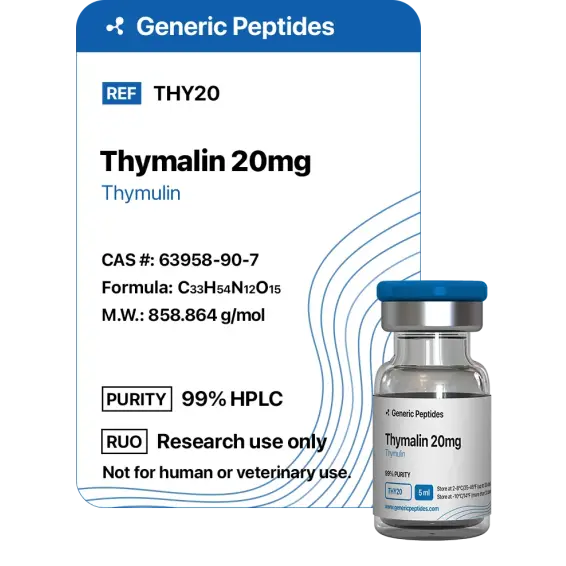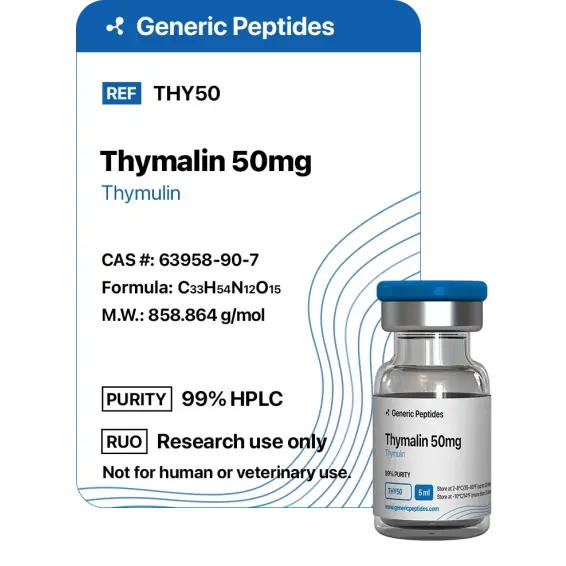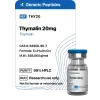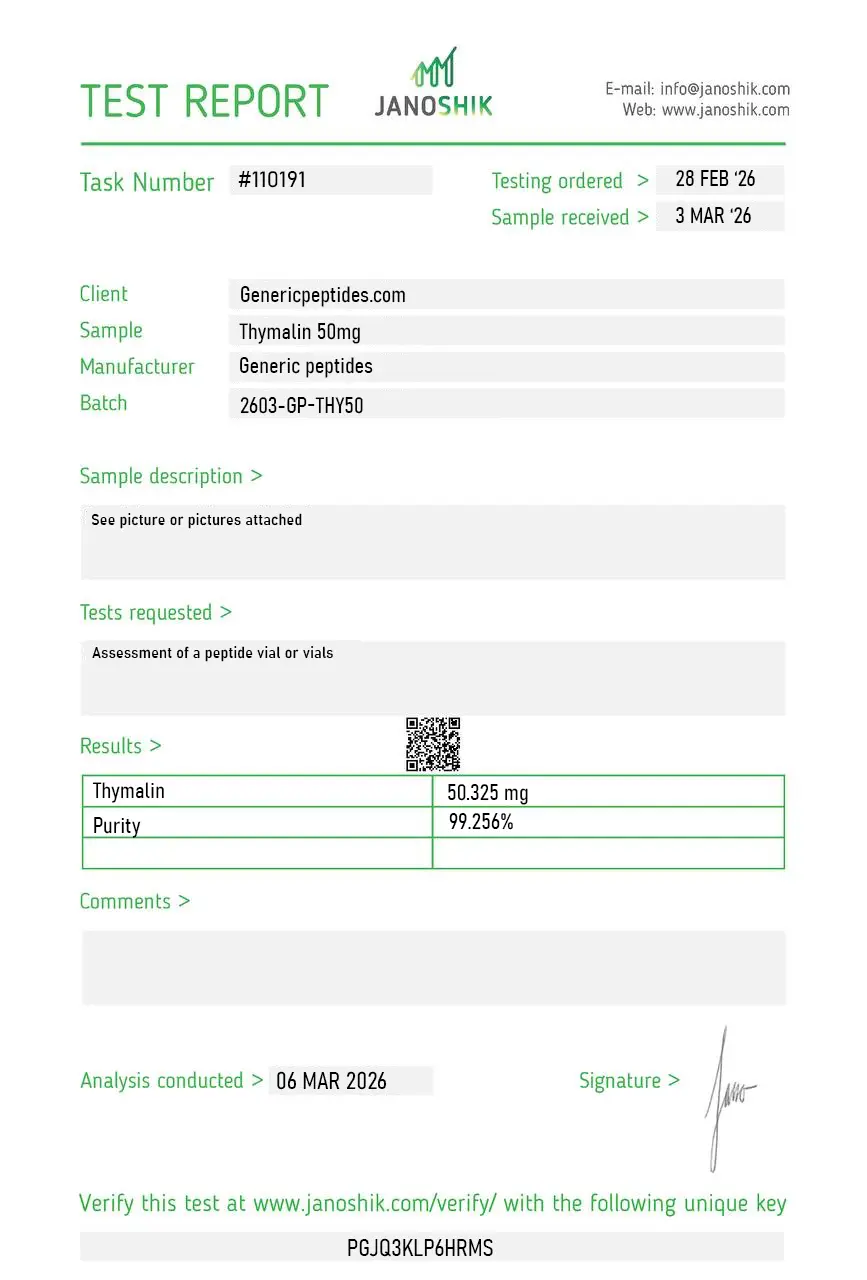
Thymalin
CAS # 63958-90-7
Mol. weight 858.86 g/mol
Formula C33H54N12O15
Identity
Manufacturer Generic Peptides
Active substance Thymalin / Thymulin (zinc-dependent thymic nonapeptide, immunomodulator)
Synonyms Thymulin, Thymic Factor, Nonathymulin, Facteur Thymique Sérique (FTS), Serum Thymic Factor, STF
Composition
Form Lyophilized powder
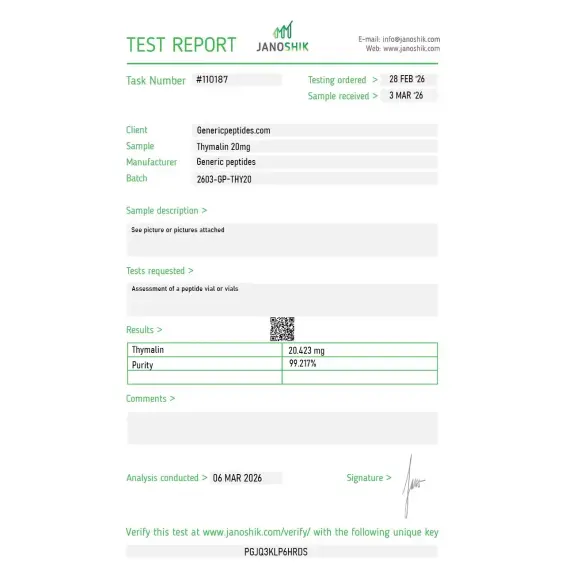
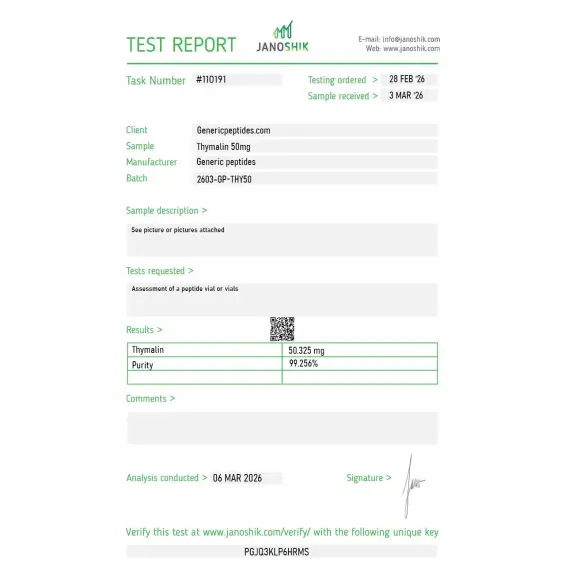
Purity ≥ 99% HPLC
Sequence Pyr-Ala-Lys-Ser-Gln-Gly-Gly-Ser-Asn (pEAKSQGGSN)
Product usage — Research only
  • For in vitro testing and laboratory use only.
  • Not for human or animal consumption.
  • Bodily introduction is illegal.
  • Handle only by licensed professionals.
  • Not a drug, food, or cosmetic.
  • Educational use only.
Availability: In Stock
$79.00
Quantity
Strength
Shipping
Wishlist

Quick take on Thymalin

Thymalin is a polypeptide complex extracted from the thymus gland of calves, developed by Russian gerontologist Vladimir Khavinson — the same researcher behind Epitalon — at the St. Petersburg Institute of Bioregulation and Gerontology starting in the 1970s. It's part of a family of Russian "bioregulator peptides" derived from specific organs (thymus, pineal, liver, vascular), built on Khavinson's theory that short peptide fragments from aging organs can restore function when administered to people whose corresponding organs have declined with age. Thymalin has been in clinical use in Russia for over 40 years for immune modulation.

Mechanism in plain English

Thymalin is not a single peptide but a complex of short peptide fragments naturally produced by thymic tissue. It's thought to restore and modulate immune function by influencing T-lymphocyte maturation and differentiation, normalizing the CD4/CD8 T-cell ratio, and regulating cytokine production. Unlike synthetic single-molecule peptides, the exact active components remain partially characterized — it's a mixture, not a defined entity, which is both its historical strength (broad biological effect) and modern weakness (hard to standardize).

What it's used for

People take it for immune system restoration, particularly in aging populations where thymic function has declined, during recovery from illness or chemotherapy, and as part of longevity protocols where age-related immune decline (immunosenescence) is a concern. Effects are gradual and subtle rather than dramatic, typically evaluated through lab markers (lymphocyte subsets, immune function panels) rather than subjective feel.

Upsides and downsides

Main upside — decades of Russian clinical data including long-term longevity studies. The most striking findings come from Khavinson's research showing reduced mortality and cancer incidence in elderly cohorts treated with Thymalin cycles over 6-12 year follow-ups, alongside a remarkably clean safety profile.

Main downside — the entire evidence base is Russian, much of it methodologically pre-modern, with essentially no Western replication. You're trusting the Khavinson research lineage, not a global consensus. The extracted (bovine) origin also raises quality and contamination concerns compared to synthetic peptides.

Typical protocol

Protocols run 5-10 mg subcutaneously or intramuscularly daily for 10 days, repeated 1-2 times per year. This short-cycle approach mirrors Khavinson's clinical trial design and reflects the underlying theory that periodic "signal pulses" restore function rather than requiring continuous administration.

Who should skip it

  • Anyone with autoimmune disease — immune activation may worsen symptoms.
  • Anyone with active cancer.
  • Anyone on immunosuppression for organ transplants.
  • Anyone with known sensitivity to bovine-derived products.

Regulatory status

Not on WADA's prohibited list. Not approved as a medication in any Western country; prescription medication in Russia.

Verdict: Thymalin sits in the same category as Epitalon — a Russian bioregulator with a clinical track record that Western medicine has largely ignored, and a research lineage that either deserves more credit than it gets or remains unreplicated for good reason. For adults in their 50s and beyond with documented immune decline, recovery from serious illness, or longevity protocol interest, annual short cycles are low-risk and potentially meaningful if you're comfortable evaluating non-Western evidence. For younger healthy adults without specific immune concerns, the case is weaker. Like most of the Khavinson peptide family, Thymalin rewards patient, cyclic use rather than chasing immediate effects — and rewards users who track their immune markers to see whether it's actually moving the needle for them.
Disclaimer. This material is for informational purposes only and is not medical advice. Thymalin is a bovine-derived polypeptide complex — not a defined synthetic molecule — with the quality and contamination considerations that entails. It is not approved as a medication in any Western jurisdiction and the clinical evidence base is concentrated in pre-modern Russian research with no Western replication. It is contraindicated in autoimmune disease, active cancer, and immunosuppressed patients. Do not self-administer without consulting a qualified physician.

In the 1970s, researchers at the Russian Military Medical Academy in Saint Petersburg were studying a problem that still preoccupies gerontology today: why does the immune system decline with age?

The answer pointed to a small organ sitting behind the sternum — the thymus gland. In childhood, the thymus is active and prominent, producing the T-cells that drive adaptive immunity. After puberty, it gradually shrinks. By age 50, most thymic tissue has been replaced by fat. By age 70, functional thymic output is dramatically reduced. This thymic involution is considered one of the central drivers of immunosenescence — the age-related immune decline that leaves older adults vulnerable to infections, cancer, and autoimmune diseases.

A research team led by Vladimir Khavinson and Vyacheslav Morozov asked a provocative question: could you isolate the peptide signals that a young thymus produces, package them into a therapeutic, and use them to partially restore immune function in older adults? They harvested thymus glands from young calves, extracted the small peptide fraction, purified it, and created a pharmaceutical preparation they called Thymalin. It was registered as a medication in Russia in 1982. Over the next four decades, Khavinson's group accumulated what remains the longest clinical evidence base for any peptide bioregulator — including a 6-year trial showing mortality reductions that still get researchers' attention.

Thymalin: what it is and how it works in a nutshell

Thymalin is a polypeptide complex extracted from bovine thymus glands — a mixture of short peptides (2-8 amino acids each) rather than a single defined molecule. This is fundamentally different from most peptides covered on this blog, which are single synthetic compounds with defined sequences.

Composition: the peptide mixture has been partially characterized. The primary synthetic equivalent identified from Thymalin is the dipeptide Glu-Trp (glutamyl-tryptophan), which was later developed separately as Thymogen [1]. But full Thymalin contains multiple bioactive peptides beyond just this dipeptide.

Origin: developed by Vladimir Khavinson and Vyacheslav Morozov at the Military Medical Academy in Saint Petersburg in the 1970s. Registered as an immunomodulator medication in Russia since 1982. Still commercially produced and widely prescribed in Russia and some post-Soviet states.

Regulatory status:

  • Approved in Russia as an immunomodulator since 1982
  • Not FDA-approved in the US, not EMA-approved in Europe
  • Available in Western markets through compounding pharmacies and research peptide suppliers
  • Classified as a "bioregulatory peptide" — a concept more developed in Russian pharmacology than elsewhere

Thymalin mechanism of action: what it actually does in the body

Thymalin's mechanism reflects the Khavinson "bioregulator" hypothesis — that small peptides can influence gene expression in specific target organs, triggering lasting physiological changes after short exposure.

The bioregulator concept. Khavinson's theory proposes that short peptides can penetrate cell nuclei, interact with chromatin, and influence which genes are expressed in specific tissues. A thymus-derived peptide complex would specifically influence genes active in thymic and immune cells [2]. This is mechanistically different from most pharmacology (which focuses on receptor activation) and more analogous to epigenetic modulation. Whether this specific mechanism is entirely correct remains debated in Western pharmacology.

Immune effects (what Thymalin actually does):

  • Normalizes T-lymphocyte populations — restores CD4/CD8 ratios in immunosuppressed patients
  • Enhances natural killer (NK) cell activity — improves first-line innate immunity
  • Modulates Th1/Th2 cytokine balance — shifts toward appropriate immune response type
  • Restores T-cell maturation capacity — even in age-related thymic involution
  • Reduces pro-inflammatory cytokines — particularly relevant in chronic inflammation and cytokine storm contexts [3]
  • Supports phagocytic activity of neutrophils and macrophages
  • Increases interferon production capacity

The COVID-19 data. During the pandemic, Lukyanov et al. (2020) published clinical results suggesting Thymalin suppressed cytokine storm markers in severe SARS-CoV-2 infections. This was published in a Russian context and hasn't been independently replicated at large scale, but it was one of the more interesting real-world tests of Thymalin's mechanism in acute immune crisis [4].

The longevity data. Khavinson and colleagues' 6-year geroprotective study in 266 elderly patients showed 2-fold mortality reduction in the Thymalin-only group vs controls, and 4.1-fold mortality reduction in the combined Thymalin + Epithalamin group vs controls, along with improvements in cardiovascular, endocrine, immune, and nervous system parameters [5]. Genuinely striking data — with the important caveat that this was a Russian study by the group that developed Thymalin, without large independent Western replication.

Short-course "reset" concept. Unlike daily peptides (BPC-157, GHRH analogs), Thymalin is designed for brief, intense exposure followed by extended washout. The typical protocol is 5-10 days of daily injection, repeated every 6-12 months. The theory: short courses trigger lasting gene expression changes that persist for months after dosing stops.

Who uses Thymalin and what for

  • Older adults with immune decline — the core use case in Russian clinical practice. Recurrent infections, poor recovery from illness, vaccine non-response.
  • Post-surgical or post-traumatic recovery — where immune competence affects healing and infection risk.
  • Patients recovering from serious infections — particularly complex cases where standard recovery has been slow.
  • Cancer patients undergoing chemotherapy or radiation — to support immune function during and after treatment. Used adjunctively in some Russian oncology protocols.
  • Longevity-oriented adults — based on the Khavinson mortality data, some biohacker and longevity communities include Thymalin in periodic protocols.
  • Patients with autoimmune conditions — used cautiously and selectively; the immune modulation effect can theoretically help in some autoimmune contexts.
  • People with chronic viral infections — HSV, EBV, chronic hepatitis (though Thymosin alpha-1 has stronger specific evidence for hepatitis).

Realistic expectations during and after a 10-day Thymalin course: improved immune markers on bloodwork (T-cell subsets, NK activity) — usually measurable within 2-4 weeks; subjective improvement in energy and resistance to minor illnesses; reduced frequency of recurrent infections over subsequent months; faster recovery from acute illness if given during or after.

What WON'T happen: dramatic reversal of any serious disease, immediate subjective "feel different" effects, replacement for vaccines or antibiotics, cure for serious immunodeficiency, anti-aging effects you can notice on your face in the mirror.

Important framing: Thymalin's strongest evidence is in populations with documented immune decline or dysfunction. For healthy young adults with normal immune function, the evidence base is much weaker — the compound was never really designed for that population.

What Thymalin stacks with: popular combinations

  • Thymalin + Epithalamin (or Epitalon) — the classic Khavinson longevity combination. The combined protocol was used in the 6-year mortality study and is considered the cornerstone of bioregulatory anti-aging approaches.
  • Thymalin + Thymogen — some protocols combine the full peptide complex (Thymalin) with the purified active Glu-Trp dipeptide (Thymogen) for theoretically broader effect.
  • Thymalin + Thymosin Alpha-1 — both are thymic immune modulators with different mechanisms and evidence bases. Combination is used in some integrative oncology contexts.
  • Thymalin + BPC-157 — different mechanisms entirely (immune vs tissue repair), stacked for comprehensive recovery support.
  • Thymalin + Standard medical therapy — Thymalin is explicitly used adjunctively in Russian practice, not as primary therapy for serious immune conditions.

Thymalin side effects and risks

Thymalin has a remarkably clean safety profile in decades of Russian clinical use. This reflects both the relatively low doses, short course duration, and the nature of the active compounds (short peptides similar to what the body produces endogenously).

Reported in clinical use (typically mild):

  • Injection site reactions — redness, mild pain, small bumps
  • Transient mild fatigue — occasional, early in treatment
  • Minor allergic reactions — uncommon but possible given the bovine origin
  • Mild flu-like symptoms — rare, self-limiting

Theoretical concerns:

  • Bovine origin concerns — Thymalin is extracted from calf thymuses. Modern production uses purified peptide fractions with extensive quality control, but theoretical concerns about animal-derived products (including theoretical prion disease risk) exist. Quality varies across compounding and research sources.
  • Immune overstimulation in autoimmune conditions — theoretical concern that Thymalin could worsen active autoimmune disease by stimulating T-cell activity. Clinical experience suggests the effect is modulatory rather than stimulatory, but caution is warranted.
  • Cancer theoretical concerns — generally considered supportive rather than harmful in Russian oncology protocols, but immune-enhancing compounds always warrant caution in active malignancy.

Who should be cautious or avoid:

  • Anyone with active autoimmune disease (without physician supervision)
  • Pregnant or breastfeeding women (no safety data)
  • People with known allergy to bovine proteins
  • Organ transplant recipients (immune modulation could theoretically affect transplant outcomes)
  • Anyone with active cancer (without oncologist supervision)

The honest regulatory framing: Thymalin is approved in Russia, not in Western regulatory systems. The clinical evidence base is substantial but predominantly from Russian research institutions, with limited independent Western replication. The safety record in real-world Russian clinical use is reassuring but not a substitute for full FDA/EMA validation.

How to use and store Thymalin

Russian approved protocol: 10 mg of lyophilized Thymalin reconstituted with saline or sterile water, administered intramuscularly once daily for 5-10 consecutive days. Courses repeated every 6-12 months.

Typical off-label protocols:

  • Dose: 5-20 mg per injection (10 mg most common)
  • Frequency: once daily for 5-10 consecutive days
  • Cycle: 10-day course, then 6-month break, repeat
  • Duration: cycles typically repeated 1-2 times per year for chronic management; more frequently for acute situations under medical supervision
  • Route: intramuscular preferred based on Russian clinical tradition; some off-label use employs subcutaneous injection with similar anecdotal results

Critical dosing concept: Thymalin is explicitly NOT a daily peptide. Running it continuously like BPC-157 misunderstands the mechanism. Short-course bioregulation is the design intent — brief exposure triggers changes, washout period allows the system to adjust. Anyone selling Thymalin for continuous daily dosing is either misinformed or prioritizing sales over accuracy.

Storage: lyophilized powder in freezer at -20°C. After reconstitution, refrigerate at 2-8°C and use within a few days (not weeks — Thymalin is less stable in solution than many peptides). Use all reconstituted material within the course.

Thymalin vs alternatives: what's different

  • Thymosin Alpha-1 — well-characterized 28-amino-acid synthetic peptide. Approved in 35+ countries for hepatitis and various immune applications. Stronger international evidence base, defined molecular identity, specific approved indications. Generally preferred where Thymosin Alpha-1 is indicated and available.
  • Thymulin — a zinc-dependent nonapeptide naturally produced by thymic epithelial cells. Different molecule, also immune-modulating. Less commercially available.
  • Thymopentin — a pentapeptide fragment of thymopoietin. Synthetic, defined sequence, smaller evidence base than Thymalin.
  • Thymogen — the purified Glu-Trp dipeptide representing Thymalin's primary active fragment. Simpler molecule, synthetic, often cheaper. Considered less comprehensive than full Thymalin by Khavinson's group.
  • Standard Western immunomodulators (IVIG, interferons) — different molecular class, much more potent, much more side-effect-laden, specific narrow indications.

Thymalin's distinguishing feature: a polypeptide complex with four decades of Russian clinical evidence, including the longest human trial ever conducted on a peptide bioregulator with significant mortality reduction signal — all within a research paradigm (bioregulation) that remains peripheral to Western mainstream medicine.

Myths about Thymalin

  • "Thymalin is a miracle anti-aging drug." The mortality reduction data from Khavinson's 6-year study is genuinely striking — but it's one trial, by the group that developed the drug, without large independent replication. "Potentially important longevity signal worth serious investigation" is an honest description; "proven miracle drug" isn't. Treating any single trial as definitive proof misunderstands how evidence accumulates in medicine.
  • "You should take Thymalin continuously for best effects." This is fundamentally wrong and reflects misapplication of the bioregulator concept. Thymalin is designed for short 5-10 day courses with long breaks. Continuous daily use doesn't produce continuously enhanced immunity — it likely just wastes material and potentially disrupts the periodic "reset" pattern the compound was designed to produce.
Thymalin sits at an interesting crossroads in the peptide world — a genuinely pharmaceutical product with decades of Russian clinical use, sitting at the center of a research tradition (peptide bioregulation) that has never fully integrated with Western medicine. For older adults with documented immune decline, for people recovering from serious infections or treatments, for those exploring bioregulatory approaches to longevity under appropriate medical supervision, it's a reasonable consideration with more clinical history than most peptides covered on this blog. The main limitations aren't safety (the profile is genuinely clean) — they're the gap between Russian-language clinical evidence and Western medical validation, the bovine origin requiring quality scrutiny, and the specific protocol understanding that this is a short-course bioregulator, not a daily peptide. For those interested in exploring it, working with a clinician familiar with Russian peptide traditions and using the established 10-day course protocols rather than continuous dosing is the rational approach.

Sources

  1. Morozov, V. G., & Khavinson, V. K. (1997). Natural and synthetic thymic peptides as therapeutics for immune dysfunction. International Journal of Immunopharmacology, 19(9-10), 501-505. — foundational paper from the developers describing Thymalin and related thymic peptides.
  2. Khavinson, V. K., & Malinin, V. V. (2005). Gerontological aspects of genome peptide regulation. Karger Publishers. — the bioregulatory peptide theory developed by Khavinson.
  3. Lukyanov, S. A., Kuznik, B. I., Shapovalov, K. G., Khavinson, V. K., Smolyakov, Y. N., et al. (2020). Thymalin as a Potential Alternative in the Treatment of Severe Acute Respiratory Infection Associated with SARS-CoV-2. International Journal of Immunology and Immunotherapy, 7, 055. https://clinmedjournals.org/articles/ijii/international-journal-of-immunology-and-immunotherapy-ijii-7-055.php — COVID-19-era data on Thymalin's effects in acute immune crisis.
  4. Khavinson, V. K., Morozov, V. G., & Goncharova, N. D. (2003). Peptides of pineal gland and thymus prolong human life. Neuroendocrinology Letters, 24(3-4), 233-240. https://pubmed.ncbi.nlm.nih.gov/14523363/ — the 6-year mortality study showing 2-4 fold reduction with Thymalin and Thymalin+Epithalamin.
  5. Anisimov, V. N., & Khavinson, V. K. (2009). Peptide bioregulation of aging: results and prospects. Biogerontology, 11(2), 139-149. — modern review of the bioregulatory peptide research program by Khavinson's group.
  6. Morozov, V. G., & Khavinson, V. K. (1985). Polypeptide preparation from thymus Thymalin: its usage for immune correction in patients with various pathologies. Zhurnal Mikrobiologii Epidemiologii i Immunobiologii, 4, 55-58. — foundational clinical usage paper from the original development period.
  7. Kuznik, B. I., Khavinson, V. K., & Linkova, N. S. (2020). Heat shock proteins: changes related to aging, development of thrombotic complications, and peptide regulation of the genome. Advances in Gerontology, 10(4), 328-336. — modern perspective on the bioregulatory mechanism from the Khavinson research program.
  8. Khavinson, V. K., Kuznik, B. I., Tarnovskaya, S. I., & Linkova, N. S. (2015). Peptides and CCL11 and HMGB1 as molecular markers of aging: Literature review and own data. Advances in Gerontology, 5(3), 167-174. — contemporary research on Thymalin's mechanism in aging contexts.

Thymalin Dosage Guide

Thymalin is a polypeptide bioregulator complex derived from thymic extracts, developed in the 1970s–80s by Professor Vladimir Khavinson at the St. Petersburg Institute of Bioregulation and Gerontology. It belongs to the "cytomedin" class of short peptide bioregulators that influence DNA transcription and gene expression in target organs — in this case, restoring thymic function, stimulating T-lymphocyte differentiation (CD3, CD4, CD8), enhancing NK cell activity, and normalizing immunoglobulin levels. This guide is aimed at users exploring immune restoration after age-related thymic involution (typically 60+), post-viral or post-chemotherapy recovery, longevity protocols following the Khavinson bioregulator model, and those stacking with Epitalon for the most studied peptide longevity combination. Dosing below follows the standardized Khavinson clinical protocol used unchanged for over four decades across thousands of Russian clinical patients.

Real-World Dosage Protocols by Experience Level

Experience Level Dose Frequency Notes
Maintenance course 5 mg Once daily, SC or IM, 10 days Lower end; repeat courses
Standard Khavinson protocol 10 mg Once daily, IM, 10 days Original clinical reference dose
Community SC adaptation 10 mg Once daily, SC abdomen, 10 days Easier self-administration
Short course 10 mg Once daily, 5 days Seasonal/pre-travel immune priming
6-year longevity (Khavinson trial) 10 mg daily x 10 days Annually for 6 years, IM Published mortality data reference

Doses also shift depending on the specific goal. The same peptide used for acute immune restoration versus long-term longevity follows the same core short-course structure but with different cycling frequencies.

Dosage by Goal

Goal Recommended Dose Frequency Cycle Length
Age-related immune restoration (primary) 10 mg daily Once daily, SC or IM 10-day course, repeat every 6 months
Post-viral recovery (post-COVID, post-flu) 10 mg daily Once daily, SC or IM 10-day course, single cycle
Post-chemotherapy immune support 10 mg daily Once daily, SC or IM 10-day course, repeat per oncologist
Seasonal immune priming 5–10 mg daily Once daily, SC 5–10 day course pre-winter/travel
Longevity protocol (with Epitalon) 10 mg Thymalin + 10 mg Epitalon Both daily for 10 days, SC or IM Repeat every 6–12 months
Maintenance courses 5 mg daily Once daily, SC 10 days, 2–4 times yearly

Thymalin follows the bioregulator model rather than the continuous-dosing model of most Western peptides — the 5 to 10-day course is the therapeutically active unit, triggering lasting epigenetic changes in thymic gene expression rather than requiring daily suppression to maintain effect. Do not run it continuously; 2–4 courses per year is the established pattern, with courses repeated every 6–12 months depending on goal. Inject in the morning or early evening; reconstituted solution has no preservative and should be used immediately or refrigerated and discarded after 30 days, with site rotation between abdomen, thigh, and glute. Absolute contraindications include active cancer (discuss with an oncologist because of the immune-stimulating properties), concurrent immunosuppressive therapy (post-transplant patients), pregnancy, breastfeeding, and known hypersensitivity to thymic peptides — and note that Thymalin is zinc-dependent for biological activity, so adequate zinc status supports its function.

For informational and educational purposes only. This is not medical advice. Thymalin has been approved for medical use in Russia since the 1980s as a geroprotective and immunomodulatory agent but is not FDA- or EMA-approved. The extensive clinical evidence base comes primarily from Russian peer-reviewed literature (notably the Khavinson group) and has not been independently replicated in large Western randomized controlled trials. Thymalin is not currently listed on the WADA prohibited substances list. Consult a qualified physician before use, particularly if you have any immune-related conditions.

Thymalin Storage Guide: How to Keep Your Research Peptide Stable and Effective

Thymalin ships as a white lyophilized powder in a sealed glass vial, freeze-dried to preserve this thymic polypeptide complex and extend its shelf life. With a few simple habits — cold, dark, dry — the sealed vial stays in perfect condition for its full shelf life. Here's exactly how to store it.

Lyophilized Powder (Unreconstituted)

Parameter Details Notes
Storage Temperature Freezer at −20°C (−4°F) for long-term storage up to 24 months. Refrigeration at 2–8°C (36–46°F) is fine for short-term use up to ~3 months. Original sealed vial in the freezer is the safest default.
Light Sensitivity Yes — thymalin's tryptophan-containing component (Glu-Trp) is particularly prone to photodegradation. Always keep in the original box or an opaque, amber container.
Freezing Allowed and recommended. −20°C is standard for long-term storage; −80°C extends stability further if available. Freeze from the start if you won't use it within 3 months.
Oxidation Sensitivity Thymalin is a peptide mixture that includes tryptophan-containing fragments, which are prone to oxidation if the vial seal is broken or the powder is exposed to air. Keep the aluminum crimp cap intact until ready to reconstitute.
Signs of Degradation Healthy powder is white to off-white and loose or cake-like. Watch for yellowing, browning, clumping, visible moisture, or a sticky texture. Any color change, clumping, or moisture = discard the vial.
Common Mistakes Leaving the vial at room temperature after delivery, storing in a humid kitchen or bathroom, or opening a cold vial and letting condensation form inside. Put it in the freezer on arrival, and let sealed vials warm to room temperature before opening.
This guide is for informational purposes only and is not medical advice; always follow the instructions provided by your supplier.

Shipping & Product Authenticity

Every order is processed quickly and shipped with full tracking. All products come directly from the official Generic Peptides supply chain — in original manufacturer packaging, carefully handled from warehouse to your door.

Shipping Times

Destination Delivery Time Notes
USA Domestic 4–5 business days Faster when local warehouse stock is selected at checkout
International 13–15 business days Tracking included; update frequency may vary by destination country
Order Processing 24–48 business hours Processing begins after payment confirmation
Tracking Provided on all orders Tracking number sent after dispatch; multiple warehouses may result in separate shipments

Direct Supply & Secure Delivery

This product is supplied through the official Generic Peptides distribution chain and shipped in original manufacturer packaging. Orders are packed securely to protect the contents during transit and to respect customer privacy as a standard practice.

Outer packaging is neutral and does not display product details on the exterior — a common approach to protect shipments from damage, tampering, and unnecessary exposure during delivery.

What to Expect

  • Orders are processed after payment confirmation
  • USA domestic shipping is typically faster when local stock is selected
  • International orders include tracking, though update frequency may vary by destination
  • Multiple warehouses may result in separate shipments when applicable

Authenticity & Verified Supply

Every order includes full authenticity assurance: official Generic Peptides presentation, batch-linked lab documentation, and sealed original packaging — giving customers confidence in every purchase.

Authenticity Feature Details
Packaging Original manufacturer packaging — sealed and unaltered
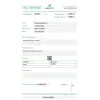
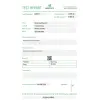
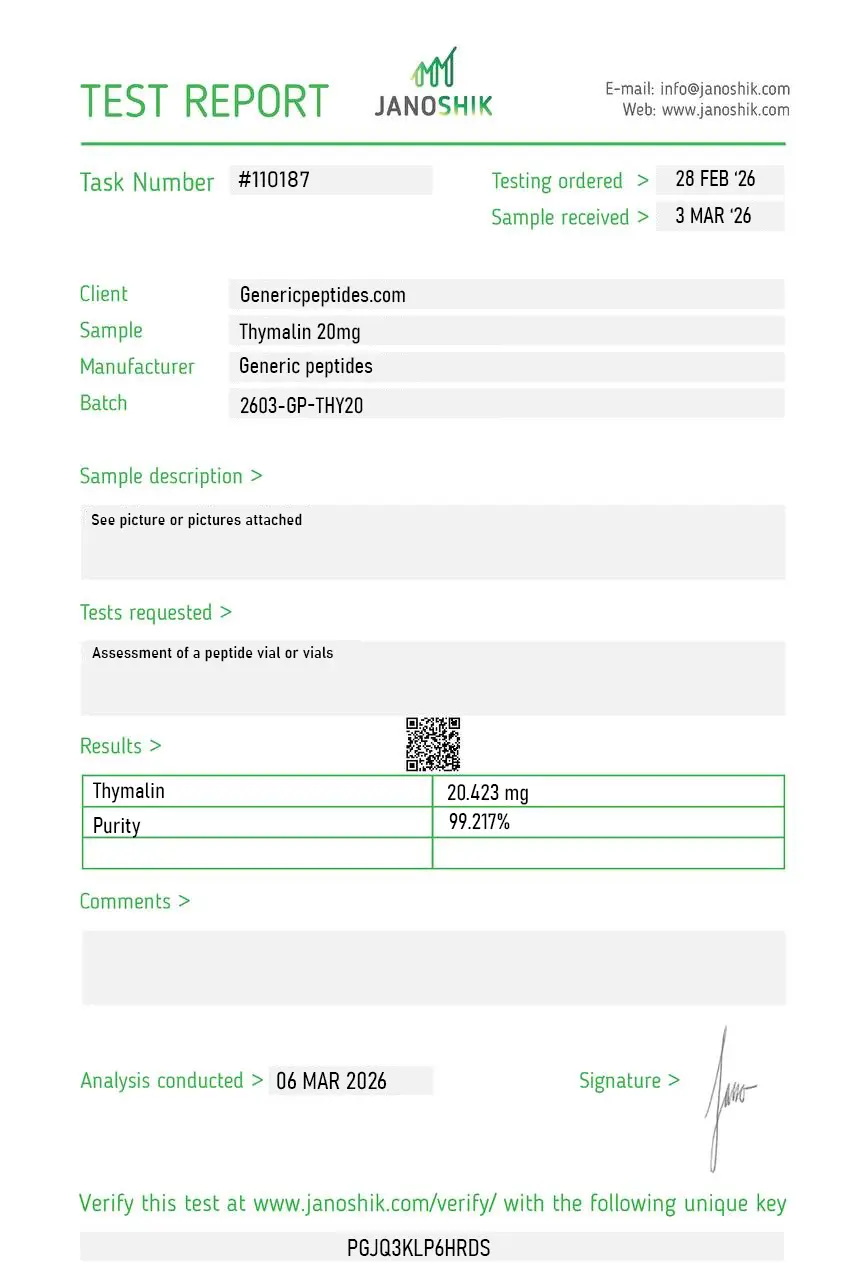
Lab Documentation Batch-linked certificate of analysis available on request
Supply Chain Sourced exclusively through official Generic Peptides distribution

Shipping & Returns

For complete delivery details, tracking policy, and reshipment terms, please see our Shipping Info page.
Please log in to write review.

Thymalin is a polypeptide complex isolated from the thymus glands of young calves, containing a mixture of short peptides (typically 2–8 amino acids long), including key active dipeptides like KE (Lys-Glu), EW (Glu-Trp), and the tripeptide EDP. It was developed in the 1970s at the USSR Institute of Gerontology under the research of Dr. Vladimir Khavinson and has been used as a prescription immunomodulatory drug in Russia and several post-Soviet states for decades. In the US, EU, and most Western countries, Thymalin is not FDA-approved and is sold only as a research chemical.

Thymalin works at the genetic level through its component short peptides, which can specifically bind to DNA and histone proteins to regulate gene expression in immune and hematopoietic (blood-forming) cells. It restores function of the thymus gland — the small organ behind the breastbone responsible for training immune T-cells — which naturally shrinks and loses function with age (a process called thymic involution). By reactivating thymic epithelial cells, Thymalin helps your body resume producing new, naive T-lymphocytes capable of recognizing and responding to new threats.

Research and decades of Russian clinical experience point to several benefits: improved immune function (especially increasing CD4+ and CD8+ T-cells in aging patients), faster recovery from viral and bacterial infections, reduced chronic inflammation, enhanced bone marrow production of blood cells, and potential geroprotective (anti-aging) effects. Studies during the COVID-19 pandemic also suggested Thymalin may help prevent the "cytokine storm" in severe cases, though this remains controversial. Long-term monitoring in elderly populations reportedly showed a 2- to 4-fold reduction in mortality compared to untreated controls — a striking finding that has not been independently replicated outside Russia.

Typical clinical protocols use 5 to 20 mg daily, injected intramuscularly or subcutaneously, for courses of 3 to 10 days. Treatment is typically given in short cycles rather than continuous use, often repeated every 4–6 months for preventive or age-management purposes. For immune restoration after illness or chemotherapy, daily dosing over 5–10 days is standard. These are Russian clinical guidelines — there are no FDA-approved dosing protocols, and self-administration of research-grade Thymalin is not supported by Western medical authorities.

Thymalin has an exceptionally clean safety profile across decades of clinical use. The most commonly reported side effects are mild and include localized redness or irritation at the injection site, temporary fatigue, and occasional mild allergic reactions. Because it is derived from animal tissue (calf thymus), rare hypersensitivity reactions are theoretically possible. Russian clinical literature reports virtually no significant adverse events even with long-term preventive use in the elderly. That said, long-term safety data outside Russian clinical settings is limited, and quality of research-grade Thymalin sold online varies widely.

Unlike stimulants or direct hormone therapies, Thymalin produces gradual effects — it works by reactivating underlying regulatory systems rather than forcing an immediate biological change. Users typically notice improvements in energy, resistance to infection, and general wellbeing over 1–3 weeks of a treatment course. Measurable immune markers (T-cell counts, inflammatory cytokines, antibody production) often show improvement by the end of a 10-day course. Benefits may persist for several months after a single course, which is why the treatment is typically given in pulsed cycles rather than continuously.

No, though they're often confused. Both are immune-supporting peptides originally derived from thymus tissue, but they're distinct molecules. Thymosin alpha-1 (Zadaxin) is a single well-characterized 28-amino-acid peptide that is approved in many countries for hepatitis B and C and used as an adjunct in cancer therapy. Thymalin is a complex mixture of many short peptides, not a single defined molecule. Both restore immune function, but Thymalin is considered more "broad-spectrum" due to its multi-peptide composition, while Thymosin alpha-1 has cleaner pharmacokinetics as a single defined compound.

This is one of the more intriguing areas of Thymalin research. Because thymic involution is considered a major driver of immune aging (immunosenescence), and Thymalin can partially restore thymic function, it is classified as a potential "geroprotector." Long-term Russian studies by Khavinson and colleagues reported improved immune function, fewer infections, and notably reduced mortality in elderly populations receiving preventive Thymalin courses. It's also often paired with Epithalon, another Khavinson-developed peptide that targets pineal gland function, in longevity protocols. These findings are promising but need independent Western replication before being considered established.

Thymalin's legal status varies widely. In Russia, Ukraine, Belarus, and several other post-Soviet states, it's an approved prescription medication used in hospitals and clinics. In the US, UK, EU, Canada, and Australia, it is not approved as a drug and is sold only as a "research chemical" labeled "not for human consumption." Possession for personal research use generally exists in a legal grey zone. Because Thymalin is derived from animal tissue rather than being chemically synthesized, quality control in unregulated supply chains is a particular concern — sourcing pure, uncontaminated product is difficult without clinical-grade access.

Thymalin is generally contraindicated during pregnancy and breastfeeding due to insufficient safety data. People with severe active autoimmune diseases should use it cautiously, since boosting immune function could theoretically worsen autoimmune activity. Those with known allergies to bovine (cow) proteins should avoid it due to its calf-thymus origin. People with active cancer — especially hematological malignancies like leukemia — should consult an oncologist, since broadly modulating immune and bone marrow function may be inappropriate during cancer treatment. As with any peptide, anyone on complex medications or with serious chronic illness should work with a qualified clinician.

Related Products