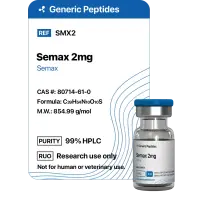
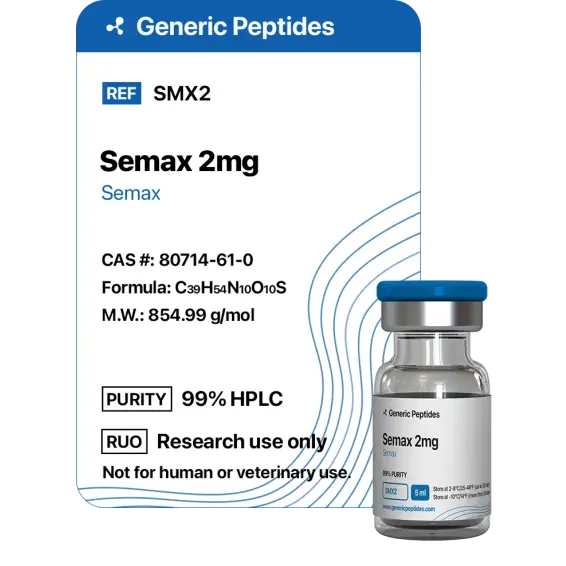
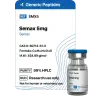
Semax 2mg
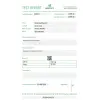
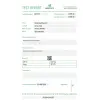
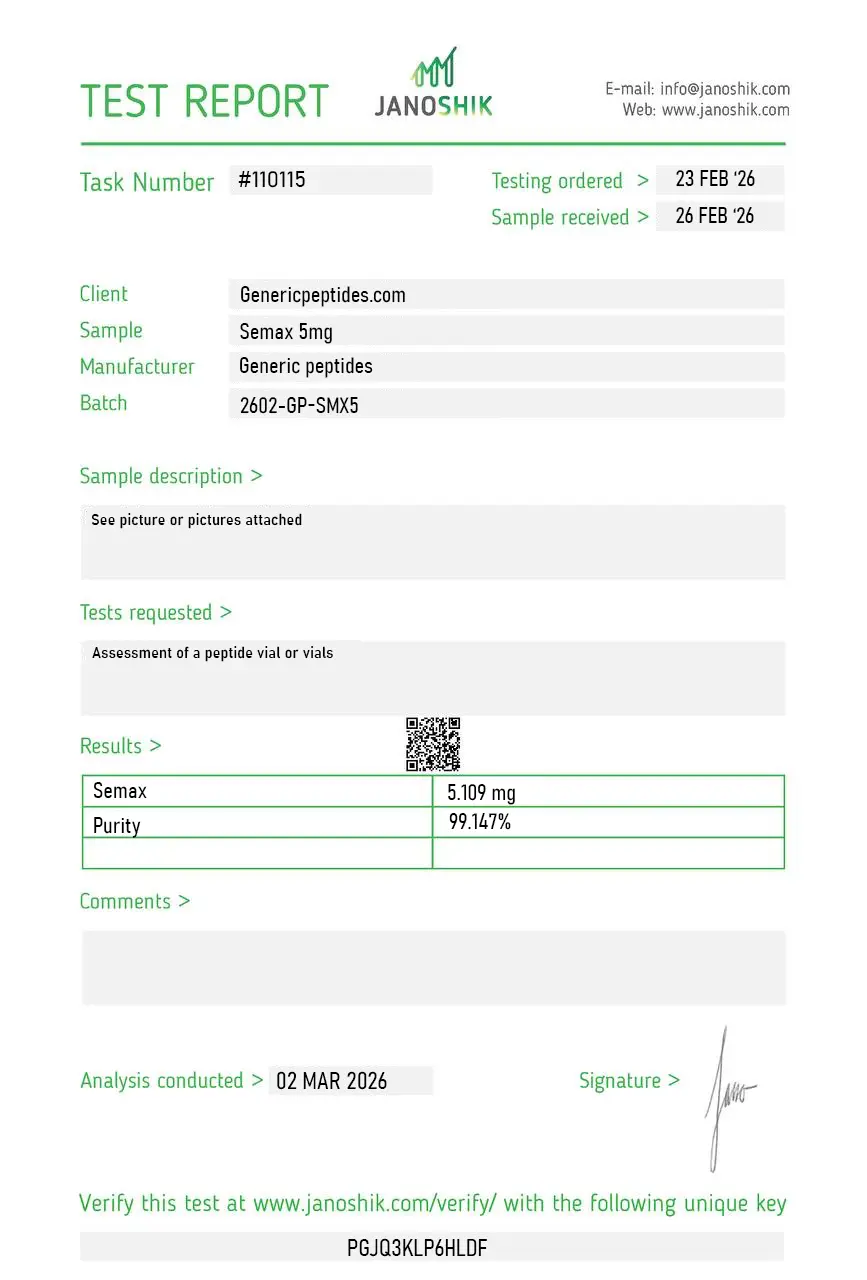
Certificate of Analysis available
Russia approved Semax as a stroke recovery drug in 1996. It's been on the country's List of Vital & Essential Drugs since 2011. Russian neurologists have been prescribing it for nearly three decades for ischemic stroke, optic nerve atrophy, attention disorders, and pediatric neurological deficits — and an entire research literature exists in Russian-language journals that most Western researchers can't easily access. The strange question Semax raises: what if there's a peptide nootropic that's been clinically validated for 30 years in one country and barely studied in another?
Semax (Russian: СЕМАКС) is a synthetic heptapeptide — the name itself comes from СЕМь АминоКиСлот meaning "seven amino acids" in Russian. It's a synthetic analog of ACTH(4-7)PGP — specifically, the 4th through 7th amino acids of natural adrenocorticotropic hormone with a Pro-Gly-Pro extension added to the C-terminus. The full sequence is Met-Glu-His-Phe-Pro-Gly-Pro (MEHFPGP).
The engineering rationale is the entire point. Researchers in the 1950s noticed that ACTH had cognitive effects separate from its hormonal (cortisol-releasing) actions. The N-terminal fragment ACTH(4-10) carried the cognitive effects without the hormonal ones — but it had a half-life of minutes. The Russian Academy of Sciences team in the 1970s solved that problem by adding the Pro-Gly-Pro tail, which extends biological action to 20-24 hours in animal models. The result is a peptide that produces ACTH's nootropic effects without triggering the cortisol response — and lasts long enough to be useful as a research compound.
What sets Semax apart from most cognitive-targeted research peptides: it rapidly elevates BDNF expression in the hippocampus. Brain-derived neurotrophic factor is one of the most studied molecules in neuroscience — it supports neuron survival, drives neuroplasticity, and is central to memory formation. Low BDNF correlates with depression, cognitive decline, and neurodegenerative disease. Most compounds that affect BDNF do so over weeks; Semax produces measurable hippocampal BDNF increases within hours of administration.
The downstream effects compound. Semax activates dopaminergic and serotonergic systems (Eremin et al., 2005, Neurochemical Research). It modulates the calcium dynamics of hippocampal pyramidal neurons. RNA-Seq studies in rat models of cerebral ischemia show Semax alters expression of hundreds of genes involved in inflammation, neurotransmitter function, and cell survival pathways. The 2024 Inozemtseva paper documented antidepressant-like and antistress effects in rodent models. The peptide has multiple mechanisms operating simultaneously, which is part of what makes the research interesting and part of what makes it difficult to isolate any single effect.
Here's the uncomfortable truth: most Semax research has been done by Russian institutions, and a meaningful fraction is published in Russian-language journals that aren't widely accessible in English. The compound has nearly 35 years of research history, but Western Phase 3 trials don't exist. Anyone selling Semax with implications about specific therapeutic outcomes is going beyond what the published English literature alone supports — though the broader Russian research base is substantially deeper than what's visible to most Western readers.
Semax also has an unusual mechanism profile: even after three decades of research, the primary molecular mechanism is still debated. Some research suggests melanocortin receptor interactions. Other work points to enkephalinase inhibition. Recent studies suggest opioid receptor modulation and anti-amyloid effects. The 2024 Inozemtseva research suggested the Pro-Gly-Pro fragment alone produces antidepressant effects — meaning the C-terminal extension isn't just a half-life modifier, it has independent pharmacological activity. That mechanistic complexity is interesting research territory; it's also the kind of thing that makes clean clinical translation difficult.
Regulatory note: Semax was placed on the FDA's Category 2 bulks list in 2023. On April 22, 2026, the FDA removed Semax from Category 2 after the original nominations were withdrawn. PCAC review is scheduled for July 24, 2026 alongside DSIP (Emideltide) and Epitalon, evaluating Semax for inclusion on the Section 503A Bulks List for ischemic stroke and trigeminal neuralgia. As of May 2026, Semax is in regulatory transition — no longer formally restricted, not yet formally approved for compounding. Sales as a research compound continue legally. WADA's Prohibited List does not specifically name Semax as of 2025.
Here's a sourcing problem that's specific to Semax: like its sister compound Selank, the peptide has an unusual amino acid composition with two proline residues plus a methionine that's vulnerable to oxidation. The N-terminal methionine oxidizes easily during synthesis and storage, producing methionine sulfoxide that changes the receptor binding profile. The two proline residues in the C-terminal extension create synthesis challenges that cheap producers handle inconsistently. Add the Russian-research origin (where Western analytical methods may not have always been applied) and you have a compound where sourcing reliability matters more than for most research peptides. Without analytical verification of both methionine integrity and proline positioning, the compound that arrives may not behave like the Semax that 35 years of Russian research describes.
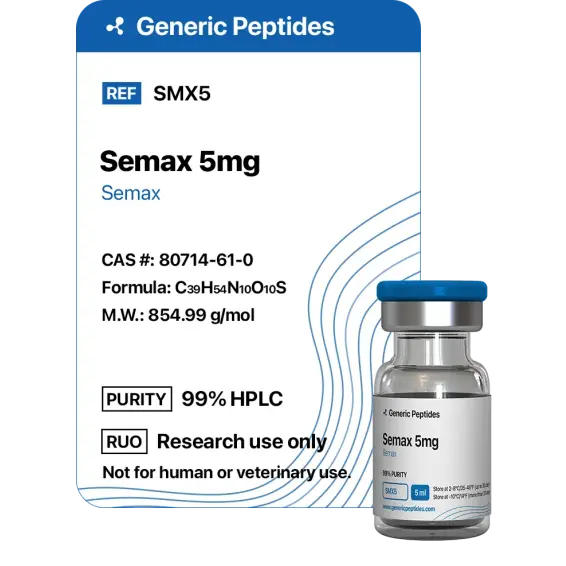
Generic Peptides supplies research-grade Semax for sale at 99% purity, manufactured in the USA. Domestic synthesis with verified methionine integrity and full sequence verification — the part that determines whether your Semax actually has the structure that produces the effects published research describes.
Order Semax for sale in the USA — 99% purity, full MEHFPGP sequence verified, manufactured domestically.
Yes — Semax is legally available as a research compound in the United States. As of April 22, 2026, it has been removed from FDA Category 2, with PCAC review scheduled for July 24, 2026 to determine its compounding status. It's not FDA-approved for human use in the US, though it's an approved prescription drug in Russia.
Different parent molecules and different research applications. Both are heptapeptides developed by Russian institutions for clinical use. Semax is derived from ACTH (an adrenal hormone) and is studied primarily for cognitive enhancement, neuroprotection, and stroke recovery. Selank is derived from tuftsin (an immune peptide) and is studied primarily for anxiolytic and immunomodulatory effects. They're often discussed together but are distinct compounds.
That's what published research shows. Multiple studies, including Dolotov et al. (2006) in Brain Research, documented rapid elevation of BDNF expression in the hippocampus following Semax administration. The TrkB receptor signaling component is also documented. Whether these mechanistic findings translate to specific human outcomes at therapeutic concentrations remains an active research question.
Two reasons. First, intranasal delivery bypasses first-pass hepatic metabolism that would otherwise degrade the peptide rapidly. Second, the nasal route may allow direct access to the brain via the olfactory pathway, potentially enhancing CNS exposure. Russian clinical use has been predominantly intranasal since the 1990s, and most published Semax research uses this route.
Probably not at the same purity or with intact methionine. The N-terminal methionine oxidizes easily, and the proline-rich C-terminal sequence creates synthesis challenges that cheap producers handle inconsistently. Without analytical verification specifically targeting methionine integrity and the proline positions, you may have a compound that's structurally close to Semax but pharmacologically different.
Sources
Dolotov OV et al. — "Semax, an analog of adrenocorticotropin (4-10), binds specifically and increases levels of brain-derived neurotrophic factor protein in rat basal forebrain." Brain Research, 2006. Foundational research on BDNF mechanism. https://pubmed.ncbi.nlm.nih.gov/?term=dolotov+semax+BDNF+2006
Eremin KO, Kudrin VS, Saransaari P et al. — "Semax, an ACTH(4-10) analogue with nootropic properties, activates dopaminergic and serotoninergic brain systems in rodents." Neurochemical Research, 2005. Documents monoamine system activation. https://pubmed.ncbi.nlm.nih.gov/16362768/
Filippenkov IB et al. — "Novel Insights into the Protective Properties of ACTH(4-7)PGP (Semax) Peptide at the Transcriptome Level Following Cerebral Ischaemia–Reperfusion in Rats." Documents genome-wide gene expression effects in stroke models. https://www.ncbi.nlm.nih.gov/pmc/articles/PMC7350263/
FDA — "Bulk Drug Substances Nominated for Use in Compounding Under Section 503A," updated April 22, 2026. Documents Semax removal from Category 2 and the July 24, 2026 PCAC consultation. https://www.fda.gov/media/94155/download
35 years of Russian research. Western synthesis quality. The methionine has to be intact.
Semax ships as a white lyophilized powder in a sealed glass vial, freeze-dried to preserve its heptapeptide structure and extend its shelf life. With a few simple habits — cold, dark, dry — the sealed vial stays in perfect condition for its full shelf life. Here's exactly how to store it.
| Parameter | Details | Notes |
|---|---|---|
| Storage Temperature | Freezer at −20°C (−4°F) for long-term storage up to 24–36 months. Refrigeration at 2–8°C (36–46°F) is fine for short-term use up to ~12 months. | Original sealed vial in the freezer is the safest default. |
| Light Sensitivity | Yes — Semax contains a methionine residue that's prone to photo-oxidation. | Always keep in the original box or an opaque, amber container. |
| Freezing | Allowed and recommended. −20°C is standard for long-term storage; −80°C extends stability further if available. | Freeze from the start if you won't use it within 3 months. |
| Oxidation Sensitivity | The N-terminal methionine is highly oxidation-prone (converting to methionine sulfoxide on air exposure) — this is the primary degradation pathway for Semax. | Keep the aluminum crimp cap intact until ready to reconstitute, and minimize air exposure during handling. |
| Signs of Degradation | Healthy powder is white to off-white and loose or cake-like. Watch for yellowing, browning, clumping, visible moisture, or a sticky texture. | Any color change, clumping, or moisture = discard the vial. |
| Common Mistakes | Leaving the vial at room temperature after delivery, storing in a humid kitchen or bathroom, or opening a cold vial and letting condensation form inside. | Put it in the freezer on arrival, and let sealed vials warm to room temperature before opening. |
Every order is processed quickly and shipped with full tracking. All products come directly from the official Generic Peptides supply chain — in original manufacturer packaging, carefully handled from warehouse to your door.
| Destination | Delivery Time | Notes |
|---|---|---|
| USA Domestic | 2–5 business days | Faster when local warehouse stock is selected at checkout |
| International | 10–15 business days | Tracking included; update frequency may vary by destination country |
| Order Processing | 24–48 business hours | Processing begins after payment confirmation |
| Tracking | Provided on all orders | Tracking number sent after dispatch; multiple warehouses may result in separate shipments |
This product is supplied through the official Generic Peptides distribution chain and shipped in original manufacturer packaging. Orders are packed securely to protect the contents during transit and to respect customer privacy as a standard practice.
Outer packaging is neutral and does not display product details on the exterior — a common approach to protect shipments from damage, tampering, and unnecessary exposure during delivery.
Every order includes full authenticity assurance: official Generic Peptides presentation, batch-linked lab documentation, and sealed original packaging — giving customers confidence in every purchase.
| Authenticity Feature | Details |
|---|---|
| Packaging | Original manufacturer packaging — sealed and unaltered |
| Lab Documentation | Batch-linked certificate of analysis available on request |
| Supply Chain | Sourced exclusively through official Generic Peptides distribution |
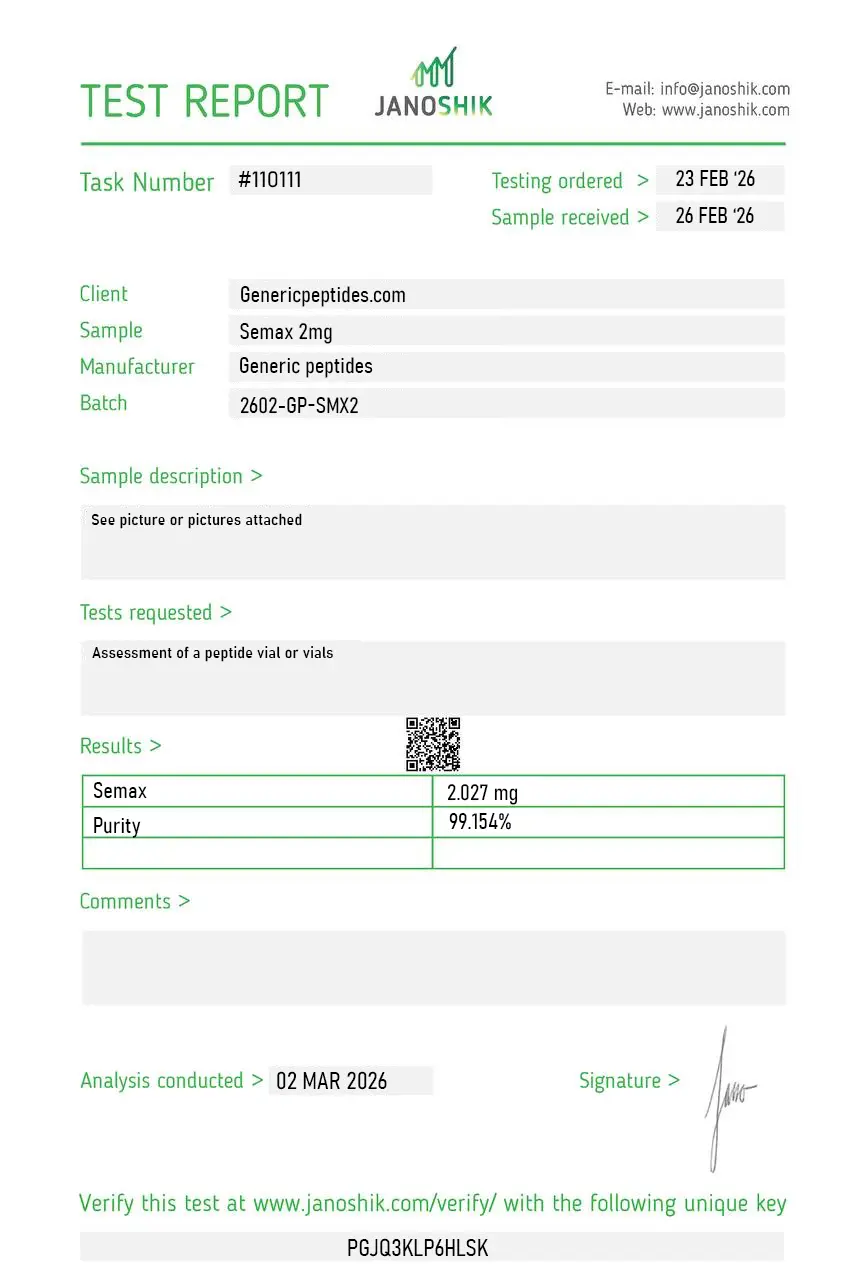
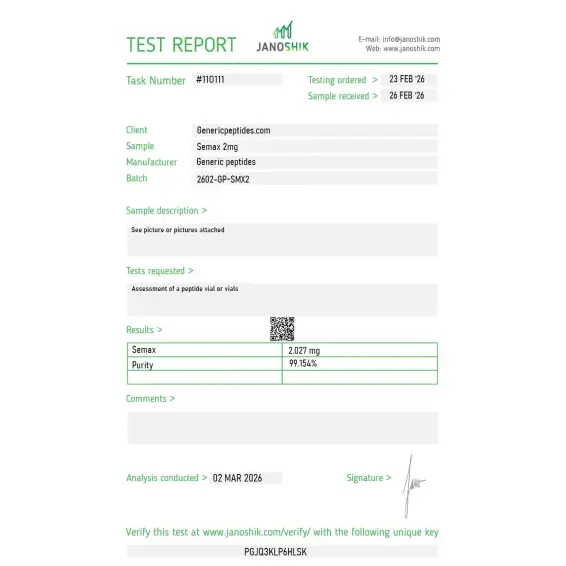
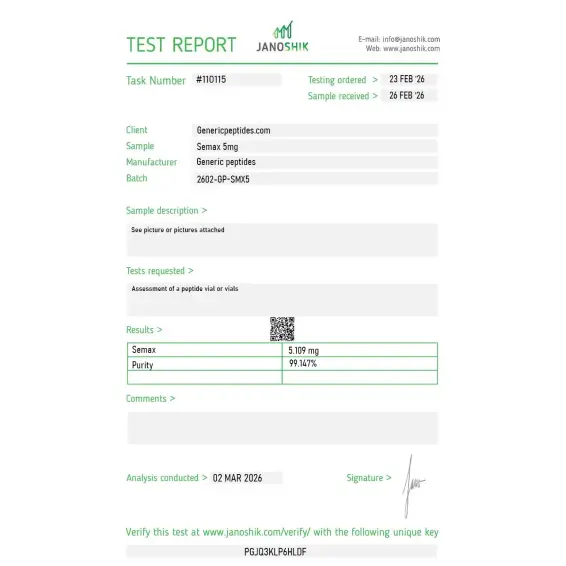
Independent lab test reports are available for Semax 2mg and 5mg batches. Each certificate provides batch-level verification details, including measured content, purity result, analysis date, and report documentation.
For BDNF expression work in cortical neuron cultures this has been our reference ACTH-fragment peptide. The MEHF core is essentially De Wied's neuroactive ACTH(4-10) sequence with the PGP stabilizer bolted on — useful to work with a vendor that knows that lineage rather than treating it as some novel compound. Consistent across the orders we've placed.
Reorder, third one. Small heptapeptide, dissolved without drama, nothing to report.
What drew me here is that they carry both Semax and Selank — same Myasoedov-group origin, same PGP-stabilization strategy, one from ACTH the other from tuftsin. For comparative work on that whole class of Russian stabilized neuropeptides, sourcing them together keeps the impurity profiles consistent. That parallel is the actual reason I order here.
Decent for our neuroprotection assays in oxygen-glucose-deprivation models, where Semax has a real Russian preclinical stroke literature behind it. The caveat I'd give others: the proposed mechanisms span BDNF, NGF, dopaminergic, all sorts of pathways, and the evidence is much stronger for some than others. Don't build a project assuming the broad "nootropic" framing is settled science — it isn't. Compound was reliable; just go in clear-eyed about the mechanism literature.
De Wied's ACTH(4-10) work at Utrecht was foundational neuropeptide pharmacology and it's nice that the page actually connects Semax back to that Western origin rather than presenting it purely as a Russian invention. The two traditions meet in this molecule. Material performed in our assays as the literature would predict.
Reference heptapeptide for our work. Reliable. Ordered repeatedly.
We study the nasal-delivery pharmacokinetics angle — Semax is interesting precisely because it has a documented intranasal clinical route in Russian practice, so it's a useful model compound for small-peptide nasal absorption. Material's been consistent enough to build that PK characterization around.
Sermorelin binds GHRH receptors on somatotroph cells in the anterior pituitary, activating adenylyl cyclase and triggering the cAMP-PKA cascade that drives GH gene transcription and release. It works upstream — telling the pituitary to make and release more of its own GH rather than supplying GH directly. The mechanism preserves the natural pulsatile pattern of GH release and the negative feedback loops that regulate the hypothalamic-pituitary-somatotropic axis.
Both are GHRH analogs targeting the same receptor, but with different engineering. Sermorelin is unmodified GRF 1-29. Tesamorelin (Egrifta, FDA-approved for HIV-associated lipodystrophy) has a single trans-3-hexenoic acid modification at the N-terminus that improves stability. Different half-life and potency profiles, different FDA-approved indications, different commercial availability.
For two related applications: first as a diagnostic tool (Geref Diagnostic, approved 1990) for evaluating pituitary GH secretory capacity in suspected growth hormone deficiency, then as a therapeutic agent (Geref, approved 1997) for treatment of idiopathic GH deficiency in children with growth failure. Both indications relied on the compound's ability to stimulate natural pituitary GH release.
The unmodified GHRH sequence is more vulnerable to enzymatic degradation and storage instability than its engineered cousins (CJC-1295, Mod GRF 1-29). Cheap synthesis routinely produces material with sequence errors, incomplete amidation at the C-terminus, or significant impurity content that affects bioactivity. Many suppliers also conflate Sermorelin with Mod GRF 1-29 and sell them interchangeably despite the different structures.
The active 29-amino-acid GHRH fragment was characterized in the early 1980s by researchers studying the natural GHRH molecule. Sermorelin was developed as a therapeutic agent through the late 1980s and 1990s, with FDA approval following in 1990 (diagnostic) and 1997 (therapeutic). The compound has more than four decades of clinical and research history behind it.
Yes. WADA prohibits Sermorelin for athletes subject to drug testing under category S2 (Peptide Hormones, Growth Factors, Related Substances and Mimetics). The classification covers all GHRH analogs regardless of FDA approval status. Athletes in tested sports should avoid the compound regardless of its regulatory pathway.
Sermorelin acetate (the salt form), Geref (the discontinued FDA-approved brand name), Gerel (international branding), GRF 1-29 NH₂ (the chemical descriptor reflecting the C-terminal amidation), and GHRH (1-29). CAS number 86168-78-7. Different naming conventions across literature and commercial sources, all referring to the same 29-amino-acid peptide.
Pituitary GH reserve testing and growth hormone deficiency diagnosis lead historical clinical use. Research applications include comparative GHRH pharmacology (Sermorelin as the natural reference compound), aging-related GH decline studies, body composition research, sleep architecture investigations (GH peaks during slow-wave sleep), and pediatric endocrinology research on growth disorders.
Regulatory pathway difference. Sermorelin was FDA-approved as Geref (NDA 020443), making it a component of a previously approved drug — which is one of the three statutory criteria for 503A compounding under Section 503A. CJC-1295 was never FDA-approved and was placed on Category 2 in 2023. The FDA approval history is what makes Sermorelin compoundable while structurally similar compounds aren't.
Sequence-wise, almost nothing — Sermorelin is identical to the first 29 amino acids of natural 44-amino-acid GHRH. The biological activity lives in those first 29 residues, so the truncated synthetic version retains full GHRH receptor binding and signaling. The difference is practical: Sermorelin is synthetically pure, characterized, and available at known concentrations, while natural GHRH would have to be extracted from biological sources at vastly higher cost.
Researchers investigating ACTH-derived neuropeptide pharmacology, BDNF upregulation, and cognitive enhancement consistently examine Semax alongside compounds that target overlapping or complementary CNS pathways. Selank is the defining pairing — both are synthetic heptapeptides developed by Russian research institutions, both administered intranasally, both modulating overlapping neurotransmitter systems; Semax is derived from ACTH and studied primarily for cognitive enhancement and neuroprotection while Selank is derived from tuftsin and studied primarily for anxiolytic and immunomodulatory effects, making them complementary tools for researchers studying the relationship between cognitive function and anxiety in the same CNS research designs. DSIP shares the neuroendocrine and stress response research space — researchers studying sleep quality, stress resilience, and cognitive performance sometimes examine all three Russian CNS peptides simultaneously to map which neurochemical pathway drives which behavioral outcome. MET5 modulates endogenous opioid signaling that intersects with the dopaminergic and serotonergic systems Semax activates — researchers studying comprehensive neurotransmitter interactions in cognitive and stress models sometimes examine both. Epitalon appears in the same neuroprotection and anti-aging research context given both compounds' documented effects on neuronal survival, cognitive function in aging models, and their shared origins in the Russian peptide bioregulator research tradition. NAD+ addresses neuronal energy metabolism through mitochondrial function and sirtuin activation — a complementary approach to Semax's growth factor-mediated neuroprotection for researchers studying aging-related cognitive decline from multiple mechanistic angles.