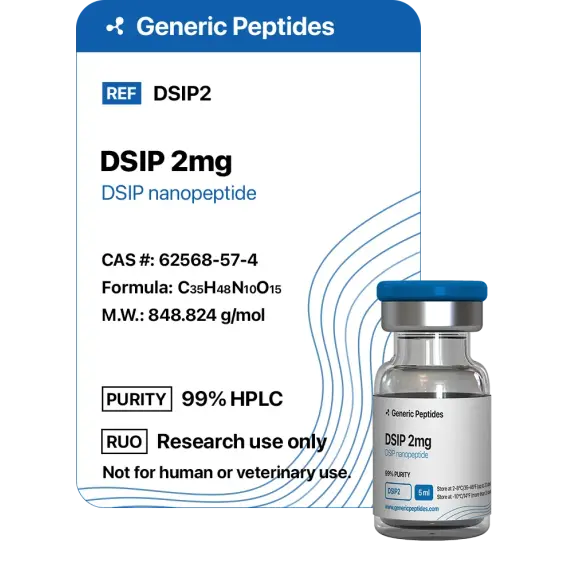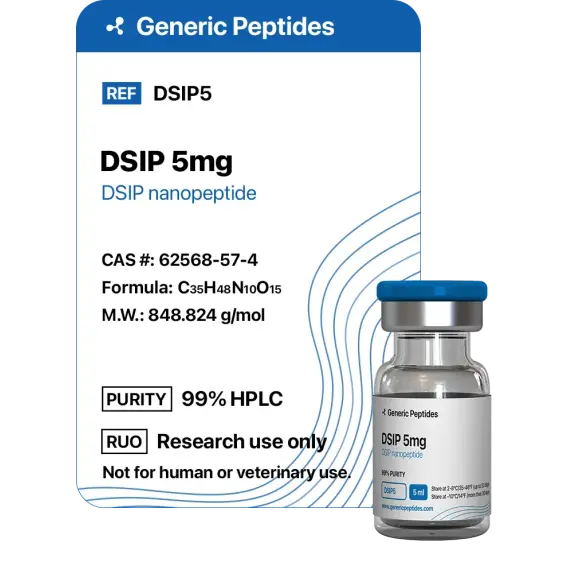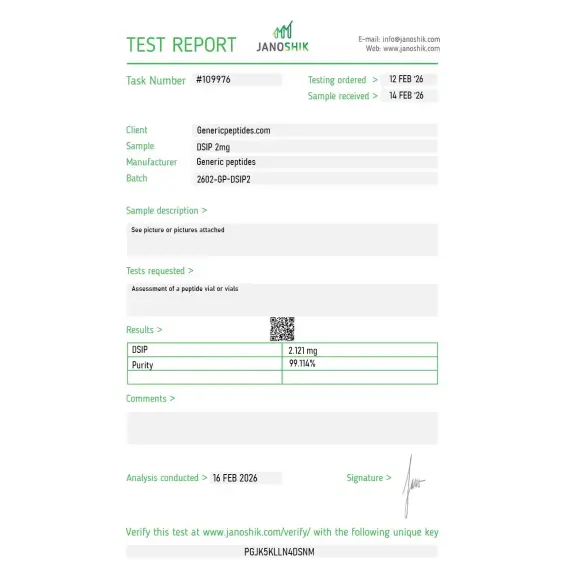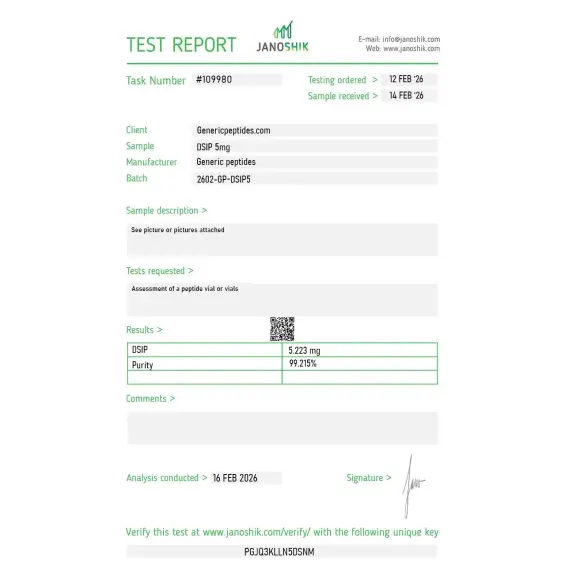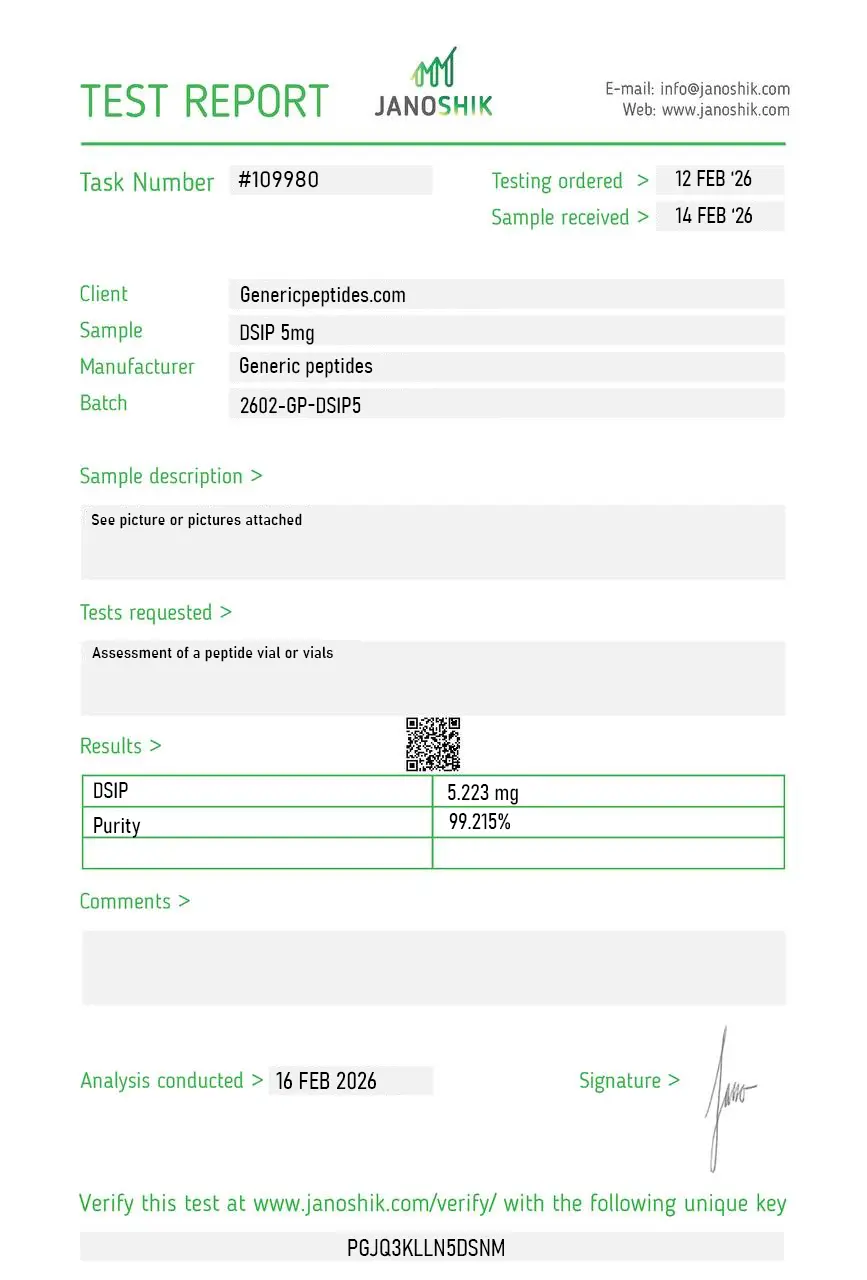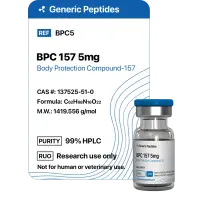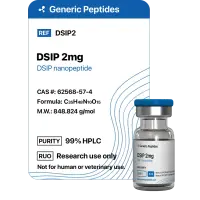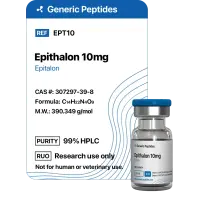
- For in vitro testing and laboratory use only.
- Not for human or animal consumption.
- Bodily introduction is illegal.
- Handle only by licensed professionals.
- Not a drug, food, or cosmetic.
- Educational use only.
- People with poor deep sleep, chronic stress, or recovery demands who want better sleep quality without sedative drugs.
- It modulates the brain's sleep-wake circadian system, promoting deeper delta-wave sleep rather than simply sedating you.
- Unlike sleeping pills, it improves sleep depth without causing tolerance, dependence, or morning grogginess.
- DSIP does not suppress testosterone or any sex hormone — no PCT is needed after use.
- Not approved by the FDA or EMA; classified as Category 2 high-risk for compounding; approved as Deltaran in Russia only.
- Inject 100–200 mcg subcutaneously in the afternoon — not at bedtime, as it works hours before sleep, not immediately.
- Used 5–7 consecutive days per month rather than daily — more is not better and can paradoxically worsen sleep.
- Do not use with naltrexone or naloxone — these opioid blockers directly cancel DSIP's effects.
DSIP (Delta Sleep-Inducing Peptide): The Complete Guide to the Sleep Neuropeptide — What the Science Really Says
Of all the research peptides circulating in the wellness and biohacking world, DSIP may be the one with the most extraordinary breadth of claimed effects relative to its name. You would be forgiven for expecting a compound called "Delta Sleep-Inducing Peptide" to simply be a sleep aid — and indeed, that is where the story starts. But the same naturally occurring nonapeptide has been linked in research to stress protection, withdrawal from opioids and alcohol, pain relief, anti-ageing effects, geroprotection, a remarkable reduction in spontaneous tumour formation in lifelong animal studies, growth hormone release, cortisol modulation, epilepsy suppression, neuroprotection after stroke, and improvements in mood and depression. Whether all of these effects are real, reproducible, and translatable to humans is a genuinely complicated scientific question — one that 50 years of research has not fully resolved. DSIP remains, as one scientific review famously titled itself, "a still unresolved riddle." This article covers all of it honestly.
What It Is and Where It Comes From
DSIP — Delta Sleep-Inducing Peptide — is a naturally occurring nonapeptide (a peptide chain of exactly nine amino acids) with the sequence Trp-Ala-Gly-Gly-Asp-Ala-Ser-Gly-Glu, often written in shorthand as WAGGDASGE. It has a molecular weight of approximately 850 daltons and is classified as amphiphilic — meaning it has both water-attracting (hydrophilic) and water-repelling (hydrophobic) domains, a property relevant to its ability to interact with cell membranes and cross the blood-brain barrier.
DSIP was first isolated in 1974–1977 by the Schoenenberger-Monnier research group from the University of Basel, Switzerland. The discovery came through an elegant experiment: rabbits were induced into slow-wave (delta) sleep by low-frequency electrical stimulation of the intralaminar thalamic nuclei. The blood that drained from the brains of these sleeping rabbits was collected and fractionated. When the active fraction was injected into other rabbits, it induced slow-wave sleep — demonstrating that a humoral (blood-borne) factor was involved. The nonapeptide responsible was isolated, characterised, and named for its sleep-inducing property.
DSIP is found in both free and protein-bound forms throughout the body — not just in the brain. It has been detected in the hypothalamus, limbic system, and pituitary gland, as well as in peripheral organs including the gut (where it co-localises with glucagon in pancreatic cells), various body fluids, and — notably — in human breast milk at concentrations of 10–30 ng/mL. The presence of DSIP in breast milk is considered biologically significant and may partly explain the well-known sleep-inducing effect of breastfeeding on infants.
How It Works in the Body — Mechanisms of Action
DSIP's mechanism of action is both multi-target and incompletely understood — two properties that coexist to create genuine scientific uncertainty about what it actually does at the molecular level. Here is the current state of knowledge:
Blood-Brain Barrier (BBB) Crossing
One of DSIP's pharmacologically unusual features is its ability to freely cross the blood-brain barrier, which most peptides and many small molecules cannot do efficiently. This property was documented early in the research literature and has been confirmed in multiple studies. The amphiphilic character of the molecule is believed to facilitate passive diffusion across the BBB. This crosses with its unusual stability in the gut — unlike most peptides, DSIP resists enzymatic denaturation during gastrointestinal passage, meaning oral administration may be pharmacologically viable.
NMDA Receptor Modulation
In the brain, DSIP's effects appear to be at least partly mediated through NMDA (N-methyl-D-aspartate) glutamate receptors. NMDA receptors play central roles in synaptic plasticity, memory, learning, and sleep regulation — their modulation is also the mechanism of action of various anaesthetic agents including ketamine. DSIP appears to act as a modulator of NMDA receptor activity, which could explain both its sleep-regulatory and neuroprotective properties.
GABAergic System Interaction
Research suggests DSIP interacts with GABA-A receptors — the same inhibitory neurotransmitter system targeted by benzodiazepines, barbiturates, and Z-drugs (the classic sedative-hypnotic drugs). However, the nature of this interaction is distinct from benzodiazepine pharmacology: DSIP does not simply suppress the central nervous system like a sedative. Rather, it appears to normalise the balance between excitatory and inhibitory signalling in a modulatory, context-dependent way — producing sleep promotion when sleep is disturbed without producing deep sedation in well-rested subjects.
Alpha-1 Adrenergic Receptor Stimulation
One study demonstrated that DSIP stimulated acetyltransferase activity through α1 adrenergic receptors in rats, implicating the sympathetic nervous system component of its regulatory actions. This pathway may contribute to DSIP's effects on noradrenaline release (documented in rat brain synaptosomes) and potentially to its ability to modulate the stress response.
MAPK Cascade and GILZ Homology
Research by Gimble et al. identified that DSIP interacts with components of the mitogen-activated protein kinase (MAPK) cascade and is structurally homologous to GILZ (Glucocorticoid-Induced Leucine Zipper), a protein that is induced by glucocorticoids (stress hormones) and plays a role in anti-inflammatory signalling. GILZ prevents Raf-1 activation, which inhibits phosphorylation and activation of ERK — a pathway with broad implications for cell survival, proliferation, and immune response. This homology with GILZ may explain DSIP's stress-modulating and potentially anticarcinogenic properties.
Circadian Rhythm Regulation
DSIP plasma concentrations exhibit marked diurnal variation in humans — low in the mornings and rising through the afternoon. This circadian pattern is correlated with the body's sleep-wake cycle and suggests DSIP is a genuine physiological regulator of circadian rhythm rather than merely a sleep-on-demand signal. Importantly, this diurnal pattern explains why DSIP must be administered during the day (not just before bed) to influence that night's sleep — a key practical distinction from conventional hypnotics.
Opiate Receptor Interaction
DSIP can act antagonistically at opiate receptors, inhibiting the development of opioid and alcohol dependence. This property is what underlies its clinical use in withdrawal management and represents a distinct mechanism from all the above. The opiate receptor interaction also contributes to DSIP's documented analgesic effects.
Antioxidant Enzyme Stimulation
Russian research programmes documented that DSIP increases the activity of superoxide dismutase, catalase, and ceruloplasmin — the major enzymatic antioxidant defence systems. It also affects concentrations of non-enzymatic antioxidants. This antioxidant enhancement may partly explain its geroprotective and anticarcinogenic properties observed in long-term animal studies, as oxidative stress is a fundamental driver of both ageing and carcinogenesis.
Half-Life Paradox
DSIP has a plasma half-life of only 7–8 minutes in humans (it is degraded by aminopeptidases in blood), yet its effects on sleep persist for multiple days after a single administration. This dramatic mismatch between pharmacokinetic half-life and pharmacodynamic duration strongly suggests that DSIP produces downstream signalling changes that outlast its own presence in circulation — possibly through second-messenger cascades, gene expression changes, or receptor sensitisation that persist after the peptide has been cleared.
What It Was Studied For and What Effects It Showed
Sleep Induction and Regulation
The original and most studied application. DSIP promotes a specific type of sleep characterised by increased delta-wave (slow-wave) EEG activity — the deep, restorative Stage 3/4 sleep that is essential for growth hormone release, memory consolidation, cellular repair, and immune function. Unlike sedative-hypnotics, DSIP does not simply suppress brain activity across all stages. Animal research established sleep-promoting effects in rabbits, rats, mice, cats, and humans. However, the clinical picture in humans is complex.
Early human trials in the 1980s produced encouraging results. A 1981 paper described a trial with six volunteers who experienced immediate sleep pressure after intravenous DSIP infusion, along with increased sleep time, decreased sleep onset latency, and better sleep efficiency without any sedative effects. Two studies across ten subjects with insomnia in 1984 found statistically significant improvements in sleep efficiency, reduced arousals, and increased REM, spindle, and slow-wave sleep.
The more rigorous double-blind human trial, published in Neuropsychobiology (1992), studied 16 chronic insomnia patients who received DSIP intravenously at 25 nmol/kg for three afternoons. Objective polysomnography showed higher sleep efficiency and shorter sleep latency with DSIP compared to placebo. However, the effects were characterised as "weak" by the authors, subjective sleep quality did not significantly improve, and the statistical significance was partly attributable to an incidental change in the placebo group. The conclusion was that "short-term treatment of chronic insomnia with DSIP is not likely to be of major therapeutic benefit."
Stress Protection and Adaptogenic Effects
Extensive Russian research established DSIP as a potent "adaptogen," normalising physiological responses to both acute and chronic stress. DSIP has been shown to reduce the lethality of extreme stress in low-resistant rats, normalise stress-induced disruption of brain metabolism, and act as an adaptogen in amphetamine-induced stereotypy models. It has been shown to normalise monoamine oxidase (MAO) activities through serotonin-adrenergic systems. Preparation Deltaran (a DSIP-containing formulation developed at the Shemyakin and Ovchinnikov Institute of Bioorganic Chemistry in Russia) was specifically developed and used clinically in Russia for stress-related applications.
Withdrawal from Opioids and Alcohol
One of DSIP's most clinically compelling documented effects. A clinical study published in European Neurology (1984) administered intravenous DSIP to approximately 100 inpatients exhibiting withdrawal symptoms from opioid or alcohol dependence. Clinical symptoms of withdrawal disappeared or "improved markedly and rapidly" in 97% of opioid-dependent patients and 87% of alcohol-dependent patients. Side effects were minimal (headaches in a few). This is a striking result, though the study was open-label and uncontrolled. DSIP is being used in clinical trials for withdrawal management, particularly in Russian and Eastern European clinical contexts, and Deltaran has been used as an approved drug in Russia for this indication.
Pain Relief
A 1984 study in European Neurology examined DSIP's analgesic effects in seven patients with migraines, vasomotor headaches, tinnitus, and psychogenic pain attacks. After intravenous administration, pain was significantly reduced in six of the seven patients. Animal studies confirmed a potent antinociceptive (pain-reducing) effect when administered intracerebroventricularly or intracisternally. The mechanism likely involves both opioid receptor interaction and NMDA receptor modulation.
Growth Hormone Release
A 1987 study by Iyer and McCann demonstrated that DSIP stimulates growth hormone release in rats through both hypothalamic and pituitary actions. DSIP promotes GH secretion during sleep by amplifying the sleep-associated GH pulse — the largest natural GH release event in the 24-hour cycle. This property has made it of interest to athletes and anti-ageing practitioners seeking to enhance natural GH release. It also stimulates the release of somatostatin (a GH-inhibiting hormone) in a complex regulatory pattern, and it stimulates luteinizing hormone (LH) release at the hypothalamic level.
Anti-Epileptic Effects
In rats with metaphit-induced epilepsy, DSIP acted as an anticonvulsant, significantly decreasing the incidence and duration of seizures. This anticonvulsant property may be related to its NMDA receptor modulation and GABAergic interactions.
Neuroprotection After Stroke
A 2021 study published in Molecules (MDPI) investigated intranasal DSIP administration before and after focal stroke induction in rats. DSIP-treated animals showed significantly accelerated recovery of motor functions as assessed by rotarod testing, despite the reduction in brain infarction volume not reaching statistical significance. The authors concluded that DSIP leads to accelerated recovery of motor functions after stroke through neuroprotective mechanisms.
Narcolepsy and Disturbed Sleep Patterns
Several case reports and small studies suggest DSIP administration can alleviate narcolepsy and normalise disturbed sleep patterns in conditions characterised by abnormal sleep architecture — the converse of its insomnia applications.
Use in Children After Chemotherapy
A preparation of DSIP (Deltaran) was used to correct central nervous system function in children aged 3–16 years after antiblastic (chemotherapy) treatment. Ten children received a ten-day course, and bioelectric brain activity was assessed. The chemotherapy-induced impairment in bioelectrical activity was reduced by DSIP administration in nine of the ten children — a remarkable finding that speaks to DSIP's potential neuroprotective and CNS-normalising properties.
Forms and Methods of Administration
Intravenous (IV) Infusion
All formal clinical trials used IV administration. This allows precise dosing and bypasses any concerns about absorption variability. The human insomnia trials used 25 nmol/kg (approximately 21 mcg/kg) administered intravenously in the afternoon, several hours before sleep. IV administration is exclusively a clinical procedure.
Subcutaneous Injection
The most commonly used route in the current research and wellness community. Given DSIP's short plasma half-life (7–8 minutes), subcutaneous absorption over a more gradual profile may actually better mimic physiological exposure than IV bolus dosing. The animal longevity studies (Deltaran) used subcutaneous injection. Human wellness protocols typically use SC injection in the lower abdomen, similarly to other research peptides.
Intranasal Administration
The 2021 stroke recovery study used intranasal administration (120 mcg/kg), which is scientifically compelling for a CNS-targeting peptide given that intranasal delivery bypasses the BBB issue entirely (the nasal mucosa provides direct access to the olfactory bulb and from there to the brain via the olfactory-trigeminal pathway). DSIP already crosses the BBB efficiently by itself, but intranasal delivery may provide higher local CNS concentrations with lower systemic doses. This route is used in some wellness clinics.
Oral Administration
DSIP is unusual in that it appears to resist denaturation by digestive enzymes — a property documented in the early literature. The European Journal of Anaesthesiology review (2001) specifically notes that DSIP "is readily absorbed from the gut without being denatured by enzymes." This suggests oral administration may be viable, though formal human pharmacokinetic data for the oral route in terms of blood-brain barrier penetration and efficacy is limited.
Dosage: Research Findings vs Real-World Practice
Clinical Trial Doses
The human insomnia studies used 25 nmol/kg intravenously — for a 70 kg adult this equates to approximately 1.75 nmol, or about 1.5 mcg (micrograms) of total dose. This is an extraordinarily small amount, reflecting the potency of a naturally occurring regulatory peptide operating at physiological concentrations. The withdrawal syndrome studies, animal stress studies, and Deltaran studies used doses of approximately 100 mcg/kg subcutaneously in mice (administered in courses of 5 consecutive days per month). The stroke study used 120 mcg/kg intranasally.
Wellness / Practitioner Protocols
Real-world protocols from wellness clinics and integrative medicine practitioners typically describe dosing in the range of 50–300 mcg per day, subcutaneously administered in the afternoon (reflecting the natural diurnal rise in DSIP levels and the "day-before" kinetics that characterise its sleep effects). A starting dose of 60–100 mcg/day is commonly referenced, with some practitioners suggesting 100–200 mcg for more established protocols.
Cycles and Protocols
Unlike most performance-oriented peptides, DSIP is not typically discussed in terms of traditional cycling protocols for body composition. The research from the Deltaran longevity studies used a chronic, lifelong administration pattern in mice — 5 consecutive days per month — which produced geroprotective and anticarcinogenic effects that accumulated over the animals' lifetimes. Some practitioners mirror this pattern: 5–7 days of use per month rather than continuous daily use.
For acute sleep applications, protocols typically involve 3–7 consecutive days of afternoon administration to establish sleep benefit, followed by a rest period. DSIP does not appear to produce tolerance — a property noted in the European Journal of Anaesthesiology review. This is a significant advantage over conventional hypnotics and distinguishes DSIP from benzodiazepines and Z-drugs.
The "day-before" kinetics are critical to understand: a dose administered in the afternoon promotes improved sleep that night and potentially for several nights thereafter. DSIP is not a "take before bed and fall asleep" compound — it is a circadian system modulator that works on timescales of hours to days, not minutes.
What It Is Combined With and Why
Melatonin
A logical complement given that DSIP stimulates melatonin synthesis and secretion in the rat pineal gland. Some researchers believe some of DSIP's geroprotective effects may actually be mediated through DSIP-stimulated endogenous melatonin production rather than direct actions of DSIP itself. Combining DSIP (for deep sleep architecture and circadian reset) with melatonin (for sleep timing) targets different aspects of sleep regulation simultaneously.
BPC-157
Combined for broader recovery, gut, and neurological support. BPC-157's healing and neuroprotective properties and DSIP's sleep-promoting and stress-protective effects are theoretically complementary in athletes or patients with both tissue injury and sleep disruption.
Epitalon (Epithalamin)
Epitalon is a tetrapeptide derived from the epithalamus that is also extensively studied for geroprotective and anticarcinogenic properties, particularly in the Russian research tradition. The combination of DSIP and Epitalon has been discussed in the longevity/anti-ageing context as providing complementary mechanisms of life extension: DSIP through antioxidant enhancement and stress modulation, Epitalon through telomere elongation and circadian regulation. Both are used in Deltaran-type protocols in Russian integrative medicine.
CJC-1295 Without DAC / Ipamorelin
In athletes, DSIP is sometimes combined with GHRH/GHRP combinations to amplify the natural sleep-associated GH pulse. Since DSIP itself stimulates GH secretion during sleep, and CJC-1295/ipamorelin amplifies the pituitary GH secretory pulse, the combination theoretically targets the same nocturnal GH release event from two complementary directions.
The Science: What Is Proven and What Is Not
What is reasonably well-supported:
- Sleep-promoting effects in multiple animal species confirmed in formal experiments
- Diurnal plasma variation in humans correlating with circadian rhythm — consistent with genuine physiological regulatory function
- Free crossing of the blood-brain barrier — established in multiple studies
- Oral stability / resistance to enzymatic degradation — documented
- Absence of tolerance development — noted in the clinical literature
- Weak but documented objective sleep improvements (higher efficiency, shorter latency) in small human RCT with chronic insomniacs
- Remarkable results in withdrawal syndrome: 97% opioid and 87% alcohol withdrawal symptom relief in clinical study (uncontrolled)
- Anticonvulsant effects in epilepsy animal models
- Analgesic effects — documented in human case series and animal models
- Motor recovery after stroke — demonstrated in rat model (2021)
- Geroprotective effects in lifelong mouse studies: 24.1% increase in maximum lifespan, reduced chromosome aberrations, preserved reproductive function
- Anticarcinogenic effects in lifelong mouse study: 2.6-fold reduction in spontaneous tumour incidence, primarily mammary carcinomas and leukaemias
- Antioxidant enzyme stimulation (superoxide dismutase, catalase, ceruloplasmin) — documented in animal studies
- Stimulation of GH and LH release — documented in animal studies
- Used clinically in Russia for withdrawal management under the Deltaran formulation
What is NOT established in humans:
- Large-scale efficacy for insomnia in adequately powered RCTs (the available trials were small and results modest)
- Anti-ageing or geroprotective effects
- Anticarcinogenic effects
- Long-term safety profile at any dose or via any route
- Efficacy for withdrawal management in a properly controlled trial
- Effects on growth hormone or LH in humans
- Mechanism of action at the receptor/molecular level (no DSIP receptor has been identified)
- Effective oral dose in humans
Side Effects and Real Risks
From Published Human Studies and Clinical Reports
DSIP has one of the most favourable acute safety profiles of any research peptide:
- Transient headache — the most commonly reported side effect across clinical studies, typically mild and short-lived
- Nausea — occasionally reported, generally transient
- Vertigo / mild dizziness — reported in some human subjects
Paradoxical Sleep Effects
The U-shaped dose-response is a genuine and practical risk: overdosing relative to the optimal window can cause excessive daytime sleepiness or, paradoxically, worsen sleep. This is not benign for individuals in safety-critical occupations. Dosing discipline matters.
Naloxone Interaction
The effects of DSIP appear to be blocked by naloxone — the opioid antagonist used to reverse opioid overdose. This suggests opioid receptor involvement in DSIP's mechanism, which is both mechanistically interesting and practically relevant: anyone receiving naloxone, naltrexone, or who is undergoing medical opioid antagonist therapy should not combine it with DSIP without medical supervision.
FDA's Concern: Immunogenicity
The FDA's designation of DSIP as a Category 2 (high-risk) bulk drug substance cites potential immunogenicity — the possibility that the immune system could recognise DSIP as a foreign antigen and mount an antibody response against it. No immunogenic reaction to DSIP has been documented clinically, but the long-term consequences of repeated synthetic peptide administration on the immune system remain uncharacterised.
Effects on Hormones and the Endocrine System
Growth Hormone (GH)
DSIP stimulates growth hormone release in rats via both hypothalamic and pituitary mechanisms. Specifically, it promotes GH secretion during sleep — the primary nocturnal GH pulse that underpins recovery, protein synthesis, and cellular repair. By deepening slow-wave sleep, DSIP should theoretically amplify the natural GH secretory event that occurs during Stage 3/4 sleep. Curiously, the Deltaran pilot study in elderly diabetic patients actually observed a decrease in basal and reactive GH levels after treatment — suggesting complex regulatory rather than simple stimulatory effects that may be state-dependent.
Corticotropin (ACTH) and Cortisol
Multiple studies have shown DSIP reduces basal corticotropin levels and appears to modulate the HPA (hypothalamic-pituitary-adrenal) axis stress response. This anti-stress cortisol modulation is one of the most consistent findings across the DSIP literature and is the basis of its adaptogenic and stress-protective characterisation.
Luteinising Hormone (LH)
DSIP stimulates LH release at the hypothalamic level. LH drives testosterone production in men and oestrogen/progesterone cycling in women. The age-related "switching-off" of oestrous function in female mice was slowed by Deltaran treatment — an anti-ageing effect on reproductive endocrinology. The implications for human gonadotropin function remain unexplored.
Melatonin
DSIP administration has been shown to stimulate melatonin synthesis and secretion from the rat pineal gland. Since melatonin is both the primary circadian rhythm signal and an independent antioxidant and anticarcinogenic agent, this DSIP-melatonin link may explain a significant portion of DSIP's geroprotective and anticarcinogenic effects through endogenous melatonin amplification.
Insulin and Glucose Metabolism
The Deltaran pilot study in elderly diabetic patients found improvement in glucose metabolism markers: decrease in glycaemia levels after load and improvement in insulin resistance in some patients. DSIP co-localises with glucagon in pancreatic cells, suggesting a direct pancreatic role that has been underexplored.
DHEA (Dehydroepiandrosterone)
The same elderly diabetic pilot study observed an increase in DHEA-S levels — an anti-ageing endocrine marker — with Deltaran treatment, consistent with the geroprotective pattern of effects.
Cancer Risk — A Direct Answer
DSIP presents one of the most pharmacologically unusual cancer risk profiles of any compound in this guide: the evidence suggests it is anticarcinogenic rather than carcinogenic.
The key study was conducted by Popovich, Anisimov, and colleagues, published in Mechanisms of Ageing and Development (2003). Female SHR mice received subcutaneous Deltaran injections of approximately 100 mcg/kg for 5 consecutive days per month, from age 3 months until natural death. Treatment with Deltaran decreased total spontaneous tumour incidence by 2.6-fold, primarily reducing mammary carcinomas and leukaemias. Maximum lifespan increased by 24.1%. Chromosome aberrations in bone marrow cells decreased by 22.6%.
The proposed mechanisms for these anticarcinogenic effects include: stimulation of endogenous melatonin production; enhancement of antioxidant enzyme systems (superoxide dismutase, catalase) that reduce oxidative DNA damage; modulation of MAPK/ERK signalling through the GILZ homology; immunomodulatory properties that may enhance tumour immune surveillance; and normalisation of endocrine function including cortisol and LH, which are implicated in hormone-sensitive cancers.
Contraindications
- Active or recent opioid antagonist therapy (naltrexone, naloxone — DSIP effects blocked)
- Active cancer (precautionary — though anticarcinogenic animal data exists, human data is absent)
- Pregnancy and breastfeeding (DSIP is present in breast milk naturally, but administering exogenous synthetic DSIP at supraphysiological levels is contraindicated by absence of safety data)
- Epilepsy or seizure disorders without physician oversight (DSIP has anticonvulsant properties but also interacts with multiple CNS receptor systems)
- Safety-critical occupations where excessive sedation or drowsiness would be dangerous (due to the risk of paradoxical over-sedation at higher doses)
- Concurrent use of benzodiazepines, Z-drugs, barbiturates, or other sedative-hypnotics (theoretical additive sedation risk)
- Patients receiving ACE inhibitors (captopril and related drugs inhibit the same peptidases that degrade DSIP — potential for prolonged DSIP action and accumulation)
Interactions With Drugs and Other Substances
- Naloxone / Naltrexone: Directly blocks DSIP's effects — the opioid receptor antagonism nullifies DSIP's sleep and analgesic properties. This interaction has been documented. Concurrent use negates therapeutic benefit.
- ACE Inhibitors (captopril, enalapril, lisinopril, etc.): These drugs inhibit angiotensin-converting enzyme, which is one of the peptidases that degrades DSIP. This could theoretically extend DSIP's plasma half-life and increase its duration of action — potentially beneficial but also increasing the risk of accumulation-related side effects. Patients on ACE inhibitors should be excluded from DSIP protocols until further studies have been undertaken.
- Sedative-hypnotics (benzodiazepines, Z-drugs, barbiturates): Additive sedative potential. DSIP modulates GABA-A receptors in a way that may interact with benzodiazepine binding sites. Concurrent use without medical supervision is inadvisable.
- Opioid analgesics: DSIP interacts with opiate receptors. Effects on opioid analgesia and tolerance under concurrent use are unpredictable.
- Alcohol: DSIP is used clinically to manage alcohol withdrawal. Whether acute alcohol use modifies DSIP's effects is unstudied, but given the CNS depressant overlap and DSIP's documented opiate receptor antagonism, caution is warranted.
- Glucocorticoids (prednisone, dexamethasone): DSIP is regulated by glucocorticoids and shares homology with GILZ (glucocorticoid-induced leucine zipper). Concurrent glucocorticoid therapy may alter DSIP's pharmacodynamics through MAPK pathway interactions.
Legal Status: EU and USA
United States
DSIP is currently on the FDA's Category 2 list of bulk drug substances that may present significant safety risks for pharmaceutical compounding. This classification, issued in 2024, cites concerns about "potential immunogenicity, peptide-related impurities, and limited safety-related information." The Category 2 designation means US compounding pharmacies are restricted from including DSIP in compounded formulations. Legal challenges and PCAC review processes were initiated in late 2024 to contest this designation, with outcomes pending. DSIP is not a DEA-scheduled controlled substance — possession is not a criminal offence. It can be sold as a research chemical for laboratory purposes.
European Union
No EMA approval. DSIP is not on the EU approved medicinal products register. In EU member states, personal possession is not specifically criminalised but selling it for therapeutic human use without marketing authorisation is illegal.
Russia / Eastern Europe
DSIP has the most developed legitimate clinical tradition outside academic research in Russia. Deltaran (a DSIP preparation produced by the Research Center COMCON in St. Petersburg, developed at the Shemyakin and Ovchinnikov Institute of Bioorganic Chemistry of the Russian Academy of Sciences) has been used clinically and studied in human patients for withdrawal management, stress disorders, and in pilot trials for elderly diabetics. This represents a genuine registered pharmaceutical tradition for the compound, distinct from the grey-market peptide context in Western countries.
United Kingdom
Not listed in the Misuse of Drugs Act. Personal possession not specifically criminalised. Sale for human therapeutic use without MHRA authorisation is illegal under The Human Medicines Regulations 2012.
Sports Status — WADA Position
DSIP is notably not explicitly listed on the WADA Prohibited List as a specifically named substance. Given its effects — sleep quality improvement, potential GH pulse amplification, stress cortisol reduction, and recovery enhancement — it is theoretically a compound that could attract future regulatory attention in the context of sports.
The current regulatory position is that DSIP does not fall clearly under the named categories of the WADA Prohibited List (it is not a GH secretagogue per se, not a GHRH analog, not a metabolic modulator in the AICAR/GW501516 sense, and not a peptide hormone in the erythropoietin/HGH sense). The WADA S0 category (Non-Approved Substances) could theoretically apply since DSIP is not approved for therapeutic use by any regulatory authority recognised by WADA. Tested athletes should approach any unregulated research peptide with caution and seek specific anti-doping guidance before use.
The USADA has not issued a specific public warning about DSIP, in contrast to its warnings about AICAR, BPC-157, CJC-1295, and other commonly used research peptides.
Storage and Solution Preparation
Storage of Lyophilised Powder
DSIP should be stored at −20°C in sealed vials away from light for long-term stability. Refrigerator storage (2–8°C) is acceptable for short-term storage of unopened vials. As a nonapeptide with a free tryptophan residue at position 1, DSIP may be sensitive to oxidation and light degradation — protect from unnecessary light exposure. The lyophilised form is stable for 2+ years when properly stored.
Reconstitution
Reconstitute with bacteriostatic water (0.9% benzyl alcohol) for injection, or sterile saline. DSIP dissolves readily in aqueous solution. Inject the water along the inner wall of the vial gently; the powder typically dissolves quickly. Never shake. The solution should be clear and colourless.
Dosing Calculations
For a 6 mg vial reconstituted with 3 mL of bacteriostatic water: 2 mg/mL = 2,000 mcg/mL. For a 100 mcg dose: 0.05 mL (5 units on a U100 insulin syringe). For a 200 mcg dose: 0.1 mL (10 units). These are very small volumes — precise measurement is important.
Storage of Reconstituted Solution
Store at 2–8°C and use within 28–30 days when reconstituted with bacteriostatic water. The tryptophan residue in DSIP is susceptible to oxidative degradation — minimise air exposure in the vial after reconstitution and store away from light. Discard any solution showing discolouration.
Who Uses It and For What Purpose
Sleep-Disordered Individuals
The most obvious user group. People with chronic insomnia, poor sleep architecture (insufficient deep sleep), disrupted circadian rhythms (shift workers, frequent travellers, those with jet lag), or stress-related sleep disruption are drawn to DSIP's promise of deeper, more restorative sleep without sedation, dependency, or morning grogginess. The absence of tolerance is particularly appealing to those who have experienced dependency or diminishing returns with conventional hypnotics.
Athletes and Sports Recovery Communities
The overlap between sleep quality, growth hormone release, and physical recovery makes DSIP naturally interesting to athletes. Deep sleep is when the body repairs damaged tissue, synthesises protein, and releases the majority of its 24-hour GH quota. Anything that enhances sleep architecture — specifically Stage 3/4 delta sleep — theoretically accelerates recovery. DSIP is increasingly incorporated into recovery stacks alongside BPC-157, CJC-1295/ipamorelin, and other GH-axis peptides.
Anti-Ageing and Longevity Community
The Deltaran longevity data — increased maximum lifespan, reduced chromosome aberrations, reduced spontaneous tumour formation — has made DSIP a serious subject of interest in the anti-ageing and longevity community. It appears alongside Epitalon in Russian-derived anti-ageing protocols. The monthly cycling pattern (5 days/month) from the Deltaran mouse studies is sometimes adopted directly in human longevity protocols.
Addiction and Withdrawal Clinics (Russian/Eastern European Context)
Deltaran has a genuine clinical tradition in withdrawal management. The published clinical observations suggest remarkable efficacy in both opioid and alcohol withdrawal — if replicated in controlled trials, this could represent one of DSIP's most valuable medical applications.
Researchers and Scientists
DSIP is used as a research tool in sleep science, neuroendocrinology, and stress physiology laboratories. It remains a valuable experimental probe despite its unresolved molecular pharmacology.
Comparison With Alternatives and Similar Products
DSIP vs Melatonin
Melatonin is the most widely used over-the-counter sleep aid and has a fundamentally different mechanism: it signals the timing of the sleep-wake cycle (circadian entrainment) but does not significantly affect sleep architecture or depth. DSIP appears to improve sleep quality and depth, particularly delta-wave sleep, without primarily affecting sleep timing. They are therefore complementary rather than competitive — melatonin for when you sleep, DSIP for how deeply you sleep. Melatonin has far more human evidence and is approved in many countries. DSIP has better depth-of-sleep mechanistic rationale but far less human clinical data.
DSIP vs Benzodiazepines / Z-Drugs
The most important clinical comparison for insomnia applications. Benzodiazepines and Z-drugs produce rapid sedation by broadly potentiating GABA-A receptor activity. They effectively increase total sleep time but tend to suppress delta (slow-wave) sleep — the most restorative sleep stage — and also suppress REM sleep. They cause tolerance, dependence, withdrawal, morning sedation, and cognitive impairment. DSIP, by contrast, specifically promotes delta sleep, does not produce tolerance, does not cause dependence, and produces no morning sedation or cognitive impairment. If its clinical efficacy can be validated in larger trials, it would represent a genuinely superior pharmacological profile compared to conventional hypnotics for the treatment of insomnia characterised by poor sleep depth.
DSIP vs Epitalon (Epithalamin)
Both are small regulatory peptides with significant geroprotective and anticarcinogenic data from Russian research programmes. Epitalon (Ala-Glu-Asp-Gly) is a tetrapeptide derived from the pineal gland region (epithalamus). Like DSIP, it has been shown in animal studies to extend maximum lifespan, reduce spontaneous tumour incidence, and preserve reproductive function. The two peptides appear to have complementary mechanisms — DSIP through antioxidant, sleep, and stress modulation; Epitalon through telomerase activation, circadian regulation, and melatonin synthesis enhancement. They are frequently combined in Russian anti-ageing protocols.
DSIP vs Selank / Semax
Russian regulatory peptides also used for stress and cognitive effects. Selank (a synthetic analogue of tuftsin) has anxiolytic and nootropic effects without sedation; Semax (an ACTH fragment) has neuroprotective and cognitive-enhancing properties. Neither specifically targets sleep architecture as DSIP does, but all three represent the same tradition of Russian regulatory peptide research and are sometimes combined in neuroendocrine optimisation protocols.
DSIP vs Conventional GH Secretagogues for Recovery
GH secretagogues (CJC-1295/ipamorelin, MK-677) increase GH secretion directly through the pituitary-hypothalamic axis. DSIP increases GH indirectly by deepening slow-wave sleep — the state during which the dominant nocturnal GH pulse occurs. The two approaches are complementary: GH secretagogues amplify the pituitary's GH secretory machinery; DSIP ensures the physiological sleep context that triggers it. An athlete combining both would be targeting the same nocturnal GH release from both directions simultaneously.
What Doctors and Official Medicine Say
Western mainstream medicine essentially does not address DSIP — it has not been developed as a pharmaceutical drug in Western jurisdictions, it has no approved indication, and it has not undergone the scale of clinical investigation required for medical recommendation. Most Western physicians and sleep medicine specialists would be unfamiliar with it as a therapeutic option.
The FDA's Category 2 designation cites immunogenicity concerns and limited safety data — a precautionary classification that reflects the absence of formal characterisation rather than specific identified harms. The published clinical safety record (transient headache, nausea, vertigo in a small proportion of subjects; LD50 never determined in animals) is arguably one of the cleanest in the research peptide world. But clean acute safety and sufficient long-term characterisation are different things.
In Russia, the picture is genuinely different. Deltaran is used in clinical practice by physicians treating withdrawal syndromes, stress disorders, and in geriatric care. The gap between Western and Eastern European clinical awareness of DSIP reflects the historical trajectory of where the research was conducted and funded rather than a clear scientific verdict on efficacy.
The honest position: DSIP is a scientifically fascinating compound with an unusually broad range of documented effects across sleep, stress, hormones, pain, neuroprotection, and longevity in animal models. It has a remarkably clean acute safety profile. But it lacks the large-scale, replicated, controlled human clinical trials that would be required to make evidence-based medical recommendations.
The Future: Clinical Trials and Prospects
DSIP sits in an unusual position in the research landscape. It is not a new compound — the original discovery was 50 years ago, and thousands of papers have been published. Yet the fundamental molecular biology (receptor, gene, precursor molecule) remains unresolved. This gap has contributed to the compound's failure to attract the pharmaceutical investment needed to progress it through modern regulatory pathways.
The areas with the most compelling future potential are: the withdrawal syndrome application, where the existing clinical data is striking enough to justify a properly powered randomised controlled trial; the geroprotective and anticarcinogenic application, where the Deltaran mouse data represents some of the most remarkable animal longevity findings in the peptide field; and the neuroprotective application, including stroke recovery, where the 2021 rat study opens a credible human investigation pathway.
The 2024 DSIP-CBBBP fusion peptide research published in Frontiers in Pharmacology represents an active contemporary line of investigation — engineering improved brain-penetrating DSIP variants for insomnia treatment, complete with neurotransmitter characterisation in PCPA-insomnia mouse models. This type of next-generation derivative research suggests the underlying biology remains actively studied.
The PCAC review process initiated by the FDA in late 2024 for various peptides including DSIP may have regulatory consequences — either restoring compounding access or maintaining restrictions — that will shape the US clinical landscape for the compound in 2025–2026 and beyond.
Summary — The Key Takeaways
DSIP is one of the oldest and most scientifically complex research peptides. Discovered half a century ago, studied across dozens of animal species and in multiple human clinical contexts, it has accumulated a remarkable evidence base for effects spanning sleep regulation, stress modulation, addiction management, pain relief, neuroprotection, and — most remarkably — geroprotection and anticarcinogenesis in lifelong animal studies. Its pharmacological profile is genuinely unusual: a compound that promotes sleep without sedation, builds stress resilience without blunting responsiveness, and in animals appears to slow ageing and reduce cancer formation.
And yet DSIP remains "a still unresolved riddle." No receptor has been identified. No gene has been found. The acute sleep effects in humans, while real, are modest. The spectacular animal findings on lifespan and cancer have not been translated into human trials. The withdrawal syndrome data — 97% symptom relief in opioid withdrawal — has never been replicated in a controlled study. The FDA classifies it as a high-risk compound for compounding purposes.
The honest framing for 2025: DSIP is pharmacologically unique, naturally occurring, and appears to have one of the cleanest acute safety profiles of any neuropeptide under investigation. Its long-term effects in humans are simply unknown. It is being used in wellness and recovery contexts with anecdotal reports of meaningful benefit, particularly for sleep quality, stress resilience, and recovery, by individuals who have researched it carefully. The gap between what the animal and early human data suggests might be possible and what has been formally validated in adequate clinical trials is wide — and that gap is what separates a fascinating scientific story from a proven medical treatment.
If you are considering DSIP: consult a physician who is familiar with neuropeptides; use only from verified sources with third-party testing documentation; start at the lower end of the dose range and respect the U-shaped dose-response; never combine it with naltrexone/naloxone or ACE inhibitors without medical oversight; and do not approach it expecting the immediate, reliable sedative effect of a conventional sleep drug. Think of it instead as a circadian system modulator — its benefits, where they occur, develop over days and cycles rather than hours.
DSIP (Delta Sleep-Inducing Peptide) Dosage & Usage Guide: Complete Protocols for Sleep, Recovery, and Stress Regulation
Introduction
DSIP dosage and usage attracts growing interest among those seeking improved sleep quality, stress resilience, and neuroendocrine regulation through peptide therapy — without the dependency and next-day impairment associated with pharmaceutical sleep aids. Delta Sleep-Inducing Peptide is a naturally occurring neuropeptide first isolated from rabbit cerebral venous blood in 1974, making it one of the longest-studied peptides in sleep and stress research. This guide covers all available clinical data, real-world protocols, and practical administration strategies in one complete reference.
What Research Says About Dosage
DSIP has a surprisingly substantial research history, particularly from Soviet/Russian and European research programs spanning the 1970s–1990s, with more recent work on stress and neuroendocrine effects.
| Study / Source | Dose Used | Goal | Population |
|---|---|---|---|
| Monnier & Hatt (1974, original isolation) | Animal IV infusion | Delta wave sleep induction | Rabbits |
| Schneider-Helmert et al. (1981, Pharmacology) | 25–50 mcg/kg IV | Sleep quality improvement | Human insomnia patients |
| Schneider-Helmert (1984–1988, multiple) | 25 mcg/kg IV over 20–30 min | Chronic insomnia, sleep architecture | Human adults |
| Sudakov et al. (1990s, Russian research) | 30–60 mcg/kg IV / intranasal | Stress modulation, opiate withdrawal | Human adults |
| Graf et al. (1984) | 25 mcg/kg IV | Narcolepsy treatment | Human narcolepsy patients |
| Khvatova et al. (2003) | Low-dose intranasal | Neuroprotection, stress | Rodent + early human |
| Community SubQ equivalent | 100–300 mcg flat dose | Sleep, recovery, stress | Human anecdotal / practitioner |
Real-World Dosage Protocols
| Experience Level | Dose | Frequency | Notes |
|---|---|---|---|
| Beginner | 100 mcg | Once daily (pre-bed) | Start low; effects can be felt at this dose |
| Intermediate | 200–300 mcg | Once daily (pre-bed) | Most commonly reported effective range |
| Advanced | 300–500 mcg | Once daily (pre-bed) | Upper practical range; limited data above 300 mcg SubQ |
| Weight-based (clinical extrapolation) | 25 mcg/kg | Once daily | ~1,750 mcg for 70 kg — IV clinical dose; too high for SubQ flat dosing |
| Intranasal | 100–200 mcg | Once daily (pre-bed) | Used in some Russian protocols; moderate bioavailability |
| Pulsed / intermittent | 200–300 mcg | Every 2–3 days | Used by some practitioners to prevent tolerance |
Dosage by Goal
| Goal | Recommended Dose | Frequency | Cycle Length |
|---|---|---|---|
| Sleep onset improvement | 100–200 mcg | Once nightly (30 min pre-bed) | 2–4 weeks |
| Deep sleep / delta wave enhancement | 200–300 mcg | Once nightly | 3–6 weeks |
| Chronic insomnia | 200–300 mcg | Nightly or every 2–3 days | 4–6 weeks |
| Stress regulation / HPA axis modulation | 100–200 mcg | Once daily (evening) | 4–8 weeks |
| Recovery enhancement (athletic) | 200–300 mcg | Nightly | 4–6 weeks |
| Opiate / alcohol withdrawal support | 200–400 mcg | Once or twice daily | 2–4 weeks (clinical supervision advised) |
| Neuroendocrine regulation (GH, LH, cortisol) | 100–200 mcg | Nightly | 4–6 weeks |
| Anti-aging / longevity | 100–200 mcg | Every 2–3 days | 4–6 weeks on, 4 off |
Forms of Administration
| Form | Bioavailability | Ease of Use | Best For |
|---|---|---|---|
| Subcutaneous injection | Moderate–high | Moderate | Standard practical route; most common |
| Intravenous infusion | Highest | Clinical only | Used in all major human trials; not for self-administration |
| Intranasal spray | Moderate | Easy | Sleep and stress goals; supported by Russian research |
| Oral capsule | Very low | Easy | Not recommended — rapidly degraded in GI tract |
| Intramuscular injection | Moderate–high | Moderate | Acceptable alternative to SubQ |
Injection Guide
Reconstitution
- Common vial size: 5 mg lyophilized powder
- Add 2.5 mL bacteriostatic water → 1 mL = 2,000 mcg → 0.1 mL = 200 mcg
- For finer control: add 5 mL BW → 1 mL = 1,000 mcg → 0.1 mL = 100 mcg
- Inject BW slowly down vial wall; swirl gently — never shake
- Refrigerate reconstituted vial; use within 4–6 weeks
- Store lyophilized vials refrigerated or frozen; protect from light and heat
| Injection Type | Site | Needle Size | Notes |
|---|---|---|---|
| Subcutaneous | Belly fat, love handles, upper thigh | 27–31G, 0.5 inch | Rotate sites; inject 30–60 min pre-bed |
| Intramuscular | Deltoid, glute | 23–25G, 1–1.5 inch | Faster onset; not necessary for sleep goals |
SubQ injection steps
- Wipe vial septum and injection site with alcohol; let dry
- Draw correct volume into insulin syringe; confirm dose calculation
- Pinch skin; insert at 45°
- Aspirate lightly — resite if blood appears
- Inject slowly; withdraw; apply light pressure
- Administer 30–60 minutes before intended sleep time
Intranasal preparation
- Reconstitute with sterile saline (not bacteriostatic water) for nasal use
- Use sterile nasal spray atomizer (e.g., LuerLok nasal atomizer)
- Standard concentration: 100 mcg per 0.1 mL spray per nostril
- Refrigerate; use within 2–3 weeks
Cycle Length and Timing
| Protocol | Cycle Length | Frequency | Timing | Notes |
|---|---|---|---|---|
| Acute insomnia / short course | 2–3 weeks | Nightly | 30–60 min pre-bed | Good for resetting disrupted sleep patterns |
| Standard sleep / recovery | 4–6 weeks | Nightly | 30–60 min pre-bed | Most common; take 2–4 weeks off after |
| Intermittent / pulsed | Ongoing | Every 2–3 nights | Pre-bed | Reduces tolerance risk; preferred for long-term use |
| Stress regulation | 4–8 weeks | Once daily (evening) | Evening, not necessarily at bedtime | Broader neuroendocrine effects |
| Withdrawal support | 2–4 weeks | Once or twice daily | Morning + evening | Requires clinical oversight |
| Anti-aging / maintenance | 4 weeks on, 4 off | Every 2–3 days | Pre-bed | Conservative sustainable approach |
Beginner Protocol
- Starting dose: 100 mcg SubQ or intranasal, 30–60 minutes before bed
- Set and setting: Dim lights, avoid screens after injection — support the sleep environment
- First week: 100 mcg nightly; note changes in sleep onset, depth, and morning recovery
- Weeks 2–4: Increase to 200 mcg if response is mild or insufficient
- Cycle length: 3–4 weeks nightly, then switch to every 2–3 nights or take a 2-week break
- What to expect: Many users report vivid dreams, deeper sleep, and improved morning recovery — effects often noticed within the first few nights
- What to watch: Unusual daytime sedation (rare at SubQ doses), vivid or disturbing dreams, headache (uncommon)
- Avoid combining with pharmaceutical sedatives (benzodiazepines, Z-drugs) without medical supervision — additive CNS depression possible
Common Dosage Mistakes
| Mistake | Why It Happens | How to Avoid |
|---|---|---|
| Applying clinical IV dose to SubQ use | Misreading research (25 mcg/kg = ~1,750 mcg) | Use flat SubQ doses of 100–300 mcg; IV and SubQ are not equivalent |
| Injecting too close to bedtime (< 15 min) | Wanting immediate effect | Allow 30–60 min for absorption and CNS distribution |
| Running nightly continuously for 8+ weeks | Sleep improvement feels good; no obvious reason to stop | Tolerance develops; pulse or cycle to maintain efficacy |
| Using oral capsules | Wanting to avoid injections | DSIP is rapidly degraded orally; SubQ or intranasal only |
| Combining with alcohol | Wanting enhanced sedation | Alcohol disrupts sleep architecture; counterproductive with DSIP |
| Combining with benzodiazepines without supervision | Wanting stronger sleep effect | Risk of additive CNS depression; medical oversight required |
| Expecting stimulant-like performance effects | Misunderstanding mechanism | DSIP acts on sleep architecture and stress pathways; not a performance stimulant |
| Ignoring sleep hygiene | Believing peptide alone fixes sleep | DSIP enhances sleep architecture but cannot override poor sleep habits |
Safety and Maximum Dose
DSIP has a favorable safety profile based on decades of research. No serious adverse events have been documented at therapeutic doses in human studies. It is non-addictive and does not produce the rebound insomnia associated with pharmaceutical sleep aids.
| Dose Range | Category | Notes |
|---|---|---|
| < 100 mcg SubQ | Sub-therapeutic | May be insufficient for meaningful sleep effect |
| 100–300 mcg SubQ | Safe / therapeutic | Well-tolerated standard range; supported by extrapolated clinical data |
| 300–500 mcg SubQ | Acceptable upper range | No safety concerns documented; limited data at this SubQ range |
| > 500 mcg SubQ | Unnecessary | Exceeds any studied SubQ range; no established added benefit |
| 25 mcg/kg IV (~1,750 mcg) | Clinical IV only | Human trial dose via IV; not applicable to SubQ self-administration |
Full side effect profile
| Side Effect | Frequency | Severity | Notes |
|---|---|---|---|
| Vivid / intense dreams | Common | Mild | Expected effect; reflects delta sleep enhancement |
| Mild morning grogginess | Occasional | Mild | Usually first 1–2 weeks; resolves with dose adjustment |
| Headache | Rare | Mild | Self-resolving; reduce dose if persistent |
| Daytime sedation | Rare at standard doses | Mild | More likely if dose is too high or taken too late |
| Injection site reaction | Occasional | Mild | Rotate sites; resolves quickly |
| Tolerance / diminishing effect | Moderate risk with nightly use | Mild | Managed with pulsed dosing or cycling |
| Dependency / withdrawal | Not documented | — | No addiction potential established; key safety advantage |
| Hormonal disruption | Not documented at low doses | — | High-dose chronic use may modestly affect GH, LH, cortisol — monitor on long cycles |
Neuroendocrine Effects Reference
DSIP acts on multiple hormonal axes — relevant for those using it for more than just sleep:
| Hormone / System | DSIP Effect | Notes |
|---|---|---|
| GH (Growth Hormone) | Modest stimulation of nocturnal GH pulse | Synergistic with natural sleep-associated GH release |
| LH (Luteinizing Hormone) | Mild stimulatory effect | May support testosterone in those with HPA dysregulation |
| Cortisol | Modulatory / normalizing effect | Does not suppress cortisol outright; normalizes dysregulated HPA axis |
| ACTH | Inhibitory at high doses | Stress axis modulation |
| Melatonin | Indirect enhancement via sleep architecture | Not a direct melatonin agonist |
| Opiate receptors | Modulatory | Basis for use in withdrawal protocols |
Quick Reference Summary
| Goal | Dose | Frequency | Cycle Length | Form | Key Note |
|---|---|---|---|---|---|
| Sleep onset | 100–200 mcg | Nightly (30–60 min pre-bed) | 3–4 weeks | SubQ or intranasal | Support with good sleep hygiene |
| Deep sleep / delta enhancement | 200–300 mcg | Nightly | 4–6 weeks | SubQ injection | Pulse after 4 weeks |
| Chronic insomnia | 200–300 mcg | Every 2–3 nights | 6–8 weeks | SubQ or intranasal | Pulsed to prevent tolerance |
| Stress / HPA regulation | 100–200 mcg | Once daily (evening) | 4–8 weeks | SubQ injection | Broader neuroendocrine benefit |
| Athletic recovery | 200–300 mcg | Nightly | 4–6 weeks | SubQ injection | Stack with BPC-157 or CJC/Ipamorelin |
| Withdrawal support | 200–400 mcg | Once or twice daily | 2–4 weeks | SubQ injection | Clinical supervision advised |
| Anti-aging / maintenance | 100–200 mcg | Every 2–3 nights | 4 weeks on / 4 off | SubQ or intranasal | Conservative sustainable protocol |
| Beginner first cycle | 100 mcg | Nightly (pre-bed) | 3–4 weeks | SubQ or intranasal | Increase to 200 mcg at week 2 if needed |
DSIP (Delta Sleep-Inducing Peptide) Storage Guide: Lyophilized Powder and Reconstituted Solution
DSIP is a short neuropeptide that is relatively sensitive in solution but straightforward to store in its dry form — keep it cold, sealed, and away from light and it will hold its stability well across both forms.
Lyophilized Powder (Unreconstituted Vial)
| Parameter | Details | Notes |
|---|---|---|
| Storage temperature | 2–8°C (36–46°F) — refrigerator preferred; up to 25°C (77°F) acceptable short-term | Shelf life: up to 24 months refrigerated; 3–6 months at room temperature |
| Freezing | Allowed — –20°C (–4°F) or below is acceptable for dry powder | Avoid repeated freeze-thaw cycles; let vial warm to room temperature before opening to prevent condensation |
| Light sensitivity | Yes — protect from light | Keep in original packaging or a dark container; away from UV and direct sunlight |
| Signs of degradation | Yellow or brown discoloration; visible clumping or caking; unusual odor after reconstitution | Fresh powder is white to off-white and completely dry; discard if discolored or clumped |
| Common mistakes | Storing in an unsealed vial; exposing to humidity; leaving on a countertop for extended periods | Keep vials sealed; return to fridge immediately after handling |
Reconstituted Solution (After Mixing with Bacteriostatic or Sterile Water)
| Parameter | Details | Notes |
|---|---|---|
| Storage temperature | 2–8°C (36–46°F) — refrigerator only; do not leave at room temperature for more than a few hours | Shelf life: up to 14–21 days with bacteriostatic water; use plain sterile water within 5–7 days. DSIP is a short-chain peptide and degrades faster in solution than larger peptides |
| After reconstitution — freezing | Not recommended — freezing damages the peptide structure; refrigerator only, no exceptions | Keep powder unreconstituted if longer storage is needed; mix only what you need |
| Light sensitivity | Yes — protect from light | Store vial wrapped in foil or in a dark container inside the fridge; DSIP is particularly sensitive to UV degradation in liquid form |
| Signs of degradation | Cloudiness; particulates; color change to yellow or brown; unusual odor | A properly reconstituted solution is clear and colorless; discard if anything looks off |
| Common mistakes | Leaving reconstituted vial at room temperature; storing for longer than 2–3 weeks; shaking vigorously | Always swirl gently, never shake; use bacteriostatic water for multi-dose vials; label with the date of reconstitution; due to shorter solution stability, prepare smaller batches more frequently |
Shipping & Product Authenticity
Every order is processed quickly and shipped with full tracking. All products come directly from the official Dragon Pharma supply chain — in original manufacturer packaging, handled discreetly from warehouse to door.
Shipping Times
| Destination | Delivery Time | Notes |
|---|---|---|
| USA Domestic | 4–5 business days | Faster when local warehouse stock is selected at checkout |
| International | 13–15 business days | Tracking included; update frequency may vary by destination country |
| Order Processing | 24–48 business hours | Processing begins after payment confirmation |
| Tracking | Provided on all orders | Tracking number sent after dispatch; multiple warehouses may result in separate shipments |
Direct Supply & Discreet Delivery
This product is supplied through the official Dragon Pharma distribution chain and shipped in original manufacturer packaging. The outer shipping package remains discreet, with privacy-focused handling and no unnecessary external product details.
What to Expect
- Orders are processed after payment confirmation
- USA domestic shipping is typically faster when local stock is selected
- International orders include tracking, though update frequency may vary by destination
- Multiple warehouses may result in separate shipments when applicable
Authenticity & Verified Supply
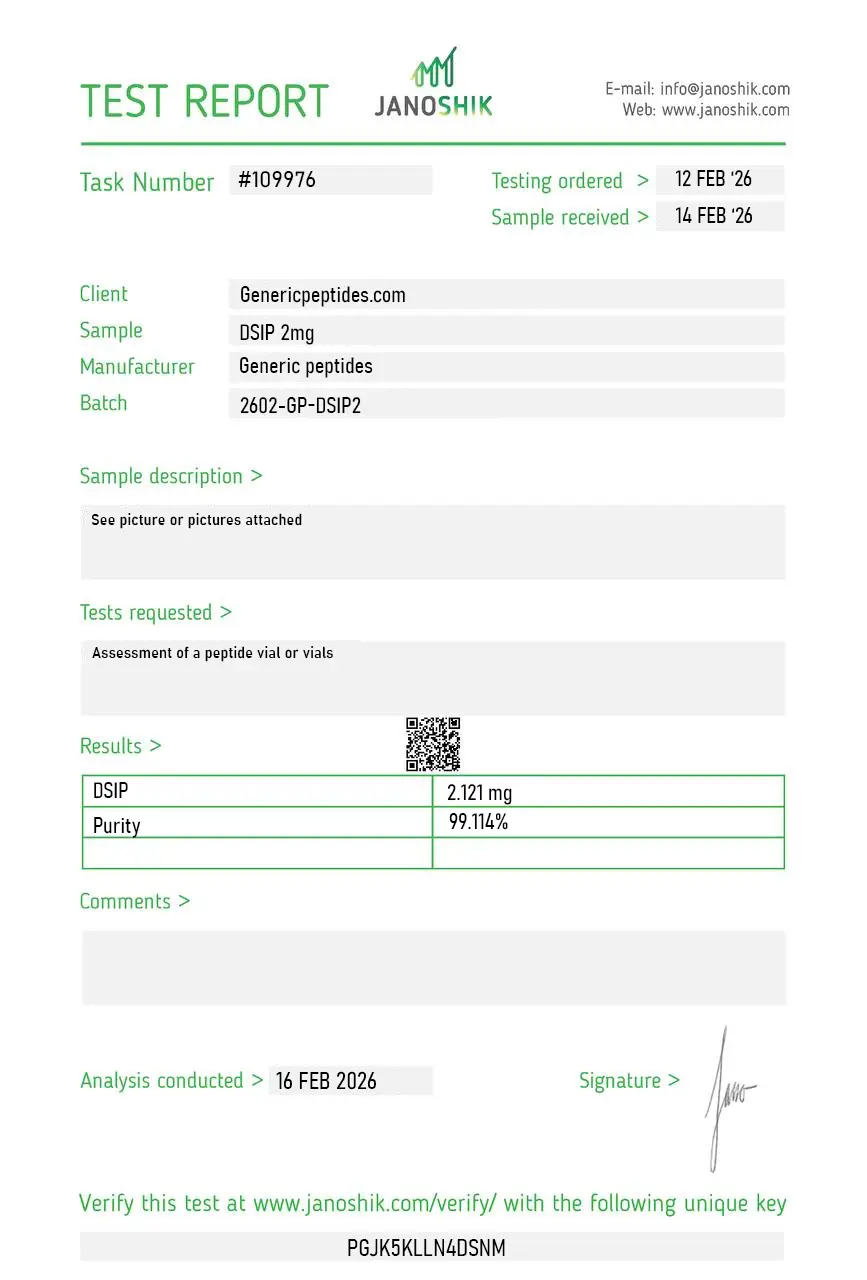
Authenticity support includes official Dragon Pharma presentation, batch-linked lab proof, and original packaging — all of which help reinforce product legitimacy and buyer confidence.
| Authenticity Feature | Details |
|---|---|
| Packaging | Original manufacturer packaging — sealed and unaltered |
| Lab Proof | Batch-linked certificate of analysis available on request |
| Supply Chain | Sourced exclusively through official Dragon Pharma distribution |
DSIP — Delta Sleep-Inducing Peptide — is a naturally occurring neuropeptide made up of just nine amino acids (sequence: Trp-Ala-Gly-Gly-Asp-Ala-Ser-Gly-Glu), making it one of the smallest peptides studied for neuromodulatory purposes. It was first isolated in the 1970s by Swiss researchers Schoenenberger and Monnier from the thalamic venous blood of rabbits that had been electrically stimulated into deep slow-wave sleep. The researchers initially suspected they had found a novel hypothalamic hormone. DSIP occurs naturally in the hypothalamus, limbic system, pituitary gland, gut, and pancreas, and is also present in human breast milk — which may partly explain why nursing infants fall asleep so readily after feeding. The synthetic versions used in research are chemically identical to the naturally occurring form.
DSIP's exact mechanism is not fully understood — researchers have openly described it as "a still unresolved riddle" in peer-reviewed literature — but several pathways have been identified. It interacts with the hypothalamus and brainstem, the brain regions that govern the sleep-wake cycle, and appears to modulate the release of neurotransmitters including GABA, which quiets neural activity and facilitates the transition into sleep. It may also interact with NMDA receptors and opioid receptor systems, which helps explain its reported effects on pain and withdrawal. One important and unusual property is that DSIP can freely cross the blood-brain barrier and is absorbed from the gut without being broken down by digestive enzymes — a rarity among peptides that makes oral or injectable delivery potentially viable. Rather than sedating the brain, DSIP appears to modulate and optimize the natural architecture of sleep.
This is one of the most important distinctions to understand. Melatonin primarily signals the timing of sleep — it tells the body it is dark and time to begin winding down, but does not directly deepen sleep quality. Conventional sleeping pills such as benzodiazepines and Z-drugs (like zolpidem) act on GABA-A receptors to produce sedation, but they come with risks including tolerance, dependence, REM suppression, and next-day cognitive impairment. DSIP is described in the literature as a sleep-promoting substance rather than a sedative — it appears to increase slow-wave delta sleep without significantly suppressing REM sleep, preserving the full architecture of the sleep cycle. Notably, DSIP is not a drug to take just before bed. Research indicates that a dose given during the day can improve sleep quality over the following night and for several nights thereafter.
The human data is promising but limited in scale. In the 1980s, several small European trials in patients with chronic insomnia found statistically significant improvements in sleep efficiency, reduced sleep latency (time to fall asleep), fewer nighttime awakenings, and increased slow-wave sleep compared to placebo. A double-blind study in 16 chronic insomnia patients showed higher sleep efficiency and shorter sleep latency with DSIP versus placebo, though the researchers noted the effects were weak and partly attributable to changes in the placebo group. Studies also observed that DSIP's effects were more pronounced in people with disrupted sleep — individuals without sleep disturbance showed minimal response. Overall, human sleep trial evidence is encouraging but far too small in sample size and too old to draw definitive conclusions.
This is one of the most clinically interesting areas of DSIP research, and the results are striking. In a study involving 107 inpatients with alcohol or opiate withdrawal symptoms, DSIP was administered intravenously. Clinical symptoms disappeared or improved markedly and rapidly in 97% of opiate-dependent patients and 87% of those with alcohol dependence, with tolerance described as good — only a few patients reported headaches. The hypothesis behind this effect is that DSIP may have agonistic activity at opioid receptors, explaining why naloxone (an opioid blocker) reverses some of its effects in animal studies. A separate case report documented rapid and repeated improvement in opioid withdrawal symptoms following DSIP in a young woman with opioid dependence. These findings are compelling, but the studies are old, small, and not replicated in modern controlled trials.
The side effect profile observed across clinical studies and anecdotal reports is generally mild. The most commonly reported side effects are headaches — thought to relate to DSIP's interaction with serotonin and other neurotransmitter systems — along with mild dizziness, occasional nausea, and temporary injection site redness or irritation. Some people report next-day sluggishness when higher doses are used, likely because DSIP enhances slow-wave sleep depth. No lethal dose has been identified in animal studies, no serious adverse events were reported in human trials, and no dependency or withdrawal effects have been documented. One important interaction risk to be aware of: because DSIP may affect GABA and NMDA receptor activity, combining it with other sleep medications, alcohol, or sedatives could increase the risk of excessive sedation or unpredictable neurological effects.
Research suggests DSIP has a broader range of physiological effects than its name implies. It appears to act as a stress-limiting factor by suppressing cortisol and ACTH (the stress hormone cascade) — in one rat study, DSIP reduced plasma corticosterone levels by 30%. It has been studied for pain modulation, with animal data showing significant dose-dependent pain reduction reversed by naloxone, suggesting opioid system involvement. A small human pilot study found DSIP reduced pain in six out of seven patients suffering from chronic migraines, vasomotor headaches, tinnitus, and psychogenic pain. It also stimulates the release of growth hormone and luteinizing hormone (LH), which has attracted interest from longevity and anti-aging researchers. Animal studies have additionally suggested anticarcinogenic and geroprotective effects — including a 2.6-fold reduction in spontaneous tumor incidence in mice given DSIP across their lifespan — though none of this has been validated in humans.
Human clinical trials used intravenous doses of approximately 25 nmol per kilogram of body weight, which works out to roughly 1,500 mcg for a 70 kg individual. In research and clinical practice today, the most commonly referenced protocol uses subcutaneous injection of 100–250 mcg, typically administered 1–3 hours before bed, with a common cycle of five days on and two days off over eight weeks. Unlike most peptides that must be taken close to bedtime to work, DSIP's delayed mechanism means a daytime dose can still improve sleep that night and potentially the following nights. There are no FDA-approved dosing guidelines, and given the paucity of modern human pharmacokinetic data, any protocol should be treated as exploratory and supervised by a qualified physician.
In the United States, DSIP is not FDA-approved for any human use and is classified as a research chemical. It appears on the FDA's list of bulk drug substances with potential safety concerns — not because of documented toxicity but because of limited human data — and cannot be legally compounded by pharmacies for therapeutic use. A pharmaceutical formulation of DSIP called Deltaran has been developed and used clinically in Russia for sleep disorders, stress-related conditions, and addiction treatment, reflecting the broader acceptance of peptide pharmaceuticals in Eastern European medicine. In most Western countries including Europe, Canada, and Australia, DSIP is similarly unregulated and available only through research chemical suppliers. Regarding sports, DSIP is not currently on the WADA Prohibited List, though its potential recovery-enhancing properties could attract future regulatory attention.
The most significant limitation of DSIP is not toxicity but the sheer absence of modern, large-scale clinical data. Almost all human studies were conducted in the 1980s with small sample sizes, and no major clinical trial program has followed them up. Long-term safety, optimal dosing, and true efficacy across diverse populations remain unestablished. People currently taking benzodiazepines, Z-drugs, opioid medications, or other CNS depressants should not combine them with DSIP without medical oversight, given the overlapping neurological pathways. Those with hormonal conditions should be aware that DSIP influences GH and LH release, which could cause downstream shifts. Pregnant or breastfeeding women, children, and individuals with neurological disorders should avoid it entirely until proper clinical evidence exists. Despite decades of scientific interest, DSIP remains, in the words of researchers, a fascinating but unfinished chapter.