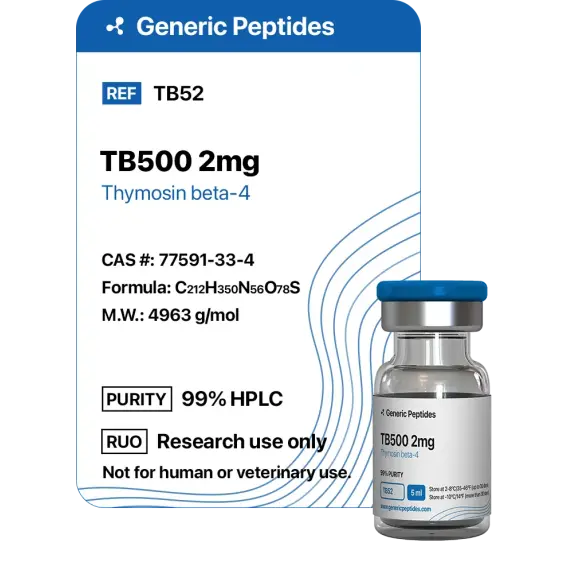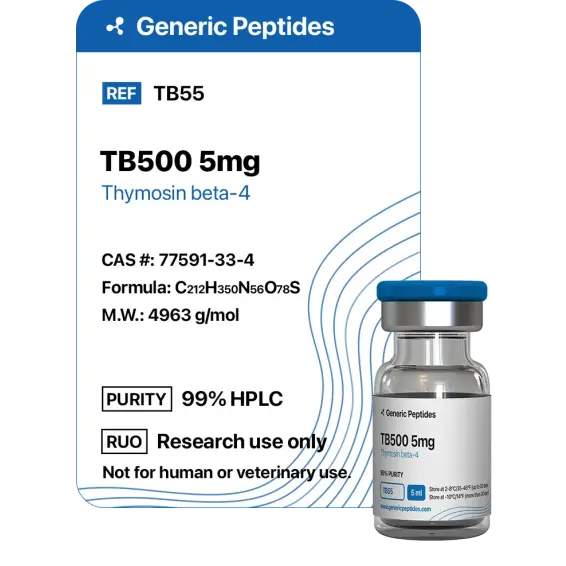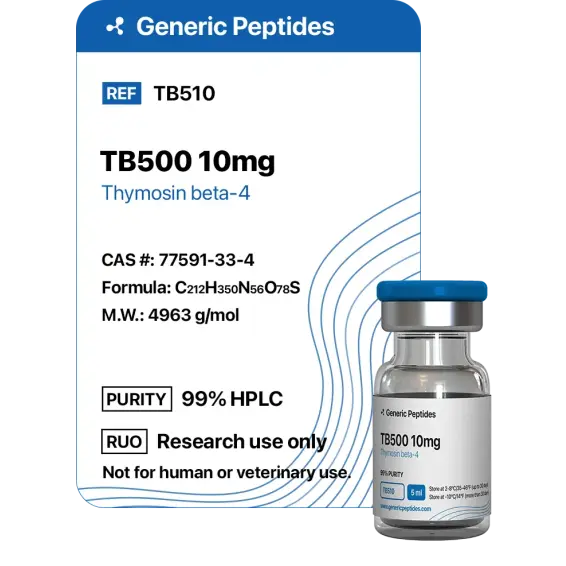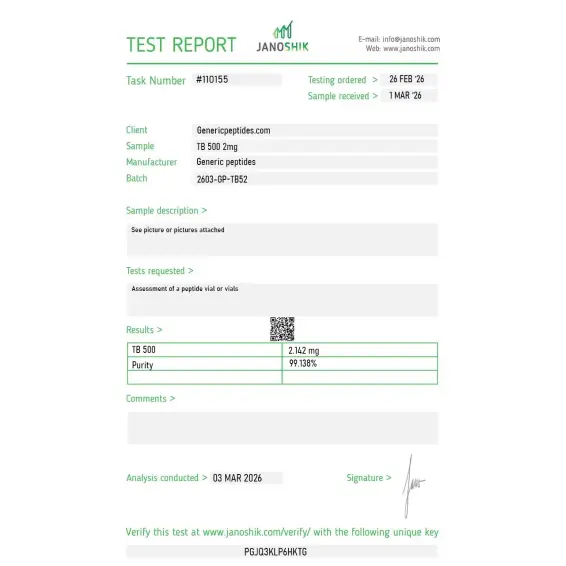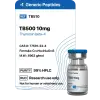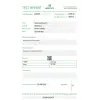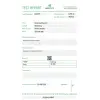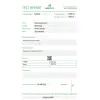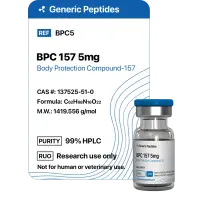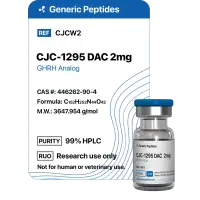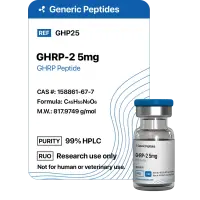
- For in vitro testing and laboratory use only.
- Not for human or animal consumption.
- Bodily introduction is illegal.
- Handle only by licensed professionals.
- Not a drug, food, or cosmetic.
- Educational use only.
Quick take on TB-500
TB-500 is a synthetic peptide fragment corresponding to the active region (residues 17-23) of Thymosin Beta-4 (TB-4) — a naturally occurring 43-amino acid protein found in nearly every cell of your body, with particularly high concentrations in platelets and wound fluid. When you cut yourself, TB-4 is one of the first molecules that floods the injury site to orchestrate repair. TB-500 is the synthetic, commercially-produced fragment that carries most of the healing activity, widely used in veterinary medicine (particularly in racehorses) and in research peptide channels for human use.
Mechanism in plain English
TB-500's primary action is binding to G-actin, a protein involved in cell structure and movement, which enables actin sequestration and remodeling. This drives several healing processes simultaneously: cell migration to injury sites, angiogenesis (new blood vessel formation), stem cell recruitment and differentiation, and reduction of inflammation and scar tissue formation. The result is tissue that heals faster and often with better structural integrity than unassisted repair produces.
What it's used for
People take it for soft tissue healing — muscle tears, tendon and ligament injuries, joint issues, chronic inflammation, and recovery from surgical procedures. It's often paired with BPC-157 as "the healing stack," because the two peptides work through partially complementary mechanisms. Effects develop gradually over 2-6 weeks, with noticeable improvement in chronic injuries that wouldn't resolve with rest alone.
Upsides and downsides
Main upside — systemic healing effects that extend beyond the injection site. Unlike BPC-157, which many users feel works better locally, TB-500 distributes throughout the body and appears to promote healing wherever tissue needs it.
Main downside — the human evidence base is thin. Most research comes from animal models and cell studies, with no substantial controlled human trials. Real-world effects, while often reported as genuine by users, vary significantly person to person.
Typical protocol
Protocols use a loading phase of 2-2.5 mg subcutaneously twice per week for 4-6 weeks, followed by maintenance doses of 2-2.5 mg once every 1-2 weeks or cycle breaks entirely. Some protocols inject near the injury site; others favor systemic subcutaneous dosing into the abdomen. The long effective duration means dosing frequency is much lower than with BPC-157.
Who should skip it
- Anyone with active cancer — angiogenesis and cell proliferation effects mean new blood vessels can feed tumors.
- Pregnant women.
- Anyone with uncontrolled clotting disorders.
Regulatory status
Banned by WADA under category S2 as a growth factor; also explicitly banned in horse racing under most regulatory bodies due to widespread use in that sport. Not approved as a medication for human use anywhere; sold as a research chemical.
In 1965, Allan Goldstein — then a young researcher at Albert Einstein College of Medicine — was trying to understand what the thymus gland did. The thymus was known to be critical for immune development but mysterious in its specific mechanisms. Goldstein's team began extracting and characterizing the small peptide hormones produced by thymic tissue, eventually identifying a whole family of them and naming them the thymosins.
One of these peptides turned out to have an unusual property. Rather than affecting immune cells specifically, thymosin beta-4 (Tβ4) bound tightly to actin — the protein scaffold that forms the cytoskeleton inside virtually every cell. Tβ4 showed up almost everywhere researchers looked: in platelets, macrophages, neurons, skin cells, heart tissue. Pound for pound, it's one of the most abundant intracellular proteins in the human body [1].
For decades, Tβ4 was mostly a curiosity for basic cell biologists studying cytoskeletal dynamics. Then in the early 2000s, evidence accumulated that this little peptide played a central role in wound healing, tissue repair, and regeneration — and the pharmaceutical industry took notice. Meanwhile, a synthetic 7-amino-acid fragment representing the active actin-binding region of Tβ4 quietly emerged in veterinary medicine — specifically horse racing, where it became legendary for accelerating injury recovery. That fragment is TB-500. Over the past decade, it has migrated from racehorses to human off-label use, becoming one of the most popular recovery peptides in sports medicine and biohacking communities.
TB-500: what it is and how it works in a nutshell
TB-500 is technically a synthetic heptapeptide (sequence: Leu-Lys-Lys-Thr-Glu-Thr-Gln / LKKTETQ) corresponding to the actin-binding motif of the full thymosin beta-4 protein.
Terminology confusion alert. In the commercial peptide market, products labeled "TB-500" are inconsistently what the name suggests. Some suppliers sell the actual 7-amino-acid fragment. Others sell the full 43-amino-acid thymosin beta-4 under the TB-500 name. Read the spec sheet — molecular weight of the true 7-amino-acid TB-500 is approximately 889 g/mol, while full Tβ4 is roughly 4961 g/mol. The two have overlapping but distinct properties:
- True TB-500 (LKKTETQ, 7aa): purely the actin-binding motif. Simpler action profile.
- Full thymosin beta-4 (43aa): contains additional domains that interact with other biological targets beyond just actin.
Most clinical research in humans has used the full Tβ4 molecule. Most veterinary use has been TB-500 fragment. Much of what's sold as "TB-500" in the peptide market is actually full Tβ4 — which is generally considered more potent for healing applications.
TB-500 is not FDA-approved for any human indication. Full thymosin beta-4 has been studied under the clinical development code RGN-259 by RegeneRx Biopharmaceuticals for applications including dry eye syndrome and cardiac repair, with mixed clinical trial results.
TB-500 mechanism of action: what it actually does in the body
The core mechanism: G-actin binding and actin polymerization regulation.
Your cells contain actin in two forms: G-actin (globular, monomeric, free) and F-actin (filamentous, polymerized, structural). The balance between these two forms determines whether cells can migrate, reshape, divide, or stay stationary. Thymosin beta-4 — and by extension TB-500 — binds G-actin monomers and regulates this dynamic equilibrium [2].
This single mechanism cascades into multiple physiological effects:
Enhanced cell migration. When tissue is injured, cells need to migrate to the wound site to repair it. TB-500 promotes this migration by keeping actin in a state conducive to cytoskeletal remodeling. Endothelial cells migrate to form new blood vessels; fibroblasts migrate to rebuild connective tissue; immune cells migrate to clear debris and infection. TB-500 enhances all of these migration processes.
Angiogenesis (new blood vessel formation). TB-500 upregulates vascular endothelial growth factor (VEGF) expression and enhances endothelial cell tube formation — the basic process by which new capillaries form. Philp et al. (2003) and subsequent studies showed accelerated vascularization of healing tissues in mice treated with TB-500 or Tβ4 [3]. This is functionally important because blood supply is rate-limiting for healing — new vessels bring oxygen, nutrients, and immune cells to damaged tissue.
Anti-inflammatory effects. Tβ4 reduces pro-inflammatory cytokines including TNF-α, IL-1β, and IL-6. This isn't anti-inflammatory in the broad immunosuppressive sense — it's a more targeted reduction of the chronic inflammatory signaling that can actually impair healing when excessive.
Anti-apoptotic signaling. TB-500 reduces programmed cell death in stressed tissue. Particularly relevant in ischemia-reperfusion injury, myocardial damage, and corneal injury. This gives damaged cells time to recover rather than self-destructing.
Stem cell mobilization and progenitor recruitment. Emerging research suggests Tβ4 and TB-500 promote migration and differentiation of various progenitor cell populations — cardiac progenitors after heart injury, neural precursors after brain injury, mesenchymal stem cells generally.
Pharmacokinetics: TB-500's plasma half-life is approximately 2-3 hours, but effects persist much longer because the peptide initiates downstream cellular processes that continue after it's cleared. The molecule is small enough to distribute widely through tissues.
Who uses TB-500 and what for
- Athletes and lifters recovering from injuries — the largest user group. Muscle strains, tendon injuries, joint problems, chronic overuse issues. The recovery acceleration is the primary reported effect.
- Post-surgical patients — off-label use to accelerate soft tissue healing after orthopedic and other surgeries.
- People with chronic tendinopathies — Achilles, rotator cuff, tennis/golfer's elbow, patellar tendon issues. The TB-500 + BPC-157 combination is particularly popular for these applications.
- Equestrian and racing communities — TB-500 has a long history in horse racing and equine veterinary medicine. Some of the evidence base comes from this source.
- People with chronic wounds or poor healing — diabetic wounds, pressure ulcers, wound healing impairment. This is closer to the legitimate clinical research application.
- People recovering from cardiovascular events — based on Tβ4's cardiac repair research, some cardiac patients use it adjunctively.
Realistic expectations over a 4-6 week loading cycle followed by maintenance: faster recovery from acute injuries (strains, mild tears) — often noticeable within 2-3 weeks; gradual improvement in chronic tendinopathies over 6-8 weeks; reduced inflammation and swelling in injured areas; better tissue quality in the healed region (though this is harder to objectively verify).
What WON'T happen: miraculous healing of structural damage (complete tendon ruptures still need surgical repair), performance enhancement beyond recovery (TB-500 isn't a performance peptide), rapid healing of severe injuries that would normally take months, results without appropriate rest and rehabilitation.
What TB-500 stacks with: popular combinations
- TB-500 + BPC-157 — the classic injury recovery stack. Different mechanisms: BPC-157 handles direct tissue protection and angiogenesis via VEGF/FAK-paxillin; TB-500 handles actin-mediated cell migration and cytoskeletal remodeling. Complementary enough that they're routinely combined despite some mechanistic overlap.
- TB-500 + PEG-MGF — for muscle-specific recovery. PEG-MGF activates satellite cells; TB-500 enhances the broader migration and angiogenic environment for muscle repair.
- TB-500 + CJC-1295 + Ipamorelin — combining TB-500's tissue repair with GH support for comprehensive recovery protocols.
- TB-500 + IGF-1 LR3 — aggressive recovery protocol used by some athletes. Different mechanisms converge on tissue healing.
Generally avoided with: active malignancy treatment (theoretical concerns about promoting vascularization of tumor tissue), immediately post-surgery before wound stability (VEGF upregulation might theoretically interfere with specific surgical outcomes).
TB-500 side effects and risks
Despite widespread off-label use, the human safety data for TB-500 specifically is limited. Most safety data comes from full thymosin beta-4 clinical trials and decades of veterinary experience.
Commonly reported in off-label use (typically mild):
- Injection site reactions — redness, small bumps, transient
- Mild headache — occasional, usually resolves
- Lethargy or fatigue — some users report during loading phase
- Temporary flu-like symptoms — uncommon but documented
- Slight dizziness — rare
Not commonly reported but theoretically concerning:
- Tumor growth promotion — the mechanisms TB-500 activates (angiogenesis, cell migration, anti-apoptosis) are exactly the mechanisms cancer cells exploit. Theoretical concern, unconfirmed in published clinical literature but mechanistically plausible. This is the main reason anyone with active or recent cancer should avoid TB-500.
- Pathological vascularization — enhanced angiogenesis in wrong contexts could theoretically worsen conditions that involve abnormal blood vessel growth (proliferative diabetic retinopathy, certain macular conditions).
Who should be cautious or avoid:
- Anyone with active or recent history of cancer
- People with strong family history of cancer
- Pregnant or breastfeeding women (no safety data)
- Anyone with active proliferative retinopathy
- People with undiagnosed growths or masses
- Competitive athletes — TB-500 is on the WADA Prohibited List (S2) [4]
The cancer concern is worth taking seriously. Unlike most peptide safety concerns which are theoretical extrapolations, TB-500's mechanism directly involves processes that cancer cells use to grow and spread (angiogenesis, cell migration, anti-apoptosis). This doesn't mean TB-500 causes cancer in healthy people — no evidence supports that. But using it when you have undetected or active cancer could theoretically accelerate disease progression. Getting a clean health evaluation before starting makes more sense with TB-500 than with most peptides.
How to use and store TB-500
Subcutaneous or intramuscular injection. Intramuscular injection near injured tissue is a common approach (though systemic distribution happens regardless). Oral bioavailability is essentially zero.
Typical protocols:
- Loading phase: 5 mg per week (often split as 2.5 mg twice weekly) for 4-6 weeks
- Maintenance phase: 2.5 mg per week or every other week
- Injury-specific protocol: 2-5 mg twice weekly for 4-8 weeks during active injury recovery
- Cycle length: 4-8 weeks typical, then break of 4+ weeks
Timing: not particularly time-sensitive. Most users inject 2-3 times per week at consistent times. Some stack with other recovery peptides injected together.
Storage: lyophilized powder in freezer at -20°C. After reconstitution with bacteriostatic water, refrigerate at 2-8°C and use within 14-30 days. TB-500 is reasonably stable but protect from light and avoid freeze-thaw cycles.
TB-500 vs alternatives: what's different
- Full thymosin beta-4 (Tβ4, RGN-259) — the 43-amino-acid parent molecule. More domains, potentially broader effects, most clinical research has been done with this form. Often what's actually being sold as "TB-500" in the market.
- BPC-157 — different healing peptide, different mechanisms (gastric origin, VEGF/NO pathway, FAK-paxillin). Complementary to TB-500, commonly stacked.
- PEG-MGF — muscle-specific via satellite cell activation. More targeted for muscle repair specifically.
- IGF-1 LR3 — systemic anabolic effects, broader muscle and recovery support at the cost of higher risk profile.
- Platelet-Rich Plasma (PRP) injections — an actual FDA-regulated clinical intervention for tendon and joint healing. Different mechanism entirely, more established in orthopedic medicine.
TB-500's distinguishing feature: specifically targets the actin-mediated cellular migration and cytoskeletal remodeling component of healing — a mechanism not addressed by most other peptides. For comprehensive injury recovery, it fills a specific role rather than competing with other recovery compounds.
Myths about TB-500
- "TB-500 heals anything." It accelerates specific aspects of tissue repair — cell migration, angiogenesis, inflammation modulation. It doesn't regenerate cartilage destroyed by years of arthritis, doesn't fix structural problems requiring surgical repair, doesn't heal bone better than appropriate immobilization would. Treating it as a universal healing agent misrepresents a compound with genuinely useful but specific effects.
- "The horse racing track record proves TB-500 works in humans." Horses and humans share mammalian physiology, but veterinary evidence isn't a substitute for human clinical trials. Horses racing on TB-500 are anecdotal evidence at best — controlled comparisons don't exist in that setting, dose differences are significant, and the endpoints that matter differ from human applications. Veterinary use suggests real biological activity (which preclinical research confirms) but doesn't validate specific human protocols or outcomes.
Sources
- Goldstein, A. L., Hannappel, E., & Kleinman, H. K. (2005). Thymosin beta4: actin-sequestering protein moonlights to repair injured tissues. Trends in Molecular Medicine, 11(9), 421-429. — foundational review by the discoverer of thymosin beta-4 establishing its role in tissue repair.
- Safer, D., Elzinga, M., & Nachmias, V. T. (1991). Thymosin beta 4 and Fx, an actin-sequestering peptide, are indistinguishable. Journal of Biological Chemistry, 266(7), 4029-4032. — established that thymosin beta-4 is the principal actin-sequestering peptide in mammalian cells.
- Philp, D., Badamchian, M., Scheremeta, B., Nguyen, M., Goldstein, A. L., & Kleinman, H. K. (2003). Thymosin beta 4 and a synthetic peptide containing its actin-binding domain promote dermal wound repair in db/db diabetic mice and in aged mice. Wound Repair and Regeneration, 11(1), 19-24. — landmark study demonstrating both full Tβ4 and the TB-500 fragment accelerate wound healing.
- World Anti-Doping Agency (WADA). Prohibited List — Section S2: Peptide Hormones, Growth Factors, Related Substances and Mimetics. https://www.wada-ama.org — TB-500 and thymosin beta-4 classification in competitive sport.
- Sosne, G., Qiu, P., Christopherson, P. L., & Wheater, M. K. (2007). Thymosin beta 4 suppression of corneal NFκB: a potential anti-inflammatory pathway. Experimental Eye Research, 84(4), 663-669. — documents anti-inflammatory mechanism of Tβ4.
- Bock-Marquette, I., Saxena, A., White, M. D., Dimaio, J. M., & Srivastava, D. (2004). Thymosin beta4 activates integrin-linked kinase and promotes cardiac cell migration, survival and cardiac repair. Nature, 432(7016), 466-472. — key paper on cardiac repair applications that drove clinical development of Tβ4.
- Crockford, D., Turjman, N., Allan, C., & Angel, J. (2010). Thymosin beta4: structure, function, and biological properties supporting current and future clinical applications. Annals of the New York Academy of Sciences, 1194, 179-189. — comprehensive review of Tβ4 clinical development and therapeutic applications.
- Zhang, J., Zhang, Z. G., Morris, D., Li, Y., Roberts, C., Elias, S. B., & Chopp, M. (2009). Neurological functional recovery after thymosin beta4 treatment in mice with experimental autoencephalomyelitis. Neuroscience, 164(4), 1887-1893. — neurological applications research.
TB-500 (Thymosin Beta-4 Fragment) Dosage Guide
TB-500 is a synthetic peptide fragment of Thymosin Beta-4 (Tβ4), a naturally occurring 43-amino-acid protein present in nearly every cell in the body. It captures the active actin-binding domain (LKKTETQ) responsible for Tβ4's key healing effects, binding G-actin monomers to enable cellular motility, promoting angiogenesis via VEGF signaling, reducing inflammatory cytokines (TNF-α, IL-1β, IL-6), and mobilizing stem and progenitor cells to injury sites. Unlike BPC-157's localized action, TB-500 is systemically active — the injection site doesn't need to be near the injury. This guide is aimed at users recovering from soft tissue injuries (tendons, ligaments, muscles), those with chronic inflammatory conditions or slow-healing injuries, and athletes seeking systemic recovery enhancement. Dosing below combines the Malinda et al. wound healing preclinical data, the Crockford Tβ4 clinical review, and community loading/maintenance protocols refined over two decades in veterinary and human research use.
Real-World Dosage Protocols by Experience Level
| Experience Level | Dose | Frequency | Notes |
|---|---|---|---|
| Beginner loading | 2 mg | Twice weekly, SC, 4 weeks | Conservative entry into loading phase |
| Standard loading | 4–5 mg | Split 2 injections weekly, SC | Most common community protocol |
| Aggressive loading | 6 mg | Split 2 injections weekly, SC, 4–6 weeks | Severe injury; higher nausea incidence |
| Maintenance | 2 mg | Once weekly, SC | After loading phase complete |
| Low maintenance | 2 mg | Every 2 weeks, SC | Longevity / systemic health protocols |
| Acute injury (intensive) | 2 mg | Every 3–4 days, SC, 3 weeks | Short-term approach for fresh injury |
Doses also shift depending on the specific goal. The same peptide used for acute injury versus chronic tendinopathy or cardiovascular support can follow quite different protocols.
Dosage by Goal
| Goal | Recommended Dose | Frequency | Cycle Length |
|---|---|---|---|
| Acute soft tissue injury | 4–6 mg per week | Split 2 injections, SC | 4–6 weeks loading + 4–6 weeks maintenance |
| Chronic tendinopathy | 4 mg per week | Split 2 injections, SC | 6–8 weeks loading + 4 weeks maintenance |
| Post-surgical recovery | 5 mg per week | Split 2 injections, SC | 4–6 weeks loading |
| General recovery / athletic | 2–2.5 mg per week | Once weekly, SC | 6–12 weeks |
| Stacked with BPC-157 (classic) | 4 mg TB-500 + 250–500 mcg BPC-157 daily | Weekly TB-500, daily BPC-157 | 4–6 weeks loading |
| Systemic / longevity protocol | 2 mg every 2 weeks | Continuous low-dose, SC | Ongoing after loading |
Inject subcutaneously in the abdomen — because TB-500 is systemically active and distributes widely to tissues with high metabolic activity (including your injury site), you don't need to inject near the injury, though intramuscular injection near an injured muscle is an option for localized focus. The standard protocol follows a loading-then-maintenance structure: 4–6 weeks of higher weekly doses to build tissue levels, followed by weekly or biweekly maintenance at roughly half the loading dose, then a 4-week washout before re-initiating. Absolute contraindications include active malignancy or recent cancer history — TB-500 promotes angiogenesis and cell migration, which could theoretically support tumor growth even though no direct tumor-promoting effect has been demonstrated in healthy animal models — along with pregnancy, breastfeeding, and known hypersensitivity to thymosin peptides. Mild transient fatigue and injection-site reactions are the most commonly reported side effects.
TB-500 Storage Guide: How to Keep Your Research Peptide Stable and Effective
TB-500 (Thymosin Beta-4) ships as a white lyophilized powder in a sealed glass vial, freeze-dried to preserve this 43-amino-acid peptide and extend its shelf life. With a few simple habits — cold, dark, dry — the sealed vial stays in perfect condition for its full shelf life. Here's exactly how to store it.
Lyophilized Powder (Unreconstituted)
| Parameter | Details | Notes |
|---|---|---|
| Storage Temperature | Freezer at −20°C (−4°F) for long-term storage up to 24 months. Refrigeration at 2–8°C (36–46°F) is fine for short-term use up to ~3 months. | Original sealed vial in the freezer is the safest default. |
| Light Sensitivity | Yes — protect from direct light and UV exposure to prevent photodegradation. | Keep in the original box or an opaque, amber container. |
| Freezing | Allowed and recommended. −20°C is standard for long-term storage; −80°C extends stability further if available. | Freeze from the start if you won't use it within 3 months. |
| Oxidation Sensitivity | TB-500 contains a methionine residue that's prone to oxidation if the vial seal is broken or the powder is exposed to air. | Keep the aluminum crimp cap intact until ready to reconstitute. |
| Signs of Degradation | Healthy powder is white to off-white and loose or cake-like. Watch for yellowing, browning, clumping, visible moisture, or a sticky texture. | Any color change, clumping, or moisture = discard the vial. |
| Common Mistakes | Leaving the vial at room temperature after delivery, storing in a humid kitchen or bathroom, or opening a cold vial and letting condensation form inside. | Put it in the freezer on arrival, and let sealed vials warm to room temperature before opening. |
Shipping & Product Authenticity
Every order is processed quickly and shipped with full tracking. All products come directly from the official Generic Peptides supply chain — in original manufacturer packaging, carefully handled from warehouse to your door.
Shipping Times
| Destination | Delivery Time | Notes |
|---|---|---|
| USA Domestic | 4–5 business days | Faster when local warehouse stock is selected at checkout |
| International | 13–15 business days | Tracking included; update frequency may vary by destination country |
| Order Processing | 24–48 business hours | Processing begins after payment confirmation |
| Tracking | Provided on all orders | Tracking number sent after dispatch; multiple warehouses may result in separate shipments |
Direct Supply & Secure Delivery
This product is supplied through the official Generic Peptides distribution chain and shipped in original manufacturer packaging. Orders are packed securely to protect the contents during transit and to respect customer privacy as a standard practice.
Outer packaging is neutral and does not display product details on the exterior — a common approach to protect shipments from damage, tampering, and unnecessary exposure during delivery.
What to Expect
- Orders are processed after payment confirmation
- USA domestic shipping is typically faster when local stock is selected
- International orders include tracking, though update frequency may vary by destination
- Multiple warehouses may result in separate shipments when applicable
Authenticity & Verified Supply
Every order includes full authenticity assurance: official Generic Peptides presentation, batch-linked lab documentation, and sealed original packaging — giving customers confidence in every purchase.
| Authenticity Feature | Details |
|---|---|
| Packaging | Original manufacturer packaging — sealed and unaltered |
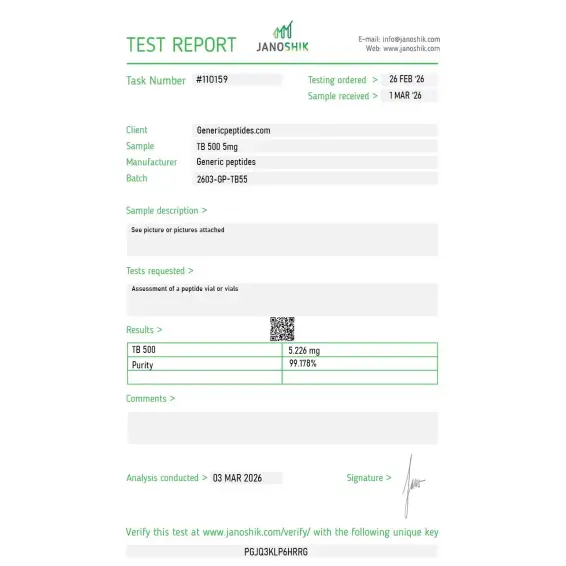
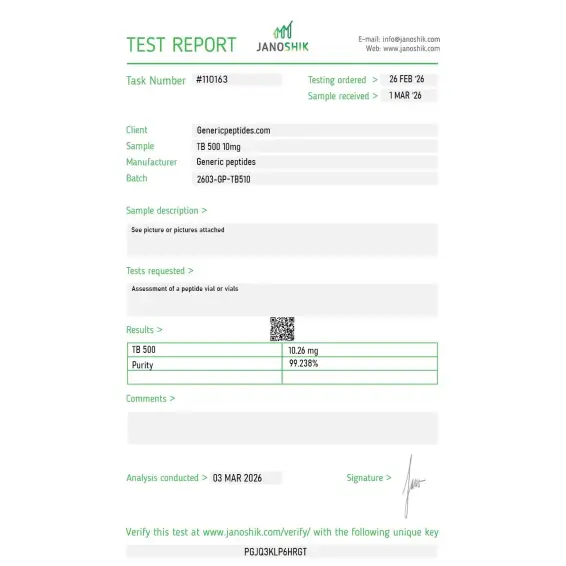
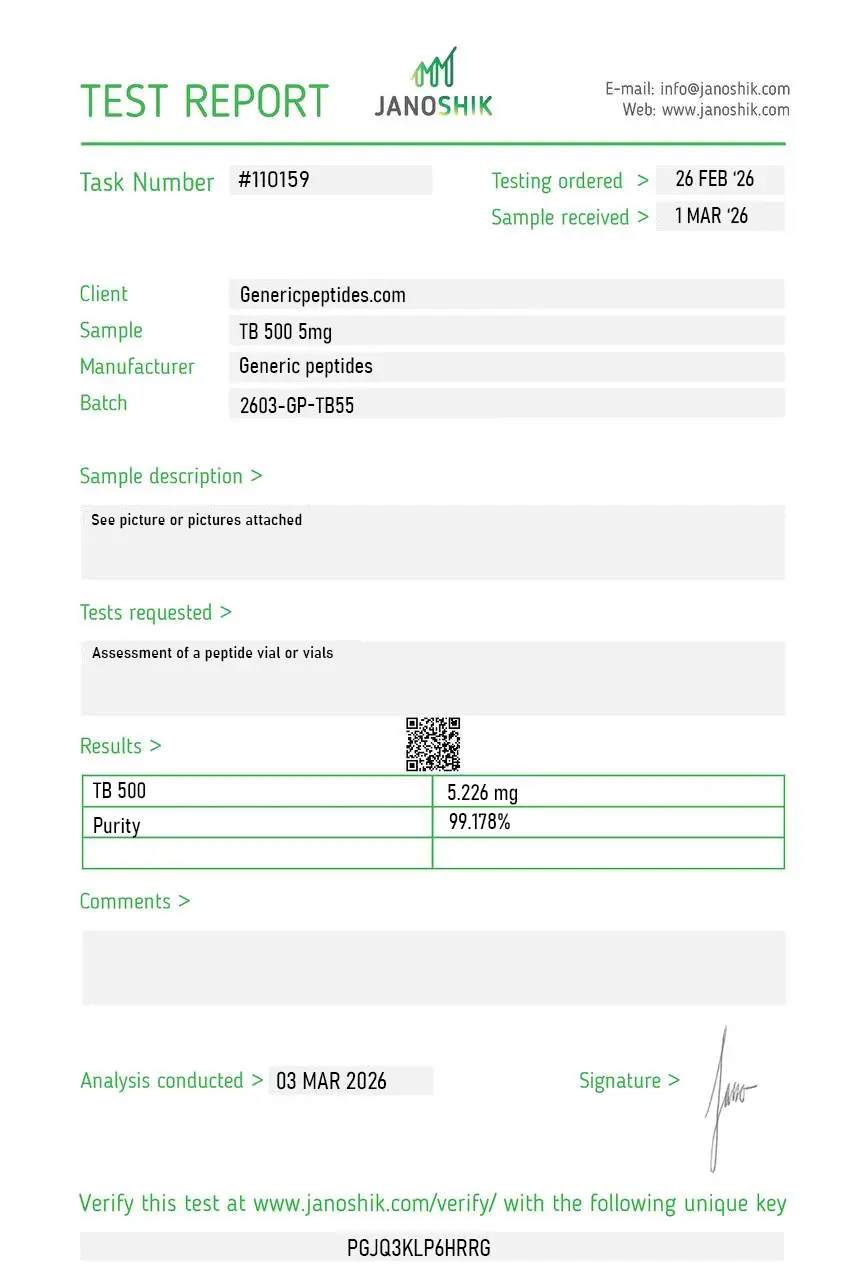
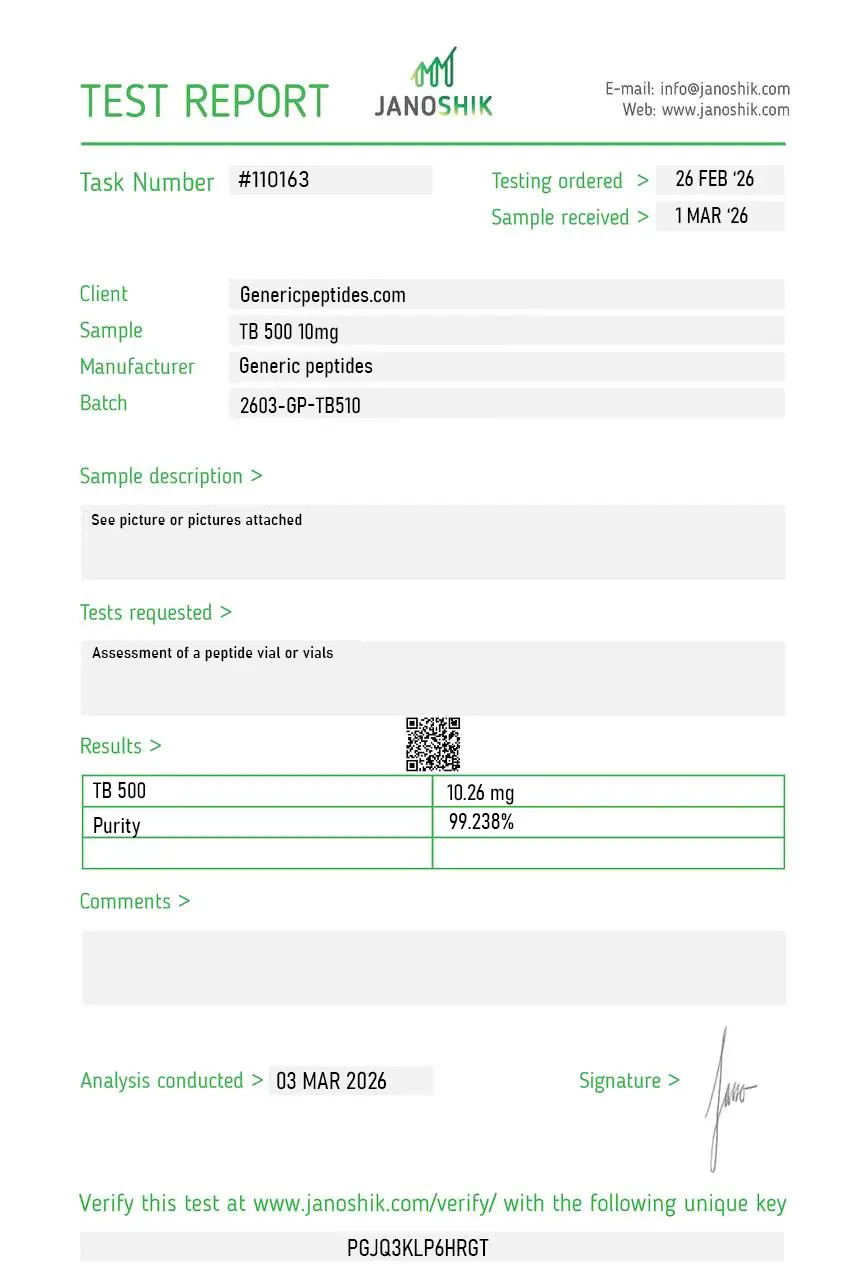
| Lab Documentation | Batch-linked certificate of analysis available on request |
| Supply Chain | Sourced exclusively through official Generic Peptides distribution |
Shipping & Returns
TB-500 is a synthetic peptide based on a 7-amino-acid active region (LKKTETQ) of thymosin beta-4 (TB-4), a naturally occurring protein found in nearly every cell of the human body. Thymosin beta-4 itself was first isolated from the thymus gland in 1981 and is one of the most abundant proteins inside your cells, where it plays a key role in tissue repair, cell migration, and inflammation control. TB-500 is not FDA-approved for human use — it is sold as a research chemical, though it is widely used off-label by athletes, injured individuals, and veterinarians (it is commonly used in racehorses).
TB-500's primary mechanism involves binding to G-actin, the protein building block of the cellular skeleton. This binding regulates how cells reshape, move, and migrate to sites of injury. The downstream effects include accelerated cell migration into wounds, promotion of new blood vessel formation (angiogenesis), reduction of inflammation without shutting it down completely, and activation of healing-related signaling pathways like Akt/PI3K. Unlike many peptides, TB-500 acts systemically rather than just locally — once injected, it travels throughout the body and concentrates at sites of injury or inflammation.
Research and user reports suggest TB-500 accelerates healing of soft tissue injuries (muscles, tendons, ligaments), speeds wound closure, reduces inflammation and scar formation, improves flexibility, and supports recovery from chronic injuries that haven't responded to standard rehab. Preclinical studies also show potential benefits for cardiac repair after heart attack, corneal healing, hair follicle regeneration, and neuroprotection after stroke. While animal data is quite strong, human clinical trials on TB-500 specifically are limited — most evidence comes from thymosin beta-4 research rather than the synthetic TB-500 fragment itself.
Common research protocols use a loading phase of 2.0–2.5 mg injected subcutaneously or intramuscularly twice per week for 4–6 weeks, followed by a maintenance phase of 2–2.5 mg once every 1–2 weeks for another 4–6 weeks. Total weekly dosing usually lands in the 4–8 mg range during the loading phase. Cycles typically run 6–12 weeks, and users are generally advised to cycle off for at least 4–6 weeks between protocols. These are not officially approved doses — they come from research, veterinary use, and user experience.
Most users report noticeable improvements in pain, swelling, and range of motion within 2–4 weeks of starting TB-500 therapy. Deeper structural healing of tendons, ligaments, and chronic injuries typically takes 4–8 weeks to become clearly evident. Because TB-500 acts on cellular repair processes rather than masking pain, it doesn't produce immediate relief the way anti-inflammatories do — instead, the improvement tends to be progressive and cumulative. Results vary widely based on injury type, severity, and how closely it's combined with proper rest and rehabilitation.
TB-500 has a generally favorable safety profile in available research, with most reported side effects being mild and transient. These include injection-site reactions (redness, mild pain, swelling), temporary fatigue or lethargy, and occasional headaches. Some users report a flu-like feeling after the first few injections, which usually resolves within a day. The most significant theoretical concerns involve its pro-angiogenic (blood-vessel-forming) and pro-migration effects, which is why it's strictly contraindicated in anyone with active or recent cancer.
No, but they are closely related. Full-length thymosin beta-4 is a 43-amino-acid peptide that occurs naturally in your body. TB-500 is a synthetic 7-amino-acid fragment representing the active "actin-binding" region of TB-4, often with N-terminal acetylation to improve stability. The names are sometimes used interchangeably in peptide vendor marketing, but strictly speaking TB-500 is a short fragment while TB-4 is the full molecule. The closely related full TB-4 compound (RGN-259) has entered formal clinical trials for dry eye disease and heart attack recovery, while TB-500 remains a research peptide.
Yes — this is actually one of the most popular peptide combinations for injury recovery. TB-500 and BPC-157 work through complementary mechanisms: TB-500 acts systemically via actin regulation to promote cell migration and angiogenesis, while BPC-157 works more locally, stimulating growth factor receptors and supporting tendon, ligament, and gut tissue repair. Many clinicians and users consider them synergistic for stubborn injuries. Typical stacks use both peptides at their standard individual doses, injected either separately or combined. As always, combining peptides also combines their risks and unknowns.
TB-500 is not FDA-approved and is not available as a prescription medication. It's sold legally as a "research chemical" labeled "not for human consumption," which places it in a legal grey zone — possession for research is generally legal, but self-injection exists in a more ambiguous space that varies by country. Importantly, TB-500 is explicitly on the WADA prohibited list (category S0: Non-Approved Substances), so any competitive athlete using it risks failed drug tests and sanctions. In 2023, the FDA also classified it in a category that prohibits commercial pharmaceutical compounding.
TB-500 is contraindicated for anyone with active cancer or a recent history of cancer, because its pro-angiogenic and pro-migration effects could theoretically accelerate tumor growth and metastasis. Pregnant or breastfeeding women should avoid it due to insufficient safety data. Other relative contraindications include known hypersensitivity to thymosin peptides, severe immunodeficiency, and active autoimmune conditions. Anyone with a serious chronic illness should not use TB-500 without specialist supervision, and competitive athletes should avoid it entirely due to WADA prohibition.