5-Amino-1MQ: NNMT Inhibitor Lacking Confirmed Human Clinical Trials
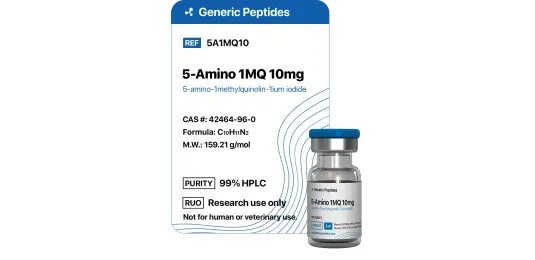
5-Amino-1MQ (5-Amino-1-Methylquinolinium): The Investigational Small-Molecule NNMT Inhibitor With Preclinical Anti-Obesity Evidence and No Confirmed Human Clinical Trials Despite Widespread Marketing Claims
By Medical Team of Generic Peptides
5-Amino-1MQ is a small-molecule nicotinamide N-methyltransferase (NNMT) inhibitor — chemical name 5-amino-1-methylquinolinium, chemical formula C₁₀H₁₁N₂⁺. The compound is built on a 1-methylquinolinium scaffold with a primary amine substitution at the 5-position that provides high membrane permeability and selective NNMT inhibition. Molecular weight approximately 159 Da. Critical context for this article series: 5-Amino-1MQ is NOT a peptide — it is a small organic molecule that is sold and marketed primarily through research-peptide vendor channels alongside actual peptides, but its chemical class is small-molecule pharmacology rather than peptide therapy. The compound is included in this article series because the research-peptide market positioning brings it into the same operational consideration framework as peptides covered elsewhere, but readers should understand the fundamental pharmacological distinction.
5-Amino-1MQ was developed primarily through Stanley J. Watowich's research group at the University of Texas Medical Branch at Galveston, with the foundational pharmacology characterized in the 2018 paper by Neelakantan et al. published in Biochemistry and Biophysics Reports (PMC5826726). Watowich subsequently founded Ridgeline Therapeutics to advance NNMT inhibitor development through pharmaceutical pathways. The compound represents one of several small-molecule NNMT inhibitors in research and early development, including JBSNF-000088 (developed separately by other groups) and various other compounds with different chemical scaffolds and selectivity profiles.
5-Amino-1MQ occupies a notable position in the broader research compound landscape — preclinical evidence supporting anti-obesity effects through a novel mechanism (NNMT inhibition driving NAD+ elevation and lipogenesis suppression) has generated substantial research-chemical market interest, with the compound widely available through gray-market peptide vendor channels marketed for weight loss and metabolic applications. However, the compound has NOT entered confirmed legitimate human clinical trials as of April 2026, NOT been FDA-approved for any indication, and the marketing claims about "Phase 2 trials 2024-2025" that circulate through some research-peptide vendor channels cannot be independently verified through ClinicalTrials.gov, peer-reviewed clinical trial publications, or official Ridgeline Therapeutics regulatory filings. The mismatch between actual evidence development (preclinical only) and marketing claims (citing supposed clinical trials with specific dosing ranges and safety findings) represents one of the more concerning quality control situations affecting compounds sold through research-peptide vendor channels.
I'll be direct about my assessment of 5-Amino-1MQ from the start. The compound has genuine preclinical merit — well-characterized mechanism through selective NNMT inhibition, demonstrated effectiveness in diet-induced obese (DIO) mouse models with substantial body weight and fat mass reduction (35% mass reduction in foundational Neelakantan studies, dose-dependent effects in subsequent Babula 2024 work), favorable preclinical safety profile in mouse studies with no significant adverse effects observed, and emerging research interest in cardiovascular applications through the NAD+ and homocysteine pathways. The mechanism is genuinely innovative and the preclinical evidence is reasonably substantial for a small-molecule research compound. The honest limitations dominate any practical positioning. The compound is not a peptide despite being marketed alongside peptides in research-peptide vendor catalogs. The compound has NOT entered confirmed human clinical trials — claims about "Phase 2 trials 2024-2025" with specific dosing ranges (50-100mg daily) and safety findings (homocysteine elevations) that circulate through research-peptide marketing cannot be independently verified and appear to be vendor-generated content without legitimate clinical research foundation. The compound is NOT FDA-approved and has no regulatory pathway visibly progressing through standard pharmaceutical development. The theoretical homocysteine elevation concern from NNMT inhibition without methylation cofactor support remains largely uncharacterized in human contexts. The widespread availability through research-chemical channels with substantial quality concerns about purity, identity, and dosing accuracy represents the practical access landscape.
This article walks through what 5-Amino-1MQ actually is and its small-molecule chemical identity that distinguishes it from peptides covered elsewhere in this series, the well-characterized NNMT inhibition mechanism with downstream effects on NAD+ metabolism and lipogenesis, the substantial preclinical evidence base in DIO mouse models, the absence of confirmed legitimate human clinical trials and the misinformation circulating about supposed Phase 2 trials, the theoretical safety concerns including homocysteine elevation, the regulatory situation with no FDA approval pathway visible, and how to think about 5-Amino-1MQ decisions given the operational realities including the very preliminary state of evidence development.
What 5-Amino-1MQ Is
5-Amino-1MQ's structural identity reflects rational small-molecule drug design targeting NNMT enzyme inhibition with optimized membrane permeability characteristics.
The compound's chemical structure is 5-amino-1-methylquinolinium — a quinolinium ring system (bicyclic aromatic with nitrogen) with a methyl group at the 1-position (nitrogen) creating the quaternary ammonium charged species, plus a primary amine substitution at the 5-position. The 1-methylquinolinium scaffold provides the NNMT enzyme binding interaction, while the 5-amino substitution provides the optimal membrane permeability profile through both passive diffusion (PAMPA assays) and active transport pathways (Caco-2 cell assays).
The structural design reflects systematic medicinal chemistry optimization. The Watowich group screened multiple 1-methylquinolinium analogs with different amino substitution positions (5-amino, 7-amino, 2,3-diamino, etc.) and found that 5-amino-1MQ had the optimal combination of NNMT inhibition potency, selectivity (doesn't inhibit related SAM-dependent methyltransferases or NAD+ salvage pathway enzymes), and membrane permeability supporting cell-based and in vivo activity.
The compound is a quaternary ammonium small molecule rather than a neutral organic compound. The positive charge on the quinolinium nitrogen creates ionic character that affects pharmaceutical behavior — solubility characteristics, tissue distribution, and pharmacokinetic profile differ from typical neutral small-molecule drugs. The membrane permeability achieved despite the charged species reflects the specific structural features of the 5-amino-1MQ design.
The compound is endogenously produced at very low levels in some tissues as a byproduct of various metabolic pathways, but it is not a major endogenous metabolite. The pharmaceutical/research compound is produced through synthetic chemistry methods using standard organic synthesis techniques.
The pharmacokinetic profile in mouse studies (Babula et al. 2024) shows:
- Single intravenous (5 mg/kg): characterized plasma concentration-time profile
- Oral (30 mg/kg): bioavailability characterized
- Subcutaneous (25 mg/kg, single and multiple dosing): characterized accumulation
- Plasma half-life relatively short (hours rather than days)
- Tissue distribution: preferential accumulation in adipose tissue, liver, and other NNMT-expressing tissues
The compound is supplied for research purposes typically as a hydrochloride salt or other salt form to improve solubility. The free base form is also available. The research-chemical market sells various formats including lyophilized powder, reconstituted solution in research-grade vials, and pre-made solutions of varying concentrations.
The naming convention is straightforward in research contexts. 5-Amino-1MQ, 5A-1MQ, 5A1MQ, and 5-amino-1-methylquinolinium all refer to the same compound. The compound has no commercial brand name because no pharmaceutical product has been approved.
5-Amino-1MQ Mechanism of Action
The mechanism is well-characterized through extensive in vitro and preclinical research, with NNMT enzyme inhibition driving downstream effects on NAD+ metabolism and lipogenesis pathways.
NNMT (Nicotinamide N-Methyltransferase) biology: NNMT is a cytosolic enzyme that catalyzes the methylation of nicotinamide (NAM) using S-adenosylmethionine (SAM) as methyl donor, producing 1-methylnicotinamide (1-MNA) and S-adenosylhomocysteine (SAH). The NNMT reaction effectively consumes nicotinamide (a NAD+ precursor) and converts it to a non-recyclable methylated product, while consuming SAM (the universal methyl donor). NNMT expression is highest in white adipose tissue, with lower but significant expression in liver, skeletal muscle, kidneys, and other tissues. Cardiac and neural tissues express minimal NNMT under normal conditions.
NNMT in obesity and metabolic disease: NNMT expression is elevated 3-5 fold in adipose tissue, liver, and skeletal muscle in obese and insulin-resistant individuals. The elevated NNMT activity creates a "methylation sink" that depletes both nicotinamide (limiting NAD+ regeneration) and SAM (affecting other methylation reactions). The depletion of NAD+ impairs sirtuin (SIRT) activity, mitochondrial function, and cellular energy metabolism. The increased 1-MNA production has its own bioactive effects (some beneficial through SIRT modulation, others potentially detrimental). The increased SAM consumption secondarily affects homocysteine levels through the methionine cycle.
5-Amino-1MQ NNMT inhibition: The compound binds to the NNMT active site as a competitive inhibitor, preventing nicotinamide from being methylated. The inhibition is selective for NNMT over other SAM-dependent methyltransferases and NAD+ salvage pathway enzymes — confirmed through preclinical specificity studies.
Downstream metabolic effects:
NAD+ elevation: NNMT inhibition allows nicotinamide to remain available for NAD+ regeneration through the salvage pathway, increasing intracellular NAD+ levels. The NAD+ elevation is most pronounced in tissues with highest baseline NNMT activity (white adipose tissue, liver). The increased NAD+ supports sirtuin activity, mitochondrial function, and cellular energy metabolism. In adipocytes specifically, NAD+ elevation reaches approximately 35-50% above baseline at therapeutic doses in mouse studies.
Lipogenesis suppression: NNMT inhibition suppresses key lipogenic transcription factors PPARγ and SREBP1 in adipocytes, reducing triglyceride storage and fat cell development. The mechanism connects NAD+ availability to sirtuin-mediated transcriptional regulation of lipid metabolism — increased SIRT1 activity through NAD+ elevation suppresses PPARγ-mediated lipogenesis.
GLUT4 upregulation: 5-Amino-1MQ increases glucose transporter 4 (GLUT4) expression in adipose and muscle tissues. GLUT4 is responsible for insulin-stimulated glucose uptake. The increased GLUT4 expression supports improved glucose clearance from blood and reduced glycogen/fat storage when glucose can't be efficiently utilized.
Energy expenditure effects: NNMT inhibition appears to support increased energy expenditure through NAD+-mediated mitochondrial function enhancement, though the magnitude and mechanism are less clear than the appetite-independent fat mass effects.
Adipocyte-specific effects: 5-Amino-1MQ's effects are most pronounced in white adipose tissue where NNMT expression is highest. The differential tissue effects mean the compound primarily targets metabolic NAD+ pools rather than producing systemic NAD+ elevation across all tissues. This tissue-selective effect distinguishes 5-Amino-1MQ from oral NAD+ precursors (NMN, NR) that produce more uniform tissue NAD+ elevation.
Importantly: 5-Amino-1MQ does NOT significantly affect food intake in animal studies. The body weight reduction occurs through metabolic mechanisms (increased energy expenditure, reduced fat storage, improved metabolic efficiency) rather than through appetite suppression. This distinguishes the compound mechanistically from incretin-based therapies (semaglutide, tirzepatide, retatrutide) that produce weight loss primarily through appetite suppression and food intake reduction.
Theoretical SAM/methionine cycle effects: NNMT inhibition reduces SAM consumption by the NNMT pathway. The reduced SAM consumption has theoretical implications for the methionine cycle — if SAM accumulates and isn't consumed by other methylation reactions, the methionine cycle backs up and homocysteine levels may rise. This concern is theoretical in human contexts (no confirmed clinical evidence has characterized this in humans), but the biochemical pathway makes the concern mechanistically plausible. NNMT consumes approximately 1.2-1.8 mmol of SAM daily in metabolically active individuals (representing ~15-20% of total hepatic SAM turnover), so blocking NNMT eliminates a substantial SAM consumption pathway.
The combination interest with NAD+ precursors (NMN, NR) reflects the complementary mechanisms — NNMT inhibition removes the degradation bottleneck while NAD+ precursors provide additional substrate. The combination should theoretically produce additive NAD+ elevation, though human evidence for this specific combination is lacking.
5-Amino-1MQ Preclinical Evidence Base
The preclinical evidence base is substantial for a research compound but represents preclinical animal studies only — no confirmed human clinical trials have been completed or are actively progressing through standard pharmaceutical development pathways as of April 2026.
Foundational pharmacology (Neelakantan et al. 2018, PMC5826726):
The seminal paper characterizing 5-Amino-1MQ's pharmaceutical properties. Published in Biochemistry and Biophysics Reports by the Watowich group at UTMB. The study screened multiple 1-methylquinolinium analogs and identified 5-Amino-1MQ as the lead compound based on optimal combination of NNMT inhibition potency, selectivity, and membrane permeability. In vitro studies demonstrated NNMT inhibition with significant intracellular 1-MNA reduction, NAD+ elevation, and lipogenesis suppression in adipocytes. In vivo studies in DIO (diet-induced obese) mice using subcutaneous administration of 5-Amino-1MQ at 20 mg/kg three times daily for 11 days demonstrated 35% reduction in body mass, 30% reduction in adipocyte size, and substantial fat mass loss without significant impact on food intake. No observable adverse effects were noted in the preclinical safety assessment.
NNMT in obesity and T2D review (Liu et al. 2021, PMC8337113):
Comprehensive review published in BioMed Research International. Established the broader research framework connecting NNMT to obesity pathophysiology and T2D. Reviewed multiple research approaches targeting NNMT including 5-Amino-1MQ, JBSNF-000088, and oligonucleotide therapeutics. Concluded that NNMT inhibition or knockdown produces consistent effects across preclinical models: increased energy expenditure, reduced body weight and white adipose mass, improved insulin sensitivity, and normalized glucose tolerance and fasting blood glucose levels.
Microbiome study (Dimet-Wiley et al. 2022, PMID 35013352):
Published in Scientific Reports. Demonstrated that 5A-1MQ treatment combined with low-fat diet (LD) switch in DIO mice produced a distinct cecal microbiome profile compared to untreated mice. Specifically increased Lactobacillus (genus associated with weight loss) and decreased Erysipelatoclostridium. The microbiome modulation supports the mechanism extending beyond direct adipose effects to include gut microbiota changes that may contribute to metabolic improvement.
Dose-response and pharmacokinetic study (Babula et al. 2024, PMID 39161060):
Critical 2024 paper published in Diabetes, Obesity and Metabolism 26(11):5272-5282. Authored by JoAnne J. Babula, Dinh Bui, Heather L. Stevenson, Stanley J. Watowich, and Harshini Neelakantan. Note: SJW is founder of Ridgeline Therapeutics and HN is paid employee of Ridgeline Therapeutics — direct commercial conflict-of-interest disclosure. The study characterized 5A1MQ in DIO mice using once-daily subcutaneous dosing for 28 days. Demonstrated dose-dependent body weight and fat mass limitation without altering food intake or lean mass. Characterized plasma pharmacokinetics across IV (5 mg/kg), oral (30 mg/kg), and subcutaneous (25 mg/kg) administration. Concluded that NNMT inhibition is a "viable pharmacological approach to ameliorate metabolic imbalances and improve liver pathologies that develop with obesity."
Cardiovascular research review (2025 MDPI Biomolecules 15(9):1281):
Comprehensive 2025 review of NNMT in cardiovascular disease. Identified 5-Amino-1MQ and JBSNF compounds as the leading NNMT inhibitor candidates for potential cardiovascular applications. The review explicitly stated: "although preclinical studies are encouraging, no clinical trials have yet targeted NNMT in CVD patients." This authoritative statement from peer-reviewed literature confirms that NNMT inhibitor clinical development has not progressed to actual clinical trials in cardiovascular disease (or, by extension, other indications) as of mid-2025.
Adipogenesis research:
Multiple in vitro studies have characterized 5-Amino-1MQ's effects on adipocyte differentiation. NNMT inhibition reduces lipid accumulation during adipocyte differentiation, suppresses lipogenic transcription factors (PPARγ, SREBP1), and lowers triglyceride storage. These effects connect the molecular mechanism to the observed in vivo body composition changes.
Liver pathology effects:
Babula et al. 2024 evaluated terminal measures of liver histopathology in 5A1MQ-treated DIO mice, finding improvements in liver pathology consistent with the metabolic improvements. NNMT is also elevated in fatty liver disease, providing rationale for hepatic applications.
What the preclinical evidence base supports with reasonable confidence: 5-Amino-1MQ inhibits NNMT enzyme selectively in vitro; the NNMT inhibition translates to NAD+ elevation, lipogenesis suppression, and GLUT4 upregulation in adipocytes; in DIO mouse models, 5A-1MQ produces substantial body weight and fat mass reduction without affecting food intake; the compound has favorable acute safety profile in mouse studies; the mechanism extends to microbiome modulation that may contribute to overall metabolic effects.
What the preclinical evidence base does NOT support: efficacy in humans (no clinical trials confirm or characterize human responses); long-term safety in any species beyond the limited 28-day mouse studies; specific dosing for human use (the mouse dosing of 20-25 mg/kg subcutaneous would translate to substantial doses in humans that have never been clinically validated); cardiovascular outcomes (theoretical concerns including homocysteine elevation are uncharacterized); efficacy in specific disease contexts (T2DM, MASH, sarcopenia, anti-aging); combination effects with NAD+ precursors in humans; safety in pregnancy or special populations; effects in human clinical conditions versus the artificial DIO mouse model.
The Critical Issue: No Confirmed Human Clinical Trials Despite Marketing Claims
This section requires direct attention because the misinformation circulating through research-peptide vendor channels and wellness-industry marketing creates substantial confusion about 5-Amino-1MQ's actual evidence development status.
The claimed evidence: Various research-peptide vendor websites, wellness-industry blog posts, and marketing materials reference "Phase 2 trials 2024-2025" for 5-Amino-1MQ, citing specific findings including dosing ranges (50-100 mg subcutaneous daily), efficacy data (NNMT activity suppression of 72-92%, NAD+ elevations of 35-55%), and safety findings (homocysteine elevations of 11-19% at higher doses). These claimed findings include reference to a "2025 Phase 2 trial published in Metabolism" with specific homocysteine data.
The actual evidence: Independent verification through ClinicalTrials.gov, PubMed, the official Ridgeline Therapeutics regulatory filings, and other authoritative sources reveals no documented Phase 2 (or Phase 1) clinical trials for 5-Amino-1MQ that have been completed or are actively progressing. The cited "Metabolism 2025 Phase 2 trial" cannot be verified through journal databases. The specific clinical findings (homocysteine elevations, NAD+ elevation magnitudes, dose-response data in humans) do not appear in peer-reviewed clinical literature as of April 2026.
The most authoritative clarification: The September 2025 review in Biomolecules (MDPI 15(9):1281) by cardiovascular research specialists explicitly states "no clinical trials have yet targeted NNMT in CVD patients" — and by reasonable extension, no NNMT inhibitor clinical trials have progressed to demonstrate clinical efficacy in human metabolic disease applications either. This direct statement from peer-reviewed literature contradicts the marketing claims about completed Phase 2 trials.
The concerning interpretation: The pattern of unverified clinical claims in research-peptide vendor marketing — citing supposed Phase 2 trials with specific dosing recommendations and safety findings that cannot be verified through legitimate scientific channels — represents either fabricated content generated to support sales of unapproved compounds or substantial misinterpretation of preclinical mouse studies as if they were human clinical trials. Either interpretation is problematic for patients seeking legitimate evidence-based information about 5-Amino-1MQ.
The legitimate development pathway: Ridgeline Therapeutics (Watowich's company) has been developing NNMT inhibitor pharmaceutical pathways but has not announced Phase 1 or Phase 2 clinical trial initiation for 5-Amino-1MQ as a clinical candidate as of April 2026. Pharmaceutical development of a small-molecule compound typically requires substantial IND-enabling toxicology studies, formulation development, and FDA approval of clinical trial protocols before Phase 1 trials begin — none of which has been documented for 5-Amino-1MQ through standard pharmaceutical development announcements.
Why this matters operationally: Patients considering 5-Amino-1MQ should understand that the compound is at a fundamentally different evidence development stage than peptides like semaglutide (decades of clinical evidence, multiple FDA approvals), tirzepatide (Phase III evidence across multiple indications, FDA approvals 2022-2024), retatrutide (substantial Phase 2 plus emerging Phase 3 evidence with planned FDA approval pathway), or even research peptides like BPC-157 (preclinical evidence plus small human pilot studies). 5-Amino-1MQ is preclinical only — comparable to research peptides covered elsewhere in this article series at very early evidence development stages. The substantial gap between actual evidence (preclinical mouse studies) and marketing claims (supposed Phase 2 clinical trials) represents a critical operational consideration.
5-Amino-1MQ Safety Profile
The safety profile reflects the preclinical-only evidence development stage, with characterization based on mouse studies and theoretical concerns that haven't been clinically characterized.
Mouse safety findings:
In the foundational Neelakantan 2018 studies and subsequent Babula 2024 work, 5A-1MQ administered at 20-25 mg/kg subcutaneously to mice (acute dosing 11 days, daily dosing 28 days) demonstrated:
- No significant adverse effects observed
- No impact on food intake (weight loss occurs through metabolic mechanisms, not appetite suppression)
- Favorable liver pathology improvements
- No major cardiovascular signal in 28-day studies
- No significant changes in serum markers beyond intended metabolic effects
- No mortality or substantial morbidity
Theoretical homocysteine concern:
The most prominent theoretical safety concern involves the methionine cycle effects. NNMT consumes ~15-20% of total hepatic SAM turnover daily. NNMT inhibition eliminates this SAM consumption pathway. If SAM accumulates without compensatory consumption through other methylation reactions, the methionine cycle backs up and homocysteine levels theoretically may rise.
Elevated homocysteine (>15 µmol/L) is associated with:
- Endothelial dysfunction
- Increased cardiovascular event risk
- Thrombotic risk
- Cognitive decline in some studies
- Various other adverse outcomes
Whether NNMT inhibition with 5-Amino-1MQ produces clinically significant homocysteine elevation in humans is unknown because no confirmed clinical trials have characterized this. The research-peptide vendor claims about "11% homocysteine increase at 75mg daily and 19% at 100mg daily" cannot be independently verified and should not be relied upon as legitimate clinical evidence.
The theoretical mitigation strategy would involve concurrent supplementation with methylation cofactors (B12, folate, B6) to support continued methionine cycle function. Whether this strategy is necessary or sufficient in humans is unknown.
Cardiovascular considerations:
The theoretical homocysteine elevation concern translates to potential cardiovascular implications. NNMT itself has complex effects on cardiovascular biology — the 2025 MDPI review identified both potential beneficial effects (NAD+ elevation supporting cardiovascular function) and concerning effects (homocysteine elevation, complex SIRT modulation). Long-term cardiovascular outcomes in humans receiving 5-Amino-1MQ are completely uncharacterized.
Long-term safety:
Completely unknown. The longest mouse study was 28 days. Human chronic exposure effects, age-related effects, organ system effects beyond what acute mouse studies characterized — none of these are documented.
Special populations:
Pregnancy, breastfeeding, pediatric populations, elderly with multiple comorbidities, patients on multiple medications, patients with renal or hepatic impairment — no safety data exists for any of these populations.
Drug interactions:
Theoretical concerns include interactions with:
- Other NAD+ precursors (NMN, NR) — likely synergistic but specific clinical effects unknown
- Methylation pathway compounds (methionine, choline, betaine)
- B vitamin supplementation effects on methionine cycle
- Drugs metabolized through methylation pathways
- Other compounds affecting NAD+ or homocysteine metabolism
None of these interactions has been clinically characterized.
Quality concerns from research-chemical sources:
The substantial concerns about research-chemical product quality apply directly to 5-Amino-1MQ:
- Purity uncertain — products may contain various contaminants from synthesis
- Identity uncertain — products marketed as 5-Amino-1MQ may contain different compounds, related impurities, or different concentrations than labeled
- Sterility uncertain for products marketed for subcutaneous injection
- Stability uncertain — small-molecule stability over storage periods not characterized for research-chemical products
- Dosing accuracy uncertain — actual delivered dose may differ substantially from labeled amount
Patients accessing 5-Amino-1MQ through research-chemical channels essentially conduct uncontrolled experiments on themselves with products of unknown purity and composition.
5-Amino-1MQ Regulatory Status and Access Reality
The regulatory situation is straightforward: 5-Amino-1MQ is NOT FDA-approved for any indication. The compound has NOT entered confirmed legitimate human clinical trials. There is NO visible regulatory pathway progressing through standard pharmaceutical development as of April 2026.
FDA status: No IND (Investigational New Drug) application has been publicly filed for 5-Amino-1MQ as far as can be verified through standard regulatory tracking. No Phase 1 trials have been registered or completed. No NDA pathway has been initiated. The compound exists in pharmaceutical development limbo — interesting preclinical compound with established mechanism but no clear progression to clinical evaluation.
Other regulatory jurisdictions: No equivalent regulatory approvals or IND-equivalent filings have been documented in EU (EMA), UK (MHRA), Japan (PMDA), or other major pharmaceutical jurisdictions.
FDA Category 2 status: Not on Category 2 of 503A bulks list. Not subject to PCAC review (because it's a small molecule, not a peptide subject to peptide-specific compounding regulations). Not on the July 23-24, 2026 PCAC agenda. Not part of the 14-peptide reclassification announced by Kennedy in February 2026.
Compounding pharmacy access: 5-Amino-1MQ is not on the FDA 503A bulks list, has not received approval through standard pharmacy compounding pathways, and is not legitimately available through compounding pharmacy channels.
Research-chemical market situation: The compound is widely available through research-peptide vendor channels marketed for "research use only" but commonly used by individuals for self-administration. Various vendors sell 5-Amino-1MQ in lyophilized powder format, sometimes as "research peptide" despite the small-molecule classification. Pricing varies substantially. Quality control is essentially absent — no GMP manufacturing requirements, no third-party testing requirements, no enforcement of identity/potency standards.
FDA enforcement: FDA has issued various warning letters and enforcement actions targeting research-chemical vendors selling unapproved compounds for human use. Specific enforcement focused on 5-Amino-1MQ is less prominent than for compounds like retatrutide where FDA has been actively addressing the underground market, but the general regulatory framework prohibits research-chemical sales for human use.
For sports anti-doping: 5-Amino-1MQ is not specifically classified by WADA. The mechanism (NNMT inhibition) doesn't fit standard performance enhancement categories. However, athletes should consult current WADA documentation directly — the compound's classification could change if it enters legitimate clinical development or becomes more prevalent in athletic populations.
Department of Defense Operation Supplement Safety: Has issued advisories regarding unapproved research compounds for service members.
Who Uses 5-Amino-1MQ and How It Compares to Alternatives
The user base for 5-Amino-1MQ in 2026 reflects the research-chemical access reality combined with substantial wellness-industry marketing.
Patients seeking weight loss alternatives: The largest user category involves patients seeking alternatives to FDA-approved weight loss medications, motivated by the substantial preclinical efficacy claims and the marketing positioning as a "natural" or "metabolic" approach to weight management. The mechanism (metabolic effects without appetite suppression) appeals to patients who've experienced GI side effects with semaglutide or tirzepatide.
NAD+ elevation enthusiasts: Patients in the broader NAD+ supplementation space (NMN, NR, lifestyle interventions) sometimes add 5-Amino-1MQ to their protocols based on the mechanistic rationale that NNMT inhibition removes the NAD+ degradation bottleneck while NAD+ precursors provide additional substrate.
Anti-aging and longevity practitioners: 5-Amino-1MQ has been incorporated into various longevity-oriented supplement protocols based on the preclinical evidence and the mechanistic connection to NAD+ metabolism (a major topic in longevity research).
Researchers and self-experimenters: A subset of users approach 5-Amino-1MQ as research compound for self-experimentation purposes, accepting the unknown safety and efficacy profile as part of personal investigation.
The relevant comparisons in 2026:
Semaglutide (Ozempic/Wegovy) is FDA-approved with extensive evidence base. Substantially different mechanism (GLP-1 receptor agonist) than 5-Amino-1MQ (NNMT inhibitor). Established efficacy for weight loss, cardiovascular outcomes, MASH. Cost and side effect considerations. For patients seeking effective evidence-based weight loss, semaglutide is the substantially superior option with established regulatory and clinical framework.
Tirzepatide (Mounjaro/Zepbound) is FDA-approved for T2DM, obesity, and OSA. Substantially superior weight loss efficacy (20%+ in clinical trials) compared to any potential 5-Amino-1MQ effect. Different mechanism (dual GIP/GLP-1 receptor agonist). For patients with FDA-approved indications and access, tirzepatide is the gold standard.
Retatrutide (LY3437943) is investigational triple agonist with substantial Phase 3 evidence emerging (28.7% weight loss in TRIUMPH-4). Different mechanism (triple GIP/GLP-1/glucagon receptor agonist). Not yet FDA-approved but on visible regulatory pathway with potential 2027-2028 approval.
NMN (nicotinamide mononucleotide) and NR (nicotinamide riboside) are NAD+ precursor supplements with broader availability, more established (though limited) clinical evidence in human populations, and substantial market presence as nutraceuticals. Different mechanism (NAD+ supply rather than NNMT inhibition) but addressing similar metabolic pathways. Combination with 5-Amino-1MQ has theoretical synergy but no established clinical evidence.
Other NNMT inhibitors: JBSNF-000088 represents a different small-molecule NNMT inhibitor candidate from different research groups. Various other compounds in early research. None have entered confirmed legitimate clinical trials.
Bariatric surgery: Established gold standard for substantial sustained weight loss. Different therapeutic modality. For patients with severe obesity meeting surgical candidacy, bariatric surgery has substantially better evidence base than any pharmacological intervention including 5-Amino-1MQ.
For patients in 2026 considering 5-Amino-1MQ, the operational decision typically involves recognizing that the compound is at a fundamentally different evidence development stage than FDA-approved alternatives, that the marketing claims about Phase 2 trials cannot be verified through legitimate scientific channels, and that legitimate access through pharmaceutical channels doesn't exist. Patients seeking effective evidence-based weight loss should use FDA-approved options (semaglutide, tirzepatide). Patients interested in NAD+-based metabolic support should consider NMN/NR with the more established (though still limited) evidence base. Patients tempted by 5-Amino-1MQ through research-chemical channels should recognize the substantial risks: unverified efficacy, unknown long-term safety, theoretical homocysteine concerns, quality control issues with research-chemical products, and the absence of medical monitoring framework appropriate for any pharmaceutical-grade intervention.
Honest Assessment of 5-Amino-1MQ in 2026
I'll be direct about 5-Amino-1MQ's positioning in current practice.
The compound has genuine pharmaceutical merit at the preclinical research level. The mechanism (selective NNMT inhibition driving NAD+ elevation, lipogenesis suppression, and GLUT4 upregulation) is genuinely innovative and mechanistically distinct from incretin-based weight loss therapies. The preclinical evidence in DIO mouse models is substantial — body weight and fat mass reductions without affecting food intake, demonstrated across multiple studies by the Watowich research group at UTMB. The favorable acute safety profile in mouse studies supports continued research investigation. The connections to broader NAD+ metabolism research and cardiovascular pathways extend the potential applications beyond simple weight management.
The honest limitations dominate practical positioning in 2026 to a substantially greater degree than for any FDA-approved compound covered in this article series. 5-Amino-1MQ is not a peptide — it's a small organic molecule (1-methylquinolinium scaffold with 5-amino substitution) marketed alongside peptides through research-chemical vendor channels. The compound has NOT entered confirmed legitimate human clinical trials as of April 2026, despite widespread marketing claims about "Phase 2 trials 2024-2025" that cannot be independently verified. The compound is NOT FDA-approved with no visible regulatory pathway progressing through standard pharmaceutical development. The theoretical homocysteine elevation concern from NNMT inhibition without methylation cofactor support remains entirely uncharacterized in humans. The widespread availability through research-chemical channels with substantial quality concerns about purity, identity, and dosing accuracy represents the practical access landscape — patients accessing 5-Amino-1MQ are essentially conducting uncontrolled self-experiments with products of uncertain composition.
The mismatch between actual evidence (preclinical mouse studies through 28 days) and marketing claims (citing supposed completed Phase 2 trials with specific dosing, efficacy, and safety findings) represents one of the more concerning quality control situations in the broader research-peptide market. Patients reading wellness-industry content about 5-Amino-1MQ should approach claims about clinical trial findings with substantial skepticism, particularly when those claims include specific numeric values (NNMT suppression percentages, NAD+ elevation magnitudes, homocysteine elevation specifics) that don't appear in peer-reviewed clinical literature.
What's genuinely uncertain about 5-Amino-1MQ in 2026 includes whether Ridgeline Therapeutics or other developers will progress the compound (or NNMT inhibitors generally) through legitimate clinical development pathways, whether the preclinical efficacy will translate to human contexts, whether the theoretical homocysteine concerns will materialize as clinical safety issues, whether the cardiovascular implications of NNMT inhibition will prove favorable or concerning over extended exposure, and whether NNMT inhibition will eventually produce a viable clinical therapeutic class.
For patients navigating 5-Amino-1MQ decisions in 2026, the framing reflects the compound's specific positioning at very early evidence development. Patients should recognize that 5-Amino-1MQ is a research compound with preclinical-only evidence base, not a pharmaceutical with clinical evidence supporting human use. Patients seeking effective evidence-based weight management should use FDA-approved alternatives with substantially better evidence bases (semaglutide, tirzepatide, or — when approved — retatrutide). Patients interested in NAD+ metabolic support should consider NMN or NR supplements with broader (though still limited) human evidence bases. Patients considering 5-Amino-1MQ through research-chemical channels should understand: actual evidence is preclinical only despite marketing claims; quality of research-chemical products is essentially unverified; theoretical safety concerns including homocysteine elevation are uncharacterized in humans; no medical monitoring framework appropriate for pharmaceutical intervention is available; the regulatory pathway provides no consumer protections; and FDA-approved alternatives with substantially better evidence and safety frameworks are available for legitimate medical applications.
For clinicians considering 5-Amino-1MQ in 2026, the appropriate response involves redirecting patient interest toward FDA-approved alternatives with established evidence bases, providing accurate information about the preclinical-only status and the misinformation circulating about supposed clinical trials, addressing patient interest in NAD+ metabolism through evidence-based approaches (NMN/NR supplementation if pursued, lifestyle interventions, addressing underlying conditions affecting NAD+ status), and discouraging research-chemical access that lacks appropriate medical safety frameworks.
5-Amino-1MQ's place in the broader research compound landscape represents an interesting preclinical pharmaceutical with genuine mechanistic innovation but no demonstrated human clinical relevance. The compound demonstrates how rational small-molecule drug design can produce compounds with selective enzyme inhibition and downstream metabolic effects. The compound also demonstrates how preclinical pharmaceutical development can stall in development limbo without progressing to clinical evaluation — a common pattern for compounds without major pharmaceutical company investment to support the substantial costs of IND-enabling studies and clinical trial conduct. Whether 5-Amino-1MQ eventually progresses through legitimate clinical pathways depends on regulatory and commercial decisions by Ridgeline Therapeutics and potentially other developers. For now, the compound exists primarily in the research-chemical market where evidence development concerns and quality control issues dominate practical considerations.
The next 12-24 months may produce clarifying developments. Ridgeline Therapeutics could announce clinical trial initiation or licensing partnerships supporting clinical development. Other research groups could advance alternative NNMT inhibitors through clinical pathways. The broader NAD+ metabolism research field could provide additional context on therapeutic potential. The pharmacological foundation won't change — 5-Amino-1MQ is what it has been: a small-molecule NNMT inhibitor with substantial preclinical evidence in DIO mouse models, no confirmed legitimate human clinical trials, and widespread research-chemical market presence with substantial misinformation about supposed clinical evidence. How 5-Amino-1MQ's positioning evolves depends on whether legitimate clinical development progresses, whether regulatory frameworks address the research-chemical market situation, and whether the broader pharmaceutical industry develops successful NNMT inhibitor compounds that establish the therapeutic class through standard regulatory pathways.
References
[1] Neelakantan H, Vance V, Wetzel MD, Wang HL, McHardy SF, Finnerty CC, Hommel JD, Watowich SJ. Selective and membrane-permeable small molecule inhibitors of nicotinamide N-methyltransferase reverse high fat diet-induced obesity in mice. Biochemistry and Biophysics Reports. 2018;15:55-64. PMC5826726. Foundational pharmacology characterization including DIO mouse model showing 35% body mass reduction.
[2] Babula JJ, Bui D, Stevenson HL, Watowich SJ, Neelakantan H. Nicotinamide N-methyltransferase inhibition mitigates obesity-related metabolic dysfunction. Diabetes, Obesity and Metabolism. 2024;26(11):5272-5282. PMID: 39161060. DOI: 10.1111/dom.15879. 2024 dose-response and pharmacokinetic study with 28-day SC dosing. Note: SJW founder of Ridgeline Therapeutics, HN paid employee — direct commercial conflict-of-interest disclosure.
[3] Liu JR, Deng ZH, Zhu XJ, Zeng YR, Guan XX, Li JH. Roles of Nicotinamide N-Methyltransferase in Obesity and Type 2 Diabetes. BioMed Research International. 2021;2021:9924314. PMC8337113. PMID: 34337005. Comprehensive review establishing NNMT as therapeutic target framework.
[4] Dimet-Wiley A, Wu Q, Wiley JT, Eswar A, Neelakantan H, Savidge T, Watowich SJ. Reduced calorie diet combined with NNMT inhibition establishes a distinct microbiome in DIO mice. Scientific Reports. 2022;12:484. PMID: 35013352. Microbiome modulation by 5A-1MQ treatment.
[5] NNMT in Cardiovascular Diseases review. Biomolecules. 2025;15(9):1281. DOI: 10.3390/biom15091281. Authoritative 2025 statement: "no clinical trials have yet targeted NNMT in CVD patients" — confirming preclinical-only evidence base.
[6] Hong S, Moreno-Navarrete JM, Wei X, Kikukawa Y, Tzameli I, Prasad D, Lee Y, Asara JM, Fernandez-Real JM, Maratos-Flier E, Pissios P. Nicotinamide N-methyltransferase regulates hepatic nutrient metabolism through Sirt1 protein stabilization. Nature Medicine. 2015;21(8):887-894. PMID: 26168293. Hepatic NNMT regulation foundational research.
[7] Kraus D, Yang Q, Kong D, Banks AS, Zhang L, Rodgers JT, Pirinen E, Pulinilkunnil TC, Gong F, Wang YC, Cen Y, Sauve AA, Asara JM, Peroni OD, Monia BP, Bhanot S, Alhonen L, Puigserver P, Kahn BB. Nicotinamide N-methyltransferase knockdown protects against diet-induced obesity. Nature. 2014;508(7495):258-262. PMID: 24717514. Foundational NNMT knockdown studies validating therapeutic target.
[8] Aksoy S, Szumlanski CL, Weinshilboum RM. Human liver nicotinamide N-methyltransferase. cDNA cloning, expression, and biochemical characterization. Journal of Biological Chemistry. 1994;269(20):14835-14840. PMID: 8182091. Foundational NNMT enzymatic characterization.
[9] van Haren MJ, Sastre Toraño J, Sartini D, Emanuelli M, Parsons RB, Martin NI. A rapid and efficient assay for the characterization of substrates and inhibitors of nicotinamide N-methyltransferase. Biochemistry. 2016;55(37):5307-5315. PMID: 27576093. NNMT enzymatic assay methodology.
[10] Komatsu M, Kanda T, Urai H, Kurokochi A, Kitahama R, Shigaki S, Ono T, Yukioka H, Hasegawa K, Tokuyama H, Kawabe H, Wakino S, Itoh H. NNMT activation can contribute to the development of fatty liver disease by modulating the NAD+ metabolism. Scientific Reports. 2018;8:8637. PMID: 29872103. Fatty liver/NNMT connection.
[11] U.S. Food and Drug Administration. 5-Amino-1MQ regulatory status: Not FDA-approved. No IND application publicly documented. No Category 2 503A bulks list inclusion. No PCAC review (small molecule, not peptide). No visible regulatory pathway as of April 2026.
[12] ClinicalTrials.gov. Search for 5-Amino-1MQ, 5-amino-1-methylquinolinium, and NNMT inhibitor clinical trials. No registered Phase 1 or Phase 2 clinical trials for 5-Amino-1MQ documented as of April 2026 — contradicting marketing claims about supposed completed Phase 2 trials. https://clinicaltrials.gov.
[13] Ridgeline Therapeutics. Company information regarding NNMT inhibitor development. Stanley J. Watowich founder. No public announcement of Phase 1 clinical trial initiation as of April 2026.
[14] PubMed comprehensive search. No peer-reviewed publications documenting completed human clinical trials for 5-Amino-1MQ — contradicting research-chemical vendor marketing claims about clinical research findings.
[15] Pissios P. Nicotinamide N-Methyltransferase: More Than a Vitamin B3 Clearance Enzyme. Trends in Endocrinology and Metabolism. 2017;28(5):340-353. PMID: 28291578. Comprehensive NNMT review.
[16] Riederer M, Erwa W, Zimmermann R, Frank S, Zechner R. Adipose tissue as a source of nicotinamide N-methyltransferase and homocysteine. Atherosclerosis. 2009;204(2):412-417. PMID: 19026414. Foundational research connecting NNMT to homocysteine elevation — supports theoretical safety concern.
[17] Eckert MA, Coscia F, Chryplewicz A, Chang JW, Hernandez KM, Pan S, Tienda SM, Nahotko DA, Li G, Blaženović I, Lastra RR, Curtis M, Yamada SD, Perets R, McGregor SM, Andrade J, Fiehn O, Moellering RE, Mann M, Lengyel E. Proteomics reveals NNMT as a master metabolic regulator of cancer-associated fibroblasts. Nature. 2019;569(7758):723-728. PMID: 31043742. NNMT in cancer biology — broader research context.
[18] World Anti-Doping Agency. 5-Amino-1MQ not specifically classified under Prohibited List as of 2026. Athletes should consult current WADA documentation. https://www.wada-ama.org/en/prohibited-list.
[19] Department of Defense Operation Supplement Safety. Advisory pages on unapproved research compounds for service member compliance.
[20] Research-chemical vendor marketing claims. Various websites cite "Phase 2 trials 2024-2025" with specific dosing recommendations (50-100 mg subcutaneous daily), efficacy data (NNMT suppression percentages, NAD+ elevation magnitudes), and safety findings (homocysteine elevations). These claims cannot be independently verified through ClinicalTrials.gov, PubMed, or official Ridgeline Therapeutics regulatory filings — readers should approach with substantial skepticism.
[21] Theoretical homocysteine elevation concern. NNMT consumes ~1.2-1.8 mmol SAM daily (~15-20% of hepatic SAM turnover). NNMT inhibition without methylation cofactor support theoretically backs up methionine cycle, potentially elevating homocysteine. Mitigation strategy involves B12, folate, B6 supplementation. Whether this concern materializes clinically in humans is uncharacterized.
[22] NAD+ precursor combination considerations. NMN, NR, and other NAD+ precursors theoretically synergistic with NNMT inhibition. Combination provides both reduced degradation (via NNMT inhibition) and increased substrate (via precursor supplementation). Specific clinical evidence for 5-Amino-1MQ + NMN combination is lacking.
[23] Comparative pharmaceutical landscape. 5-Amino-1MQ at preclinical-only evidence stage versus FDA-approved alternatives (semaglutide, tirzepatide) with extensive Phase III evidence and regulatory legitimacy versus investigational compounds in active development (retatrutide) with substantial Phase 2/3 evidence and visible regulatory pathway. The evidence development gap represents the critical operational consideration.
[24] Quality concerns for research-chemical products. Purity, identity, sterility, stability, and dosing accuracy uncertain for products marketed through research-chemical vendor channels. No GMP manufacturing requirements, no third-party testing requirements, no FDA enforcement framework providing consumer protections.
[25] Pharmaceutical development pathway analysis. Standard small-molecule drug development requires substantial IND-enabling toxicology studies, formulation development, FDA IND approval, Phase 1 dose-finding, Phase 2 efficacy/safety expansion, Phase 3 pivotal trials, and NDA submission/review before commercial approval. 5-Amino-1MQ has not visibly progressed through these steps as of April 2026, suggesting either developmental stall, ongoing private development without public announcements, or licensing/partnership negotiations affecting development timing.