IGF-1 LR3: Long R3 IGF-1 Analog Lacking Independent Human Clinical Validation
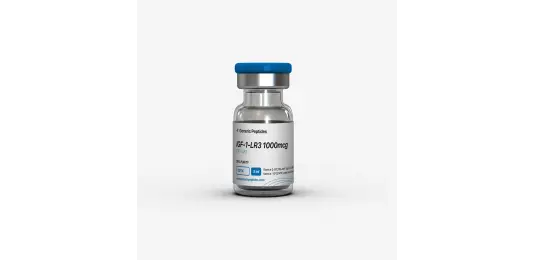
IGF-1 LR3: Research Guide to the Long-Acting IGF-1 Analog
By Medical Team of Generic Peptides
Quick answer. IGF-1 LR3 (Long R3 IGF-1) is an 83-amino-acid recombinant analog of human insulin-like growth factor 1. Two changes to the native 70-residue protein, an arginine in place of glutamate at position 3 and a 13-residue extension at the N-terminus, reduce its binding to the IGF-binding proteins that normally sequester IGF-1 in circulation. The result is a molecule that stays active far longer and shows roughly three-fold greater potency than native IGF-1 in cell and animal systems. It was developed in the early 1990s as a research reagent and is widely used as a serum-free cell-culture supplement; it has never been tested in a controlled human trial and has no approved medical use anywhere.
This guide covers the structure and origin of IGF-1 LR3, its mechanism, what cell-culture and animal studies have measured, the regulatory position in 2026, and what to look for on a certificate of analysis for a recombinant protein of this size.
What IGF-1 LR3 Is
Native human IGF-1 is a 70-amino-acid, single-chain protein of about 7.6 kDa with three disulfide bonds. It is produced mainly by the liver in response to growth hormone and mediates most of GH's anabolic effects. In blood, more than 95% of IGF-1 is bound to IGF-binding proteins (IGFBPs), chiefly IGFBP-3 in a ternary complex with the acid-labile subunit. This binding extends IGF-1's half-life but also limits how much free hormone can reach receptors.
IGF-1 LR3 was engineered by Francis, Ballard, and colleagues in Adelaide, Australia (CSIRO/University of Adelaide group), and commercialized by GroPep Ltd. to get around that constraint [1]. Two modifications define it:
- Arg3 substitution. Glutamate at position 3 is replaced with arginine. Position 3 sits in the region of IGF-1 that contacts IGFBPs; the substitution reduces binding affinity to IGFBP-1, -2, and -3 by one to two orders of magnitude without materially affecting binding to the IGF-1 receptor.
- 13-residue N-terminal extension. The sequence Met-Phe-Pro-Ala-Met-Pro-Leu-Ser-Ser-Leu-Phe-Val-Asn, derived from the expression construct, is left in place. It further weakens IGFBP binding and slows clearance.
The product is 83 residues long with a molecular weight of about 9.1 kDa, produced by recombinant expression in E. coli and refolded to the native disulfide pattern. The "LR3" name encodes both changes: Long (the extension) and R3 (arginine at position 3).
Mechanism of Action
IGF-1 LR3 binds the IGF-1 receptor (IGF-1R), a transmembrane tyrosine kinase, with affinity comparable to native IGF-1. Receptor activation recruits insulin receptor substrate proteins and engages two major cascades:
- PI3K–Akt–mTOR, associated with protein synthesis, cell survival, and glucose uptake.
- Ras–MAPK–ERK, associated with proliferation and differentiation.
The difference between LR3 and native IGF-1 is not what happens at the receptor but how much ligand is available to reach it. Because LR3 is not captured by IGFBPs, a given amount produces a larger and more sustained free-ligand concentration. In rat infusion studies, LR3 and the related analog des(1-3)IGF-1 were roughly three times more potent than native IGF-1 on growth and nitrogen-retention endpoints [2].
Two consequences of this pharmacology are relevant for interpreting any IGF-1 LR3 study:
- Loss of the IGFBP buffer. IGFBPs do more than extend half-life; they regulate where and when IGF-1 acts. An analog that bypasses them removes a layer of physiological control that native IGF-1 is subject to.
- Insulin-receptor cross-reactivity. IGF-1 binds the insulin receptor with roughly 100-fold lower affinity than IGF-1R. At high free concentrations this becomes relevant, and hypoglycemia is the characteristic acute effect of IGF-1 analogs in animal studies [2, 3].
What the Research Shows
The published record on IGF-1 LR3 falls into two groups: cell-culture applications, where it is a standard reagent, and animal physiology studies from the 1990s that characterized the analog. There are no controlled human trials.
| Study | Model | What was measured | Key finding |
|---|---|---|---|
| Francis et al., 1992, J Mol Endocrinol [1] | In vitro (receptor and IGFBP binding; cell proliferation) | Binding affinities; mitogenic potency in L6 myoblasts and other lines | LR3 bound IGFBPs far more weakly than IGF-1 while retaining receptor binding; higher mitogenic potency in culture |
| Tomas et al., 1996, J Endocrinol [2] | Animal (rat) | Body weight, nitrogen retention, organ weights after infusion | LR3 and des(1-3)IGF-1 about 3× more potent than IGF-1; superiority maintained with injection |
| Lemmey et al., 1991, Am J Physiol [3] | Animal (rat, gut resection model) | Body and gut weight, protein accretion | Truncated analog des(1-3)IGF-1 (poor IGFBP binding, like LR3) enhanced growth and gut adaptation more than native IGF-1 |
| Morris & Schmid, 2000, Biotechnol Prog [4] | In vitro (CHO cell bioprocess) | Cell growth and viability in serum-free media | LR3 substituted effectively for insulin as a growth supplement in serum-free CHO culture |
| Pollak, 2008, Nat Rev Cancer [5]; Renehan et al., 2004, Lancet [6] | Review; epidemiological meta-analysis (native IGF-1) | IGF signaling and cancer risk | Higher circulating IGF-1 associated with increased risk of several cancers; context for any sustained IGF-1R activation |
A few observations about this evidence base:
The best-documented use is in cell culture. LR3 IGF-1 is a standard component of serum-free media for recombinant protein production in CHO cells, where its IGFBP resistance and stability make it a reliable replacement for insulin [4]. This is the one application for which there is a large body of reproducible, published practice.
The animal data are old and focused on growth physiology. The Adelaide group's rat studies established potency and the role of IGFBP binding; they were not designed to evaluate therapeutic endpoints and did not include long-term safety follow-up.
There are no human data. Native IGF-1 (mecasermin) has been studied extensively in humans and is FDA-approved for a rare pediatric deficiency [7], and recombinant IGF-1 was tested in two ALS trials in the 1990s with results that did not support approval [8, 9]. IGF-1 LR3 itself has never been the subject of a registered clinical trial. Any statement about effects in people is extrapolation.
The IGF axis has known long-term signals. Epidemiological work links higher IGF-1 levels to increased risk of prostate, breast, and colorectal cancers [5, 6]. This does not describe LR3 specifically, but it is the reason sustained IGF-1R activation is treated cautiously in all research contexts.
Regulatory Status in 2026
- No approved use. IGF-1 LR3 is not an approved drug in the United States, the European Union, or Australia. It is registered in the FDA Substance Registration System (UNII M9L22Y19H9) as a chemical identifier, which carries no regulatory review.
- Compounding. IGF-1 LR3 was not included in the FDA's September 2023 Category 2 list of bulk substances, and it was not among the peptides reviewed at the December 2024 or July 2026 Pharmacy Compounding Advisory Committee meetings. It is not on the 503A bulks list and is not a component of an approved drug, so it has no lawful compounding pathway in the US [10].
- Sport. The World Anti-Doping Agency prohibits IGF-1 and its analogues, including IGF-1 LR3, under class S2 at all times [11].
For researchers, IGF-1 LR3 is a research-use-only reagent with a long history in cell biology and bioprocessing and no clinical standing.
IGF-1 LR3 Compared With Related Research Compounds
| Native IGF-1 | IGF-1 LR3 | des(1-3)IGF-1 | PEG-MGF | |
|---|---|---|---|---|
| Length | 70 aa | 83 aa | 67 aa | ~24 aa (MGF E-domain, PEGylated) |
| Modification | None | Arg3 + 13-aa N-extension | First 3 residues deleted | Splice-variant peptide + PEG |
| IGFBP binding | High | Very low | Low | Not applicable (not IGF-1R ligand in the same sense) |
| Relative potency (rat) | 1× | ~3× | ~3× | Not comparable |
| Human data | Extensive; approved (mecasermin) | None | None | None |
| Typical research use | Endocrinology, clinical | Cell culture supplement; animal physiology | Animal physiology | Muscle-biology research |
PEG-MGF, which Generic Peptides also supplies for muscle-recovery research, is sometimes grouped with IGF-1 LR3 because both derive from the IGF-1 gene. They are not interchangeable: MGF is a splice-variant E-domain peptide with a proposed role in satellite-cell activation, not a full-length IGF-1R agonist. Our PEG-MGF research guide covers that distinction.
Reading an IGF-1 LR3 Certificate of Analysis
IGF-1 LR3 is a recombinant protein, not a synthetic peptide, and its COA should look different from the COA for a 10-residue peptide.
- Identity by mass spectrometry. The observed mass should be close to 9,111 Da for the full 83-residue sequence with three disulfide bonds. An intact-mass measurement is more informative than peptide-mapping alone.
- Purity by SDS-PAGE and/or RP-HPLC. For a protein of this size, SDS-PAGE under reducing and non-reducing conditions shows aggregates and truncations that HPLC may miss. Purity of 97% or higher is typical for research-grade material.
- Endotoxin. Because the protein is expressed in E. coli, bacterial endotoxin is a real contaminant risk and directly affects cell-culture results. A LAL result in EU/mg should be on the certificate; values below 1 EU/mg are standard for cell-culture-grade material.
- Bioactivity (optional but valuable). Some suppliers report an ED50 in a cell-proliferation assay. This confirms correct folding, which mass and purity alone cannot.
- Lot traceability and storage. Lot number, date of analysis, and storage conditions (lyophilized protein is typically stored frozen) should match the vial.
Generic Peptides publishes a lot-specific COA for research-grade IGF-1 LR3. For a general walkthrough of each test, see how to read a research peptide COA.
Open Questions in the Research
- Tissue-level consequences of IGFBP bypass. Animal studies measured whole-body growth; how an IGFBP-insensitive analog redistributes IGF signaling among tissues is less well characterized.
- Long-term exposure. No animal study has examined chronic IGF-1 LR3 exposure with tumor-incidence endpoints.
- Immunogenicity. The 13-residue extension is non-human sequence. Whether it provokes antibody responses in vivo has not been published.
FAQ
What does "LR3" mean in IGF-1 LR3?
"Long" refers to the 13-amino-acid N-terminal extension and "R3" to the arginine substituted at position 3. Together these changes reduce binding to IGF-binding proteins, which is the analog's defining feature.
Is IGF-1 LR3 the same as IGF-1?
No. Native IGF-1 is a 70-residue human protein; IGF-1 LR3 is an 83-residue engineered analog with much weaker IGFBP binding, a longer active life in animal studies, and about three-fold higher potency in rat models.
Has IGF-1 LR3 been tested in humans?
No controlled human trial of IGF-1 LR3 has been published or registered. Human data exist only for native recombinant IGF-1 (mecasermin), which is a different molecule.
What is IGF-1 LR3 actually used for in research?
Its most established use is as a growth supplement in serum-free cell-culture media, particularly for CHO cells in biologics manufacturing, and in animal studies of growth and protein metabolism.
Why does endotoxin matter on an IGF-1 LR3 COA?
IGF-1 LR3 is produced in E. coli. Endotoxin carried over from expression can alter cell behavior in culture and confound results, so a LAL value should be reported for every lot.
References
For research use only. Not for human consumption. This content is for informational purposes and is not medical advice.
[1] Francis GL, Ross M, Ballard FJ, et al. Novel recombinant fusion protein analogues of insulin-like growth factor (IGF)-I indicate the relative importance of IGF-binding protein and receptor binding for enhanced biological potency. J Mol Endocrinol. 1992;8(3):213–223. PMID 1378742.
[2] Tomas FM, Lemmey AB, Read LC, Ballard FJ. Superior potency of infused IGF-I analogues which bind poorly to IGF-binding proteins is maintained when administered by injection. J Endocrinol. 1996;150(1):77–84. PMID 8708565.
[3] Lemmey AB, Martin AA, Read LC, Tomas FM, Owens PC, Ballard FJ. IGF-I and the truncated analogue des-(1-3)IGF-I enhance growth in rats after gut resection. Am J Physiol. 1991;260(2 Pt 1):E213–E219. PMID 1996625.
[4] Morris AE, Schmid J. Effects of insulin and LongR3 on serum-free Chinese hamster ovary cell cultures expressing two recombinant proteins. Biotechnol Prog. 2000;16(5):693–697. PMID 11027158.
[5] Pollak M. Insulin and insulin-like growth factor signalling in neoplasia. Nat Rev Cancer. 2008;8(12):915–928. PMID 19029956.
[6] Renehan AG, Zwahlen M, Minder C, O'Dwyer ST, Shalet SM, Egger M. Insulin-like growth factor (IGF)-I, IGF binding protein-3, and cancer risk: systematic review and meta-regression analysis. Lancet. 2004;363(9418):1346–1353. PMID 15110491.
[7] U.S. Food and Drug Administration. INCRELEX (mecasermin) injection prescribing information. Approved August 30, 2005.
[8] Lai EC, Felice KJ, Festoff BW, et al. Effect of recombinant human insulin-like growth factor-I on progression of ALS: a placebo-controlled study. Neurology. 1997;49(6):1621–1630. PMID 9409357.
[9] Borasio GD, Robberecht W, Leigh PN, et al. A placebo-controlled trial of insulin-like growth factor-I in amyotrophic lateral sclerosis. Neurology. 1998;51(2):583–586. PMID 9710040.
[10] U.S. Food and Drug Administration. Certain bulk drug substances for use in compounding that may present significant safety risks (September 29, 2023) and Section 503A bulk drug substances list.
[11] World Anti-Doping Agency. The Prohibited List 2026, Section S2: Peptide hormones, growth factors, related substances and mimetics.