Semax: What the Research Shows (2026)
Semax: What the Research Shows (2026)
By Medical Team of Generic Peptides
Quick answer. Semax is a synthetic seven-amino-acid peptide built on a fragment of adrenocorticotropic hormone, ACTH(4-7), with a Pro-Gly-Pro tail added for stability. It was developed in Russia, where it is registered as a medicine for ischemic stroke and certain optic nerve and neurological conditions. Most mechanistic research comes from rat studies, which link it to brain-derived neurotrophic factor (BDNF) and to gene expression after brain ischemia. Clinical studies are mostly small, Russian-language and not independently replicated. Semax is not FDA-approved. In July 2026 an FDA advisory committee voted to recommend it for compounding for specific uses, but the FDA has not acted on that vote.
This guide covers what Semax is, the proposed mechanisms, what animal and clinical studies measured, what is known about safety, and its 2026 regulatory status. It does not cover use in people.
What Is Semax?
Semax has the sequence Met-Glu-His-Phe-Pro-Gly-Pro. The first four amino acids are ACTH(4-7), a short piece of ACTH that researchers studied for its effects on the nervous system rather than on the adrenal glands. The Pro-Gly-Pro tail slows enzymatic breakdown. The molecular formula is C37H51N9O10S and the molecular weight is about 813.9 Da.
The peptide was developed at the Institute of Molecular Genetics of the Russian Academy of Sciences together with Moscow State University, by researchers including Igor Ashmarin and Nikolay Myasoedov, who summarized 15 years of work on it in 1997. In Russia, it is registered in two concentrations: 1% for ischemic stroke, and 0.1% for optic nerve conditions, several other neurological indications and, in children from age 7, minimal brain dysfunction including ADHD.
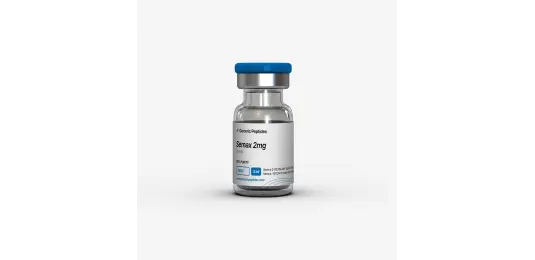
Semax is often mentioned together with Selank, which uses the same Pro-Gly-Pro design on a different parent peptide. We compare them in Semax vs Selank. Generic Peptides supplies Semax for laboratory research only.
What Does Semax Do? Proposed Mechanisms
The proposed mechanisms come mainly from rat and cell studies:
- BDNF and TrkB. Dolotov and colleagues reported that Semax increased expression of BDNF and its receptor, TrkB, in the rat hippocampus. BDNF is a growth factor involved in neuron survival and synaptic plasticity.
- Gene expression after ischemia. In rats with experimental stroke (middle cerebral artery occlusion), Semax changed the expression of neurotrophins and their receptors. A genome-wide study in the same model found effects on genes linked to immune response and blood-vessel function.
- Enkephalin-degrading enzymes. In human serum in vitro, Semax inhibited enzymes that break down enkephalins, the body's own opioid peptides.
- Lacks ACTH's hormonal activity. Russian product information describes Semax as devoid of hormonal activity, because the ACTH(4-7) fragment does not include the region ACTH needs to stimulate the adrenal glands.
These findings show what Semax does in rodent tissue and in vitro. They do not establish the same effects in people.
Semax Benefits in Research: What Animal Studies Measured
"Semax benefits" in online searches usually refers to cognition, focus, neuroprotection or mood. In the research literature, these map onto specific animal endpoints:
| Area | Typical model | What was measured |
|---|---|---|
| Neurotrophins | Rat hippocampus | BDNF and TrkB expression |
| Brain ischemia | Rat middle cerebral artery occlusion | Neurotrophin gene expression, genome-wide transcription |
| Learning and memory | Rat passive-avoidance learning after experimental cortical stroke | Memory retention compared with untreated animals |
| Stress-related signaling | Rodent models, human serum in vitro | Enkephalin-degrading enzyme activity |
Most of these studies come from a small number of Russian groups. Results in rodent behavior tests do not show effects on human attention or memory.
Semax in Russian Clinical Studies
Clinical research on Semax has focused on ischemic stroke:
- Miasoedova et al., 1999 examined possible neuroprotective mechanisms of Semax in the acute period of ischemic stroke.
- Gusev et al., 2018 studied Semax in patients at different stages of ischemic stroke and reported effects on recovery measures.
Western Replication and Study Limitations
These studies share important limits:
- They were published mainly in Russian journals.
- They were relatively small, and several did not use a placebo-controlled, double-blind design.
- They have not been replicated in large trials outside Russia.
- Registration in Russia was based on this national evidence base, which differs from the evidence the FDA or the European Medicines Agency typically requires.
The result is a peptide with a long clinical history in one country but little independently verified clinical evidence.
N-Acetyl Semax Amidate vs Semax
"N-acetyl Semax amidate" is a modified form sold on the research market. It adds an acetyl group at the N-terminus and an amide at the C-terminus. These changes are intended to increase stability. They also change the molecular weight, so the two forms can be told apart by mass spectrometry.
Its molecular formula is C39H54N10O10S, about 855 Da, roughly 41 Da heavier than Semax. The registered Russian medicine is Semax itself. We found no published clinical trial and no peer-reviewed animal study of the N-acetyl amidate form, and claims that it is "stronger" come from vendors rather than from comparative studies.
Semax Side Effects and Safety: What Is Known
Safety data come mainly from Russian clinical use and small studies.
- Reported effects. Russian product information lists mild irritation of the nasal mucosa with long-term use as the main reported effect.
- Long-term data. There are no large long-term safety studies.
- Listed contraindications. For the 1% form, Russian product information lists acute psychiatric disorders, anxiety disorders, a history of seizures, age under 18 and hypersensitivity. For the 0.1% form, it lists age under 7 (under 18 for certain eye and neurosurgical uses).
- ADHD. In Russia, the 0.1% form's label includes minimal brain dysfunction, including ADHD, in children from age 7. Semax is not approved for ADHD in the US or Europe, and we found no published placebo-controlled trials of Semax in ADHD.
When the FDA reviewed Semax for compounding, its staff recommended against listing it. The briefing document said Semax is not well characterized chemically, that the FDA did not identify published nonclinical toxicity studies, that human safety data cover only the nasal route, and that the potential for immunogenicity could not be ruled out. Product quality is a practical risk in itself, which is why identity testing matters.
Is Semax FDA Approved? 2026 Status
Checked October 26, 2026.
FDA approval. No. Semax is not an FDA-approved drug.
Compounding.
- September 2023. The FDA placed Semax in Category 2 of its interim 503A bulks policy, meaning substances that may present significant safety risks in compounding.
- April 2026. Semax was moved out of Category 2 ahead of an advisory review.
- July 24, 2026. The Pharmacy Compounding Advisory Committee voted 8–5 to recommend Semax for the 503A bulks list for specific uses, reported as cerebral ischemia, migraine and trigeminal neuralgia. The vote is advisory and went against the recommendation of FDA staff.
- October 2026. The FDA has not added Semax to the 503A bulks list. It sent an "Interim Access Policy for Compounding Using Certain Peptides" to the White House for review; its content has not been published.
Our news report on the July 2026 Semax review and our coverage of the FDA peptide interim access policy cover these steps in detail.
Sport. Semax is not named on the 2026 WADA Prohibited List. However, section S2.2.2 covers corticotrophins and their releasing factors with "e.g." wording, so the examples are not exhaustive. Since Semax is derived from ACTH, the absence of its name should not be read as clearance.
How to Verify Semax: Product Quality and COA Checks
Because Semax and N-acetyl Semax amidate are both sold, and because short peptides are easy to mislabel, a batch-specific certificate of analysis should show:
- Mass spectrometry matching about 813.9 Da for Semax. A mass near 855 Da indicates the N-acetyl amidate form; any other mass suggests a different peptide.
- HPLC purity with the chromatogram and method conditions.
- The full sequence stated on the COA.
- Net peptide content and lot traceability matching the vial.
Our guide to reading a research peptide COA explains each item. Generic Peptides publishes a lot-specific COA for research-grade Semax.
FAQ
What is Semax?
Semax is a seven-amino-acid peptide based on the ACTH(4-7) fragment with a Pro-Gly-Pro tail. It was developed in Russia and is registered there for ischemic stroke and some optic nerve and neurological conditions.
Is Semax safe?
Its safety has not been established by large controlled trials. Russian product information lists mild nasal irritation as the main effect, but long-term data are lacking, and the FDA's review found no published nonclinical toxicity studies.
Is Semax FDA approved?
No. An FDA advisory committee voted 8–5 in July 2026 to recommend it for compounding for specific uses, but the FDA has not acted on that vote.
Is Semax used for ADHD?
In Russia, the 0.1% label includes minimal brain dysfunction, including ADHD, in children from age 7. It is not approved for ADHD in the US or Europe, and we found no published placebo-controlled trials of Semax in ADHD.
What is N-acetyl Semax amidate?
A modified form with an acetyl group at one end and an amide at the other, intended to increase stability. It has no published clinical trials or peer-reviewed animal studies, and it can be distinguished from Semax by mass spectrometry.
How does Semax differ from Selank?
Both are Russian seven-amino-acid peptides with a Pro-Gly-Pro tail. Semax is built on an ACTH fragment and studied mainly in brain ischemia; Selank is built on the immune peptide tuftsin and studied mainly for anxiety-related endpoints.
References
For research use only. Not for human consumption. This content is for informational purposes and is not medical advice.
[1] Ashmarin IP, Nezavibat'ko VN, Myasoedov NF, et al. A nootropic adrenocorticotropin analog 4-10 — Semax (15 years experience in its design and study) [in Russian]. Zh Vyssh Nerv Deiat Im I P Pavlova. 1997;47(2):420–430. PMID: 9173745.
[2] Dolotov OV, Karpenko EA, Inozemtseva LS, et al. Semax, an analog of ACTH(4-10) with cognitive effects, regulates BDNF and trkB expression in the rat hippocampus. Brain Res. 2006;1117(1):54–60. PMID: 16996037.
[3] Dmitrieva VG, Povarova OV, Skvortsova VI, et al. Semax and Pro-Gly-Pro activate the transcription of neurotrophins and their receptor genes after cerebral ischemia. Cell Mol Neurobiol. 2010;30(1):71–79. PMID: 19633950.
[4] Medvedeva EV, Dmitrieva VG, Povarova OV, et al. The peptide semax affects the expression of genes related to the immune and vascular systems in rat brain focal ischemia: genome-wide transcriptional analysis. BMC Genomics. 2014;15:228. PMID: 24661604.
[5] Kost NV, Sokolov OIu, Gabaeva MV, et al. Semax and selank inhibit the enkephalin-degrading enzymes from human serum [in Russian]. Bioorg Khim. 2001;27(3):180–183. PMID: 11443939.
[6] Vidal Russian drug registry. Semax 0.1% (reg. LP-009449) and Semax 1% (reg. LP-010596): indications, adverse effects and contraindications. vidal.ru.
[7] Miasoedova NF, Skvortsova VI, Nasonov EL, et al. Investigation of mechanisms of neuro-protective effect of semax in acute period of ischemic stroke [in Russian]. Zh Nevrol Psikhiatr Im S S Korsakova. 1999;99(5):15–19. PMID: 10358912.
[8] Gusev EI, Martynov MYu, Kostenko EV, et al. The efficacy of semax in the treatment of patients at different stages of ischemic stroke [in Russian]. Zh Nevrol Psikhiatr Im S S Korsakova. 2018;118(3 Pt 2):61–68. PMID: 29798983.
[9] Romanova GA, Silachev DN, Shakova FM, et al. Neuroprotective and antiamnesic effects of Semax during experimental ischemic infarction of the cerebral cortex. Bull Exp Biol Med. 2006. PMID: 17603664.
[10] U.S. Food and Drug Administration. 503A categories update, September 29, 2023; and Bulk drug substances nominated for use in compounding under section 503A (list updated May 14, 2026). fda.gov.
[11] U.S. FDA, CDER. Pharmacy Compounding Advisory Committee meeting, July 23–24, 2026: FDA briefing document on Semax (fda.gov/media/193348). Regulatory Affairs Professionals Society (RAPS), report of July 24, 2026.
[12] Office of Information and Regulatory Affairs. Interim Access Policy for Compounding Using Certain Peptides (RIN 0910-ZD94). reginfo.gov.
[13] World Anti-Doping Agency. The 2026 Prohibited List, Section S2.2.2: corticotrophins and their releasing factors. wada-ama.org.