Tirzepatide Side Effects in Research: What to Track
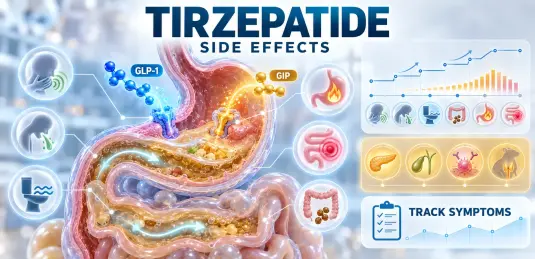
Tirzepatide Side Effects in Research: What to Track
Nobody searches for a drug's mechanism of action at 1 a.m. They search tirzepatide side effects — because something already happened. Nausea after the first shot. Three days of constipation. A Reddit thread about hair loss suddenly feels personal.
This article is for general education only and does not replace medical advice from a licensed healthcare professional.
Quick Answer
Most common: gut symptoms — nausea, diarrhea, vomiting, constipation, stomach pain — dose‑dependent, worst right after dose increases. Serious risks include pancreatitis, gallbladder problems, severe allergic reactions, and a boxed warning for thyroid tumors (seen in rats, unknown in humans) (FDA label via DailyMed). Hair loss appears on the Zepbound label, though rapid weight loss itself can cause shedding. Muscle loss follows any major weight loss; it is not a drug toxicity — trial body‑composition data show fat loss predominates (SURMOUNT-1 DXA substudy).
Search results flatten everything into one list — a forum horror story sits next to an FDA label, both looking equally authoritative. The actual evidence sorts itself into three piles: common and annoying, rare and serious, and "weight loss wearing a costume."
What Tirzepatide Is — and Why It Hits the Stomach First
Tirzepatide mimics two gut hormones: GLP-1 (slows stomach emptying, curbs appetite) and GIP (helps regulate insulin and fat metabolism). It was the first approved dual GIP/GLP-1 agonist. That stomach‑slowing action is the source of most side effects: food lingers, causing fullness, nausea, reflux, and belching — the intended effect overshooting.
A crucial distinction: Mounjaro (approved 2022 for type 2 diabetes) and Zepbound (approved November 2023 for weight management, December 2024 for obstructive sleep apnea) are the same molecule, both FDA‑approved prescription drugs. Vials sold online as "research use only" tirzepatide are unregulated; never assume they're equivalent.
The Common Side Effects: Mostly a Gut Story
Across the SURPASS (diabetes) and SURMOUNT (weight loss) trial programs, one pattern dominates:
- Nausea — the single most reported reaction in every trial Diarrhea and constipation — both, sometimes in the same person Vomiting Stomach pain, indigestion, reflux, belching Decreased appetite — intended, occasionally overshooting Fatigue and injection site reactions (listed in the Zepbound label) Hair loss (alopecia) — also in the Zepbound label, with a caveat covered below
All are dose‑dependent. The label's slow dose escalation is designed to blunt this; the toughest GI days usually follow a dose bump. The exact dose and schedule should come from a healthcare provider.
Tirzepatide headache? Reported across the GLP-1 class, but it isn't listed as an adverse reaction in the FDA label, so no verified incidence rate exists. Treat confident percentages you see online with skepticism.
Serious Warnings: What Deserves Your Attention
Pancreatitis. Inflammation of the pancreas — the organ behind the stomach that makes digestive enzymes and insulin — has been seen with tirzepatide. The label advises discontinuation if pancreatitis is suspected. The hallmark is severe, persistent abdominal pain that may radiate to the back, often with vomiting. That combination is a same‑day medical problem, not a wait‑and‑see one.
Gallbladder problems. GLP-1 agonists as a class are linked to gallstones and gallbladder inflammation; rapid weight loss from any cause raises the risk further. Pain in the upper right abdomen, especially after fatty meals, is the classic flag.
Thyroid cancer warning. Both labels carry the FDA's strongest warning — a boxed warning — because tirzepatide caused thyroid C‑cell tumors in rats. The label states clearly: it is unknown whether this happens in humans. The drug is contraindicated for anyone with a personal or family history of medullary thyroid carcinoma or MEN 2, a rare inherited tumor syndrome. This is a precaution built on rodent data, not a proven human risk.
Other label warnings: acute kidney injury (usually from dehydration due to vomiting or diarrhea), low blood sugar — mainly when combined with insulin or certain diabetes pills — and severe GI reactions, which the FDA elevated to a distinct warning in late 2025 and early 2026. Notably, the suicidal ideation warning was removed from the Zepbound label in February 2026 after surveillance found no confirmed signal. Labels move in both directions. That's what monitoring looks like.
What to Track and Bring to Your Doctor
You can't self‑manage tirzepatide, but you can show up with better data:
- GI symptoms: severity, duration, and whether they cluster after dose increases Hydration: vomiting or diarrhea plus poor fluid intake is the kidney‑injury pathway Abdominal pain patterns: central pain radiating to the back (pancreas) versus upper‑right pain after meals (gallbladder) Hair shedding: when it started relative to how fast you're losing weight Your medication list: especially insulin or diabetes pills — they change the low‑blood‑sugar picture
When to stop tirzepatide is a prescriber's call, but the label is specific: suspected pancreatitis, serious allergic reactions (anaphylaxis and angioedema — severe swelling reactions, an emergency rather than an appointment), and pregnancy are the stated discontinuation triggers. GI symptoms that stay intolerable after dose adjustment are a legitimate reason to discuss stopping.
What the Internet Gets Wrong
The thyroid warning is rodent data. Presenting it as proven human cancer misreads the label.
Muscle loss isn't a drug side effect. Any major caloric deficit costs some lean mass — that's weight‑loss physics, not tirzepatide toxicity. In one body‑composition substudy, roughly three‑quarters of the weight lost was fat, not muscle.
"Ozempic face" is not a diagnosis. Facial fat loss follows rapid weight loss from any cause — diet, surgery, or any drug in this class. Celebrity before‑and‑after photos can't establish which substance, dose, or duration was involved. Photos are not evidence.
Tirzepatide is not semaglutide. Semaglutide (Ozempic/Wegovy) targets GLP-1 only. Tirzepatide adds GIP. The side‑effect profiles overlap but aren't interchangeable — we compare all three molecules in our semaglutide vs. tirzepatide vs. retatrutide breakdown.
"Research chemical" vials are not Mounjaro. Approved products went through Phase 3 trials and FDA review. Gray‑market powder did not.
Where the Safety Data Stands in 2026
Is tirzepatide safe? The FDA judged its benefit‑risk profile favorable for approved uses — meaning well‑characterized, not risk‑free. Day‑to‑day side effects are dominated by dose‑dependent gut symptoms. Serious risks — pancreatitis, gallbladder disease, severe allergy — are known, labeled, and worth tracking. The most eye‑catching warning rests on rat data. The long view is still being written: trials run to about 72 weeks, multi‑year controlled data don't exist yet, and post‑marketing surveillance is actively reshaping the label in both directions.
Frequently Asked Questions
Do tirzepatide side effects differ in females vs. males? Mostly no — the FDA label doesn't define separate profiles by sex. One difference stands out: in Zepbound trials, hair loss was reported by 7.1% of women versus 0.5% of men. Rapid weight loss itself can cause shedding, which muddies the picture, so any "female‑specific" side‑effect list goes beyond the evidence.
Does tirzepatide cause hair loss? Yes, it's on the label. Alopecia is listed for Zepbound. Rapid weight loss from any cause can trigger temporary shedding (telogen effluvium). Separating the drug's effect from the weight loss is genuinely difficult.
Does tirzepatide cause muscle loss? Not as a drug toxicity. Any large weight loss includes some lean mass loss; trial data show fat loss predominates. It's a feature of caloric deficit, not a unique tirzepatide side effect.
What are the long‑term side effects of tirzepatide? Unknown beyond roughly 72 weeks of trial data. Ongoing surveillance has already changed the label — a severe‑GI warning was added, the suicidal ideation warning removed — so the picture is still developing.
Are Mounjaro and Zepbound side effects different? Same molecule, same doses. The Zepbound label lists more reactions (fatigue, injection site reactions, hair loss) largely because it was studied in different populations at weight‑loss doses.
Is tirzepatide headache a real thing? It's reported across the GLP-1 class, but not listed in the FDA label, so no verified incidence rate. Dehydration from nausea or vomiting can also cause headaches — if one persists, bring it to your doctor.