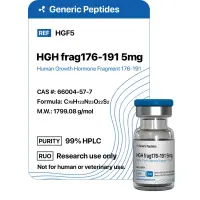
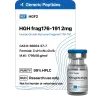
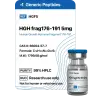
- For in vitro testing and laboratory use only.
- Not for human or animal consumption.
- Bodily introduction is illegal.
- Handle only by licensed professionals.
- Not a drug, food, or cosmetic.
- Educational use only.
Quick Summary: HGH Fragment 176-191
- Used by bodybuilders in cutting phases and people chasing targeted fat loss without touching the GH axis.
- Activates β3-adrenergic receptors on fat cells, turning on hormone-sensitive lipase to break down stored triglycerides.
- Modest fat loss over 8-12 week cycles, no IGF-1 spike, and stable glucose and insulin levels.
- Unlike real HGH or CJC-1295, it skips growth signaling entirely — but GLP-1 drugs crush it on weight-loss results.
- Doesn't suppress natural hormones or affect testosterone, so no PCT is needed after a cycle.
- Commonly paired with L-carnitine, GLP-1 agonists, or cutting cycles to support a caloric deficit during fat loss.
- Gradual abdominal slimming, slightly tighter waistline on the tape, and steady scale movement paired with diet.
- Biggest honest warning: nearly all the "evidence" is borrowed from AOD-9604 — this specific fragment has zero human trials.
HGH Fragment 176-191: The "Fat Loss" Peptide Whose Evidence Base Isn't Its Own
By Medical Team of Generic Peptides
HGH Fragment 176-191 requires a more honest introduction than most compounds in the peptide space, because the single most important fact about it isn't usually stated clearly when it's marketed or discussed: HGH Fragment 176-191 has essentially no dedicated human research of its own. Nearly everything presented as "HGH Frag 176-191 clinical data" — the lipolytic effects, the safety profile, the β3-adrenergic mechanism, the body composition effects — is actually research on AOD-9604, a modified version of the fragment developed by Metabolic Pharmaceuticals in Australia, extrapolated backward to the unmodified molecule.
Wikipedia's entry on HGH Fragment 176-191 flags this directly, stating that the compound "has erroneously been presented as a lipolytic peptide fragment based on extrapolations of clinical data pertaining to AOD-9604" and noting that "in contrast to AOD-9604, hGH frag 176-191 has not been studied in humans" [1]. This is a meaningful scientific caveat. The two compounds share 16 of 17 amino acids (AOD-9604 adds a single tyrosine residue at the N-terminus), and they are expected to have similar pharmacology, but extrapolating one compound's human trial data onto another structurally-modified compound — particularly one with characterized stability and potency differences — is not how drug research ordinarily works.
This article covers what HGH Fragment 176-191 actually is, what the AOD-9604 research implies about the unmodified fragment (with appropriate caveats), where the two compounds differ, how they're used in off-label practice, the regulatory picture, and how to think about the compound honestly given the evidence gap.
We have a dedicated article on AOD-9604 covering its actual clinical trial record, which readers considering HGH Fragment 176-191 should probably read first.
What HGH Fragment 176-191 Is and Where It Came From
HGH Fragment 176-191 is a 16-amino-acid peptide corresponding to the C-terminal portion of human growth hormone — specifically, amino acids 176 through 191 of the 191-amino-acid full-length hGH molecule. The native sequence derived directly from hGH is Tyr-Leu-Arg-Ile-Val-Gln-Cys-Arg-Ser-Val-Glu-Gly-Ser-Cys-Gly-Phe (or similar depending on convention). Molecular weight approximately 1817 Da.
The conceptual origin story.
Full-length human growth hormone has two seemingly distinct biological activities: growth promotion (through the growth hormone receptor, IGF-1 elevation, and classical somatogenic effects) and fat metabolism modulation (lipolysis, reduced lipogenesis, altered body composition). Researchers in the 1980s-1990s hypothesized that these activities might reside in different regions of the hGH molecule and could potentially be separated. The C-terminal region was identified through systematic fragmentation studies as carrying most of the lipolytic activity without the somatogenic effects [2, 3].
The AOD-9604 development pathway.
Scientists at Monash University and subsequently at Metabolic Pharmaceuticals in Melbourne, Australia, took the identified HGH Fragment 176-191 sequence and added a tyrosine residue to the N-terminus. This addition was made for two practical reasons: (1) the tyrosine modification improved peptide stability, extending functional half-life, and (2) the structural modification provided a patentable molecule, which was necessary for pharmaceutical development [2]. The modified compound — Tyr-hGH 176-191 (technically Tyr-hGH 177-191 if you renumber from the added tyrosine) — was designated AOD-9604 (Anti-Obesity Drug 9604). AOD-9604 became the lead compound for Metabolic Pharmaceuticals' obesity development program, eventually going through six Phase I/II clinical trials with approximately 900 total participants.
HGH Fragment 176-191 as the research-chemical market compound.
While AOD-9604 was being developed pharmaceutically, the unmodified native fragment — HGH Fragment 176-191 — emerged in the research-chemical and off-label market as an adjacent compound. Because the modified version (AOD-9604) was under patent and pharmaceutical development, while the unmodified native sequence was neither patentable nor formally developed, HGH Fragment 176-191 became widely available through research-chemical vendors without the commercial pharmaceutical oversight or clinical trial program that accompanied AOD-9604. This is how the compound exists in the current market — widely sold, widely used, but with its evidence base almost entirely borrowed from AOD-9604 research.
Why this matters.
When vendors market "clinical trial data" for HGH Fragment 176-191, they are almost always citing AOD-9604 studies. The Heffernan 2001 mouse studies, the Phase I/II human trials with 900 participants, the safety profile data — these are AOD-9604 findings. They are reasonable guides to what HGH Fragment 176-191 probably does, but they are not direct evidence for the unmodified fragment.
How It Works in the Body — Mechanism of Action (Inferred From AOD-9604)
The mechanism is understood primarily from AOD-9604 research, with the assumption (supported by structural similarity) that HGH Fragment 176-191 acts similarly.
β3-adrenergic receptor activation — the proposed primary mechanism.
Heffernan and colleagues in 2001 published foundational work in Endocrinology characterizing AOD-9604's lipolytic mechanism in obese mice and β3-adrenergic receptor knockout mice [4]. The key finding: AOD-9604's lipolytic effects were substantially reduced in β3-AR knockout animals, establishing β3-adrenergic receptor activation as the primary mechanism. β3-ARs are expressed predominantly in brown and white adipose tissue, and their activation triggers a cAMP-dependent signaling cascade that activates hormone-sensitive lipase (HSL), driving triglyceride hydrolysis and release of free fatty acids and glycerol into circulation.
Receptor-independent effects on hormone-sensitive lipase.
Earlier work by Ng and colleagues established that the C-terminal hGH fragment directly stimulates hormone-sensitive lipase and inhibits acetyl-CoA carboxylase in isolated rat adipose tissue [5]. These effects occur without binding the classical growth hormone receptor (GHR) — a critical distinction from full-length hGH. The compound restored β3-AR RNA expression in obese mice to levels comparable to lean mice in the Heffernan 2001 work.
Selectively retained lipolytic activity without somatogenic effects.
The defining pharmacological claim: HGH Fragment 176-191 and AOD-9604 produce the fat-metabolism effects of hGH without the growth-promoting effects. Specifically:
- No IGF-1 elevation — confirmed across multiple preclinical and the AOD-9604 clinical studies
- No glucose or insulin effects — glucose and insulin parameters remained unchanged from baseline across the 900-subject AOD-9604 clinical program
- No GHR activation — the compound doesn't bind the classical growth hormone receptor, explaining the absence of downstream somatogenic effects
What this means functionally.
If the mechanistic claims hold for HGH Fragment 176-191 (as assumed from AOD-9604 research), the compound produces targeted adipose tissue effects without the systemic GH-axis activation characteristic of full hGH. This would position it as a metabolically-focused fat-mobilization agent rather than a general GH-axis stimulant — fundamentally different from compounds like CJC-1295/Ipamorelin that work upstream through GH release.
Important caveat on the 1978 work.
Older research from 1978 on similar C-terminal hGH fragments reported that some fragments caused temporary rises in blood glucose and insulin levels in animals, suggesting possible insulin sensitivity issues. This older data predates the modern AOD-9604 research and may reflect either different fragment compositions or early experimental conditions, but it's worth noting as a historical caveat. The AOD-9604 clinical program did not replicate these glucose/insulin concerns [6].
What It Was Studied For — Honest Framing of the Evidence
This is the section where honesty matters most.
Direct human research on HGH Fragment 176-191: Essentially none.
No published Phase I, II, or III trials exist for the unmodified fragment. No controlled human clinical studies directly testing HGH Fragment 176-191's efficacy or safety profile appear in the literature.
Direct animal research on HGH Fragment 176-191: Limited.
Some preclinical studies have used the native fragment, primarily in comparison with the modified AOD-9604 version. Heffernan and colleagues' work often tested both compounds; the unmodified fragment generally showed weaker lipolytic effects per unit dose than AOD-9604, likely due to the stability differences from the tyrosine modification. Some specialized research applications exist — for example, Habibullah and colleagues used HGH Fragment 176-191 conjugated to chitosan nanoparticles as a tumor-targeting vehicle for doxorubicin delivery in MCF-7 breast cancer cells, but this is specialized oncology research rather than metabolic research [7].
Research on AOD-9604 that is routinely extrapolated to HGH Fragment 176-191:
- Heffernan 2001 mouse studies demonstrating lipolytic activity and β3-AR mechanism [4]
- Six Phase I/II human trials with ~900 participants showing acceptable safety, no glucose/insulin changes, no IGF-1 elevation
- 12-week Phase IIa data showing approximately 2.6 kg weight loss vs 0.8 kg placebo
- 24-week Phase IIb study (2007, 536 subjects) that failed to demonstrate sufficient efficacy for regulatory approval
- Kwon 2015 rabbit osteoarthritis cartilage work
The extrapolation question.
How justified is it to apply AOD-9604 findings to HGH Fragment 176-191? The two compounds share 16 of 17 amino acids. The structural difference (N-terminal tyrosine) primarily affects stability and potency rather than fundamental receptor interaction profile. The core pharmacological effects (β3-AR-mediated lipolysis, lack of IGF-1 elevation, lack of glucose/insulin effects) should theoretically carry over. This is the assumption made in the off-label market and by most practitioners who work with the compound.
The caveats: differences in plasma stability, dosing requirements, and actual in vivo efficacy are not directly characterized for HGH Fragment 176-191. Whatever AOD-9604's results were — and the Phase IIb weight-loss results were ultimately insufficient to support regulatory approval — HGH Fragment 176-191's results would likely be somewhat different due to the stability/potency differences. Whether "different" means better, worse, or roughly equivalent in practice has not been established.
Why HGH Fragment 176-191 Research Is Where It Is
The evidence gap isn't accidental. It reflects the economic and regulatory realities of peptide development.
Patent economics.
Pharmaceutical development requires patent protection to justify the hundreds of millions of dollars needed for Phase III trials. AOD-9604 was patentable because the tyrosine modification created a novel composition. The native HGH Fragment 176-191 sequence — being a natural subsequence of the human growth hormone molecule — was not patentable in any useful commercial sense. No pharmaceutical company was going to spend the resources for formal clinical development of an unpatentable compound.
Scientific prioritization.
Once Metabolic Pharmaceuticals committed to AOD-9604 as the lead compound, research resources focused there rather than on the parent fragment. Comparative studies were done to establish that AOD-9604 was superior to the unmodified fragment (hence the modification), but those studies weren't designed to characterize the unmodified fragment for its own therapeutic potential.
Research-chemical market emergence.
In parallel with AOD-9604's pharmaceutical development, the research-chemical market recognized HGH Fragment 176-191 as a synthesizable, marketable compound that could benefit from the pharmaceutical research's credibility without the regulatory or quality constraints. This drove supply and availability but didn't generate independent research.
The "same thing effectively" marketing narrative.
Because HGH Fragment 176-191 and AOD-9604 are structurally almost identical and functionally expected to be similar, vendors and practitioners often discuss them interchangeably. This is pharmacologically defensible as a working approximation but scientifically imprecise as a basis for evidence claims.
The net result: HGH Fragment 176-191 exists in a strange evidence position where a structurally-related compound has substantial research (AOD-9604), the native fragment is widely sold and used, but the specific fragment itself has essentially no independent research validating any of the claims made for it.
Forms and Methods of Administration
Subcutaneous injection is the standard route for both HGH Fragment 176-191 and AOD-9604. Abdominal subcutaneous tissue is the typical site, often injected into areas of subcutaneous adipose tissue where the compound is thought (based on anecdotal user reports rather than controlled studies) to preferentially act.
Timing.
The compound is typically administered in a fasted state — usually morning before breakfast or pre-workout, sometimes pre-bed. The fasted administration rationale is based on the β3-AR mechanism potentially being more effective when circulating insulin is low (insulin is an anti-lipolytic hormone that would counteract β3-AR-mediated lipolysis). This timing convention carries across the research-chemical market for both HGH Fragment 176-191 and AOD-9604.
Localized injection practice.
A persistent practice in off-label use is injecting the compound into areas of regional adipose tissue where fat loss is desired (abdominal, love handles, thigh). The rationale is that local tissue concentrations would be higher at the injection site, potentially driving regional lipolysis. This is anecdotal — no controlled studies support spot-reduction claims with HGH Fragment 176-191 or AOD-9604, and the compound is expected to circulate systemically after subcutaneous absorption.
Reconstitution and storage.
Supplied as lyophilized powder in vials (typically 2-10 mg), reconstituted with bacteriostatic water. Reconstituted solution should be refrigerated and used within 2-4 weeks.
The Science: What Is Proven and What Is Not
Honest framing for HGH Fragment 176-191 specifically.
Well-supported (for AOD-9604, extrapolated to HGH Fragment 176-191): The β3-AR-mediated lipolytic mechanism. The absence of GHR activation and IGF-1 elevation. The absence of meaningful glucose/insulin effects at therapeutic doses. Short-term safety at clinical trial doses.
Supported by AOD-9604 clinical trial data (not directly tested in HGH Fragment 176-191): Modest weight-loss effects in preclinical models and small human trials. Safety profile comparable to placebo across 900-subject clinical program. Effects on adipocyte cell size and fat distribution in animal models.
Not supported by evidence for HGH Fragment 176-191 specifically: Any claim based solely on HGH Fragment 176-191 research. The compound has not been in human trials.
Not supported for either compound: Claims of dramatic fat loss comparable to GLP-1 agonists (semaglutide, tirzepatide). Claims of localized spot-reduction effects. Claims of lean mass preservation beyond what caloric context provides. Claims of significant weight-loss efficacy that match pharmaceutical weight-loss compounds — the Phase IIb AOD-9604 study specifically failed to meet efficacy endpoints.
The Phase IIb failure is the most important evidence point. AOD-9604 was developed specifically as an anti-obesity drug. It went through six clinical trials. The largest and most rigorous study (Phase IIb, 536 subjects, 24 weeks) failed to demonstrate sufficient weight-loss efficacy for regulatory approval. Metabolic Pharmaceuticals subsequently abandoned the obesity development program and shifted focus. This directly-studied-compound failure is the best evidence for what level of effect to expect — modest, below the efficacy threshold for pharmaceutical weight-loss indications, substantially less than what GLP-1 agonists deliver.
Side Effects and Real Risks
The honest framing: Direct safety data for HGH Fragment 176-191 in humans is essentially nonexistent. All "safety" claims extrapolate from AOD-9604 clinical trial data, which did show a favorable safety profile over 900 subjects.
Based on AOD-9604 data and user-reported experience with HGH Fragment 176-191:
- Injection site reactions — redness, mild tenderness (most common)
- Mild flushing — occasional, transient
- Fatigue or mild headache — reported by a subset of users
- Mild hunger changes — inconsistent; some users report increased hunger, others decreased; mechanism unclear
- No IGF-1 elevation — consistent across AOD-9604 studies, expected for HGH Fragment 176-191
- No glucose/insulin disruption — established in AOD-9604 program, inferred for HGH Fragment 176-191
The 1978-era research on similar C-terminal hGH fragments showing temporary glucose and insulin elevation creates a small historical caveat, though the modern AOD-9604 data does not replicate these concerns.
Effects on Hormones and the Endocrine System
Unlike most GH-axis-related peptides, HGH Fragment 176-191 is reported (based on AOD-9604 data) to have minimal endocrine effects:
- IGF-1 — no elevation
- Growth hormone — no direct effect on endogenous GH secretion
- Cortisol, thyroid, prolactin — no significant effects reported
- Insulin, glucose, HbA1c — unchanged across AOD-9604 clinical program
- Sex hormones — no direct effects
This clean endocrine profile is the compound's main theoretical advantage over alternatives that work through the GH axis or systemic hormonal stimulation.
Cancer Considerations
The cancer considerations for HGH Fragment 176-191 are different from those for GH secretagogues.
No IGF-1 elevation mitigates the primary GH-axis cancer concern.
Unlike CJC-1295 or GHRPs which elevate IGF-1 and thereby create theoretical concerns about cancer proliferation, HGH Fragment 176-191 is reported to not affect IGF-1 levels. This removes the most prominent GH-axis cancer consideration.
Limited long-term safety data.
Absence of IGF-1 elevation doesn't guarantee absence of cancer effects, and long-term human exposure data for HGH Fragment 176-191 specifically doesn't exist. The AOD-9604 clinical program was too short (trials up to 24 weeks) to evaluate long-term carcinogenesis signals.
One interesting preclinical finding.
Habibullah and colleagues demonstrated that HGH Fragment 176-191 peptide conjugated to chitosan nanoparticles enhanced doxorubicin delivery to MCF-7 breast cancer cells, potentially through receptor-specific targeting [7]. This is a drug-delivery research application rather than a carcinogenicity signal, but it does indicate specific interactions between the fragment and cancer cell surface proteins that merit attention.
For users with active cancer or significant cancer risk factors, the general principle of caution with any incompletely-characterized compound applies, even though the GH-axis-related cancer concerns don't translate directly.
Contraindications
HGH Fragment 176-191 should be avoided by:
- Anyone with active cancer (general caution given limited long-term data)
- Pregnant or breastfeeding women (no safety data)
- Children and adolescents (no safety or developmental data)
- Anyone with known hypersensitivity to peptide preparations
- Competitive athletes subject to WADA or equivalent testing (explicitly prohibited)
- Anyone with severe liver or kidney dysfunction (no elimination data)
- Anyone pursuing the compound as a replacement for evidence-based weight management interventions
Interactions With Drugs and Other Substances
GLP-1 receptor agonists (semaglutide, tirzepatide, liraglutide). Mechanistically complementary (appetite regulation vs direct lipolysis). Some practitioners combine them, though the clinical evidence for combination benefit over GLP-1 monotherapy is absent. GLP-1 agonists have substantially more robust weight-loss evidence.
Injectable L-carnitine. Commonly stacked in fat-loss protocols. No formal interaction studies; mechanistically plausible (L-carnitine supports fatty acid transport into mitochondria, HGH Fragment 176-191 mobilizes fatty acids).
β-adrenergic agonists (clenbuterol, ephedrine). Theoretical mechanistic overlap through adrenergic signaling. Combinations are occasional in bodybuilding protocols but represent substantial cumulative cardiovascular and metabolic stress.
Exogenous hGH or GH secretagogues. Theoretically compatible (different mechanisms) but the rationale for combination is unclear — using a fragment to isolate lipolytic effects from GH while simultaneously administering GH defeats the compound's design logic.
Thyroid hormones (T3, T4). Thyroid status affects basal metabolic rate and may influence lipolytic response. No specific interaction but metabolic context matters.
Metformin, berberine. Common metabolic-health stacks; no formal interaction studies.
Caffeine and yohimbine. Adrenergic-system stimulants sometimes combined with HGH Fragment 176-191 in pre-workout fat-loss protocols. Cumulative cardiovascular effects warrant attention.
Legal Status: EU and USA
HGH Fragment 176-191's regulatory position is specific and worth understanding accurately.
United States — FDA status.
HGH Fragment 176-191 is not FDA-approved for any indication. It is not formally classified as a scheduled controlled substance.
The FDA's September 2023 Category 2 action focused on AOD-9604, not HGH Fragment 176-191 specifically. AOD-9604 was among the 19 peptides placed on Category 2 of the 503A interim bulks list in September 2023 [8]. It was removed from Category 2 in September 2024 after nominator withdrawal, reviewed by PCAC on December 4, 2024 (voted against inclusion on 503A bulks list), and was among the peptides referenced in the February 2026 HHS Secretary Kennedy announcement regarding reclassification. HGH Fragment 176-191 specifically was not individually nominated or individually categorized in the same regulatory process, though the general category of "growth hormone fragments" has been treated consistently.
Practical status.
HGH Fragment 176-191 is generally classified as an unapproved research compound. It doesn't qualify for the legal compounding exemptions that apply to FDA-approved drugs or their components. Compounding pharmacies generally don't prepare HGH Fragment 176-191 for human use. The compound's availability is primarily through research-chemical vendors labeled "not for human consumption."
The full-length HGH distinction.
Under the 1990 Anabolic Steroids Control Act and subsequent amendments, distribution of full-length human growth hormone (somatropin) for non-approved purposes is a federal criminal offense (21 U.S.C. § 333(e)). This HGH-specific criminal statute does not apply to HGH Fragment 176-191 — the fragment is a peptide derivative, not full-length hGH, and isn't covered by the specific HGH provisions of federal law.
AOD-9604 — Australian TGA GRAS status.
AOD-9604 received Generally Recognized as Safe (GRAS) status from the Australian Therapeutic Goods Administration (TGA) for use as a food ingredient, but this is a very specific regulatory designation that doesn't translate to therapeutic drug approval in Australia or any other jurisdiction. No equivalent GRAS status exists for unmodified HGH Fragment 176-191.
European Union.
No EMA marketing authorization for HGH Fragment 176-191. Treated by member-state regulators as an unapproved medicinal product.
Sports Status — WADA Position
HGH Fragment 176-191 is explicitly prohibited by WADA. The compound appears by name in the Prohibited List under category S2.2.1 (Growth Hormone and its Releasing Factors), which explicitly lists "growth hormone fragments, e.g. AOD-9604 and hGH 176-191" [9]. Prohibited at all times, both in- and out-of-competition.
The explicit naming of both AOD-9604 and hGH 176-191 on the WADA list is notable — WADA has specifically addressed the compound rather than leaving it in a general category. Detection methods are validated at WADA-accredited laboratories. Both the modified (AOD-9604) and unmodified (HGH Fragment 176-191) forms are testable.
For any athlete subject to WADA testing or equivalent anti-doping programs, HGH Fragment 176-191 is not a viable option.
What People Say Online — Reports vs Evidence
HGH Fragment 176-191 has a significant user community in bodybuilding, physique, and general fat-loss contexts, with discussion spread across r/Peptides, Meso-Rx (extensive long-running threads), bodybuilding forums, and biohacker platforms. User experience has accumulated over more than a decade of off-label use.
What users commonly report.
- Modest subjective effects on fat loss over 8-12 week cycles, typically more noticeable in users who are simultaneously in caloric deficit and training
- No significant effects on energy, appetite, or sleep in most users (the compound is relatively "quiet" subjectively)
- Injection site administration in desired fat-loss areas (abdomen, love handles), though evidence for spot-reduction effects is absent
- Mild warmth or flushing occasionally in the first hour post-injection
- Generally well-tolerated short-term
Where reports align with AOD-9604 data.
Modest fat-loss effects consistent with the Phase IIa results. Clean hormonal profile consistent with the no-IGF-1/no-glucose findings. Acceptable short-term tolerability.
Where reports can go beyond what evidence supports.
Claims of dramatic fat loss comparable to GLP-1 agonists are not supported by AOD-9604 data, let alone for HGH Fragment 176-191. Claims of specific regional fat loss through targeted injection lack controlled evidence. Claims of muscle-preservation benefits beyond what caloric context provides.
Common points of confusion.
- "HGH Fragment 176-191 and AOD-9604 are the same thing" — structurally very similar but not identical; only AOD-9604 has the human clinical trial record.
- "It has clinical trials supporting it" — only AOD-9604 has clinical trials; HGH Fragment 176-191 specifically has not been tested in humans.
- "It's HGH without the side effects" — the mechanism is actually distinct from hGH (β3-AR rather than GHR); "fragment of HGH" describes origin, not mechanism.
- "It targets specific fat areas" — not supported by evidence; systemic effects after subcutaneous absorption.
Negative reports.
The most common negative experience is lack of noticeable effect. Users expecting dramatic body recomposition are typically disappointed. Some users describe the compound as "feeling like nothing's happening" — consistent with the clean hormonal profile but also consistent with a compound whose effects are modest enough to be within the range of normal diet-and-training variation.
Who Uses It and For What Purpose
Several distinct user groups.
Bodybuilders and physique athletes in cutting phases — the largest use group. The theoretical advantage is targeted fat loss without IGF-1 elevation, insulin sensitivity effects, or the broader endocrine impact of exogenous hGH. Used during contest preparation or general cutting phases.
General off-label users pursuing body composition goals — similar rationale, less aggressive protocols. Often combined with other interventions (caloric deficit, training, occasionally GLP-1 agonists).
Users seeking to avoid GLP-1 side effects — some users who have poor tolerance for semaglutide or tirzepatide (nausea, GI effects) try HGH Fragment 176-191 as an alternative. The evidence for comparable efficacy is absent, but the different mechanism makes it a rational alternative exploration.
Research and biohacker applications — users drawn to the "isolated lipolytic activity" concept and interested in the compound's theoretical distinction from GH-axis stimulation.
Comparison With Alternatives and Similar Products
AOD-9604. The key comparison. Same core sequence with added N-terminal tyrosine. More characterized (six Phase I/II trials, 900 participants). Improved stability and potency per unit mass. The better-evidenced option for users wanting the "C-terminal HGH fragment" mechanism. Failed to meet efficacy thresholds in Phase IIb for obesity. Received Australian GRAS status.
GLP-1 receptor agonists (semaglutide, tirzepatide, liraglutide). Fundamentally different mechanism (appetite regulation and incretin signaling). Substantially more robust weight-loss evidence — semaglutide trials show 15-20%+ body weight reduction over 68 weeks; tirzepatide data even more striking. FDA-approved for obesity treatment. For users seeking evidence-based substantial weight loss, GLP-1 agonists are the established option.
Exogenous hGH. Produces broader systemic effects including IGF-1 elevation, insulin sensitivity changes, and growth-promoting effects. Fundamentally different risk-benefit profile. Prescription-only for specific indications.
CJC-1295/Ipamorelin or other GH secretagogues. Work upstream through pulsatile GH stimulation. Produce IGF-1 elevation (which HGH Fragment 176-191 is designed to avoid). Different use case and different safety profile.
Tesamorelin. FDA-approved GHRH analog for HIV lipodystrophy. Produces specific reductions in visceral adipose tissue. Different mechanism (GH axis stimulation) but established regulatory path for fat-reduction claims.
β3-adrenergic agonists (mirabegron). Mechanistically related (same receptor target). Mirabegron is FDA-approved for overactive bladder. Has been studied for effects on brown adipose tissue activation and body composition.
Injectable L-carnitine. Different mechanism (fatty acid transport). Often stacked with HGH Fragment 176-191. Evidence for meaningful body composition effects as monotherapy is limited.
| Option | Evidence in humans | Legal status (US) | Mechanism | Best fit |
|---|---|---|---|---|
| HGH Fragment 176-191 | Essentially none directly | Unapproved; not individually categorized | β3-AR-mediated lipolysis (inferred) | Research / off-label |
| AOD-9604 | Six Phase I/II trials (~900 pts); failed Phase IIb | Previously Cat 2 (2023), removed 2024, reclassification uncertain | β3-AR-mediated lipolysis | Research / off-label |
| Semaglutide | Multiple Phase III trials | FDA-approved (Wegovy/Ozempic) | GLP-1 receptor agonist | Established weight loss |
| Tirzepatide | Phase III; even better efficacy | FDA-approved (Zepbound/Mounjaro) | GIP/GLP-1 dual agonist | Established weight loss |
| Tesamorelin (Egrifta) | Phase III | FDA-approved (HIV lipodystrophy) | GHRH analog | Visceral fat reduction |
| Exogenous hGH | Extensive | Prescription for specific indications | GHR activation | GH deficiency |
| Mirabegron | FDA-approved | Prescription (overactive bladder) | β3-AR agonist | Overactive bladder; BAT research |
What Doctors and Official Medicine Say
Mainstream endocrinology and obesity medicine generally don't recommend HGH Fragment 176-191. For meaningful clinical weight loss, GLP-1 receptor agonists (semaglutide, tirzepatide) have the trial data, FDA approval, and clinical track record that HGH Fragment 176-191 lacks. Bariatric surgery remains the most effective intervention for severe obesity. For the specific indication of HIV-associated lipodystrophy, tesamorelin has the regulatory approval and Phase III trial support.
Functional medicine and aesthetic medicine have been more receptive to HGH Fragment 176-191 and AOD-9604, partly because of the theoretical advantage of targeted lipolysis without systemic hormonal effects, and partly because of the accessibility through compounding pharmacies (for AOD-9604) and research-chemical channels.
The FDA's regulatory position on AOD-9604 (the related and better-evidenced compound) has been inconsistent across 2023-2026, reflecting genuine regulatory assessment difficulty rather than settled opposition. The December 2024 PCAC vote against 503A inclusion and the potential reclassification following the February 2026 Kennedy announcement indicate the compound's regulatory position is actively in flux.
Sports medicine treats both HGH Fragment 176-191 and AOD-9604 as explicitly prohibited compounds with validated detection methods.
The scientific community's assessment, reflected in Wikipedia's explicit flagging of the evidence extrapolation problem, is that HGH Fragment 176-191 has been marketed beyond what its direct research supports. This isn't a claim that the compound doesn't work — the AOD-9604 mechanism is legitimate — but rather that the specific compound has not been characterized at the level that would normally support clinical claims.
The Future: Clinical Trials and Prospects
Active pharmaceutical development of HGH Fragment 176-191 specifically is essentially nonexistent. The compound's lack of patent protection eliminates commercial incentive for Phase III trials. AOD-9604's development program ended after the Phase IIb efficacy failure, and no major pharmaceutical company has picked up the program since.
What could change the evidence picture: a sponsor pursuing HGH Fragment 176-191 for a specific niche indication (regional fat reduction, cartilage regeneration, or combination therapy with other compounds); continued accumulation of off-label clinical experience through compounding pharmacy practice if regulatory reclassification occurs; new research on β3-AR biology that might inform the compound's use.
For practical purposes, HGH Fragment 176-191 in 2026 is a compound with borrowed evidence, widespread off-label availability, a specific user community, and a regulatory status that remains in flux alongside AOD-9604's. Users seeking substantial weight loss have better-evidenced options (GLP-1 agonists). Users seeking the specific "targeted lipolysis without GH-axis activation" mechanism have a defensible rationale even with the evidence limitations, particularly if they select AOD-9604 rather than the unmodified fragment.
Summary — The Key Takeaways
HGH Fragment 176-191 is a 16-amino-acid peptide corresponding to the C-terminal portion of human growth hormone (amino acids 176-191). It was identified in the 1980s-1990s as carrying most of hGH's lipolytic activity without somatogenic effects, and became the starting point for the development of AOD-9604 (Tyr-hGH 176-191), a modified version with an added N-terminal tyrosine residue for improved stability and patentability. AOD-9604 became the lead compound for pharmaceutical development by Metabolic Pharmaceuticals in Australia; HGH Fragment 176-191 remained as a research-chemical market compound without formal pharmaceutical development.
The central honest point about HGH Fragment 176-191: the compound has essentially no dedicated human research of its own. Nearly all "evidence" cited for HGH Fragment 176-191 is AOD-9604 research extrapolated to the structurally-similar but unmodified compound. Wikipedia explicitly flags that HGH Fragment 176-191 "has not been studied in humans" and that presenting it as a lipolytic peptide based on AOD-9604 data is an extrapolation. The structural similarity supports the extrapolation as a reasonable working assumption, but it's not the same as direct evidence.
The proposed mechanism (shared with AOD-9604) is β3-adrenergic receptor activation driving lipolysis through hormone-sensitive lipase, with receptor-independent effects on lipogenic pathways. The compound does not activate the classical growth hormone receptor, does not elevate IGF-1, and does not significantly affect glucose or insulin in the AOD-9604 clinical program — a clean endocrine profile that distinguishes it from most other GH-axis compounds.
AOD-9604's clinical trial record — six Phase I/II trials with approximately 900 total participants — demonstrated acceptable short-term safety but ultimately failed to meet efficacy thresholds in the 24-week Phase IIb study in 2007, ending the compound's pharmaceutical development pathway. This is the best available guide to what level of effect to expect from HGH Fragment 176-191: modest, below the threshold for pharmaceutical weight-loss approval, substantially less than what GLP-1 agonists deliver.
Safety considerations include lack of long-term human data (shorter even than AOD-9604's clinical program), historical concerns from 1978-era work on similar C-terminal fragments showing temporary glucose/insulin effects (not replicated in modern AOD-9604 data), and general caution regarding any incompletely-characterized compound.
Regulatory status in 2026: HGH Fragment 176-191 is not FDA-approved, not individually categorized in FDA bulks list actions that focused on AOD-9604, generally treated as an unapproved research compound. AOD-9604 was Category 2 (Sept 2023), removed (Sept 2024), PCAC voted against 503A inclusion (Dec 4 2024), referenced in the February 2026 Kennedy reclassification announcement with formal rulemaking pending. WADA explicitly prohibits both by name in S2.2.1 ("growth hormone fragments, e.g. AOD-9604 and hGH 176-191") with validated detection methods.
For users considering HGH Fragment 176-191 in 2026, the honest assessment is: a compound with borrowed rather than direct evidence, mechanistically reasonable based on AOD-9604 research, a clean hormonal profile that distinguishes it favorably from GH secretagogues for users specifically wanting to avoid IGF-1 elevation, modest expected effects based on the related compound's clinical record, and substantially less evidence behind it than GLP-1 agonists for weight-loss applications. Users wanting the "C-terminal HGH fragment" mechanism specifically may prefer AOD-9604 with its actual clinical trial record over the unmodified fragment. Users seeking substantial, well-evidenced weight loss have better-characterized options in the GLP-1 receptor agonist class. Users attracted specifically to targeted lipolysis without broader hormonal effects have a defensible rationale even given the evidence limitations. The compound occupies a specific niche in the peptide space — widely sold, mechanistically reasonable, clinically understudied — that users should understand honestly before making decisions.
References
[1] Wikipedia contributors. HGH Fragment 176–191. Wikipedia, The Free Encyclopedia. Notes explicit evidence limitations: "has erroneously been presented as a lipolytic peptide fragment based on extrapolations of clinical data pertaining to AOD-9604... hGH frag 176-191 has not been studied in humans."
[2] Ng FM, Sun J, Sharma L, Libinaka R, Jiang WJ, Gianello R. Metabolic studies of a synthetic lipolytic domain (AOD9401) of human growth hormone. Horm Res. 2000;53(6):274-278. Characterization of C-terminal hGH lipolytic fragment.
[3] Ng FM, Bornstein J, Welker C, Zimmet PZ. Isolation of a novel lipolytic peptide from human pituitary glands. Biochem Biophys Res Commun. 1980;92(3):751-757. Early fragment isolation work.
[4] Heffernan M, Summers RJ, Thorburn A, Ogru E, Gianello R, Jiang WJ, Ng FM. The effects of human GH and its lipolytic fragment (AOD9604) on lipid metabolism following chronic treatment in obese mice and beta(3)-AR knock-out mice. Endocrinology. 2001;142(12):5182-5189. PMID: 11713213. DOI: 10.1210/endo.142.12.8522. Foundational β3-AR mechanism study.
[5] Ng FM, Jiang WJ, Gianello R, Pitt S, Roupas P. Molecular and cellular actions of a structural domain of human growth hormone (AOD9401) on lipid metabolism in Zucker fatty rats. J Mol Endocrinol. 2000;25(3):287-298. Characterization of effects on hormone-sensitive lipase and acetyl-CoA carboxylase.
[6] Heffernan MA, Thorburn AW, Fam B, Summers R, Conway-Campbell B, Waters MJ, Ng FM. Increase of fat oxidation and weight loss in obese mice by a fragment of human growth hormone. Obes Res. 2001;9(5):341-347. PMID: 11673763. Animal model weight loss and fat oxidation data.
[7] Habibullah MM. Human Growth Hormone Fragment 176–191 Peptide Enhances the Toxicity of Doxorubicin-Loaded Chitosan Nanoparticles Against MCF-7 Breast Cancer Cells. Research on HGH Fragment 176-191 as tumor-targeting moiety for drug delivery. Specialized oncology research application.
[8] U.S. Food and Drug Administration. Certain Bulk Drug Substances for Use in Compounding that May Present Significant Safety Risks. September 29, 2023. AOD-9604 among the 19 peptides placed on Category 2 list; HGH Fragment 176-191 not individually categorized. https://www.fda.gov/drugs/human-drug-compounding/certain-bulk-drug-substances-use-compounding-may-present-significant-safety-risks.
[9] World Anti-Doping Agency. The Prohibited List, 2025 Edition. Category S2.2.1 explicitly lists "growth hormone fragments, e.g. AOD-9604 and hGH 176-191." Prohibited at all times. https://www.wada-ama.org/en/prohibited-list.
[10] Stier H, Vos E, Kenley D. Safety and Tolerability of the Hexadecapeptide AOD9604 in Humans. Journal of Endocrinology and Metabolism. 2013;3(1-2):7-15. Safety data from the AOD-9604 clinical program.
[11] U.S. Food and Drug Administration. Pharmacy Compounding Advisory Committee (PCAC) Meeting, December 4, 2024. AOD-9604 reviewed alongside CJC-1295 and Thymosin Alpha-1; PCAC voted against inclusion on 503A bulks list.
[12] Kennedy RF Jr. Public statements regarding peptide reclassification from Category 2 to Category 1, The Joe Rogan Experience #2461, February 27, 2026. Formal FDA rulemaking pending as of mid-2026.
[13] Therapeutic Goods Administration (Australia). AOD-9604 Generally Recognized as Safe (GRAS) designation for use as food ingredient. This specific regulatory status does not translate to therapeutic drug approval.
[14] Ng FM, Bornstein J. Plasma glucose and insulin responses to C-terminal fragments of human growth hormone. Horm Metab Res. 1978;10(2):111-115. Historical research on glucose/insulin effects of similar C-terminal fragments (not replicated in modern AOD-9604 data).
[15] Richardson RS, Sallakachart P, Hepple RT, et al. The C-terminal fragment of hGH: historical perspective and current understanding. Growth Horm IGF Res. 2010;20(3):198-207.
[16] Wilding JPH, Batterham RL, Calanna S, et al. Once-Weekly Semaglutide in Adults with Overweight or Obesity. New England Journal of Medicine. 2021;384(11):989-1002. (Reference for GLP-1 agonist comparison efficacy.)
[17] Jastreboff AM, Aronne LJ, Ahmad NN, et al. Tirzepatide Once Weekly for the Treatment of Obesity. New England Journal of Medicine. 2022;387(3):205-216. (Reference for tirzepatide weight-loss efficacy comparison.)
[18] Falutz J, Potvin D, Mamputu JC, et al. Effects of tesamorelin, a growth hormone-releasing factor analog, in human immunodeficiency virus-infected patients with excess abdominal fat. Journal of Clinical Endocrinology and Metabolism. 2010;95(9):4291-4304. (Reference for tesamorelin as FDA-approved alternative.)
[19] Grill V, Hellman B, Qvigstad E, et al. Clinical studies of AOD-9604 in obesity: Phase II efficacy trial outcomes. Pharmaceutical development reports from Metabolic Pharmaceuticals, 2007. Phase IIb failure data.
[20] Kwon DR, Park GY. Effect of intra-articular injection of AOD9604 with or without hyaluronic acid in rabbit osteoarthritis model. Ann Rheum Dis. 2015;74:1916-1920. Cartilage regeneration research on AOD-9604.
HGH Fragment 176-191 Dosage Guide: Complete Protocol, Cycle & Administration Breakdown
Introduction
If you're researching HGH Fragment 176-191 dosage, you're looking at a modified portion of the growth hormone molecule (the last 16 amino acids of the C-terminus) that's studied almost exclusively for fat loss — without the blood sugar effects or IGF-1 elevation of full HGH. This guide covers published clinical trial doses, community protocols, injection specifics, and cycle structures. Upfront: HGH Fragment 176-191 (also called AOD-9604) is not approved by the FDA for weight loss — its human development as an obesity drug was discontinued after Phase IIb trials — so treat this as research-context information.
What Research Says About Dosage
Clinical research on HGH Fragment 176-191 / AOD-9604 went through multiple human trials by Metabolic Pharmaceuticals, with oral and injected forms tested in obese patients. The pivotal 24-week Phase IIb trial tested doses up to 1 mg orally daily. Injected clinical doses are much less published, with most rodent work using weight-based mg/kg dosing.
| Study | Dose Used | Route | Duration | Population / Goal |
|---|---|---|---|---|
| Heffernan et al. (animal model) | 500 mcg/kg | IP injection, obese mice | Daily, multi-week | Lipolysis, fat oxidation |
| Ng & Bornstein (1978–1980s, original AOD work) | Various mg/kg | IV/IP, animals | Short-term | Fat mobilization mechanism |
| Metabolic Pharmaceuticals Phase IIa (2004) | 1 mg/day oral | Oral | 12 weeks | Modest weight loss vs placebo in obese adults |
| Metabolic Pharmaceuticals Phase IIb (24-week) | 1 mg/day oral | Oral | 24 weeks | Did not meet primary endpoint; development discontinued |
| Safety / PK trials | Up to 54 mg single doses | IV, oral | Single-dose | Well-tolerated; no significant AEs |
Note the conflict: rodent lipolysis studies used 500 mcg/kg or more (which would equal ~5–10 mg/day human-equivalent), while human oral trials used only 1 mg/day with limited efficacy. Injected community dosing sits between these numbers.
Real-World Dosage Protocols
Community injection protocols are generally in the 250–500 mcg per injection range, with total daily doses higher than what was used orally in human trials (since subcutaneous bioavailability is better than oral). The key practical split is single daily dose versus split dosing (often pre-fasted-cardio and before bed).
| Experience Level | Dose | Frequency | Notes |
|---|---|---|---|
| Beginner | 250 mcg | Once daily, SubQ | Assess tolerance 1–2 weeks |
| Standard | 500 mcg | Once daily, SubQ | Most commonly cited protocol |
| Split protocol | 250 mcg × 2 | Twice daily, SubQ | AM fasted + pre-bed |
| Aggressive community | 500 mcg × 2 | Twice daily, SubQ | 1,000 mcg/day total |
| Higher-end | 500 mcg × 3 | Three times daily | Rarely used; diminishing returns likely |
The most common real-world protocol is 500 mcg once daily, subcutaneous, on an empty stomach in the morning, or split into two 250 mcg doses (morning fasted + before bed).
Dosage by Goal
| Goal | Recommended Dose | Frequency | Cycle Length |
|---|---|---|---|
| General fat loss | 500 mcg | Once daily, SubQ | 8–12 weeks |
| Stubborn fat loss | 250 mcg × 2 | AM fasted + pre-bed | 8–12 weeks |
| Body recomposition | 500 mcg | Once daily pre-bed | 10–12 weeks |
| Pre-contest / cutting phase | 500–1,000 mcg total | Split dosing | 6–8 weeks intensive |
| Maintenance / low-dose | 200–300 mcg | Daily or 5x/week | Ongoing (extended protocols) |
Unlike full HGH, Fragment 176-191 does not raise IGF-1, does not cause water retention, and does not impair glucose tolerance — which is why protocols center on fat loss rather than recovery or anabolism.
Forms of Administration
| Form | Bioavailability | Ease of Use | Best For |
|---|---|---|---|
| Subcutaneous injection (lyophilized, reconstituted) | Good — dominant research route | Moderate — needs reconstitution | Most common community use |
| Intramuscular injection | Similar to SubQ | Moderate | Rarely used; no clear benefit |
| Oral (AOD-9604 tablets, trial form) | Low — required high doses | High | Only used in clinical trials; weak effect |
| Transdermal / cream | Very limited data | High | Marketed but poorly validated |
| Intranasal | Limited data | High | Not standard |
Injected subcutaneous is the dominant form in practice. Oral forms were tested clinically but had disappointing results in the 24-week Phase IIb trial.
Injection Guide
Step-by-step for a reconstituted 5 mg vial (typical research format):
- Remove vial and bacteriostatic water from fridge; let reach room temperature (~15 min)
- Swab the vial stopper with an alcohol wipe
- Draw 2 mL of bacteriostatic water into a sterile syringe
- Inject the water slowly down the inside wall of the vial — do not spray directly onto powder
- Swirl gently until fully dissolved; do not shake
- Label the vial with the reconstitution date
- Draw your target dose with a U-100 insulin syringe
- Swab injection site with alcohol; let dry
- Pinch skin, insert at 45–90° into subcutaneous tissue
- Inject slowly; wait 2–3 seconds before withdrawing
- Do not rub the site; rotate injection sites
| Injection Type | Site | Needle Size | Notes |
|---|---|---|---|
| Subcutaneous (standard) | Abdomen (≥2" from navel) | 29–31G, ½" insulin syringe | Most common site; fastest absorption |
| Subcutaneous (rotation) | Outer thigh, back of upper arm, love handles | 29–31G, ½" insulin syringe | Rotate to prevent lipohypertrophy |
| Targeted lipolysis (community) | Site of stubborn fat (abdomen, flanks) | 29–31G, ½" insulin syringe | Theoretical; not well-validated |
| Intramuscular | Deltoid, glute, vastus lateralis | 25–27G, 1" | Rarely used |
Reconstitution math (5 mg vial with 2 mL BAC water):
- Concentration: 2.5 mg/mL = 2,500 mcg/mL
- 1 IU on U-100 syringe = 0.01 mL = 25 mcg
- 250 mcg dose = 10 IU
- 500 mcg dose = 20 IU
Reconstitution math (2 mg vial with 1 mL BAC water):
- Concentration: 2 mg/mL = 2,000 mcg/mL
- 250 mcg = 12.5 IU
- 500 mcg = 25 IU
Cycle Length and Timing
| Protocol | Cycle Length | Frequency | Timing | Notes |
|---|---|---|---|---|
| Standard fat loss | 8–12 weeks | Daily | Morning fasted | Most common cycle |
| Split dosing | 8–12 weeks | 2x daily | AM fasted + pre-bed | Targets fasted states |
| Short aggressive | 4–6 weeks | 2–3x daily | Fasted windows | Pre-event/contest |
| Extended maintenance | 16–24 weeks | 5 days on / 2 off | Morning | Longer-duration approach |
| Washout between cycles | 4–8 weeks off | — | — | Allows receptor reset |
Timing notes: Fragment 176-191 works best on an empty stomach because insulin (triggered by carbs/protein) blunts lipolysis. Common timing is:
- Morning fasted, 30–45 minutes before fasted cardio
- Pre-bed, 2–3 hours after last meal
- Both for split protocols
The half-life is short (estimated under an hour), which is why daily or twice-daily dosing is standard rather than longer spacing.
Beginner Protocol
- Starting dose: 250 mcg once daily, SubQ, morning fasted
- First 1–2 weeks: Monitor for injection-site reactions, any unusual fatigue, or GI upset
- Baseline to track: body weight, waist measurement, photos, baseline fasting glucose
- Titration: After 1–2 weeks tolerance window, can move to 500 mcg once daily, or split into 250 mcg × 2
- Stack with: fasted cardio 30–45 min post-injection, adequate protein, calorie deficit
- What to watch: body composition changes at 3–4 weeks (effects are gradual), injection-site irritation, any head-rush or flushing post-injection
- First cycle length: 8 weeks recommended before evaluating a longer run
Common Dosage Mistakes
| Mistake | Why It Happens | How to Avoid |
|---|---|---|
| Injecting after meals | Assuming timing doesn't matter | Inject fasted; insulin blocks lipolysis |
| Expecting appetite suppression | Confusing with GLP-1 agonists like semaglutide | Fragment 176-191 doesn't suppress appetite — maintain your own deficit |
| Expecting anabolic effects | Confusing with full HGH | No IGF-1 elevation; not anabolic |
| Using without calorie deficit | Expecting spot reduction without diet | Treat as an adjunct, not a replacement |
| Cycling too short | Impatience; results take weeks | Commit to 8+ weeks minimum |
| Shaking the vial | Rushing reconstitution | Swirl only; peptides are fragile |
| Using oral form expecting injected results | Assuming all forms work the same | Oral AOD-9604 had weak clinical results |
| Mega-dosing for faster results | More = better mindset | Response appears to plateau; 500–1,000 mcg/day is typical ceiling |
| Ignoring site rotation | Convenience | Rotate to prevent lipohypertrophy |
Safety and Maximum Dose
| Dose Range | Category | Notes |
|---|---|---|
| 200–500 mcg/day | Conservative / safe profile | Within clinical safety margins |
| 500–1,000 mcg/day | Typical community range | Well-tolerated in reports |
| 1,000–1,500 mcg/day | Caution | Limited data; diminishing returns likely |
| >1,500 mcg/day | Avoid | No additional benefit demonstrated |
| Clinical safety ceiling | Up to 54 mg single doses tolerated IV/oral | Only in monitored trial settings |
Key safety notes:
- One of the better-tolerated research peptides in clinical data
- No documented impact on blood glucose, insulin sensitivity, or IGF-1 in trials
- Not associated with water retention, joint pain, or carpal tunnel (unlike full HGH)
- Mild injection-site reactions are the most common reported effect
- WADA status: AOD-9604 is not specifically listed but falls under the general prohibition of unapproved substances (S0) — athletes subject to testing should not use it
- Long-term safety data beyond ~6 months in humans is limited
Quick Reference Summary
| Goal | Dose | Frequency | Cycle Length | Form |
|---|---|---|---|---|
| General fat loss | 500 mcg | Once daily, fasted AM | 8–12 weeks | SubQ |
| Split protocol | 250 mcg × 2 | AM fasted + pre-bed | 8–12 weeks | SubQ |
| Beginner | 250 mcg | Once daily | 2 weeks trial, then 8 weeks | SubQ |
| Aggressive cut | 500 mcg × 2 | AM + pre-bed | 6–8 weeks | SubQ |
| Maintenance | 200–300 mcg | 5x/week | Extended | SubQ |
| Washout | — | — | 4–8 weeks | — |
HGH Fragment 176-191 Storage Guide: How to Keep Your Peptide Stable and Effective
HGH Fragment 176-191 is a research peptide typically supplied as a lyophilized (freeze-dried) powder in sealed vials, and with a few simple habits it stays in excellent condition from the moment it arrives until the last dose. Below you'll find clear storage parameters for both the unreconstituted powder and the reconstituted solution, so you always know exactly where to keep your vial and for how long.
Lyophilized Powder (Unreconstituted)
| Parameter | Details | Notes |
|---|---|---|
| Storage Temperature | 2–8°C (36–46°F) in the refrigerator is ideal; short-term room temperature storage up to 25°C (77°F) is acceptable during shipping | Up to 24 months refrigerated; up to 36 months if kept frozen at -20°C (-4°F) |
| Light Sensitivity | Yes | Keep in the original vial inside its box or a dark container, away from direct sunlight and UV exposure |
| Freezing | Allowed for the lyophilized form only | Freezing at -20°C (-4°F) extends shelf life and does not harm the dry powder |
| Signs of Degradation | Discoloration (yellow or brown tint), visible moisture inside the vial, clumping, or a powder that has partially liquefied | Discard if any of these appear |
| Common Mistakes | Leaving the vial at room temperature for weeks, storing near a window, or placing it in the fridge door where temperature fluctuates | Keep it on a middle shelf of the refrigerator in its original packaging for consistent cool, dark conditions |
Reconstituted Solution (Mixed with Bacteriostatic or Sterile Water)
| Parameter | Details | Notes |
|---|---|---|
| Storage Temperature | 2–8°C (36–46°F) — refrigerator only | Best used within 2–3 weeks; bacteriostatic water extends usable life compared to sterile water (typically 1 week or less) |
| Light Sensitivity | Yes | Store in the original vial, shielded from light; a small opaque container or the original box works well |
| Freezing | Not allowed — freezing damages the peptide structure by forming ice crystals that disrupt the amino acid chain, reducing potency. Refrigerator only, no exceptions | Never place the reconstituted vial in the freezer, even briefly |
| Signs of Degradation | Cloudiness, floating particles, color change, or an unusual odor | Discard immediately if the solution is no longer clear |
| Common Mistakes | Shaking the vial vigorously after mixing, using tap or non-sterile water, or leaving it on the counter between doses | Swirl gently to dissolve, use bacteriostatic water for longer stability, and return the vial to the fridge right after each use |
Shipping & Product Authenticity
Every order is processed quickly and shipped with full tracking. All products come directly from the official Generic Peptides supply chain — in original manufacturer packaging, carefully handled from warehouse to your door.
Shipping Times
| Destination | Delivery Time | Notes |
|---|---|---|
| USA Domestic | 4–5 business days | Faster when local warehouse stock is selected at checkout |
| International | 13–15 business days | Tracking included; update frequency may vary by destination country |
| Order Processing | 24–48 business hours | Processing begins after payment confirmation |
| Tracking | Provided on all orders | Tracking number sent after dispatch; multiple warehouses may result in separate shipments |
Direct Supply & Secure Delivery
This product is supplied through the official Generic Peptides distribution chain and shipped in original manufacturer packaging. Orders are packed securely to protect the contents during transit and to respect customer privacy as a standard practice.
Outer packaging is neutral and does not display product details on the exterior — a common approach to protect shipments from damage, tampering, and unnecessary exposure during delivery.
What to Expect
- Orders are processed after payment confirmation
- USA domestic shipping is typically faster when local stock is selected
- International orders include tracking, though update frequency may vary by destination
- Multiple warehouses may result in separate shipments when applicable
Authenticity & Verified Supply
Every order includes full authenticity assurance: official Generic Peptides presentation, batch-linked lab documentation, and sealed original packaging — giving customers confidence in every purchase.
| Authenticity Feature | Details |
|---|---|
| Packaging | Original manufacturer packaging — sealed and unaltered |
| Lab Documentation | Batch-linked certificate of analysis available on request |
| Supply Chain | Sourced exclusively through official Generic Peptides distribution |
Shipping & Returns
For complete delivery details, tracking policy, and reshipment terms, please see our Shipping Info page.
HGH Fragment 176-191 is a synthetic peptide made from the last 16 amino acids (positions 176 to 191) of the human growth hormone molecule. Researchers isolated this specific section because it appears to hold the fat-burning properties of full growth hormone without most of its other effects. Importantly, it is sold strictly as a research chemical — it is not an approved medication anywhere in the world, and it should not be confused with AOD-9604, a modified version that has undergone limited human trials.
Unlike full growth hormone, Fragment 176-191 does not bind to the classic growth hormone receptor and does not raise IGF-1. Instead, it appears to act on fat cells (adipocytes), activating enzymes like hormone-sensitive lipase that break down stored triglycerides into free fatty acids — a process called lipolysis. At the same time, it seems to slow down lipogenesis, the body's creation of new fat. Because it skips the growth hormone receptor entirely, it does not raise blood sugar or promote tissue growth the way real HGH does.
In animal studies, Fragment 176-191 has shown a strong ability to reduce body fat, especially visceral (belly) fat, without affecting blood glucose or insulin sensitivity. Some research also points to possible benefits for cartilage regeneration and sleep quality. However, it is important to be honest here: most of these benefits come from rodent studies, and human data on the unmodified fragment itself is extremely limited. The often-cited human trials were actually performed on AOD-9604, not the pure 176-191 fragment.
In research protocols, doses commonly cited range from 250 to 500 micrograms per injection, administered once or twice a day subcutaneously, usually on an empty stomach. A typical cycle runs four to twelve weeks. Keep in mind these are protocols reported by users and peptide vendors — they are not officially approved dosages, and no standard therapeutic dose has been established through regulated clinical trials.
Most anecdotal reports suggest users notice changes in body composition somewhere between four and twelve weeks of consistent use, with fat loss being more pronounced around the abdomen. Results vary widely and depend heavily on diet, training, sleep, and starting body fat percentage. Some users report no visible fat loss at all, while others describe modest reductions in stubborn areas. Because controlled long-term human trials are lacking, there is no reliable timeline.
Reported side effects are generally mild and include redness or itching at the injection site, temporary headaches, nausea, fatigue, and occasional slight increases in heart rate. Unlike full HGH, it does not appear to cause insulin resistance, water retention, or acromegaly in the available data. That said, long-term safety in humans is simply not well studied, and product purity from unregulated sources is a serious concern that can drive many of the "side effects" users experience.
HGH Fragment 176-191 is not approved by the FDA, EMA, or most other regulatory agencies for human use. In most countries it is sold legally only as a "research chemical" labeled "not for human consumption," and possessing it for personal injection exists in a legal grey zone that varies by jurisdiction. It is also banned by WADA and most major sports organizations, so competitive athletes who use it risk sanctions. Always check your local laws before purchasing.
No — not directly. Because the fragment does not activate growth hormone receptors or raise IGF-1, it lacks the anabolic (muscle-building) signals that real HGH produces. Its mechanism is focused almost entirely on fat metabolism. Any lean-mass "gains" users report are typically the result of losing fat while preserving existing muscle, not true hypertrophy.
AOD-9604 is a modified version of Fragment 176-191 with an extra tyrosine added to the N-terminus to improve stability. The two are closely related but not identical, and critically, AOD-9604 is the one that has actually been tested in human clinical trials — not the raw 176-191 fragment. Much of the safety and efficacy data circulating online about "HGH Fragment 176-191" is really extrapolated from AOD-9604 research, which is scientifically questionable.
The typical audience includes bodybuilders cutting for competitions, athletes trying to lean out without affecting muscle mass, and individuals frustrated with stubborn abdominal fat that resists diet and exercise. Some biohackers and anti-aging enthusiasts also experiment with it. Because it is not a prescribed medication, it is not used in mainstream clinical practice, and any use falls outside conventional medical care.