BPC-157 5mg
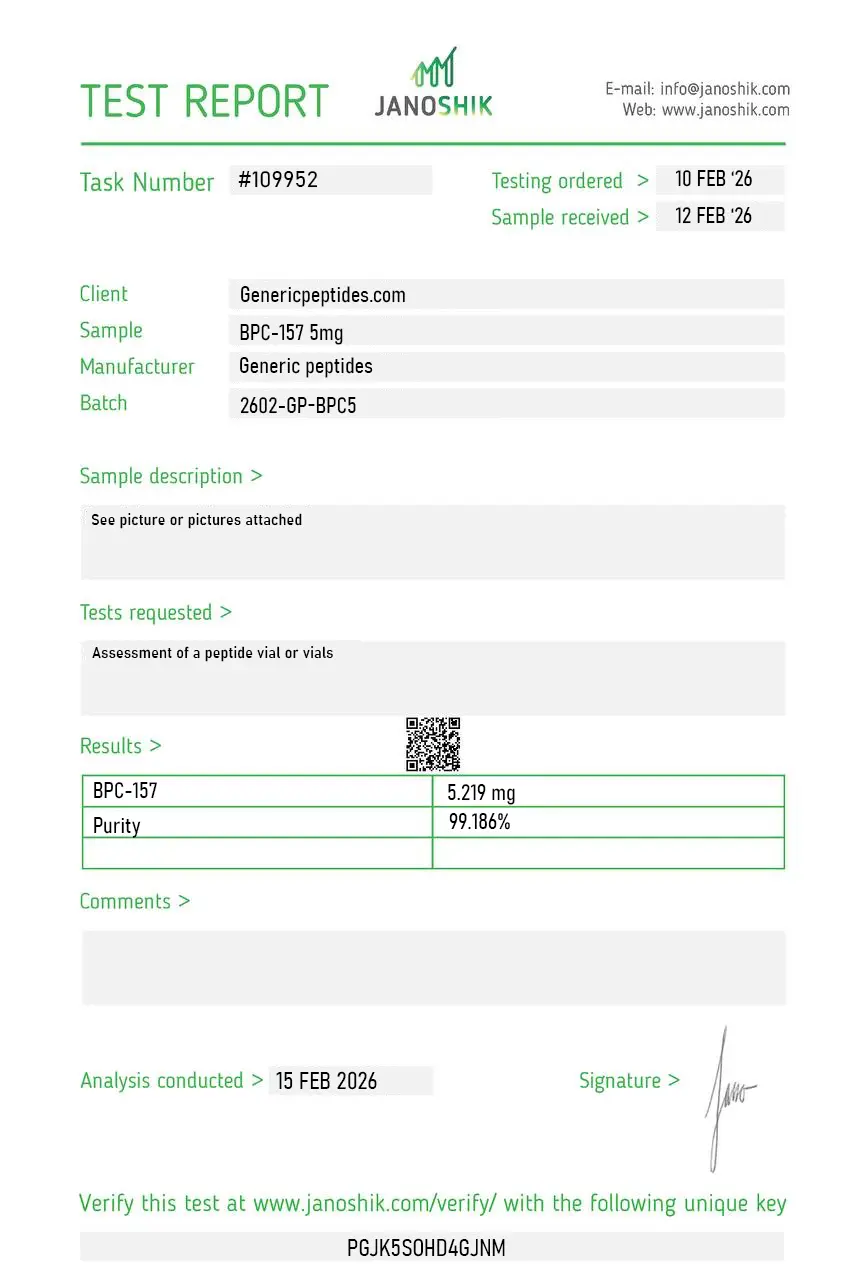
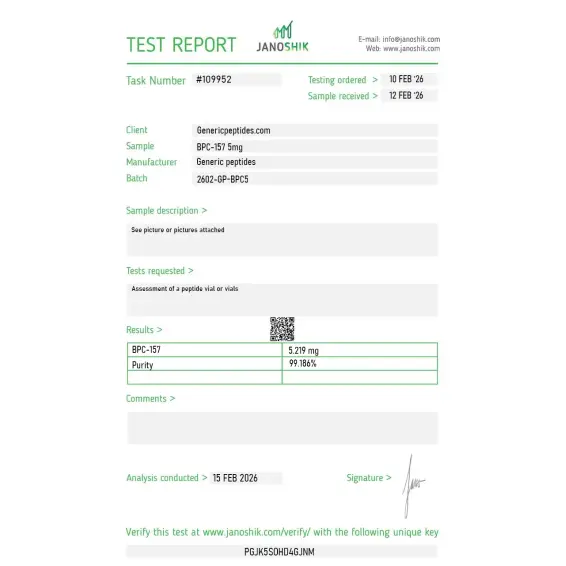
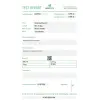
Purity: 99.186% · Content: 5.219 mg
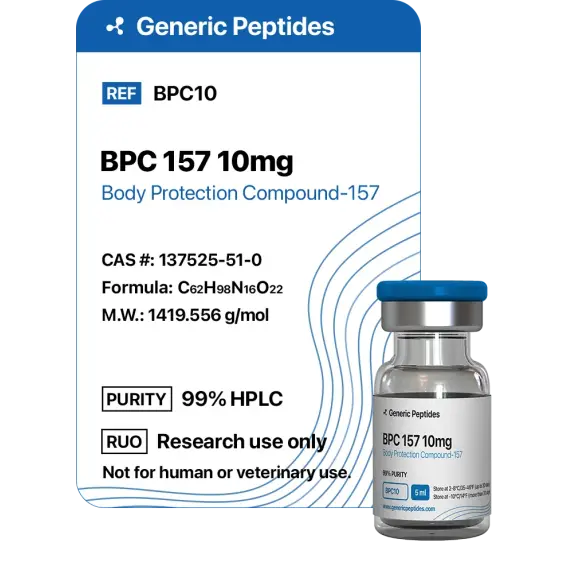
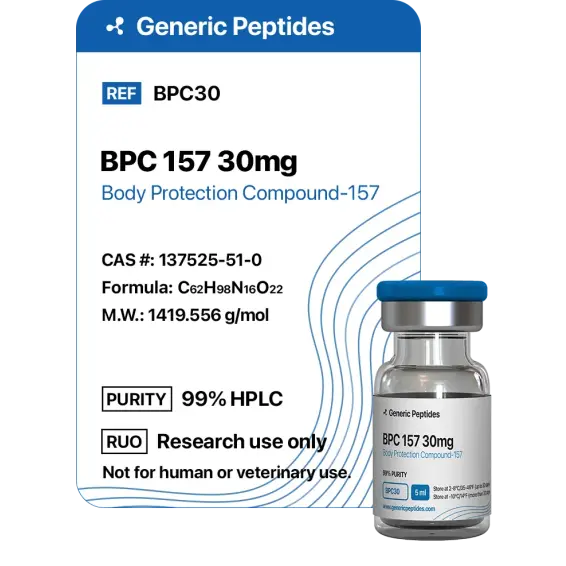
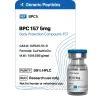
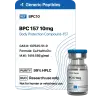
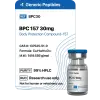
BPC-157 is a synthetic 15-amino-acid pentadecapeptide studied in laboratory and animal research involving tendon and ligament models, gastrointestinal inflammation, blood-vessel signaling, and other tissue-response systems. Most available evidence remains preclinical. BPC-157 is not an FDA-approved drug, and this product is supplied for laboratory research only.
Research-use notice: This page is for researchers evaluating an experimental peptide. It does not provide medical advice, dosing instructions, or a recommendation for human use.
BPC-157 is commonly described in scientific literature as a 15-amino-acid peptide fragment associated with Body Protection Compound. Researchers have examined it in cellular and animal models involving tissue-response signaling, cell migration, inflammatory pathways, and vascular processes.
These findings may help generate research hypotheses, but proposed mechanisms do not establish safety or effectiveness in humans.
Rodent studies have investigated BPC-157 in tendon and ligament injury models. Reported endpoints include tendon outgrowth, cell survival, cell migration, collagen-related changes, and expression of growth-hormone receptors in tendon fibroblasts.
These are animal findings and should not be presented as proof that BPC-157 repairs injuries in humans.
Other laboratory work has examined BPC-157 in gastrointestinal and inflammatory models. The experimental systems, formulations, routes, and concentrations vary between studies, so results from one model cannot be assumed to predict the behavior of a product in another setting.
There is no large, established clinical evidence base demonstrating that BPC-157 is safe or effective for a human medical indication. The available literature does not establish a clinically validated dose, long-term safety profile, or approved therapeutic use.
Claims that guarantee a specific recovery or treatment outcome go beyond the available evidence.
FDA's Pharmacy Compounding Advisory Committee (PCAC) met on July 23–24, 2026. FDA evaluated BPC-157 free base and BPC-157 acetate in the context of possible inclusion on the Section 503A Bulks List, with ulcerative colitis listed as the evaluated use in the FDA briefing materials.
The FDA briefing document available for the meeting proposed that BPC-157 free base and BPC-157 acetate not be added to the 503A Bulks List. PCAC input is advisory and non-binding. It does not constitute FDA approval or automatically change the 503A Bulks List. Final regulatory status depends on FDA's published decision.
For the complete event timeline and the distinction between the committee process and FDA action, read our BPC-157 July 2026 PCAC review update.
FDA treats BPC-157 free base and BPC-157 acetate as different bulk drug substances. A salt or other derivative may have different physical, chemical, stability, and analytical characteristics.
The names should not be treated as proof that two materials are interchangeable. Researchers should verify the exact chemical form and supporting documentation for the material being evaluated.
Peptide quality depends on more than a headline purity number. Solid-phase synthesis can produce truncated sequences and process-related impurities, while formulation and storage conditions can affect aggregation and degradation.
FDA's BPC-157 briefing discusses the importance of chemical characterization, impurity control, and quality information for peptide drug substances.
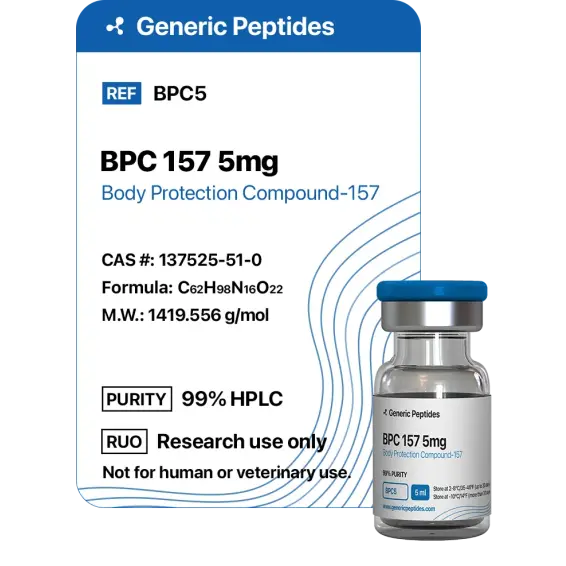
Generic Peptides lists this BPC-157 research product as USA-made with a stated specification of ≥99% HPLC purity. Researchers should review the current product specifications and any available batch-specific documentation before using the material in a laboratory workflow.
For broader background on BPC-157 research, see the BPC-157 research overview.
Researchers comparing related investigational peptides can also review the TB-500 research peptide product page.
All products are supplied for laboratory research only and are not intended for human or veterinary use.
Sources
U.S. Food and Drug Administration — BPC-157-related bulk drug substances briefing document, July 2026.
U.S. Food and Drug Administration — July 23–24, 2026 PCAC meeting page.
Chang CH, Tsai WC, Hsu YH, Pang JH — Pentadecapeptide BPC 157 Enhances the Growth Hormone Receptor Expression in Tendon Fibroblasts. PubMed Central.
Chang CH et al. — The promoting effect of pentadecapeptide BPC 157 on tendon healing involves tendon outgrowth, cell survival, and cell migration. Journal of Applied Physiology.
Gwyer D, Wragg NM, Wilson SL — Gastric pentadecapeptide body protection compound BPC 157 and its role in accelerating musculoskeletal soft tissue healing. Cell and Tissue Research.
This BPC-157 product is supplied as a sealed lyophilized research peptide. The manufacturer provides a 24-month sterility guarantee for unopened vials when stored according to the labeled conditions.
The 24-month period refers to the manufacturer’s sterility assurance for the sealed container. It should not be interpreted as a universal expiration date for peptide potency or chemical stability.
| Storage factor | Recommended practice |
|---|---|
| Temperature | Store the sealed vial at −20°C or below for long-term laboratory research storage. |
| Room-temperature stability | FDA briefing materials report that lyophilized BPC-157 free base was reported to remain stable at room temperature for up to three weeks. |
| Moisture | Keep the lyophilized powder dry. Moisture can reduce the long-term stability of solid peptides. |
| Light | Protect the vial from direct sunlight and bright light. |
| Container | Keep the peptide in its original sealed vial until it is required for laboratory work. |
| Opening the vial | Allow a cold, sealed vial to reach room temperature before opening to reduce the risk of condensation. |
The 24-month period shown on the product label is a manufacturer-stated sterility guarantee for the unopened vial. It is not a guarantee of indefinite chemical stability, potency, or research performance.
Lower-temperature storage, including −80°C, may help slow degradation when appropriate laboratory conditions are maintained. However, no indefinite shelf life should be assumed without product-specific stability testing.
Every order is processed promptly and shipped with tracking information after dispatch. Products are supplied through the official Generic Peptides supply chain and carefully handled from processing to delivery.
| Destination | Delivery Time | Notes |
|---|---|---|
| USA Domestic | 2–5 business days | Delivery may be faster when local warehouse stock is selected at checkout. |
| International | 10–15 business days | Tracking information is provided after dispatch; update frequency may vary by destination country. |
| Order Processing | 24–48 business hours | Processing begins after payment confirmation. |
| Tracking | Provided after dispatch | Multiple warehouses may result in separate shipments when applicable. |
This product is supplied through the official Generic Peptides distribution chain and shipped in original manufacturer packaging when applicable. Orders are packed securely to help protect the contents during transit and to respect customer privacy.
Outer packaging is neutral and does not display product details on the exterior.
Products are shipped in original manufacturer packaging when applicable. Batch-specific laboratory documentation may be available on request.
| Authenticity Feature | Details |
|---|---|
| Packaging | Original manufacturer packaging when applicable. |
| Lab Documentation | Batch-specific certificate of analysis may be available on request. |
| Supply Chain | Products are supplied through the official Generic Peptides distribution chain. |
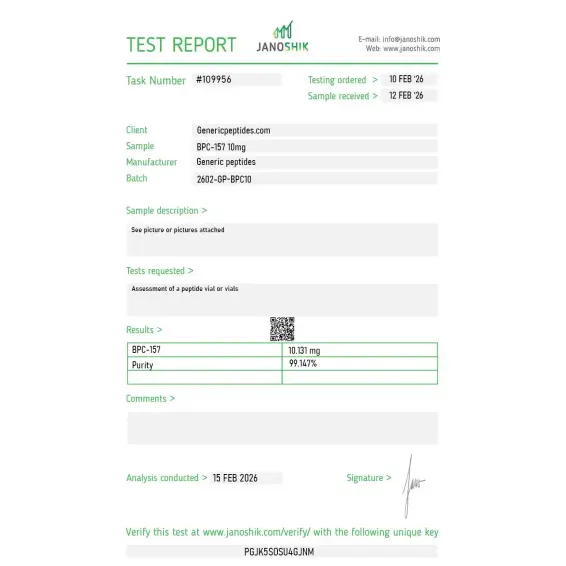
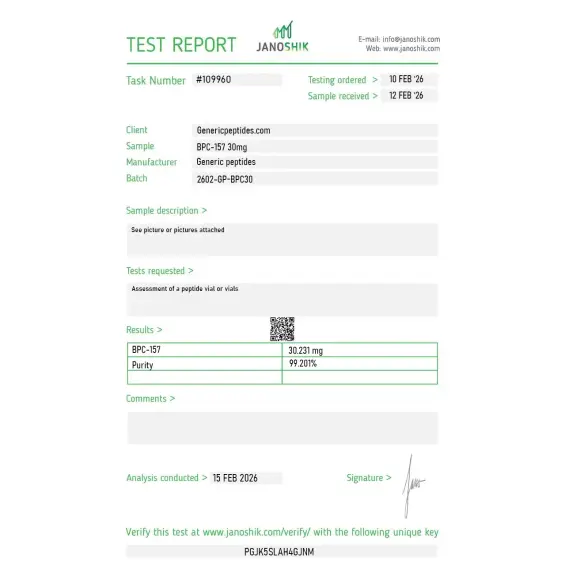
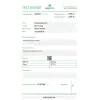
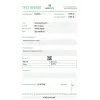
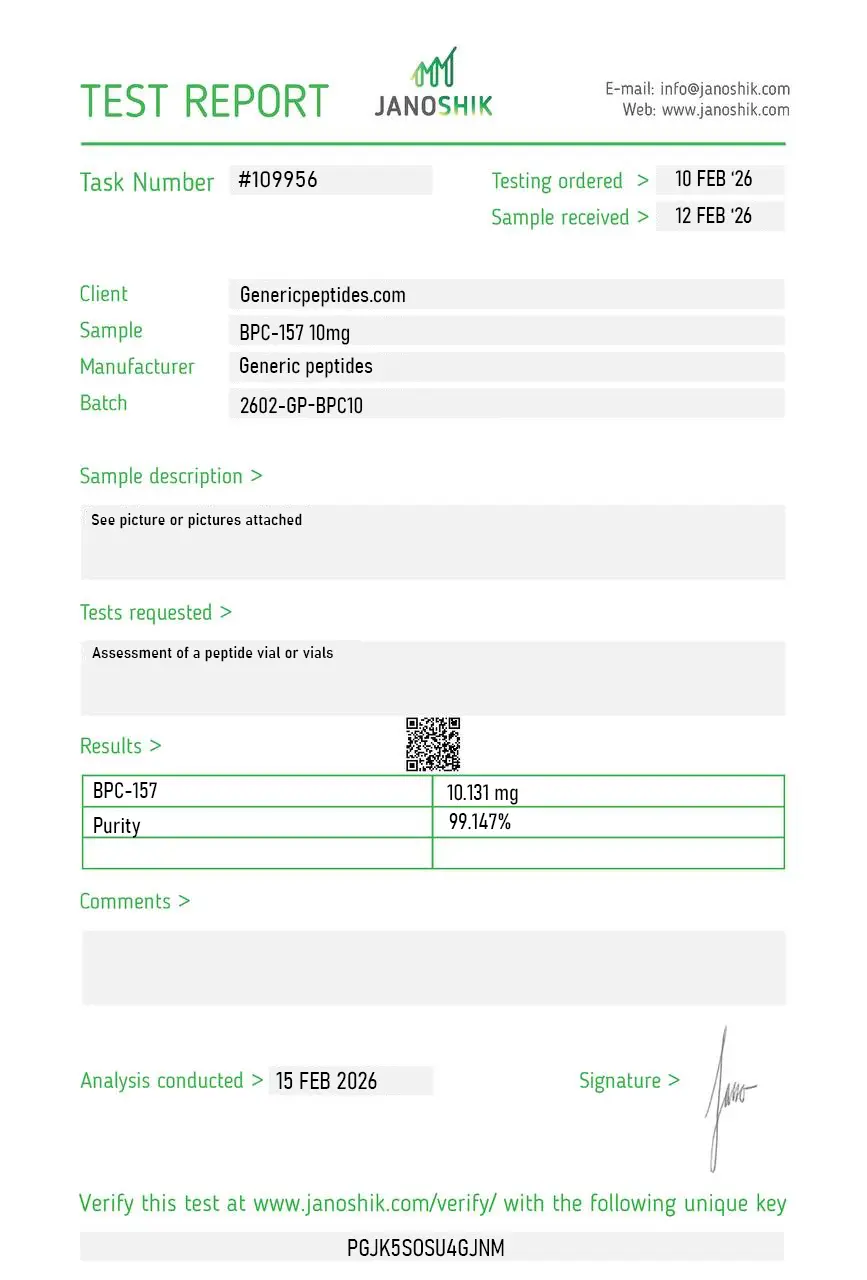
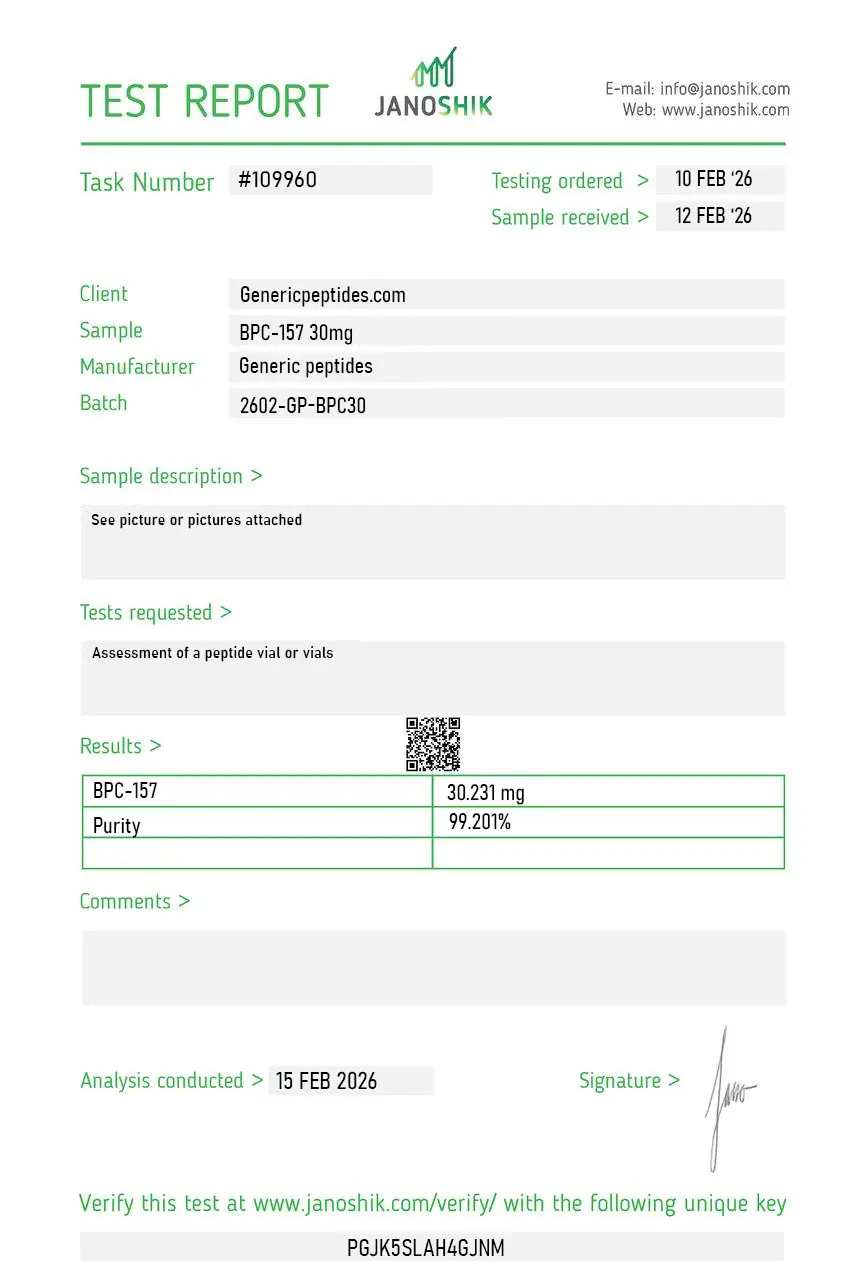
Independent Janoshik test reports are available for BPC-157 5mg, 10mg, and 30mg batches. Each certificate includes batch identification, measured content, purity result, analysis date, and verification key.
Fifteen residues and dissolved cleanly with no visible haze. I rated it four stars because the COA included a purity result but did not provide mass-spectrometry sequence confirmation. For a widely sold research peptide, I would prefer more complete identity documentation and would verify the material independently before using it in a laboratory workflow.
Product quality was consistent across two orders. The lyophilized material arrived in proper condition, and the accompanying documentation was thorough. I rated it four stars because the product was temporarily out of stock during the past few months. A restock notification option would be useful for researchers managing ongoing projects.
Reliable supplier for a compound that's increasingly difficult to source from properly documented sources. BPC-157 arrived in good condition, properly labeled with batch number, sequence, and storage requirements. The COA was included with the shipment rather than requiring a follow-up request. Pricing is reasonable for the purity grade and the documentation standard.
BPC-157 is a synthetic 15-amino-acid peptide studied mainly in preclinical models involving tissue injury, gastrointestinal inflammation, vascular responses, and repair-related signaling. These findings come largely from laboratory and animal research and do not establish a proven human treatment.
Preclinical studies have proposed interactions with angiogenic signaling, nitric-oxide pathways, inflammatory mediators, and tissue-response systems. These remain research hypotheses and are not confirmed clinical mechanisms or proof of therapeutic benefit in humans.
Researchers have investigated BPC-157 in animal and cellular models involving gastrointestinal injury, inflammation, and mucosal repair. These findings remain preclinical and should not be interpreted as evidence that BPC-157 treats human digestive conditions.
BPC-157 and TB-500 are different investigational peptides with different molecular structures and research literature. Neither is an FDA-approved treatment for human use. Comparisons should consider the study model, research objective, and measured outcomes.
No. BPC-157 is not an FDA-approved drug. FDA briefing materials state that BPC-157 is not a component of an FDA-approved drug and has no USP or NF drug-substance monograph.
The July 2026 PCAC meeting reviewed BPC-157-related bulk substances in the context of the 503A Bulks List. Any PCAC recommendation is advisory, not FDA approval, and does not automatically add BPC-157 to the list. Final regulatory action depends on the FDA.
FDA treats BPC-157 free base and BPC-157 acetate as distinct active pharmaceutical ingredients. They may have different chemical, physical, and stability characteristics and should not be presented as interchangeable. The product details identify the form supplied on this page.
Research use only means the product is intended for laboratory research and educational work. It is not intended for human or veterinary administration, diagnosis, treatment, consumption, or personal use.
Review the product identity and stated HPLC purity in the product panel, then compare the batch information with the available Certificate of Analysis documentation. A COA reports analytical results for a tested batch and does not establish clinical safety or effectiveness.
The manufacturer's 24-month period refers to the sterility guarantee for an unopened sealed vial when stored according to the labeled conditions. It is not a universal expiry date for peptide potency or chemical stability.
FDA briefing materials report that lyophilized BPC-157 free base was reported to remain stable at room temperature for up to three weeks. For longer-term storage, protect the sealed vial from moisture and follow the labeled cold-storage conditions.