BPC-157: What the Research Shows (2026)
BPC-157: What the Research Shows (2026)
By Medical Team of Generic Peptides
Quick answer. BPC-157 is a synthetic 15-amino-acid peptide derived from a protein found in human gastric juice. Over three decades, a large body of animal and cell studies, mostly from one research group in Zagreb, has reported effects on tendon, muscle, gut and blood-vessel repair. Published human evidence is limited to three small, uncontrolled reports. Its biggest open questions are independent replication and long-term safety. BPC-157 is not an approved drug anywhere. In July 2026 an FDA advisory committee voted narrowly to recommend it for pharmacy compounding, and in October 2026 HHS announced an enforcement-discretion policy that allows 503A compounding of BPC-157 under strict conditions. It remains unapproved, is not yet on the final 503A bulks list, and is prohibited in sport.
This guide covers what BPC-157 is, the proposed mechanisms, what animal and human studies measured, the scientific debate about the evidence, and its 2026 regulatory status. It does not cover use in people.
What Is BPC-157?
BPC stands for "body protection compound." BPC-157 is a pentadecapeptide, a chain of 15 amino acids, with the sequence Gly-Glu-Pro-Pro-Pro-Gly-Lys-Pro-Ala-Asp-Asp-Ala-Gly-Leu-Val. Its molecular weight is about 1,419 Da.
It was described in the early 1990s by Predrag Sikirić and colleagues at the University of Zagreb as a fragment of a larger protein they isolated from human gastric juice. The sequence does not occur as a free peptide in the body; BPC-157 is a laboratory-made fragment. In early clinical development it was given the code PL 14736.
Two properties are often cited in the literature:
- Stability. Unlike many short peptides, BPC-157 is reported to remain stable in gastric juice, which is why it was studied by both oral and injected routes in animals.
- Broad activity in models. It has been tested in rat and mouse models of injury in many organs, which is unusual for a single peptide and is part of the reason it attracts both interest and skepticism.
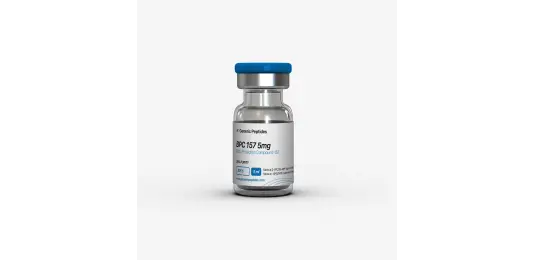
Generic Peptides supplies BPC-157 for laboratory research only.
What Does BPC-157 Do? Proposed Mechanisms
No single receptor for BPC-157 has been identified. The proposed mechanisms come from cell and animal studies:
- Nitric oxide (NO) system. In rats, BPC-157 has been reported to modulate NO signaling, counteracting both NO-synthase blockade and NO excess in several models.
- Angiogenesis and VEGFR2. In endothelial cell cultures and rat models, BPC-157 increased expression of vascular endothelial growth factor receptor 2 (VEGFR2) and activated downstream signaling, which is linked to new blood-vessel formation.
- Tendon fibroblasts. In rat tendon fibroblasts, BPC-157 increased cell spreading and migration and activated the FAK–paxillin pathway, which is involved in cell adhesion and movement. A later study from the same group reported increased growth-hormone receptor expression in these cells.
- Cytoprotection. The original concept was gastric "cytoprotection": protecting the stomach lining against injury, a framework that the Zagreb group later extended to other tissues.
These mechanisms are plausible and partly overlapping, but most come from a small number of laboratories. None has been confirmed in human tissue.
BPC-157 Benefits in Animal Studies: What Was Measured
Searches for "BPC-157 benefits" usually refer to findings in animal models. The main areas are:
| Area | Typical model | What was reported |
|---|---|---|
| Tendon and ligament | Rat transected Achilles tendon, ligament injury | Better histology and biomechanical measures than controls |
| Muscle | Rat crushed or transected muscle | Faster functional and histological recovery |
| Gastrointestinal | Rat ulcers, colitis, fistulas, short-bowel models | Reduced lesions and improved healing |
| Blood vessels | Rat vessel occlusion, endothelial cells | Increased collateral vessel formation |
| Other organs | Rat liver, nerve, bone and brain models | Protective effects in various injury models |
Two features of this literature matter. First, most studies come from the Sikirić group or its collaborators. Second, nearly all report positive results, with few published null findings. A 2026 head-to-head rat tendon study comparing BPC-157 with TB-500 is covered in our article on BPC-157 and TB-500 together, and a structural comparison is in BPC-157 vs TB-500.
Results in rats do not show what happens in people. Doses, routes, healing biology and outcome measures differ between species.
BPC-157 Human Studies: The Three Published Reports
Despite the size of the animal literature, the published human evidence consists of three small reports, all led by the same US clinician, Edwin Lee.
Lee and Padgett, 2021: Knee Pain Case Series
A retrospective review of 16 people with various types of knee pain who had received intra-articular BPC-157; four of them also received thymosin beta-4. Fourteen of the 16 reported improvement. The design had no control group and relied on self-reported outcomes, so it cannot separate an effect of BPC-157 from placebo response or natural recovery.
Lee, Walker and Ayadi, 2024: Interstitial Cystitis Pilot
A pilot report of 12 women with interstitial cystitis who received a single BPC-157 injection into the bladder wall during cystoscopy. All 12 reported improvement, 10 reported complete symptom resolution, and no adverse events were described. Again, there was no comparison group.
Lee and Burgess, 2025: Intravenous Safety Pilot
A pilot study in two healthy adults who received intravenous BPC-157. No adverse effects were observed. Two participants are far too few to characterize safety.
Trials That Were Not Published
A randomized, placebo-controlled Phase I trial of oral BPC-157 was registered by the Croatian company PharmaCotherapia (NCT02637284), planned in Mexico, but no results have been posted or published. Earlier development by Pliva under the code PL 14736 included a randomized Phase II trial of BPC-157 enemas in ulcerative colitis, reported only as a 2005 conference abstract.
In short, no randomized controlled trial of BPC-157 has been published in full peer-reviewed form.
BPC-157 Side Effects and Safety Questions
Because human data are so limited, the side-effect profile of BPC-157 in people is essentially unknown.
- In the human reports, no serious adverse events were described, but the studies were small, uncontrolled and short.
- In animal studies, toxicity studies reported no lethal dose in the ranges tested and few adverse findings.
- The angiogenesis question. Because BPC-157 promotes blood-vessel growth in models, critics have raised the theoretical concern that it could support tumor growth. Its proponents argue the opposite based on limited cell data. No adequate in vivo study has resolved the question either way.
- Product quality. Much of the BPC-157 sold online has not been independently verified. The US Department of Defense's Operation Supplement Safety program lists BPC-157 as a prohibited, unapproved drug and has warned about its presence in products.
The Scientific Debate Over BPC-157
In 2025 the evidence base became the subject of an open exchange in the journal Pharmaceuticals:
- Józwiak et al., January 2025. A literature and patent review by Polish researchers acknowledged BPC-157's broad preclinical activity but criticized the lack of regulatory approval after three decades, the limited clinical data, the potential cancer risk linked to angiogenesis, and the concentration of studies in one group.
- Sikirić et al., September 2025. The Zagreb group published a point-by-point comment, defending the safety record and arguing that BPC-157 is not tumor-promoting.
- Józwiak et al., September 2025. The reply maintained the critique, noting that no published in vivo data show BPC-157 inhibits tumor progression and that independent laboratories have contributed only a handful of studies.
A separate 2025 narrative review by McGuire and colleagues, focused on musculoskeletal healing, reached a similar overall conclusion: a large, mostly positive preclinical literature and very little human data.
The debate is not about whether the animal studies exist. It is about how much confidence their concentration and lack of independent replication allow.
BPC-157 FDA Compounding Status in 2026
Checked October 28, 2026.
Approval. BPC-157 is not an FDA-approved drug and has never completed a clinical development program.
Compounding.
- September 2023. The FDA placed BPC-157 in Category 2 of its interim 503A bulks policy, meaning substances that may present significant safety risks in compounding.
- April 15, 2026. The FDA announced it would remove BPC-157 and other peptides from Category 2 after their nominations were withdrawn and refer them for advisory review. Removal from Category 2 did not make BPC-157 eligible for compounding.
- July 23, 2026. The Pharmacy Compounding Advisory Committee voted 8–6 with one abstention to recommend adding BPC-157 (nominated for ulcerative colitis and tissue healing) to the 503A bulks list. FDA staff had recommended against it, citing a lack of quality safety and effectiveness data and gaps in characterization. The vote is advisory.
- October 14, 2026. The policy, titled "Interim Access Policy for Compounding Using Certain Peptides," was sent to the White House Office of Management and Budget for review. See our report on the FDA peptide interim access policy.
- October 28, 2026. HHS filed a notice announcing an "Enforcement Discretion Policy Regarding 503A Compounding Using Certain Peptide Bulk Drug Substances," scheduled for publication in the Federal Register on October 30, 2026. BPC-157 is one of six peptides listed in Appendix A. HHS states it does not intend to take enforcement action against state-licensed pharmacies, federal facilities or licensed physicians compounding BPC-157 for individual patients, provided all conditions are met, including a defined identity and limited routes (Appendix B), a certificate of analysis from an FDA-registered, CGMP-compliant manufacturer, adverse-event reporting, single-ingredient products and a patient-specific prescription. The policy lasts until BPC-157 is addressed in a final rule on the 503A bulks list and may be revisited if safety or quality problems arise. Details are in our report on the HHS peptide policy and our coverage of the BPC-157 FDA review.
The policy is enforcement discretion, not approval. BPC-157 is still not an FDA-approved drug, it is not yet on the final 503A bulks list, and the policy does not cover products sold for research use only.
Sport. The World Anti-Doping Agency prohibits BPC-157 at all times under section S0, non-approved substances. USADA and the Department of Defense list it as prohibited.
How to Verify BPC-157: COA Checks
BPC-157 is one of the most widely sold research peptides, which makes identity testing important. A batch-specific certificate of analysis should include:
- HPLC purity with the chromatogram and method conditions.
- Mass spectrometry confirming the expected molecular weight of about 1,419 Da.
- Net peptide content or water and counter-ion values, since gross vial weight overstates peptide content.
- Lot traceability matching the vial.
Our guide to reading a research peptide COA explains each item.
FAQ
What is BPC-157?
BPC-157 is a synthetic 15-amino-acid peptide based on a fragment of a protein isolated from human gastric juice. It has been studied mainly in rat and cell models of tissue injury.
Is BPC-157 FDA approved?
No. It is not an approved drug. An FDA advisory committee voted 8–6 in July 2026 to recommend it for pharmacy compounding, and in October 2026 HHS announced that it will not take enforcement action against 503A pharmacies and physicians compounding BPC-157 under strict conditions. Neither step is FDA approval.
Has BPC-157 been tested in humans?
Only in three small, uncontrolled published reports: a 16-person knee pain case series, a 12-person interstitial cystitis pilot and a 2-person intravenous safety pilot. No randomized controlled trial has been published in full peer-reviewed form.
What are the side effects of BPC-157?
They are not well characterized in humans. The small human reports described no serious adverse events, but they were too small and short to establish safety. The main theoretical concern is its pro-angiogenic activity.
Is BPC-157 hard on the kidneys?
There are no human data on BPC-157 and kidney function. In rat models, BPC-157 has been reported to protect the kidney in several injury models, but these findings have not been tested in people.
Can you buy BPC-157 over the counter?
No. BPC-157 is not an FDA-approved drug. Under the October 2026 HHS policy, it can be compounded only by licensed 503A pharmacies or physicians for an individual patient with a prescription, and only under specific conditions. The Department of Defense's Operation Supplement Safety program has warned about BPC-157 in products sold for health and wellness. Research-grade BPC-157 is a laboratory reagent, not a product for human use.
Is BPC-157 banned in sport?
Yes. WADA lists it under S0, non-approved substances, prohibited at all times.
References
For research use only. Not for human consumption. This content is for informational purposes and is not medical advice.
[1] Sikirić P, Petek M, Rucman R, et al. A new gastric juice peptide, BPC. An overview of the stomach-stress-organoprotection hypothesis and beneficial effects of BPC. J Physiol Paris. 1993;87(5):313–327. doi:10.1016/0928-4257(93)90038-U. PMID: 8298609.
[2] Seiwerth S, Rucman R, Turković B, et al. BPC 157 and standard angiogenic growth factors. Gastrointestinal tract healing, lessons from tendon, ligament, muscle and bone healing. Curr Pharm Des. 2018;24(18):1972–1989. doi:10.2174/1381612824666180712110447. PMID: 29998800.
[3] Chang CH, Tsai WC, Lin MS, Hsu YH, Pang JH. The promoting effect of pentadecapeptide BPC 157 on tendon healing involves tendon outgrowth, cell survival, and cell migration. J Appl Physiol. 2011;110(3):774–780. PMID: 21030672.
[4] Chang CH, Tsai WC, Hsu YH, Pang JH. Pentadecapeptide BPC 157 enhances the growth hormone receptor expression in tendon fibroblasts. Molecules. 2014;19(11):19066–19077. doi:10.3390/molecules191119066. PMID: 25415472.
[5] Hsieh MJ, Liu HT, Wang CN, et al. Therapeutic potential of pro-angiogenic BPC157 is associated with VEGFR2 activation and up-regulation. J Mol Med (Berl). 2017;95(3):323–333. doi:10.1007/s00109-016-1488-y. PMID: 27847966.
[6] Lee E, Padgett B. Intra-articular injection of BPC 157 for multiple types of knee pain. Altern Ther Health Med. 2021;27(4):8–13. PMID: 34324435.
[7] Lee E, Walker C, Ayadi B. Effect of BPC-157 on symptoms in patients with interstitial cystitis: a pilot study. Altern Ther Health Med. 2024;30(10):12–17.
[8] Lee E, Burgess K. Safety of intravenous infusion of BPC157 in humans: a pilot study. Altern Ther Health Med. 2025;31:20–24. PMID: 40131143.
[9] ClinicalTrials.gov. NCT02637284: PCO-02 – Safety and pharmacokinetics trial. Sponsor: PharmaCotherapia d.o.o.
[10] Ruenzi M, et al. [Randomized, double-blind, placebo-controlled phase II study of PL 14736 enema in ulcerative colitis; conference abstract]. Gastroenterology. 2005;128:A584.
[11] Józwiak M, Bauer M, Kamysz W, Kleczkowska P. Multifunctionality and possible medical application of the BPC 157 peptide—literature and patent review. Pharmaceuticals (Basel). 2025;18(2):185. doi:10.3390/ph18020185. PMID: 40005999.
[12] Sikirić P, Seiwerth S, Skrtic A, et al. BPC 157 therapy: targeting angiogenesis and nitric oxide's cytotoxic and damaging actions, but maintaining, promoting, or recovering their essential protective functions. Comment on Józwiak et al. Pharmaceuticals (Basel). 2025;18(10):1450. doi:10.3390/ph18101450.
[13] Józwiak M, Bauer M, Kamysz W, Kleczkowska P. Reply to Sikiric et al. Comment on "Józwiak et al. Multifunctionality and possible medical application of the BPC 157 peptide—literature and patent review." Pharmaceuticals (Basel). 2025;18(10):1451. doi:10.3390/ph18101451.
[14] McGuire FP, Martinez R, Lenz A, Skinner L, Cushman DM. Regeneration or risk? A narrative review of BPC-157 for musculoskeletal healing. Curr Rev Musculoskelet Med. 2025;18(12):611–619. doi:10.1007/s12178-025-09990-7.
[15] U.S. Food and Drug Administration. Certain bulk drug substances for use in compounding that may present significant safety risks. fda.gov (Category 2 update of September 29, 2023; removal announced April 15, 2026).
[16] U.S. Food and Drug Administration. Pharmacy Compounding Advisory Committee meeting, July 23–24, 2026. Meeting materials.
[17] Office of Information and Regulatory Affairs. Interim Access Policy for Compounding Using Certain Peptides (RIN 0910-ZD94). reginfo.gov.
[18] World Anti-Doping Agency. The 2026 Prohibited List: S0 Non-approved substances. wada-ama.org.
[19] Operation Supplement Safety (U.S. Department of Defense). BPC-157: a prohibited peptide and an unapproved drug found in health and wellness products. opss.org. April 29, 2025.
[20] Department of Health and Human Services. Enforcement Discretion Policy Regarding 503A Compounding Using Certain Peptide Bulk Drug Substances. Notice of availability. Docket No. HHS-OASH-2026-0496; RIN 0910-ZD94. FR Doc. 2026-22192, filed October 28, 2026; scheduled publication October 30, 2026.
[21] Department of Health and Human Services. HHS Enforcement Discretion Policy Regarding 503A Compounding Using Certain Peptide Bulk Drug Substances, Appendices A and B. hhs.gov (October 2026).
Related reading
- BPC-157 and TB-500 Together: What the Research Shows
- BPC-157 vs TB-500: Structure, Research Evidence and Status
- BPC-157 at the July 2026 FDA Review
- HHS Opens 503A Compounding for Six Peptides: What the October 30 Policy Does and Doesn't Do
- FDA Peptide Interim Access Policy Goes to White House
- How to Read a Research Peptide COA