DSIP: 1977 Swiss-Discovered Sleep Peptide Facing 2026 PCAC Review
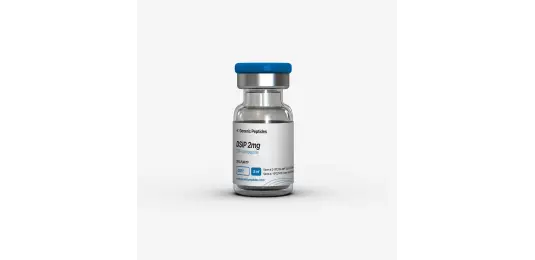
DSIP Peptide (Delta Sleep-Inducing Peptide): What the Research Shows
By Medical Team of Generic Peptides
Quick answer. DSIP is a nine-amino-acid peptide (Trp-Ala-Gly-Gly-Asp-Ala-Ser-Gly-Glu) first isolated in 1977 from the blood of sleeping rabbits. Its name reflects the original observation that it increased slow-wave (delta) sleep in animals. Nearly five decades later it remains one of the most studied and least understood neuropeptides: no receptor has been confirmed, the human sleep data are small and mixed, and most of the richer findings come from animal and in vitro work on stress hormones, pain thresholds, and mitochondrial protection. In the United States the FDA refers to it as emideltide; in July 2026 an FDA advisory committee declined to recommend it for pharmacy compounding, citing gaps in characterization and clinical data rather than evidence of harm.
This article covers the structure and discovery of DSIP, the mechanistic hypotheses, what the human and animal studies actually measured, the 2026 regulatory picture, and what to check on a research-grade certificate of analysis.
What DSIP Is
DSIP is a nonapeptide with the sequence Trp-Ala-Gly-Gly-Asp-Ala-Ser-Gly-Glu (WAGGDASGE) and a molecular weight of about 849 Da. It carries no post-translational modifications in its native form, which makes it simple to synthesize and easy to verify by mass spectrometry.
The peptide was identified by Guy Schoenenberger and Marcel Monnier at the University of Basel [1]. Their method was unusual: they connected the circulation of two rabbits, induced sleep in the donor by electrical stimulation of the thalamus, and collected and fractionated cerebral venous blood from the recipient. A fraction that produced delta-wave sleep in recipient animals was purified and sequenced, and the nine-residue product was named "delta sleep-inducing peptide."
Subsequent work found DSIP-like immunoreactivity in mammalian brain, pituitary, several peripheral tissues, and even human milk [2, 3]. Whether this material is identical to synthetic DSIP, or how it is produced, has never been fully established, and no gene encoding a DSIP precursor has been identified. This is one of the reasons the peptide's biology remains contested.
Mechanism of Action: Still Unresolved
Unlike GHRH analogs or GLP-1 agonists, DSIP has no confirmed receptor. The literature instead offers several partially supported hypotheses, mostly from animal models [4, 5].
| Proposed mechanism | Evidence type | What was observed |
|---|---|---|
| Modulation of GABAergic transmission | Animal, in vitro | Changes in sleep EEG consistent with enhanced inhibitory tone; no direct binding to GABA-A receptors demonstrated |
| Hypothalamic–pituitary–adrenal (HPA) axis | Animal; small human studies | Reduced corticotropin and corticosteroid release under stress conditions |
| Monoamine systems | Animal | Region-dependent shifts in serotonin and dopamine turnover |
| Mitochondrial protection | Animal (rat brain) | Preservation of mitochondrial respiration after hypoxia [6] |
| Pain and opioid pathways | Animal | Raised pain thresholds without direct opioid-receptor binding; reduced signs of opioid withdrawal in some models |
| Luteinizing hormone release | Animal (rat) | Stimulation of LH but not FSH via a hypothalamic site [7] |
The pattern across these studies is that DSIP behaves more like a broad neuromodulator than a classical ligand with a single target. Dose–response relationships in animal sleep studies were also non-linear: both low and high amounts produced smaller effects than intermediate ones, which complicates interpretation and replication.
What the Research Shows in Humans
Human data on DSIP are limited, old, and mixed. The studies that exist are small, mostly from the 1980s and early 1990s, and used intravenous administration in controlled settings.
| Study | Model | What was measured | Key finding |
|---|---|---|---|
| Schneider-Helmert et al., 1981 [8] | Clinical, small group of volunteers | Sleep EEG after IV DSIP | Increase in slow-wave sleep and shorter sleep latency reported on the treatment night and the following night |
| Schneider-Helmert & Schoenenberger, 1983 [9] | Clinical, small groups | Sleep, mood, and performance measures | Effects described as "normalizing" rather than sedative; authors emphasized psychophysiological rather than hypnotic action |
| Bes et al., 1992 [10] | Clinical, double-blind, adults with chronic insomnia | Polysomnography | Modest improvement in delta sleep without REM suppression; authors concluded short-term treatment was "not likely to be of major therapeutic benefit" |
| Pollard & Pomfrett, 2001 [11] | Editorial review | Safety and anesthesia-related literature | Summarized DSIP as well tolerated in available human and animal data |
Two conclusions follow. First, the human evidence for a sleep effect is weak: the only double-blind insomnia trial found a measurable but clinically unimpressive change. Second, the safety record in these small studies was unremarkable, with transient headache, nausea, and drowsiness the main reported effects — though the total number of participants across all trials is far too small to characterize safety at modern standards.
Sleep researcher Alexander Borbély famously described DSIP as "a flop" as a sleep substance, and interest in the molecule as a hypnotic largely faded in Western laboratories by the mid-1990s. Research continued in Russia and Eastern Europe, particularly on stress physiology and neuroprotection [12], but much of that literature is not indexed in PubMed or available in English.
Regulatory Status in 2026
DSIP has never been approved as a drug in the United States or Europe. Its regulatory history in the US concerns pharmacy compounding, not drug approval.
- September 2023. The FDA placed DSIP (as "emideltide") in Category 2 of its evaluation of bulk drug substances for Section 503A compounding, citing immunogenicity concerns and limited safety data [13].
- April 2026. HHS directed the FDA to remove DSIP and eleven other peptides from Category 2 pending advisory review, and the FDA scheduled a Pharmacy Compounding Advisory Committee (PCAC) meeting for July 23–24, 2026 [14].
- July 24, 2026. The PCAC reviewed emideltide free base and emideltide acetate and did not recommend either for the 503A Bulks List [15]. The FDA briefing document cited inconsistent characterization of the free base versus acetate forms, no USP or NF monograph, insufficient effectiveness evidence for the proposed route, lack of route-specific safety data, and potential immunogenicity and impurity concerns. The FDA did not conclude that DSIP had been shown to be dangerous; the finding was that the data were insufficient.
- Sport. DSIP is not named on the WADA Prohibited List, but as a non-approved pharmacological substance it falls under the S0 category, which prohibits such substances at all times for tested athletes [16].
The practical consequence for researchers is that DSIP remains a research-use-only compound. The committee's reasoning — gaps in physical characterization and route-specific data — is also a useful reminder of what a serious COA for this peptide should address.
Reading a DSIP Certificate of Analysis
DSIP's short, unmodified sequence makes it easier to verify than a long or lipidated peptide, but two points deserve attention.
- Salt form. The FDA review specifically flagged confusion between emideltide free base and emideltide acetate. A COA should state which form was analyzed and, for the acetate, report acetate content so that net peptide content can be calculated.
- Mass spectrometry. The observed mass should match 848.8 Da for the free peptide. The sequence contains two glycine pairs; a single missing glycine would show as a −57 Da deficit, which HPLC alone may not resolve.
- HPLC purity. A nine-residue peptide should reach high purity; a single sharp peak with method conditions listed and purity of 98% or higher is typical for research-grade material.
- Lot traceability. Lot number, analysis date, and storage conditions must match the vial.
Generic Peptides publishes a lot-specific COA for research-grade DSIP with the mass spectrum and chromatogram for each batch. Our guide to reading a research peptide COA explains each test in detail.
DSIP Compared With Other Neuroactive Research Peptides
DSIP is often grouped with Semax and Selank, two Russian-developed peptides that were reviewed at the same 2026 PCAC meeting. The comparison is instructive.
| DSIP | Semax | Selank | |
|---|---|---|---|
| Origin | Basel, 1977, from rabbit blood | Moscow, ACTH(4-7) analog | Moscow, tuftsin analog |
| Length | 9 residues, unmodified | 7 residues (ACTH 4-7 + Pro-Gly-Pro) | 7 residues (tuftsin + Pro-Gly-Pro) |
| Proposed target | None confirmed | Melanocortin-related and BDNF signaling | GABAergic and enkephalin pathways |
| Human data | Small 1980s–90s sleep trials | Russian clinical use; limited Western trials | Russian clinical use; limited Western trials |
| 2026 PCAC | Not recommended | Reviewed July 24, 2026 | Not on July 2026 agenda |
All three share the same evidence problem: substantial animal and non-English clinical literature, and thin controlled data in Western journals. For researchers comparing neuromodulatory peptides, DSIP's distinguishing feature is its origin in sleep physiology and its stress-hormone findings; Semax and Selank were designed around cognitive and anxiolytic endpoints. Our Semax vs Selank comparison covers those two in more depth.
Open Questions in the Research
- Receptor identity. Fifty years on, no DSIP receptor has been cloned, and no precursor gene has been found. Until that changes, mechanistic claims remain inferential.
- Replication. The non-linear dose–response in animal sleep studies and the small human samples mean that many reported effects have not been independently replicated under modern standards.
- Stress and HPA findings. These are the most consistent animal results and the least studied in humans; they represent the most plausible direction for future controlled work.
- Stability of the native peptide. DSIP is rapidly degraded in plasma; how, or whether, endogenous DSIP-like material reaches the brain is unknown.
FAQ
What does DSIP stand for?
Delta sleep-inducing peptide. The name comes from the 1977 observation that the peptide increased delta-wave (slow-wave) sleep in rabbits. The FDA's name for the same molecule is emideltide.
Is DSIP a proven sleep aid?
No. The only double-blind trial in people with chronic insomnia found a small effect on delta sleep and concluded the benefit was unlikely to be clinically important. DSIP has never been approved as a drug anywhere.
What did the FDA decide about DSIP in 2026?
On July 24, 2026, the FDA's Pharmacy Compounding Advisory Committee declined to recommend emideltide (DSIP) for the 503A compounding bulks list, citing insufficient characterization and clinical data. It did not find the peptide to be dangerous. DSIP remains research-use-only.
How is DSIP different from Semax and Selank?
DSIP originated in sleep research and has no confirmed receptor; Semax and Selank are Russian-designed analogs of ACTH and tuftsin with proposed cognitive and anxiolytic mechanisms. DSIP (as emideltide) and Semax were reviewed by the FDA's compounding advisory committee in July 2026; Selank was removed from the FDA's Category 2 list in 2024 and was not on that agenda.
What should a DSIP certificate of analysis show?
The salt form (free base or acetate), a mass spectrum matching ~849 Da, an HPLC chromatogram with purity of 98% or higher, and a lot number matching the vial.
For research use only. Not for human consumption. This content is for informational purposes and is not medical advice.
References
[1] Schoenenberger GA, Monnier M. Characterization of a delta-electroencephalogram (-sleep)-inducing peptide. Proc Natl Acad Sci USA. 1977;74(3):1282–1286. PMID 265572.
[2] Schoenenberger GA. Characterization, properties, and multivariate functions of delta-sleep-inducing peptide (DSIP). Eur Neurol. 1984;23(5):321–345. PMID 6548966.
[3] Graf MV, Hunter CA, Kastin AJ. Presence of delta-sleep-inducing peptide-like material in human milk. J Clin Endocrinol Metab. 1984;59(1):127–132. PMID 6547144.
[4] Graf MV, Kastin AJ. Delta-sleep-inducing peptide (DSIP): a review. Neurosci Biobehav Rev. 1984;8(1):83–93. PMID 6145137.
[5] Kovalzon VM, Strekalova TV. Delta sleep-inducing peptide (DSIP): a still unresolved riddle. J Neurochem. 2006;97(2):303–309. PMID 16539679.
[6] Khvatova EM, Samartzev VN, Zagoskin PP, Prudchenko IA, Mikhaleva II. Delta sleep inducing peptide (DSIP): effect on respiration activity in rat brain mitochondria and stress protective potency under experimental hypoxia. Peptides. 2003;24(2):307–311. PMID 12668217.
[7] Iyer KS, McCann SM. Delta sleep inducing peptide (DSIP) stimulates the release of LH but not FSH via a hypothalamic site of action in the rat. Brain Res Bull. 1987;19(5):535–538. PMID 3121137.
[8] Schneider-Helmert D, Gnirss F, Monnier M, Schenker J, Schoenenberger GA. Acute and delayed effects of DSIP (delta sleep-inducing peptide) on human sleep behavior. Int J Clin Pharmacol Ther Toxicol. 1981;19(8):341–345. PMID 6895513.
[9] Schneider-Helmert D, Schoenenberger GA. Effects of DSIP in man: multifunctional psychophysiological properties besides induction of natural sleep. Neuropsychobiology. 1983;9(4):197–206. PMID 6689058.
[10] Bes F, Hofman W, Schuur J, Van Boxtel C. Effects of delta sleep-inducing peptide on sleep of chronic insomniac patients. A double-blind study. Neuropsychobiology. 1992;26(4):193–197. PMID 1299794.
[11] Pollard BJ, Pomfrett CJD. Delta sleep-inducing peptide. Eur J Anaesthesiol. 2001;18(7):419–422. PMID 11437870.
[12] Sudakov KV, Umriukhin PE, Rayevsky KS. Delta-sleep inducing peptide and neuronal activity after acute stress. Neurosci Behav Physiol. 2004; and Sudakov KV, et al. Delta-sleep-inducing peptide: contemporary aspects of research and prospects for therapeutic application. Biology Bulletin Reviews. 2008.
[13] U.S. Food and Drug Administration. Certain bulk drug substances for use in compounding that may present significant safety risks. September 29, 2023.
[14] U.S. Food and Drug Administration. Federal Register notice: Pharmacy Compounding Advisory Committee meeting, July 23–24, 2026. Docket FDA-2025-N-6895. April 16, 2026.
[15] U.S. Food and Drug Administration. Pharmacy Compounding Advisory Committee briefing document: emideltide (free base and acetate). July 2026 meeting materials.
[16] World Anti-Doping Agency. The Prohibited List 2026, Section S0: Non-approved substances.