CJC-1295 No DAC: Short-Acting GHRH Analog After the 2024 PCAC Vote
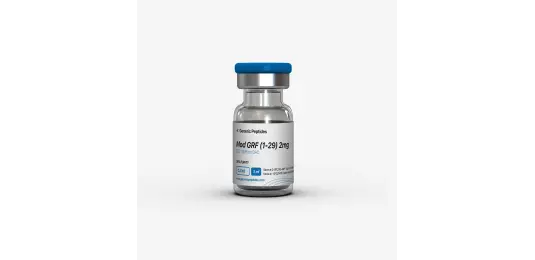
Modified GRF (1-29) / CJC-1295 No DAC: The Short-Acting GHRH Analog Component of the Most Popular Peptide Combination, Its Specific Pharmacology, and the Regulatory Limbo Following the December 2024 PCAC Vote
By Medical Team of Generic Peptides
Modified GRF (1-29), also called Mod GRF 1-29, ModGRF(1-29), tetrasubstituted GRF(1-29), or — most commonly in clinical and compounding pharmacy contexts — CJC-1295 without DAC, is a synthetic 30-amino-acid analog of growth hormone-releasing hormone (GHRH). The compound is structurally identical to the protein portion of CJC-1295 with DAC, just without the Drug Affinity Complex modification that creates the long-acting albumin-conjugated form. Same amino acid sequence, same four stability substitutions, same GHRH receptor pharmacology — but with approximately 30-minute plasma half-life rather than 6-8 days. This pharmacokinetic difference defines everything operationally important about how Modified GRF (1-29) is used compared to the DAC version.
The structural foundation involves the 29-amino-acid GHRH(1-29) sequence (the bioactive N-terminal fragment of the 44-amino-acid native GHRH that retains full GH-releasing activity, also known as Sermorelin in its unmodified form) with four specific amino acid substitutions: D-Ala² replacing L-Ala (preventing DPP-4 enzymatic cleavage at position 2), Gln⁸ replacing Asn (additional DPP-4 resistance), Ala¹⁵ replacing Gly (oxidation resistance), and Leu²⁷ replacing Met (oxidation resistance). Plus the lysine at position 30 that's structurally part of the original CJC-1295 design even when the DAC is absent. The sequence H-Tyr-D-Ala-Asp-Ala-Ile-Phe-Thr-Gln-Ser-Tyr-Arg-Lys-Val-Leu-Ala-Gln-Leu-Ser-Ala-Arg-Lys-Leu-Leu-Gln-Asp-Ile-Leu-Ser-Arg-NH₂ produces a peptide with substantially better metabolic stability than native Sermorelin (which has only the D-Ala² substitution and approximately 10-minute half-life) while retaining the pulsatile GH release pattern that distinguishes short-acting GHRH analogs from sustained-signaling alternatives.
The naming convention deserves clarification because the literature uses multiple terms inconsistently. "Modified GRF (1-29)" or "Mod GRF 1-29" is the standalone name reflecting the compound's identity as modified GHRH(1-29). "CJC-1295 without DAC" or "CJC-1295 no DAC" is the most common name in clinical and compounding pharmacy contexts, reflecting the structural relationship to the better-known DAC version. "Tetrasubstituted GRF(1-29)" was the original technical name reflecting the four amino acid substitutions; the term "Modified GRF 1-29" was coined in 2008 by a researcher and has become the dominant naming convention in scientific literature. All these names refer to the same compound. The compound is not CJC-1293 (a different molecule), and it shouldn't be confused with native Sermorelin (which lacks three of the four stability substitutions).
The clinical positioning of Modified GRF (1-29) in 2026 reflects two distinct identities. As a standalone compound, the peptide is used relatively rarely — most clinical applications of short-acting GHRH analogs use Sermorelin (the pharmaceutically more established option) or shift to the longer-acting CJC-1295 with DAC for sustained signaling protocols. As a component of the CJC-1295/Ipamorelin Duo-Blend, Modified GRF (1-29) is part of the most popular peptide combination in off-label compounding pharmacy practice (covered separately in this article series). The combination role drives most off-label clinical use — patients receive Modified GRF (1-29) typically as part of the synergistic GHRH analog plus selective ghrelin receptor agonist combination rather than as standalone monotherapy.
The 2026 regulatory situation for Modified GRF (1-29) is genuinely complicated and worth detailed treatment because it differs from compounds with potentially favorable trajectories. FDA placed CJC-1295 (all forms, including the no-DAC Modified GRF 1-29 version) on Category 2 in September 2023. Removed for PCAC review September 2024. At the December 4, 2024 PCAC meeting, all CJC-1295 forms — free base, acetate, DAC free base, DAC acetate, and DAC trifluoroacetate — were reviewed and the committee voted against inclusion in the 503A Bulks Regulation. This unfavorable outcome covers Modified GRF (1-29) by extension, since the no-DAC version is one of the CJC-1295 forms reviewed. The February 27, 2026 Kennedy Rogan announcement included CJC-1295 among approximately 14 peptides intended for reclassification — but with the important caveat that CJC-1295 and Ipamorelin had unfavorable PCAC votes that complicate the regulatory pathway forward. The compound is not on the July 23-24, 2026 PCAC review agenda because it already received its PCAC review with negative outcome.
I'll be direct about my assessment of Modified GRF (1-29) from the start. The compound has well-characterized GHRH receptor pharmacology, suitable pharmacokinetics for pulsatile GH release applications, and substantial accumulated clinical experience through years of off-label compounding pharmacy use particularly as the GHRH component of the popular Duo-Blend combination. The honest limitations dominate the 2026 evaluation. The clinical evidence base specifically for the Modified GRF (1-29) version (rather than CJC-1295 with DAC) is more limited than for the DAC version that went through Phase IIb development. The Teichman 2006 JCEM paper that's typically cited as foundational human pharmacology evidence used CJC-1295 with DAC, not the no-DAC version — extrapolation between the two compounds is mechanistically reasonable but not directly validated. The December 2024 PCAC negative vote represents the worst possible procedural outcome for compounding pharmacy access. The path forward to legal compounding pharmacy availability requires procedural mechanisms that haven't been clarified despite political support for reclassification. The cardiac safety concerns from CJC-1295 with DAC's Phase IIb development apply to Modified GRF (1-29) by extension despite the very different pharmacokinetics, because FDA's regulatory analysis hasn't differentiated between forms.
This article walks through what Modified GRF (1-29) actually is and how it relates to other GHRH analogs, the mechanism that produces pulsatile GH release distinct from sustained-signaling alternatives, the clinical evidence base with its specific limitations, the complicated 2026 regulatory situation with both political support for reclassification and procedural challenges from the December 2024 PCAC negative vote, the safety profile derived primarily from related compound research, and how to think about Modified GRF (1-29) decisions given the operational realities including its predominant use as Duo-Blend component rather than standalone therapy.
What Modified GRF (1-29) Is
Modified GRF (1-29) emerged from the systematic development of GHRH analogs starting from native human GHRH and progressing through Sermorelin to the modified versions with enhanced stability properties.
The endogenous biology starts with native human GHRH, a 44-amino-acid peptide produced by hypothalamic neurons that stimulates GH release from pituitary somatotrophs through the GHRH receptor. The GH-releasing activity of GHRH is contained in the N-terminal 29 amino acids (GHRH(1-29)) — the C-terminal residues serve other functions but aren't required for GH stimulation. This recognition led to development of Sermorelin (also called GRF 1-29) as the truncated synthetic analog containing just the GH-releasing N-terminal fragment.
Sermorelin (Geref, marketed by Serono as the pharmaceutical product) was developed in the 1980s and received FDA approval for diagnostic GH stimulation testing. The compound has the basic GHRH(1-29) sequence with a single D-Ala² substitution that provides modest enzymatic stability — enough to allow clinical use but with very brief plasma half-life of approximately 10 minutes. Sermorelin's pharmaceutical limitations led to research aimed at producing more stable analogs.
The four-substitution modified version emerged from this stability enhancement research. By adding three more substitutions to Sermorelin's structure — Gln⁸ replacing Asn, Ala¹⁵ replacing Gly, and Leu²⁷ replacing Met — researchers produced a peptide with substantially improved metabolic stability while retaining GHRH receptor binding. The plasma half-life extended from Sermorelin's ~10 minutes to approximately 30 minutes for the modified version. This three-fold half-life extension is operationally important — it allows clinically practical dosing intervals while preserving the pulsatile signaling pattern characteristic of short-acting GHRH analogs.
The relationship to CJC-1295 with DAC is structural and developmental. ConjuChem (originally) developed CJC-1295 with DAC by adding the Drug Affinity Complex modification (a maleimidopropionic acid moiety attached at the C-terminal lysine that covalently links to circulating albumin) to the modified GRF(1-29) framework. The DAC modification dramatically extends half-life from 30 minutes to 6-8 days through albumin conjugation that prevents renal clearance and enzymatic degradation. The "without DAC" or "no DAC" terminology specifically indicates the absence of this modification — the underlying peptide is the same modified GRF(1-29), but without the albumin-binding modification that creates the long-acting form.
The compound is supplied as lyophilized white powder requiring reconstitution with bacteriostatic water before subcutaneous injection. Pharmaceutical-grade Modified GRF (1-29) had been produced through compounding pharmacies prior to September 2023, with quality varying among manufacturers but high-purity material accessible through legitimate channels. After the FDA Category 2 placement, compounding pharmacy access ended and the compound has existed primarily through research-chemical channels with the standard quality control concerns.
Modified GRF (1-29) Mechanism of Action
The mechanism is well-characterized and identical to other GHRH receptor agonists at the receptor level — the differences from CJC-1295 with DAC and Sermorelin are pharmacokinetic rather than pharmacodynamic.
Modified GRF (1-29) binds GHRH receptors on pituitary somatotrophs (the GH-producing cells). The GHRH receptor is a G-protein coupled receptor that activates Gs signaling through adenylyl cyclase, generating cAMP and activating protein kinase A and downstream signaling. The combined signaling triggers GH release from secretory granules and stimulates GH gene transcription supporting future GH production.
The receptor binding affinity is comparable to native GHRH and to other GHRH analogs in the same chemical family. The four amino acid substitutions don't significantly alter receptor binding — they specifically protect against enzymatic degradation while preserving the receptor pharmacology. This is operationally important: the modifications enhance metabolic stability without compromising the GH-releasing efficacy per receptor activation event.
The pulsatile GH release pattern is the defining pharmacodynamic feature. After subcutaneous administration, GH levels rise within 15-30 minutes, peak at approximately 30 minutes, and return to baseline within 2-3 hours. The rapid clearance through 30-minute half-life produces a brief, well-defined GH pulse rather than the sustained elevation characteristic of CJC-1295 with DAC. This pulsatile pattern is considered physiologically more natural than continuous GH elevation, mimicking the body's normal pulsatile GH secretion architecture.
The pulsatility preservation has several mechanistic implications. Pulsatile GH signaling is believed to drive distinct biological effects compared to sustained elevation — particularly through differential STAT5 phosphorylation patterns in target tissues that affect downstream gene expression differently than continuous signaling produces. Pulsatile signaling preserves somatotroph responsiveness over repeated dosing, avoiding the receptor desensitization that develops with sustained continuous receptor stimulation. The pattern allows somatostatin's normal inhibitory function to operate between pulses, preserving the natural rhythm of GH-axis regulation.
The hepatic IGF-1 response to pulsatile GH stimulation produces measurable IGF-1 elevation, though typically lower than what sustained GH elevation from CJC-1295 with DAC produces. With repeated daily dosing of Modified GRF (1-29), IGF-1 levels rise gradually over weeks but the elevation is more modest than the sustained pattern from DAC version produces. This is a tradeoff — pulsatile signaling preserves physiological characteristics but produces less aggressive IGF-1 elevation that drives the clinical effects on body composition and recovery.
The synergy with ghrelin receptor agonists (particularly Ipamorelin in the popular Duo-Blend combination) is mechanistically rational. GHRH receptor activation through Modified GRF (1-29) and GHS-R1a activation through Ipamorelin operate through distinct second messenger systems but converge on enhanced somatotroph activation. The combined signaling produces approximately 10-fold greater GH release than either compound alone — substantially more than additive synergy. This synergy is the mechanistic foundation for the CJC-1295/Ipamorelin Duo-Blend's clinical popularity.
The brief half-life makes daily or twice-daily dosing operationally necessary for sustained therapeutic effect. Most clinical protocols use evening pre-bed administration to align GH pulse with natural sleep-related GH secretion. Some protocols use multiple daily injections to produce multiple daily GH pulses. Empty stomach administration is typically recommended because elevated insulin levels can blunt GH release at the somatotroph level.
Modified GRF (1-29) Clinical Evidence Base
The clinical evidence base specifically for Modified GRF (1-29) (rather than CJC-1295 with DAC or Sermorelin) is genuinely more limited than for the related compounds, which is operationally important to acknowledge.
The Teichman et al. 2006 paper in Journal of Clinical Endocrinology and Metabolism is typically cited as foundational human pharmacology evidence for "CJC-1295" generally. Critically, this study used the DAC version (CJC-1295 with DAC), not the no-DAC version. The findings — dose-dependent increases in plasma GH 2-10 fold for 6+ days, IGF-1 elevation 1.5-3 fold for 9-11 days, half-life of 5.8-8.1 days — characterize the DAC version's pharmacology. Extrapolating these findings to Modified GRF (1-29) requires assuming that the DAC modification doesn't significantly alter the receptor pharmacology beyond the half-life difference. This assumption is mechanistically reasonable but isn't directly validated through head-to-head clinical comparison.
The Sermorelin pharmaceutical development provides indirect evidence relevant to Modified GRF (1-29). Sermorelin (the GHRH(1-29) with D-Ala² substitution alone) was developed by Salk Institute researchers and obtained FDA approval as Geref for diagnostic GH stimulation testing in pediatric short stature evaluation. The compound was subsequently withdrawn from US market due to commercial considerations rather than safety or efficacy issues. The Sermorelin clinical evidence base demonstrates that short-acting GHRH analogs produce reliable GH stimulation through GHRH receptor activation. Modified GRF (1-29)'s additional three substitutions enhance stability but don't fundamentally change the GHRH receptor pharmacology that Sermorelin established.
The Phase IIb cardiac safety concern from CJC-1295 with DAC development is worth specific mention because it affects regulatory framework for all CJC-1295 forms. ConjuChem's Phase IIb development of the DAC version included a documented cardiac death attributed to underlying coronary artery disease with possible plaque rupture trigger. The death occurred in a Phase IIb trial subject and contributed to the development being discontinued. The cardiac safety signal was associated with the sustained 8-day half-life GH-axis stimulation profile of the DAC version. Whether this safety signal applies to Modified GRF (1-29) (with 30-minute half-life producing pulsatile rather than sustained GH elevation) is debatable mechanistically. FDA's regulatory analysis hasn't formally differentiated between CJC-1295 forms regarding the cardiac safety considerations — the Category 2 placement covered all forms, and the December 2024 PCAC negative vote covered all forms (free base, acetate, DAC free base, DAC acetate, DAC trifluoroacetate). For practical regulatory purposes, the cardiac safety concerns apply to Modified GRF (1-29) by extension despite the pharmacokinetic differences from the DAC version that generated the original safety signal.
Body composition and recovery research has examined Modified GRF (1-29) primarily in off-label clinical contexts rather than formal pharmaceutical research. The CJC-1295/Ipamorelin Duo-Blend has been the subject of accumulated clinical experience over more than a decade of off-label use, with documented effects on lean muscle preservation, modest fat reduction, recovery enhancement, sleep quality improvement, and general anti-aging applications. These effects represent observational clinical evidence rather than randomized controlled trial validation.
Research applications using Modified GRF (1-29) as research tool compound continue in academic contexts. The compound's well-characterized GHRH receptor pharmacology with brief half-life makes it suitable for pulsatile GH stimulation research where sustained signaling from CJC-1295 with DAC would be inappropriate. The Peptides Lab UK 2026 comparison documented continued research interest in the distinct pharmacological profiles of Sermorelin, Modified GRF (1-29), and CJC-1295 with DAC for studies on pulsatile vs sustained GH signaling effects.
What the research base supports with reasonable confidence: Modified GRF (1-29) produces pulsatile GH release through GHRH receptor activation with pharmacokinetics that allow daily clinical dosing protocols; the compound retains the GHRH receptor pharmacology of Sermorelin and CJC-1295 with DAC with enhanced metabolic stability over native Sermorelin; combination with Ipamorelin produces synergistic GH release through complementary mechanisms.
What the research base supports less robustly: specific therapeutic efficacy for Modified GRF (1-29) at modern Phase III evidence standards (the compound never advanced to Phase III development as standalone therapy); long-term safety in extended use beyond what's been documented in off-label clinical experience; whether the cardiac safety concerns from CJC-1295 with DAC's Phase IIb development apply to Modified GRF (1-29) given the very different pharmacokinetic profile.
Modified GRF (1-29) Regulatory Status: Same as CJC-1295 — Complicated 2026 Position
The regulatory situation for Modified GRF (1-29) is identical to that of CJC-1295 generally because FDA's regulatory framework treats all CJC-1295 forms as a single regulatory category.
On September 29, 2023, FDA placed CJC-1295 (all forms, including the no-DAC Modified GRF 1-29 version) on Category 2 of the 503A bulks list as part of the 19-peptide action. Stated rationale included immunogenicity concerns, manufacturing impurity considerations, limited safety data at modern pharmaceutical standards, and the cardiac safety signal from the Phase IIb DAC version development.
On September 20, 2024, FDA announced removal of CJC-1295 (all forms — free base, acetate, DAC free base, DAC acetate, DAC trifluoroacetate) from Category 2 effective September 27, 2024 for procedural PCAC review. The removal was based on the nominator withdrawing and resubmitting nominations to reset the review process.
At the December 4, 2024 PCAC meeting, CJC-1295 in all forms was reviewed alongside AOD-9604 and Thymosin Alpha-1. The committee voted against inclusion of CJC-1295 (all forms) in the 503A Bulks Regulation. This unfavorable outcome covers Modified GRF (1-29) by extension — the no-DAC free base and no-DAC acetate forms were among the CJC-1295 forms reviewed and rejected.
The February 27, 2026 Kennedy Rogan announcement on The Joe Rogan Experience #2461 declared intent to reclassify approximately 14 of 19 peptides back to Category 1, including CJC-1295 among the targeted compounds. Industry analysts have noted the specific complication: "Important caveat about CJC-1295 and Ipamorelin: These two peptides were removed from Category 2 in September 2024, but the PCAC subsequently voted against recommending them for the 503A bulks list. Their final status under the Kennedy announcement remains less certain than the other 12 peptides listed above."
The April 16, 2026 Federal Register notice published the announcement of the July 23-24, 2026 PCAC meeting reviewing seven peptides for 503A inclusion. CJC-1295 (and therefore Modified GRF (1-29)) is not on this agenda because it already received its PCAC review in December 2024 with negative outcome.
For Modified GRF (1-29) to return to legal compounding pharmacy preparation, FDA would need to take procedural pathway that overcomes the December 2024 PCAC recommendation — formal notice-and-comment rulemaking proceeding with Category 1 inclusion despite the PCAC vote, bringing CJC-1295 back to PCAC for re-review based on new data or political directive, resolution through Evexias/Farmakeio APA litigation that named CJC-1295 specifically, or different regulatory pathway through 503B outsourcing facility provisions. As of mid-2026, the specific procedural mechanism hasn't been clarified in publicly available regulatory guidance.
The current operational reality is that Modified GRF (1-29) doesn't have legitimate compounding pharmacy access pathway in the United States. The compound exists primarily through research-chemical vendor channels with the standard quality control concerns plus the regulatory uncertainty about future availability. Patients who had been using physician-prescribed Modified GRF (1-29) (typically as part of CJC-1295/Ipamorelin Duo-Blend) through compounding pharmacies before September 2023 lost legal access through that pathway.
In international pharmaceutical markets, Modified GRF (1-29) doesn't have specific regulatory approval. The compound is available for research applications through research supply channels internationally with the variable quality concerns characteristic of the broader research-chemical peptide market.
For sports anti-doping, Modified GRF (1-29) is prohibited by WADA under category S2.2.1 (Peptide Hormones, Growth Factors, Related Substances, and Mimetics — including GH-Releasing Hormones, Growth Hormone Secretagogues, and related compounds). Prohibited at all times, in and out of competition. Detection methods are validated at WADA-accredited laboratories with specific techniques for differentiating GHRH analogs from endogenous GHRH. Athletes subject to WADA testing should not use Modified GRF (1-29).
The Department of Defense Operation Supplement Safety has issued advisories regarding GHRH analogs including Modified GRF (1-29) for military service members.
Modified GRF (1-29) Safety Profile
The safety profile for Modified GRF (1-29) is derived primarily from Sermorelin clinical research (the FDA-approved related compound), CJC-1295 with DAC's Phase IIb development data (with the cardiac safety considerations), and accumulated off-label clinical experience that doesn't substitute for systematic clinical research.
Common reported effects in clinical use include injection site reactions (typically mild redness or tenderness), occasional mild flushing (from CJC-1295's modest vasodilatory effects through GHRH receptor signaling on vascular tissue), mild transient headache occasionally, mild transient hypotension occasionally during initial dosing, and modest sleep architecture changes with some patients reporting altered dream patterns particularly with evening dosing.
The cardiovascular concerns documented for the DAC version of CJC-1295 deserve specific mention given the potential applicability to Modified GRF (1-29). The Phase IIb cardiac death in CJC-1295 with DAC development was attributed to underlying coronary artery disease with possible plaque rupture trigger from GH-axis stimulation. The 8-day half-life sustained GH elevation characteristic of the DAC version produces different cardiac stress profile than Modified GRF (1-29)'s pulsatile pattern. Whether the cardiac safety signal applies to Modified GRF (1-29) given the very different pharmacokinetics is debatable mechanistically — the brief half-life and pulsatile signaling may produce less cardiovascular stress than sustained elevation. However, FDA's regulatory analysis hasn't differentiated between forms, and clinically prudent practice treats the cardiac safety considerations as applicable to all CJC-1295 forms including Modified GRF (1-29). Patients with significant cardiovascular risk factors warrant clinical attention.
Glucose and insulin effects parallel those of other GH-axis stimulants. GH-axis activation produces counter-regulatory effects on insulin signaling, and sustained Modified GRF (1-29) use can produce modest insulin resistance with shifted glucose tolerance. The pulsatile pattern produces less pronounced insulin resistance than sustained elevation from CJC-1295 with DAC, but the cumulative effect over months of daily dosing is still meaningful. Diabetic patients on hypoglycemic medications may need monitoring and potential dose adjustment.
Cancer considerations apply to Modified GRF (1-29) as they do to all GH-axis stimulants. Sustained IGF-1 elevation is a recognized cancer-relevant concern because IGF-1 acts as a proliferation signal for many tumor types. The IGF-1 elevation produced by Modified GRF (1-29)'s pulsatile pattern is less aggressive than what CJC-1295 with DAC produces but still meaningful with chronic use. For patients with active cancer or significant cancer risk factors, Modified GRF (1-29) should be approached with appropriate clinical consideration.
Long-term safety in extended use is supported by accumulated off-label clinical experience but hasn't been characterized through dedicated multi-year prospective studies at modern pharmaceutical safety standards. The off-label patient population using Modified GRF (1-29) primarily as Duo-Blend component has generally been younger, healthier, and at lower cardiovascular and cancer risk than typical pharmaceutical trial populations.
The substantial uncertainty about Modified GRF (1-29) quality from research-chemical sources adds practical safety dimensions. Independent testing of research-chemical peptide products has documented variable purity, incorrect potency, and occasional contamination. Users obtaining Modified GRF (1-29) through gray market channels face uncertainty not just about pharmacology but about whether the product actually contains what the label claims at the claimed potency.
Drug interactions involve standard considerations. Insulin and oral hypoglycemics may require monitoring given GH-axis effects on insulin signaling. Recombinant hGH represents redundant mechanism — combination doesn't add benefit and amplifies cumulative GH-axis exposure. Other GHRH analogs (Sermorelin, CJC-1295 with DAC, Tesamorelin) are mechanistically redundant. GH secretagogues (Ipamorelin, GHRP-2, GHRP-6, hexarelin, ibutamoren) work through complementary GHS-R1a pathway and produce synergistic effects when combined — the basis for the popular CJC-1295/Ipamorelin Duo-Blend. Corticosteroids antagonize GH effects on protein synthesis and bone metabolism. Sex hormones are commonly stacked in TRT/HRT protocols without specific interaction concerns. Cardiovascular medications may interact with Modified GRF (1-29)'s vasodilatory effects, potentially potentiating antihypertensives transiently.
Contraindications include active cancer or recent cancer history (IGF-1 concerns), significant cardiovascular disease or untreated coronary artery disease (particular attention given the FDA-cited cardiac safety signal applying to all CJC-1295 forms), pregnancy and breastfeeding (no safety data), pediatric populations except in supervised growth deficiency contexts, severe hepatic or renal dysfunction, hypersensitivity to peptide preparations, uncontrolled diabetes mellitus requiring careful monitoring of glucose effects, and competitive athletes subject to WADA testing.
Who Uses Modified GRF (1-29) and How It Compares to Alternatives
The user base for Modified GRF (1-29) in 2026 reflects predominantly its role as Duo-Blend component rather than standalone therapy.
Patients receiving CJC-1295/Ipamorelin Duo-Blend protocols use Modified GRF (1-29) as the GHRH component of the synergistic combination. The overwhelming majority of off-label clinical use of Modified GRF (1-29) involves the Duo-Blend rather than standalone use. The combination protocols provide synergistic GH release that produces clinically meaningful effects on body composition, recovery, sleep quality, and general anti-aging applications.
Patients seeking pulsatile GH stimulation through GHRH receptor activation as alternative to Sermorelin sometimes use Modified GRF (1-29) standalone. The compound's enhanced stability over native Sermorelin (3-fold longer half-life) provides operational advantages for protocols where multiple daily Sermorelin doses would be required to maintain therapeutic effect.
Patients in TRT-adjunct contexts use Modified GRF (1-29) (typically as Duo-Blend) for body composition support and recovery enhancement complementing testosterone therapy. The combined GH-axis stimulation provides effects that complement TRT's androgenic effects without requiring full hGH replacement.
Body composition and physique-focused users (in non-WADA-tested contexts) use Modified GRF (1-29)-containing protocols for muscle preservation, modest fat reduction, and recovery enhancement.
Functional medicine and longevity-focused patients pursuing comprehensive hormonal optimization protocols use Modified GRF (1-29) typically as Duo-Blend component.
Research applications using Modified GRF (1-29) as research tool compound for pulsatile GH stimulation research continue in academic contexts.
The relevant comparisons in 2026:
CJC-1295 with DAC produces sustained 6-8 day GH elevation through albumin conjugation, with weekly dosing operational profile. Different therapeutic positioning — sustained signaling for chronic GH-axis support rather than pulsatile pattern. The Phase IIb cardiac concerns apply more to this version than to Modified GRF (1-29). For patients prioritizing convenient weekly dosing and accepting sustained signaling profile, the DAC version may be preferable; for patients preferring pulsatile physiological GH pattern, Modified GRF (1-29) is more appropriate.
Sermorelin (Geref) is FDA-approved (formerly available, now withdrawn from US market) and represents the pharmaceutically established short-acting GHRH analog. Native Sermorelin has only D-Ala² substitution and ~10-minute half-life. For patients in jurisdictions where Sermorelin remains accessible through compounding pharmacy, the FDA-approved heritage may provide regulatory comfort despite the shorter half-life.
Tesamorelin is FDA-approved GHRH analog for HIV-associated lipodystrophy. Daily injection. Specific FDA approval gives it regulatory pathway that Modified GRF (1-29) doesn't have. For HIV lipodystrophy specifically, tesamorelin is the established option.
The CJC-1295/Ipamorelin Duo-Blend (covered separately in this article series) is the predominant operational form in which Modified GRF (1-29) is used. The combination produces synergistic 10-fold greater GH release than either compound alone through complementary GHRH receptor and GHS-R1a activation. For patients seeking the synergistic combination effect, the Duo-Blend rather than standalone Modified GRF (1-29) is the typical operational form.
Other GH secretagogues (GHRP-2, GHRP-6, hexarelin, Ipamorelin, ibutamoren) work through the GHS-R1a pathway rather than GHRH receptor — different mechanisms with complementary effects when combined.
For patients in 2026 considering Modified GRF (1-29) decisions, the operational reality is that the compound is overwhelmingly used as Duo-Blend component rather than standalone therapy. The decision typically involves whether to pursue the popular CJC-1295/Ipamorelin combination through gray market channels given the regulatory restrictions on legitimate compounding pharmacy access. Patients seeking standalone short-acting GHRH analog therapy may find Sermorelin (where accessible) more clinically established despite the shorter half-life.
Honest Assessment of Modified GRF (1-29) in 2026
I'll be direct about Modified GRF (1-29)'s positioning in current practice.
The compound has well-characterized GHRH receptor pharmacology, suitable pharmacokinetics for pulsatile GH stimulation applications, established structural framework derived from Sermorelin and shared with CJC-1295 with DAC, and substantial accumulated clinical experience particularly through the popular Duo-Blend combination protocol. The mechanism is mature, the pharmacokinetic profile is appropriate for clinical use, and the compound has played a meaningful role in the off-label peptide therapy ecosystem prior to the 2023 regulatory restrictions.
The honest limitations dominate the 2026 evaluation. The clinical evidence base specifically for Modified GRF (1-29) (rather than CJC-1295 with DAC or Sermorelin) is more limited than typically acknowledged — most of the foundational human pharmacology evidence cited as supporting "CJC-1295" used the DAC version. Modified GRF (1-29) never advanced through formal pharmaceutical development as standalone therapy — its clinical use evolved through compounding pharmacy practice rather than pharmaceutical approval pathways. The December 2024 PCAC negative vote covers Modified GRF (1-29) by extension since the no-DAC forms were among the CJC-1295 forms reviewed and rejected. The path forward to legal compounding pharmacy availability requires procedural mechanisms that haven't been clarified despite political support for reclassification. The cardiac safety concerns from CJC-1295 with DAC's Phase IIb development apply to Modified GRF (1-29) by FDA regulatory framework even though the pharmacokinetic differences could produce different cardiac stress profile.
What's genuinely uncertain about Modified GRF (1-29) in 2026 is whether the Kennedy administration's political commitment to peptide reclassification will translate into specific FDA procedural action that overcomes the December 2024 PCAC negative vote on CJC-1295 (all forms), whether the regulatory pathway for the popular Duo-Blend combination will be resolved, and how the next 12-24 months will play out for legitimate compounding pharmacy access for the most popular peptide combination in pre-2023 off-label clinical practice.
For patients navigating Modified GRF (1-29) decisions in 2026, the framing reflects the compound's specific positioning. Most patients pursuing Modified GRF (1-29) actually want the CJC-1295/Ipamorelin Duo-Blend rather than standalone Modified GRF (1-29) therapy — and the Duo-Blend's regulatory situation is correspondingly complicated by the negative PCAC outcomes for both component peptides. Patients with active medical needs that pulsatile GHRH analog therapy specifically addresses (selected GH deficiency contexts, specific recovery applications, body composition goals refractory to other interventions) have a defensible mechanistic rationale despite the regulatory uncertainty. Patients pursuing general anti-aging or wellness goals have less specific medical rationale and should weigh the regulatory risks and quality concerns about gray market access more heavily.
Modified GRF (1-29)'s place in the broader peptide therapy landscape reflects both its pharmacological merits and the complicated regulatory positioning that distinguishes it from compounds with potentially favorable trajectories. The compound has clinical utility but exists primarily as Duo-Blend component, has substantial off-label clinical experience but limited standalone clinical evidence, has political support for reclassification but procedural challenges from the December 2024 PCAC negative vote. How this resolves over the next 12-24 months will tell us substantial information about the regulatory future of the most popular peptide combination in off-label practice and the broader peptide therapy ecosystem.
The next 12-24 months may produce clearer regulatory positioning if FDA's administration produces specific procedural action implementing the Kennedy announcement intent. The pharmacological foundation won't change — Modified GRF (1-29) is what it has been: the four-substitution stabilized version of GHRH(1-29) with pulsatile signaling profile, suitable as standalone short-acting GHRH analog or as GHRH component of synergistic combinations with ghrelin receptor agonists. Whether the political commitment to reclassification translates into procedural action overcoming the 2024 PCAC recommendation is the key question for Modified GRF (1-29)'s regulatory future, with substantial implications for the patient population that had been using the compound (typically as Duo-Blend component) through legitimate compounding pharmacy channels before the September 2023 Category 2 placement disrupted clinical access.
References
[1] Teichman SL, Neale A, Lawrence B, Gagnon C, Castaigne JP, Frohman LA. Prolonged stimulation of growth hormone (GH) and insulin-like growth factor I secretion by CJC-1295, a long-acting analog of GH-releasing hormone, in healthy adults. Journal of Clinical Endocrinology and Metabolism. 2006;91(3):799-805. PMID: 16352683. DOI: 10.1210/jc.2005-1536. Foundational human pharmacology paper for CJC-1295 (used DAC version, not Modified GRF (1-29)).
[2] Walker RF. Sermorelin: a better approach to management of adult-onset growth hormone insufficiency? Clinical Interventions in Aging. 2006;1(4):307-308. Sermorelin pharmaceutical context for Modified GRF (1-29) comparison.
[3] Frohman LA, Krieger DT. Growth hormone-releasing hormone: clinical and basic studies. Recent Progress in Hormone Research. 1989;45:447-491. Foundational GHRH pharmacology research.
[4] Sigalos JT, Pastuszak AW. The safety and efficacy of growth hormone secretagogues. Sexual Medicine Reviews. 2018;6(1):45-53. Mainstream safety review of GHRH analogs including Modified GRF (1-29).
[5] U.S. Food and Drug Administration. Certain Bulk Drug Substances for Use in Compounding that May Present Significant Safety Risks. September 29, 2023. CJC-1295 (all forms including Modified GRF (1-29)) placed on Category 2. https://www.fda.gov/drugs/human-drug-compounding/certain-bulk-drug-substances-use-compounding-may-present-significant-safety-risks.
[6] U.S. Food and Drug Administration. September 20, 2024 announcement removing CJC-1295 (all forms — free base, acetate, DAC free base, DAC acetate, DAC trifluoroacetate) from Category 2 effective September 27, 2024.
[7] U.S. Food and Drug Administration. Pharmacy Compounding Advisory Committee Meeting, December 4, 2024. CJC-1295 (all forms) reviewed alongside AOD-9604 and Thymosin Alpha-1. Committee voted against inclusion of all CJC-1295 forms — covering Modified GRF (1-29) by extension.
[8] U.S. Food and Drug Administration. FDA Briefing Document, Pharmacy Compounding Advisory Committee Meeting, December 4, 2024. CJC-1295 review documentation.
[9] Kennedy RF Jr. Public statements regarding peptide reclassification from Category 2 to Category 1, The Joe Rogan Experience #2461, February 27, 2026. CJC-1295 included among approximately 14 peptides under reclassification consideration despite December 2024 unfavorable PCAC outcome.
[10] U.S. Food and Drug Administration. Federal Register Notice of Pharmacy Compounding Advisory Committee Meeting, published April 16, 2026. PCAC meeting scheduled for July 23-24, 2026. CJC-1295 (and Modified GRF (1-29)) not on this agenda.
[11] Evexias Health Solutions and Farmakeio v. FDA. United States District Court, Texas. Administrative Procedure Act lawsuit challenging Category 2 placement of AOD-9604, CJC-1295, Ipamorelin acetate, and Thymosin Alpha-1.
[12] Reed Smith. FDA removes certain peptide bulk drug substances from Category 2. October 2024. Comprehensive legal analysis of September 20, 2024 procedural action and subsequent PCAC review process.
[13] World Anti-Doping Agency. The Prohibited List, 2025 Edition. CJC-1295 (all forms including Modified GRF (1-29)) prohibited under S2.2.1 category. Prohibited at all times. https://www.wada-ama.org/en/prohibited-list.
[14] Frohman LA, Downs TR, Kelijman M, Clarke IJ, Thomas G. Somatostatin secretion and action in the regulation of growth hormone secretion. Metabolism. 1990;39(9 Suppl 2):43-45. Somatostatin-GHRH interaction relevant to pulsatile GH signaling.
[15] Veldhuis JD, Roemmich JN, Richmond EJ, Rogol AD, Lovejoy JC, Sheffield-Moore M, Mauras N, Bowers CY. Endocrine control of body composition in infancy, childhood, and puberty. Endocrine Reviews. 2005;26(1):114-146. Pulsatile vs sustained GH signaling biology.
[16] Department of Defense Operation Supplement Safety. Advisory pages on GHRH analogs including Modified GRF (1-29) for service member compliance.
[17] Sigalos PC, Pastuszak AW, Khera M. Growth hormone secretagogue treatment in hypogonadal men raises serum insulin-like growth factor-1 levels. American Journal of Men's Health. 2017;11(6):1752-1757. Clinical research on GH secretagogue effects in TRT-adjunctive contexts.
[18] U.S. Customs data, 2024-2025. Imports of hormone and peptide compounds from China showing dramatic increase post-September 2023 Category 2 action, reflecting displaced demand from compounding pharmacy restrictions affecting CJC-1295 forms.
[19] Lengea Law analysis. FDA Puts BPC-157, TB-500, and 5 Other Peptides Under the Microscope: What Prescribers Need to Know About the 503A Review. April 2026. Comprehensive analysis of regulatory situation. https://lengealaw.com/fda-puts-bpc-157-tb-500-and-5-other-peptides-under-the-microscope-what-prescribers-need-to-know-about-the-503a-review/.
[20] 503Pharma. CJC-1295: The Complete Guide for Compounding Pharmacies in 2025. Industry analysis of compounding pharmacy considerations for CJC-1295 forms including Modified GRF (1-29).
[21] Peptides Lab UK. CJC-1295 vs Sermorelin for Growth Hormone Research UK 2026: Long-Acting DAC-Modified GHRH Analogue Versus Short-Acting Native Sequence Pharmacology in Somatotroph GHRH Receptor Biology. 2026 industry analysis of distinct pharmacological profiles.
[22] Hansen BS, Raun K, Nissen KK, Bertelsen J, Johansen PB, Christensen MS, Andersen JV, Madsen K, Sehested A, Christiansen JS. Pharmacological characterisation of a new oral GH secretagogue, NN703. European Journal of Endocrinology. 1999;141(2):180-189. GH secretagogue research providing context for combination protocols.
[23] Falutz J, Allas S, Mamputu JC, et al. Long-term safety and effects of tesamorelin, a growth hormone-releasing factor analogue, in HIV patients with abdominal fat accumulation. AIDS. 2008;22(14):1719-1728. Tesamorelin as FDA-approved GHRH analog comparison.
[24] Compounding pharmacy practice references for Modified GRF (1-29) and CJC-1295 protocols, 2010-2023. Substantial off-label clinical use through licensed compounding pharmacies prior to September 2023 Category 2 placement, predominantly as Duo-Blend component with Ipamorelin.
[25] Smith RG, Van der Ploeg LH, Howard AD, Feighner SD, Cheng K, Hickey GJ, Wyvratt MJ Jr, Fisher MH, Nargund RP, Patchett AA. Peptidomimetic regulation of growth hormone secretion. Endocrine Reviews. 1997;18(5):621-645. Foundational GH secretagogue review providing context for combination protocols.