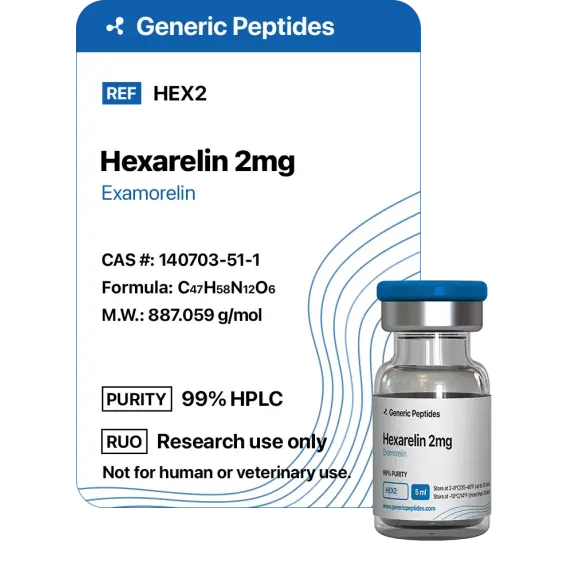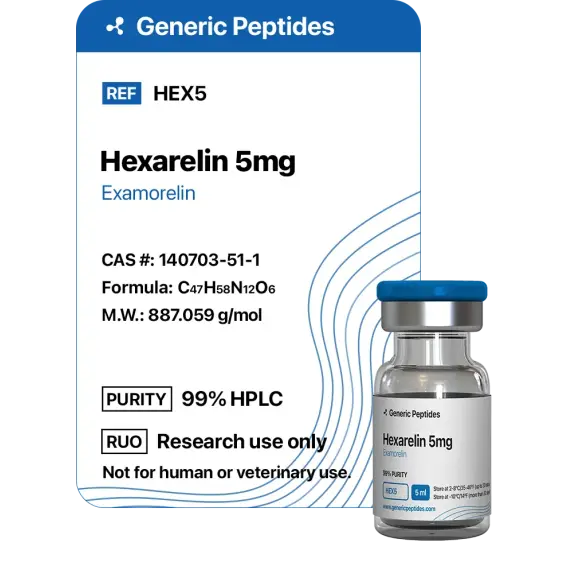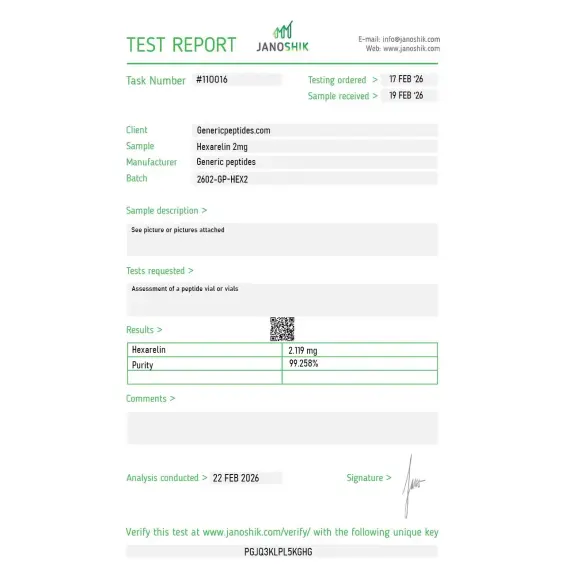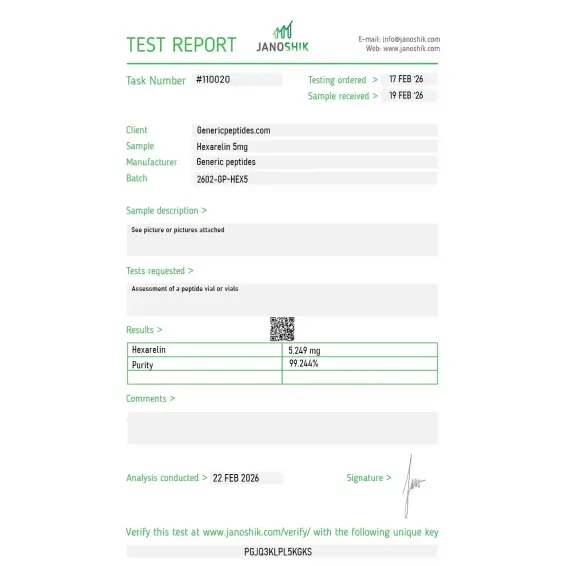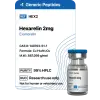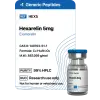
- For in vitro testing and laboratory use only.
- Not for human or animal consumption.
- Bodily introduction is illegal.
- Handle only by licensed professionals.
- Not a drug, food, or cosmetic.
- Educational use only.
- People wanting the highest possible acute GH pulse in a short window, or those specifically targeting GH-independent cardiac protection.
- It activates both the pituitary ghrelin receptor for GH release and a separate cardiac receptor (CD36) that directly protects heart tissue.
- The most potent acute GH pulse of any GHRP per dose — and the only one with clinically documented GH-independent heart protection in humans.
- Hexarelin does not suppress testosterone — no PCT is needed, but prolactin and cortisol should be monitored as both rise significantly.
- Not approved by the FDA or EMA; explicitly WADA-banned under S2 by name as examorelin.
- Inject 100–200 mcg subcutaneously two to three times daily on an empty stomach — cortisol rises sharply at higher doses.
- Maximum cycle length is 3–4 weeks — the GH response drops by 50–75% within weeks and does not recover without a long break.
- If you want sustained GH over months, choose ipamorelin instead — hexarelin is for short, high-intensity bursts only.
Hexarelin (Examorelin): The Complete Guide to the Most Potent GHRP and Its Landmark Cardioprotective Discovery — What the Science Really Says
Hexarelin holds a singular position in growth hormone secretagogue research. It is simultaneously the most potent GH-releasing peptide in the classical GHRP family by peak GH output per dose — producing roughly 1.5–2-fold greater acute GH levels than GHRP-6 or GHRP-2 at equivalent doses — and the compound through which the cardiac CD36 receptor was first identified as a specific molecular target for GHRPs, opening an entirely new understanding of how these peptides protect the heart independently of any growth hormone effects. Developed in the early 1990s by Romano Deghenghi and colleagues at Europeptides (and later Mediolanum Farmaceutici in Milan), hexarelin progressed to Phase II clinical trials for both growth hormone deficiency and congestive heart failure. Neither indication reached marketing approval. The compound has never been commercially licensed as a therapeutic. It remains one of the most scientifically instructive peptides in this series — not because it succeeded clinically, but because the research programme it generated produced foundational discoveries that shaped the entire GHRP cardioprotection field.
What It Is and Where It Comes From
Hexarelin — INN: examorelin — is a synthetic hexapeptide with the amino acid sequence His-D-2-methyl-Trp-Ala-Trp-D-Phe-Lys-NHâ. Its molecular weight is approximately 887 Da and its molecular formula is CââHâ âNââOâ. Development codes include EP-23905 and MF-6003. CAS number: 140703-51-1.
The defining structural feature of hexarelin that distinguishes it from its direct predecessor GHRP-6 is a D-2-methyltryptophan (D-2-methyl-Trp) substitution at position 2. In GHRP-6, this position has D-Trp (D-tryptophan). The addition of a methyl group to the tryptophan indole ring achieves two things simultaneously: it enhances metabolic stability against proteolytic degradation (the methyl group sterically blocks enzymatic attack), and it increases GH-releasing potency compared to GHRP-6. This structural optimisation — a single methyl group addition — is what makes hexarelin more potent than its parent compound.
Hexarelin was developed at the same historical moment as GHRP-2 and studied in parallel during the 1990s and early 2000s when interest in GH secretagogues as potential therapeutics was at its peak. Unlike GHRP-2, which attracted Japanese regulatory attention resulting in approval as a diagnostic agent, hexarelin's development was discontinued in 2005–2006 when clinical trial results were insufficient to justify continued pharmaceutical investment. However, the science generated — particularly the discovery of CD36 as a cardiac hexarelin receptor — remained highly significant and continues to inform cardiovascular pharmacology.
How It Works — Mechanisms of Action
Primary Mechanism: GHS-R1a Agonism (Pituitary and Hypothalamic)
Hexarelin is a high-affinity agonist at the Growth Hormone Secretagogue Receptor type 1a (GHS-R1a) — the ghrelin receptor — with an EC50 of approximately 10–100 nM in functional assays. Receptor binding activates the standard Gq/11 G-protein cascade: Phospholipase C → IP3/DAG → intracellular calcium release → protein kinase C activation → GH vesicle exocytosis from anterior pituitary somatotroph cells. Hexarelin also acts at the hypothalamus to stimulate GHRH release from arcuate nucleus neurons and suppress somatostatin tone — the same dual hypothalamic amplification that underlies all GHRPs' advantage over GHRH alone.
The potency advantage over other GHRPs is quantified in comparative studies: hexarelin's ED50 (dose producing 50% of maximal GH response) is approximately 0.48 mcg/kg intravenously, compared to approximately 0.7–1.0 mcg/kg for GHRP-6 and approximately 0.5–0.6 mcg/kg for GHRP-2. However, GH response exhibits a ceiling effect — plateauing at approximately 1.0 mcg/kg IV — while cortisol and prolactin responses continue to increase above this dose.
The Critical GHRH Dependence
Like GHRP-6 and GHRP-2, hexarelin's GH-releasing effect requires intact endogenous GHRH signalling for its maximum expression. Studies combining hexarelin with exogenous GHRH produced "massive" increases in plasma GH — supraadditive effects far exceeding either compound alone. Conversely, in patients with hypothalamopituitary disconnection, hexarelin's GH response is blunted, confirming that hypothalamic GHRH is necessary for the full response.
The CD36 Receptor — Hexarelin's Landmark Discovery
The most scientifically significant aspect of hexarelin's pharmacology is its binding to CD36 — a scavenger receptor of the class B family expressed on cardiomyocytes, microvascular endothelial cells, macrophages, platelets, and adipocytes.
The discovery was made by Demers et al. (2004, Circulation Research), the landmark paper in hexarelin pharmacology. Using a radioactive photoactivatable derivative of hexarelin to cross-link it to its binding partner in rat cardiac membranes, they purified and sequenced a protein of molecular weight 84,000 Da — and identified it as CD36, a glycoprotein previously known for its roles in fatty acid transport, oxidised LDL uptake, and platelet function. The proof of CD36 specificity came from CD36 knockout studies: hearts from CD36-deficient mice and spontaneous hypertensive rats showed no coronary response to hexarelin, while wild-type hearts showed the characteristic dose-dependent response.
The downstream consequences of CD36 binding in cardiomyocytes include: activation of the PI3K/Akt pro-survival pathway; ERK1/2 activation; Bcl-2 upregulation and Bax downregulation (anti-apoptotic shift); PPARγ upregulation (anti-inflammatory gene expression, fatty acid metabolism improvement); eNOS upregulation (improved vascular function); and reduction of IL-1β expression with upregulation of IL-1Ra in ischaemic myocardium.
Appetite Stimulation (Hypothalamic GHS-R1a)
Like all GHRPs, hexarelin activates NPY/AgRP neurons in the arcuate nucleus through GHS-R1a, stimulating appetite. Hexarelin's orexigenic effect is present but consistently described as less pronounced than GHRP-6's in animal studies — attributable to the structural difference at position 2 producing subtly different receptor binding kinetics at hypothalamic versus pituitary GHS-R1a.
ACTH/Cortisol and Prolactin Stimulation
Hexarelin stimulates ACTH and cortisol through pituitary and hypothalamic GHS-R1a on corticotroph cells and CRH neurons. In human studies (Arvat et al., 1997, JCEM), the HPA axis stimulation was characterised systematically, and confirmed to occur partly through arginine vasopressin (AVP) release (Trainer et al., 1999, JCEM). The cortisol response to hexarelin is the most pronounced of any classical GHRP, exceeding GHRP-2 and substantially exceeding ipamorelin.
What It Was Studied For and What Effects It Showed
GH Deficiency Diagnosis and Treatment — Phase II Clinical Investigation
Hexarelin was primarily investigated as a therapeutic and diagnostic tool for GH deficiency. The combined low-dose hexarelin (0.25 mcg/kg) + GHRH test was shown by Aimaretti et al. (1999) to be as sensitive as the insulin tolerance test for diagnosing adult GHD, while avoiding the risks of insulin-induced hypoglycaemia. For therapeutic use in GHD, progressive tachyphylaxis of the GH response — significant blunting within 1–2 weeks of daily use — made hexarelin unsuitable for the sustained GH axis activation required. Phase II development for this indication was discontinued.
The Critical Human Cardiac Data: GH-Independent Positive Inotropic Effect
The most important human clinical study of hexarelin was published by Bisi et al. in 1999. In seven adult patients with GH deficiency and left ventricular failure, IV hexarelin administration increased LVEF (left ventricular ejection fraction) by approximately 5–7 percentage points (from mean 64.0% to 70.7%; p<0.03), with the effect appearing within 15 minutes, peaking at 30 minutes, and lasting up to 60 minutes. Critically, this improvement occurred without changes in mean blood pressure, heart rate, catecholamine levels, or aldosterone — ruling out adrenergic or haemodynamic mechanisms.
The GH-independence of this effect was confirmed in the same patient population: because these patients had GH deficiency, their GH response to hexarelin was negligible, yet the cardiac improvement was robust. This was the first demonstration that a GH secretagogue could exert a direct positive inotropic effect in humans via specific myocardial receptors independent of GH release. A subsequent study in seven normal volunteers found comparable LVEF improvement from acute IV hexarelin. Comparing hexarelin to equimolar IV recombinant GH in the same subjects, hexarelin increased LVEF while rhGH did not — confirming the positive inotropic effect was specific to hexarelin's GHS-R1a/CD36 pharmacology rather than to GH elevation per se.
Myocardial Ischaemia-Reperfusion — Extensive Preclinical Evidence
In hypophysectomised rats (no GH response possible), hexarelin pretreatment attenuated I/R damage — the first direct demonstration of GHRP I/R protection independently of GH. In rats after left coronary artery ligation and reperfusion, hexarelin treatment (100 mcg/kg twice daily SC for 7 days) improved cardiac systolic function, decreased malondialdehyde production, and increased the number of surviving cardiomyocytes. A 2018 mouse MI model study (McDonald et al., Physiological Reports) showed hexarelin preserved myocardial function and reduced cardiac fibrosis, with mechanistic analysis demonstrating suppression of neuroinflammatory pathways. A 2020 paper by the same group (Biomedicine & Pharmacotherapy) confirmed anti-fibrotic effects through CD36/PI3K/Akt.
Atherosclerosis — CD36-Mediated Anti-Atherosclerotic Effects
In ApoE knockout mice, hexarelin treatment attenuated atherosclerotic plaque formation, partially reversed the HDL/LDL cholesterol ratio, and increased serum nitric oxide levels and aortic eNOS expression. The proposed mechanism: hexarelin's CD36 binding in macrophages upregulates PPARγ → increased sterol transporters and cholesterol efflux → reduced foam cell formation → reduced plaque progression. This anti-atherosclerotic effect was confirmed using EP 80317, the hexarelin derivative without GH-releasing activity. A 2019 paper (Peptides, Cheng et al.) demonstrated hexarelin attenuated atherosclerosis via inhibiting the LOX-1/NF-κB signalling pathway involved in macrophage oxLDL uptake.
Congestive Heart Failure — Phase II Investigation (Discontinued)
Based on the GH-independent positive inotropic finding in humans, hexarelin was advanced to Phase II clinical trials specifically for congestive heart failure. Both the cardiac and GHD Phase II programmes were ultimately discontinued in 2005–2006. The specific reasons for discontinuation are not publicly detailed — standard explanations in the field include insufficient effect size on hard cardiac endpoints, the availability of effective standard-of-care CHF therapies, and tachyphylaxis concerns for chronic dosing.
Lipid Metabolism and Insulin Resistance
In non-obese insulin-resistant MKR transgenic mice, hexarelin treatment improved dyslipidaemia alongside improvements in glucose tolerance, insulin sensitivity, and body composition correction. The beneficial lipid effects were attributed to CD36-mediated PPARγ activation in adipocytes, promoting fatty acid mobilisation toward mitochondrial oxidative phosphorylation and upregulating genes involved in fatty acid metabolism.
GHD Children — Intranasal Administration Studies
An intranasal bolus of 20 mcg/kg was found to have identical efficacy to an intravenous bolus of 1 mcg/kg for raising serum GH. Longer-term intranasal hexarelin in children with idiopathic short stature raised IGF-1 levels and showed evidence of growth stimulation at doses of 60–120 mcg/kg/day. However, tachyphylaxis again limited chronic therapeutic utility.
Neuroprotection and Pancreatic Beta-Cell Protection
Hexarelin modulates MAPK and PI3K/Akt pathways in neuronal cells, inhibiting hydrogen peroxide-induced apoptotic toxicity in Neuro-2A neuroblastoma cells (Meanti et al., 2021, Pharmaceuticals). In streptozotocin-treated β-cell line MIN6 cells, hexarelin pretreatment alleviated mitochondrial damage, increased SOD activity, reduced caspase-3 and caspase-9 expression, and reduced the Bax/Bcl-2 ratio — demonstrating pancreatic cytoprotective effects relevant to diabetes prevention models.
Tachyphylaxis — The Most Important Limitation
The defining clinical limitation of hexarelin, distinguishing it from all other GHRPs in degree if not in kind, is the speed and magnitude of its receptor desensitisation with repeated use.
- In vitro calcium response to hexarelin desensitises within 2–5 minutes of continuous exposure — exceptionally rapid at the cellular level
- In human studies with daily hexarelin administration, significant blunting of GH response is evident within 1–2 weeks
- A 50–75% decrease in GH-releasing efficacy occurs over weeks to months of continuous administration
- The ED50 for GH response increases substantially over a 2–4-week dosing period, reflecting GHS-R1a downregulation
The mechanistic basis of this rapid tachyphylaxis is GHS-R1a receptor internalisation and downregulation — the same process that limits all GHRPs but is most pronounced for hexarelin due to its highest receptor affinity and most potent stimulation. Once GHS-R1a receptors are internalised, recycling back to the cell surface takes days to weeks.
Practical implication: hexarelin is fundamentally unsuitable for chronic daily use as a GH-optimisation compound. Its window of maximum GH efficacy is 1–4 weeks from first use, after which the GH response deteriorates substantially regardless of dosing adjustments. This is the primary reason hexarelin failed as a GHD therapeutic and why practitioners who want sustained GH elevation prefer ipamorelin or CJC-1295 DAC.
Forms and Methods of Administration
Subcutaneous Injection
The standard research and wellness route. Reconstituted hexarelin injected into subcutaneous fat using an insulin syringe. Peak plasma concentrations occur within 30–60 minutes, with GH peak at approximately 30–45 minutes post-injection.
Intravenous Injection/Infusion
Used in all published human pharmacological studies (Bisi et al., Arvat et al., Trainer et al.) and the cardiac studies documenting acute positive inotropic effects. In research contexts only.
Intranasal
Validated in children's studies to produce comparable GH release to IV dosing. Bioavailability via intranasal route appears favourable for hexarelin relative to most peptides, attributed to its enhanced stability from the D-2-methyl-Trp modification. Not validated for adults or chronic wellness use.
Oral
Mao et al. (2014) demonstrated that oral hexarelin (0.3 mg/kg/day) protected chronic cardiac function after MI in mice. This oral activity — unusual for a peptide of this class — is attributed to hexarelin's metabolic stability from the D-2-methyl-Trp substitution resisting gastric and intestinal proteases. Whether oral bioavailability is sufficient for human therapeutic use remains unvalidated.
Dosage: Research Findings vs Real-World Practice
Human Pharmacological Studies
- 1.0 mcg/kg IV: maximal effective dose for GH release (plateau point)
- 2.0 mcg/kg IV: used in cardiac studies to maximise GHS-R1a and CD36 activation; no additional GH increase over 1.0 mcg/kg
- 0.25 mcg/kg IV (combined with GHRH): diagnostic dose for GHD testing
Real-World Research and Wellness Protocols
Given tachyphylaxis, the only evidence-supported approach to hexarelin use for GH effects is short cycles:
- Starting dose: 100 mcg SC once or twice daily (fasted state)
- Maintenance: 100–200 mcg twice to three times daily
- Cycle length: maximum 4–6 weeks, with a hard stop
- Off-period: 8–12 weeks (minimum) before the next cycle
Cycles and Protocols
Intensive Short Cycle (for maximum acute GH effects)
- Weeks 1–4: 100–200 mcg SC twice to three times daily, fasted (morning, pre-sleep ± post-exercise)
- Total cycle: 3–4 weeks maximum
- Off-period: 8–12 weeks minimum
Rotation Strategy
Many practitioners rotate hexarelin with a more tolerant GHRP across successive cycles. For example: an 8-week cycle of ipamorelin (minimal tachyphylaxis, sustained GH benefits), followed by a 4-week intensive hexarelin cycle (maximum acute GH + CD36 cardioprotection), followed by an 8-week rest, then repeat. This rotation exploits hexarelin's specific advantages without running into continuous tachyphylaxis.
The Cardiac Protection Protocol Consideration
If hexarelin is being used specifically for CD36-mediated cardiac protection rather than GH optimisation — in a context of cardiac ischaemic risk where the cytoprotective mechanism is the priority — the dosing and cycling logic is different. CD36 does not appear to undergo the same rapid desensitisation as GHS-R1a. However, this application has no validated human protocol and should be approached only with physician supervision and cardiologist involvement.
What It Is Combined With and Why
With CJC-1295 (GHRH Analog)
The classic dual-pathway combination. CJC-1295 activates GHRHR; hexarelin activates GHS-R1a. The synergy between GHRH + hexarelin was specifically documented as producing "massive" GH increases — the supraadditive effect is most pronounced for hexarelin precisely because of its superior GHS-R1a potency. However, given hexarelin's tachyphylaxis, this combination should be used on the same short-cycle basis: 3–4 weeks maximum, with extended off-periods.
With BPC-157
For recovery-focused protocols: BPC-157 provides local tissue healing and vascular repair; hexarelin provides systemic GH/IGF-1 anabolism and CD36-mediated cardiac and tissue cytoprotection. Mechanistically complementary in the recovery context.
EP 80317 (Research Context)
EP 80317 is a hexarelin derivative specifically engineered to bind CD36 without activating GHS-R1a — no GH release, pure CD36 pharmacology. In atherosclerosis research, EP 80317 showed anti-atherosclerotic effects comparable to hexarelin but without any GH axis effects. This compound confirms that hexarelin's cardiac/metabolic effects can be fully dissociated from its GH-stimulating mechanism.
The Science: What Is Proven and What Is Not
Documented in human clinical evidence:
- Hexarelin is the most potent GHRP for acute GH release in humans — confirmed in multiple dose-response studies
- Hexarelin + GHRH produces supraadditive "massive" GH elevation in humans — confirmed
- Combined low-dose hexarelin + GHRH is as sensitive as the ITT for GHD diagnosis — confirmed (Aimaretti et al., 1999)
- Acute IV hexarelin produces a positive inotropic effect (LVEF increase of ~5–7 percentage points) in GH-deficient patients with left ventricular failure, within 15–60 minutes, GH-independent — confirmed in humans (Bisi et al., 1999)
- Hexarelin increased LVEF in normal volunteers; rhGH at equivalent GH elevation did not — confirming hexarelin-specific positive inotropic effect
- Tachyphylaxis: 50–75% decrease in GH efficacy over weeks to months — confirmed in humans
- Cortisol/ACTH stimulation via AVP — confirmed in humans
- CD36 is the specific cardiac receptor mediating hexarelin's cardiovascular effects independent of GHS-R1a — confirmed in knockout animal studies (Circulation Research, 2004)
Documented in preclinical research (strong but requiring human translation):
- I/R injury protection in multiple species (rats, mice, hypophysectomised animals) — extensively documented
- CHF improvement — documented in pressure-overload models
- Atherosclerosis attenuation — documented in ApoE-/- and high-lipid-diet models
- Anti-fibrotic cardiac effects — documented in MI mouse model
- Improved dyslipidaemia and insulin sensitivity in lipodystrophy model
- Neuroprotection in neuronal oxidative stress models
- Pancreatic beta-cell protection
Discontinued clinical development:
- Phase II for GHD — discontinued (tachyphylaxis, insufficient therapeutic value)
- Phase II for congestive heart failure — discontinued (2005–2006)
Side Effects and Real Risks
Cortisol and ACTH Elevation — The Most Clinically Significant
Hexarelin produces the strongest cortisol/ACTH stimulation of any classical GHRP, exceeding GHRP-2 (which was comparable to CRH) and dramatically exceeding ipamorelin. This occurs through both direct pituitary corticotroph GHS-R1a activation and hypothalamic AVP release. At standard doses (100–200 mcg SC), transient cortisol elevation occurs within 30–60 minutes and returns to baseline within 2–3 hours. With three daily injections, repeated cortisol spikes throughout the day could contribute to cumulative HPA axis disruption and catabolic interference with anabolic goals. Cortisol monitoring is appropriate in extended hexarelin protocols.
Prolactin Elevation
The strongest prolactin response in the classical GHRP family. Transient, returning to baseline within hours of each injection. In extended cycles, chronic prolactin elevation above physiological ranges can suppress testosterone through HPG axis inhibition. Monitoring in men on extended protocols is appropriate.
Additional Class Effects
- Appetite stimulation — present but less pronounced than GHRP-6; mediated through hypothalamic NPY/AgRP activation
- Water retention / peripheral oedema — class GH effect; dose-dependent; reversible on cycle cessation
- Carpal tunnel syndrome-like symptoms — tingling, numbness in hands; GH-mediated fluid retention; dose-dependent; reversible
- Injection site reactions — redness, mild bruising; standard with any SC injection
- Transient flushing and headache — minutes after injection; brief and self-limiting
- Glucose metabolism — GH counter-regulation of insulin; short cycles with adequate off-periods limit cumulative metabolic effect
Effects on Hormones and the Endocrine System
Growth Hormone
The most potent acute GH pulse of any classical GHRP. Peak at approximately 30 minutes post-injection; return towards baseline within 2–3 hours. The strongest GH effect decreases progressively with repeated administration.
IGF-1
Rises with hexarelin use — but less robustly than would be predicted from the large GH pulses, likely because the co-elevation of cortisol partially antagonises hepatic IGF-1 production. This is a documented pharmacological self-antagonism that distinguishes hexarelin from more selective GHRPs.
Cortisol and ACTH
Most pronounced in the GHRP family. Transient, dose-dependent, mediated via AVP and pituitary corticotroph GHS-R1a. The cortisol/anabolism self-antagonism limits the net anabolic benefit of hexarelin's large GH pulses.
Prolactin
Most pronounced in the GHRP family. Transient, dose-dependent. Long-term high-frequency use warrants monitoring for potential testosterone suppression in men.
FSH, LH, TSH, Testosterone
FSH, LH, and TSH are not significantly affected. No direct HPG axis effect. Indirect testosterone suppression through prolactin elevation is possible with chronic high-frequency dosing. A 2012 study (Puechagut et al.) in adult mice found chronic hexarelin treatment affected reproductive performance and fertility in both sexes — raising a caution regarding long-term use in individuals of reproductive age, though the relevance of this rodent finding to humans at standard wellness doses remains unknown.
Cancer Risk — A Direct Answer
The cancer risk assessment follows the same framework as other GH secretagogues: the primary concern is chronic IGF-1 elevation promoting existing pre-malignant or malignant cells. This concern is moderated for hexarelin compared to more selective GHRPs by two factors: the attenuated IGF-1 elevation (due to cortisol co-elevation antagonising hepatic IGF-1 production) and the short cycle lengths required by tachyphylaxis, which limit cumulative IGF-1 exposure.
The CD36 pharmacology adds specific considerations. CD36 is expressed on tumour-associated vasculature and some cancer cells; its role in facilitating fatty acid uptake by cancer cells has received attention in the recent cancer metabolism literature. Whether hexarelin's CD36 agonism could promote tumour fatty acid metabolism is a theoretical concern without documented clinical evidence, but it adds uncertainty that does not exist for compounds that lack CD36 activity.
Standard contraindications apply: active cancer, history of IGF-1-sensitive malignancy, prostatic carcinoma.
Contraindications
- Active cancer or history of IGF-1-sensitive malignancy
- Active prolactinoma or sustained hyperprolactinaemia (hexarelin's prolactin effect is the most pronounced in the GHRP family)
- Poorly controlled diabetes or severe insulin resistance
- Acromegaly or pre-existing GH excess
- Active pituitary tumour
- Proliferative or severe non-proliferative diabetic retinopathy
- Pregnancy and breastfeeding
- Paediatric and adolescent patients with open growth plates
- Active cardiac disease requiring conventional medical management (use only with cardiologist oversight given the GH-independent inotropic effects)
Interactions With Drugs and Other Substances
- CRH/AVP-axis drugs: Hexarelin stimulates the HPA axis via AVP; compounds affecting AVP signalling (desmopressin, tolvaptan) could interact with hexarelin's cortisol-stimulating mechanism.
- Corticosteroids: Additive HPA activation; glucocorticoids suppress GHRH release and may attenuate hexarelin's GH response while amplifying metabolic glucocorticoid effects.
- Testosterone and sex steroids: Documented to significantly potentiate hexarelin's GH-releasing effects in humans — testosterone enanthate and ethinylestradiol enhanced GH elevation. Users on TRT may experience larger GH responses than steroid-naive individuals.
- Somatostatin analogues: Direct antagonism at the somatotroph level; will abolish hexarelin's GH effects.
- Insulin and antidiabetics: GH reduces insulin sensitivity; combined use requires glucose monitoring.
- Dopamine antagonists: Combined with hexarelin's prolactin elevation could cause clinically significant hyperprolactinaemia.
- Other GHRPs: Receptor competition at GHS-R1a; additive tachyphylaxis with no proportional benefit.
Legal Status: EU and USA
United States
Not FDA-approved for any indication. Hexarelin is not on any FDA-approved compounding list. It is not a DEA-scheduled controlled substance — personal possession is not criminally prohibited. It exists as a grey-market research chemical available from overseas and domestic suppliers. The FDA's Category 2 restrictions applicable to ipamorelin and CJC-1295 apply equally to hexarelin under the general principle that unapproved bulk drug substances cannot be used in compounded formulations.
European Union
No EMA approval or marketing authorisation. Development by Mediolanum Farmaceutici (an Italian company) never reached the point of regulatory application. Available through grey-market research chemical suppliers.
Australia and United Kingdom
Australia: Schedule 4 prescription-only medicine classification. United Kingdom: not named in the Misuse of Drugs Act; not an approved medicine; MHRA has not licensed any hexarelin product.
Sports Status — WADA Position
Hexarelin is explicitly named on the WADA Prohibited List by its INN, examorelin, under Section S2: Peptide Hormones, Growth Factors, Related Substances, and Mimetics — specifically: "GH-releasing peptides (GHRPs) [e.g. alexamorelin, examorelin (hexarelin), GHRP-1, GHRP-2 (pralmorelin), GHRP-3, GHRP-4, GHRP-5 and GHRP-6]."
The prohibition is at all times — in-competition and out-of-competition — with no TUE pathway available given the absence of any approved therapeutic indication. WADA-accredited laboratories have validated detection methods for examorelin using LC-MS/MS in urine. The compound's detectability window extends to approximately 8 hours post-administration by specialised analytical methods.
Storage and Reconstitution
Lyophilised Powder
Store at −20°C (−4°F) for long-term stability. Short-term storage at 2–8°C for unopened vials is acceptable. Like GHRP-6, hexarelin contains multiple aromatic residues susceptible to oxidation — protection from light and air is important. The D-2-methyl-Trp modification at position 2 provides substantially better metabolic stability than GHRP-6's D-Trp, making hexarelin more resistant to degradation even at room temperature during brief handling.
Reconstitution
Use bacteriostatic water (0.9% benzyl alcohol). For a 5 mg vial with 2 mL bacteriostatic water: 2,500 mcg/mL concentration. For a 100 mcg dose: draw 0.04 mL (4 units on a U100 syringe). Inject water slowly down the vial inner wall; gently swirl — never shake. Solution should be clear and colourless. Refrigerate at 2–8°C immediately; use within 21–28 days. Protect from light.
Comparison With the GHRP Family — Hexarelin's Position
Hexarelin vs GHRP-6
Hexarelin is GHRP-6's structural successor: all the same general pharmacological properties but with substantially higher GH-releasing potency per unit dose (1.5–2-fold greater acute GH), moderately less appetite stimulation, greater cortisol and prolactin elevation, and far more pronounced tachyphylaxis. For any application where sustained GH elevation over weeks is the goal, GHRP-6 is more appropriate despite being less potent acutely. Both share CD36-mediated cardioprotective and anti-fibrotic properties; hexarelin's CD36 affinity is higher and its cardiac effects are more extensively documented.
Hexarelin vs GHRP-2
GHRP-2 (pralmorelin) has regulatory approval in Japan as a diagnostic agent — hexarelin does not. At standard doses, hexarelin produces greater peak GH than GHRP-2, but GHRP-2 produces slightly less cortisol elevation. Both exhibit tachyphylaxis with chronic use. For GHD diagnostic testing, GHRP-2 is the clinically validated choice.
Hexarelin vs Ipamorelin
The starkest contrast in the GHRP family. Ipamorelin has minimal cortisol/prolactin/appetite effects (even at 200× the GH ED50), substantially less tachyphylaxis, and weaker but more sustainable GH elevation. For virtually any wellness or anti-ageing GH optimisation protocol intended to run for more than 4 weeks, ipamorelin is superior. Hexarelin is superior for maximum acute GH pulse amplitude and for CD36-mediated cardiac protection specifically, where the lack of ipamorelin CD36 activity means the two compounds are addressing fundamentally different biology.
Hexarelin vs MK-677 (Ibutamoren)
MK-677 is an oral GHS-R1a agonist with a 24-hour half-life. It produces sustained IGF-1 elevation without tachyphylaxis over years of use — the most chronic use data for any GH secretagogue. For the user seeking sustainable long-term GH/IGF-1 optimisation, MK-677 comprehensively outperforms hexarelin. Hexarelin's only advantage over MK-677 is the CD36-mediated cardiac biology that MK-677 completely lacks.
Who Uses Hexarelin and For What Purpose
Research Laboratories (Cardiovascular and Endocrine)
The primary legitimate scientific user population. Hexarelin is a key research tool for studying CD36-mediated cardiac signalling, ischaemia-reperfusion protection, the GHS-R1a receptor's cardiac pharmacology, and the dissociation between GH-mediated and GH-independent GHRP effects. The compound's unique pharmacological profile makes it irreplaceable for specific experimental questions that ipamorelin or GHRP-2 cannot address.
Short-Cycle GH Maximisation (Performance/Bodybuilding)
Users seeking the highest acute GH pulses for a limited 3–4-week window — typically early in a protocol or as a "kick-start" before transitioning to a more sustainable GHRP or MK-677. The appeal is straightforward: maximal GH output per injection. The limitation is equally straightforward: the window closes fast.
Cardiac-Focused Wellness Protocols
A smaller but scientifically motivated user group — individuals with known cardiac risk factors, recovered from MI, or interested in hexarelin specifically for its GH-independent CD36 cardioprotection. Given the absence of validated human dosing protocols for this application, this use exists in a frontier space between informed self-experimentation and genuine unmet medical need. It should occur only with cardiologist involvement.
Summary — The Key Takeaways
Hexarelin is the most potent and the most tachyphylaxis-prone member of the classical GHRP family. Its pharmacological superiority for acute GH release is undeniable — no other injectable GHRP produces larger GH pulses per unit dose. But this potency is accompanied by the most pronounced cortisol/prolactin effects and the fastest receptor desensitisation, making hexarelin functionally unsuitable for the extended 12–24-week cycles that characterise effective use of ipamorelin or MK-677.
What makes hexarelin genuinely irreplaceable in the research and therapeutic landscape is its CD36-mediated cardioprotective biology — the biology that ipamorelin, GHRP-2, and CJC-1295 simply do not possess. The 1999 demonstration of GH-independent positive inotropic effects in GH-deficient patients with heart failure, confirmed through direct CD36 binding studies in knockout animals, represents one of the most scientifically significant findings in the entire GHRP field. The continuing preclinical evidence base for hexarelin's cardiac, anti-fibrotic, and anti-atherosclerotic effects through CD36 remains scientifically compelling even though clinical translation was discontinued.
The practical prescription for informed use: hexarelin is a short-cycle, high-potency compound for specific applications — not a foundation for long-term GH optimisation. Use it for 3–4 weeks when the goal is maximum acute GH amplitude, rotate it into a protocol that normally employs more selective compounds, and appreciate that its most medically important properties may lie not in the GH axis at all but in the CD36-mediated cardiac biology that its clinical development failed to fully translate.
Hexarelin Dosage & Usage Guide: Complete Protocols for Maximum GH Release, Cardiac Protection, and Performance
Introduction
Hexarelin dosage and usage demands careful attention to detail more than almost any other GHRP â because while Hexarelin is the most potent synthetic growth hormone releasing peptide ever developed, producing the strongest GH pulse of any compound in its class, it also carries the most significant desensitization risk and the sharpest side effect profile of all GHRPs. A synthetic hexapeptide structurally similar to GHRP-6, Hexarelin activates both the GHS-R1a (ghrelin) receptor and a separate cardiac-specific receptor (CD36), giving it a unique dual action that has attracted serious research interest for both performance and cardioprotective applications. This guide covers all available clinical data and real-world protocols with particular emphasis on managing Hexarelin's unique limitations.
What Research Says About Dosage
Hexarelin has meaningful human clinical trial data, primarily from European research programs in the 1990sâ2000s.
| Study / Source | Dose Used | Goal | Population |
|---|---|---|---|
| Ghigo et al. (1994, Journal of Clinical Endocrinology) | 2 mcg/kg IV | GH release characterization | Healthy adults |
| Loche et al. (1995) | 2 mcg/kg IV | GH response in short stature | Children |
| Mericq et al. (1998) | 1â2 mcg/kg SubQ | GH deficiency treatment | GH-deficient children |
| Broglio et al. (1999) | 2 mcg/kg IV | Cardiac function, GH-independent effects | Healthy adults + heart failure patients |
| Muccioli et al. (2004) | 1â2 mcg/kg | CD36 receptor activation, cardiac protection | Animal models + early human |
| Disposito et al. (2005, cardiac) | 80 mcg/kg (animal) | Post-MI cardiac remodeling prevention | Rat cardiac infarction model |
| Receptor saturation (multiple studies) | ~100 mcg per injection SubQ | GHS-R1a saturation threshold | Extrapolated human data |
| Community / practitioner consensus | 100â200 mcg per injection | GH maximization, short cycles | Human anecdotal |
Real-World Dosage Protocols
| Experience Level | Dose Per Injection | Frequency | Total Daily Dose | Notes |
|---|---|---|---|---|
| Beginner | 100 mcg | Once daily (pre-bed) | 100 mcg | Start here; assess cortisol and prolactin response |
| Intermediate | 100 mcg | Twice daily | 200 mcg | Most practical effective range before desensitization accelerates |
| Standard performance | 100â200 mcg | 2x daily | 200â400 mcg | Upper recommended range for short cycles |
| Advanced / short blast | 200 mcg | 2â3x daily | 400â600 mcg | Maximum short-term use; 4â6 weeks only |
| Cardiac protocol (research-referenced) | 1â2 mcg/kg (~70â140 mcg) | Once daily | 70â140 mcg | Conservative; CD36 receptor targeted |
Dosage by Goal
| Goal | Dose Per Injection | Injections/Day | Cycle Length | Notes |
|---|---|---|---|---|
| Maximum GH pulse / performance | 100â200 mcg | 2x daily | 4â6 weeks max | Strongest GH output available; strict cycle limits |
| Muscle growth / body recomposition | 100 mcg | 2x daily | 4â6 weeks | Stack with GHRH; rotate with other GHRPs |
| Cardiac protection / recovery | 100 mcg | Once daily | 4â8 weeks | CD36 receptor activation; GH-independent benefit |
| Fat loss | 100 mcg | 2x daily | 4â6 weeks | Potent GH pulse aids lipolysis; appetite less than GHRP-6 |
| Recovery / injury healing | 100 mcg | 2x daily | 4â6 weeks | Rotate into broader protocol; do not run continuously |
| Anti-aging (pulsed into rotation) | 100 mcg | Once daily | 4 weeks on; 8+ weeks off | Use as one rotation in multi-GHRP annual cycle |
| IGF-1 elevation (short blast) | 100â200 mcg | 2â3x daily | 4 weeks maximum | Highest acute IGF-1 stimulus of any GHRP |
Forms of Administration
| Form | Bioavailability | Ease of Use | Best For |
|---|---|---|---|
| Subcutaneous injection | High (~70â80%) | Moderate | Standard practical route |
| Intravenous injection | Highest (100%) | Clinical only | Used in all published human research |
| Intramuscular injection | High | Moderate | Acceptable; faster peak; not necessary |
| Intranasal spray | Lowâmoderate | Easy | Limited data; not standard for Hexarelin |
| Oral | Negligible | Easy | Not viable â fully degraded in GI tract |
Injection Guide
Reconstitution
- Common vial sizes: 2 mg or 5 mg lyophilized powder
- 2 mg vial + 2 mL BW â 1 mL = 1,000 mcg â 0.1 mL = 100 mcg (ideal standard)
- 5 mg vial + 5 mL BW â 1 mL = 1,000 mcg â 0.1 mL = 100 mcg
- 5 mg vial + 2.5 mL BW â 1 mL = 2,000 mcg â 0.1 mL = 200 mcg
- Inject BW slowly down vial wall; swirl gently â never shake
- Solution should be clear and colorless; discard if cloudy
- Refrigerate reconstituted vial; use within 4â6 weeks
- Store lyophilized vials refrigerated or frozen; protect from light
| Injection Type | Site | Needle Size | Notes |
|---|---|---|---|
| Subcutaneous | Belly fat, love handles, upper thigh | 27â31G, 0.5 inch | Rotate sites every injection |
| Intramuscular | Deltoid, glute, quad | 23â25G, 1â1.5 inch | Faster GH peak; not necessary |
SubQ injection steps
- Remove vial from refrigerator 5â10 minutes before use
- Wipe vial septum and injection site with alcohol; allow to dry
- Draw correct volume into insulin syringe; verify dose
- Pinch skin; insert at 45°
- Aspirate lightly â resite if blood appears
- Inject slowly; withdraw; apply light pressure
- Return vial to refrigerator immediately
Cycle Length and Desensitization Management
This is the most critical section for Hexarelin â desensitization is not a theoretical risk but a documented, predictable, and rapid phenomenon.
How desensitization works
| Timeframe | GHS-R1a Status | Effect on GH Release |
|---|---|---|
| Days 1â7 | Fully sensitive | Maximum GH pulse amplitude |
| Weeks 1â2 | Early downregulation begins | GH response starts declining |
| Weeks 2â4 | Progressive receptor downregulation | Significantly reduced GH per injection |
| Weeks 4â6 | Substantial desensitization | GH response 40â60% of original |
| Weeks 6+ continuous | Near-complete tachyphylaxis | Minimal GH response despite continued dosing |
| After 8+ weeks off | Receptor sensitivity restored | Full GH response returns |
Cycle protocols
| Protocol | Cycle Length | Break Length | Frequency | Notes |
|---|---|---|---|---|
| Short blast (maximum potency) | 4 weeks | 8+ weeks off | 2x daily | Best GH-per-dose ratio; recommended approach |
| Standard cycle | 6 weeks | 8â12 weeks off | 2x daily | Upper practical cycle length |
| Cardiac / CD36 protocol | 4â8 weeks | 6â8 weeks off | Once daily | GH-independent cardiac benefit; less desensitization concern |
| Rotation protocol | 4 weeks on | Rotate to Ipamorelin or GHRP-2 for 8â12 weeks | 2x daily | Best long-term annual strategy |
| Annual schedule example | Hexarelin 4â6 wks à 2 cycles/year | GHRP-2 or Ipamorelin in between | Varies | Maximizes cumulative annual GH output |
GHRP Rotation Strategy â Annual Framework
Because of desensitization, most experienced users rotate Hexarelin into a broader GHRP strategy rather than relying on it as a primary year-round compound.
| Period | Compound | Duration | Rationale |
|---|---|---|---|
| Months 1â1.5 | Hexarelin 100â200 mcg 2x daily | 4â6 weeks | Maximum GH blast; receptor fully sensitive |
| Months 1.5â4 | GHRP-2 or Ipamorelin 100â200 mcg 2â3x daily | 10â12 weeks | Maintain GH pulsing; allow GHS-R1a recovery |
| Months 4â5.5 | Hexarelin 100â200 mcg 2x daily | 4â6 weeks | Second blast cycle; receptor sensitivity restored |
| Months 5.5â8 | Ipamorelin 200â300 mcg 2â3x daily | 10â12 weeks | Clean GH maintenance; minimal side effects |
| Months 8â9.5 | Optional third Hexarelin cycle | 4â6 weeks | If goals require; monitor IGF-1 |
| Months 9.5â12 | GHRP-2 or Ipamorelin maintenance | 10+ weeks | Year-end maintenance |
Stacking Protocols
| Stack Partner | Hexarelin Dose | Partner Dose | Goal | Notes |
|---|---|---|---|---|
| CJC-1295 No-DAC (Mod GRF) | 100 mcg | 100 mcg | Maximum GH pulse | Best stack; inject simultaneously; dramatic synergy |
| CJC-1295 DAC | 100 mcg daily | 1â2 mg/week | Sustained GH + peak pulse | DAC weekly; Hexarelin provides daily pulse amplitude |
| BPC-157 | 100 mcg | 400â500 mcg/day | Recovery + maximum GH | Excellent combined protocol; no interactions |
| AOD 9604 | 100 mcg | 300 mcg | Fat loss + GH maximization | Potent fat loss stack; short cycle |
| Ipamorelin (do not combine) | â | â | â | Same receptor class; no synergy; choose one GHRP |
| GHRP-2 (do not combine) | â | â | â | Same receptor; redundant; choose one GHRP per cycle |
Hexarelin vs All GHRPs â Complete Comparison
| Parameter | Hexarelin | GHRP-2 | GHRP-6 | Ipamorelin |
|---|---|---|---|---|
| GH release potency | Highest | Very high | High | Moderate |
| Desensitization speed | Fastest / most severe | Moderate | Moderate | Slowest / minimal |
| Appetite stimulation | Mildâmoderate | Moderate | Very strong | Minimal |
| Cortisol increase | Highest of all GHRPs | Moderate | Moderate | Minimal |
| Prolactin increase | Highest of all GHRPs | Moderate | Moderate | Minimal |
| Cardiac receptor (CD36) | Yes â unique to Hexarelin | No | No | No |
| Max recommended cycle | 4â6 weeks | 3â6 months | 3â6 months | 3â6 months |
| Best for | Short blasts; maximum GH; cardiac | Performance; recomposition | Bulking; appetite | Anti-aging; fat loss; beginners; long-term |
| Beginner suitability | Low â start with Ipamorelin | Moderate | Moderate | High |
Cardiac Protection Protocols
Hexarelin's CD36 receptor activation produces GH-independent cardioprotective effects â a unique property with meaningful research support.
| Application | Dose | Frequency | Duration | Evidence Level |
|---|---|---|---|---|
| Post-MI cardiac remodeling | 100 mcg | Once daily | 4â8 weeks | Animal models (strong); early human data |
| Cardiac function support (general) | 100 mcg | Once daily | 4â6 weeks | Preclinical + Broglio human data |
| Heart failure supportive protocol | 100 mcg | Once daily | 4â8 weeks (with physician) | Requires medical supervision |
| Preventive cardioprotection | 100 mcg | Once daily | 4 weeks à 2â3 cycles/year | Community extrapolated; no RCT in healthy adults |
Beginner Protocol
- Recommendation: Hexarelin is not the ideal first GHRP â start with Ipamorelin or GHRP-2 to establish baseline tolerance and injection routine before using Hexarelin
- If proceeding: Start at 100 mcg once daily, SubQ, pre-bed injection
- Reconstitution: 2 mg vial + 2 mL BW â 0.1 mL = 100 mcg per injection
- Week 1â2: Once daily pre-bed; assess cortisol response (energy, mood, sleep), appetite, and injection site tolerance
- Week 3â4: Add morning fasted injection (100 mcg) if well tolerated; note any desensitization (reduced subjective GH feeling)
- Maximum first cycle: 4â6 weeks total â do not extend
- Post-cycle: Switch to Ipamorelin or GHRP-2 for minimum 8 weeks before returning to Hexarelin
- Bloodwork: IGF-1, cortisol, and prolactin at baseline and week 4
- Stack from day 1: Add Mod GRF 1-29 (100 mcg simultaneously) for substantially enhanced GH release
Common Dosage Mistakes
| Mistake | Why It Happens | How to Avoid |
|---|---|---|
| Running continuous cycles beyond 6 weeks | Wanting sustained maximum GH | Receptor desensitization makes extended use counterproductive; strict 4â6 week limit |
| Expecting same results in week 4 as week 1 | Not understanding desensitization | GH response declines week by week; plan for this; rotate compounds |
| Using as primary year-round GHRP | Not aware of tachyphylaxis | Hexarelin is a blast compound; rotate with Ipamorelin or GHRP-2 as base |
| Dosing above 200 mcg per injection | Wanting more GH | GH receptor saturates at ~100 mcg; higher dose adds cortisol/prolactin not GH |
| Combining with another GHRP simultaneously | Wanting maximum stimulation | Same receptor; no additive GH; only additive side effects |
| Not stacking with GHRH | Using Hexarelin alone | GHRH + Hexarelin synergy produces dramatically superior GH pulse |
| Skipping bloodwork | Avoiding cost / inconvenience | Cortisol and prolactin elevations are highest of all GHRPs; must monitor |
| Starting with Hexarelin as first GHRP | Wanting maximum potency immediately | Cortisol / prolactin side effects and desensitization make it a poor first compound |
| Resuming too soon after previous cycle | Impatience | Minimum 8 weeks off required for receptor sensitivity recovery |
Safety and Maximum Dose
| Dose Per Injection | Category | Notes |
|---|---|---|
| < 50 mcg | Sub-therapeutic | Insufficient GH stimulus; still produces cortisol/prolactin |
| 50â100 mcg | Conservative / therapeutic | Good GH release; best side effect ratio |
| 100â200 mcg | Standard performance range | At or above saturation; acceptable short-term |
| 200â300 mcg | Caution | Disproportionate cortisol/prolactin elevation; no added GH benefit |
| > 300 mcg per injection | Avoid | No additional GH; significant neuroendocrine disruption risk |
Full side effect profile
| Side Effect | Frequency | Severity | Notes |
|---|---|---|---|
| Cortisol elevation | Very common | Moderate | Highest of all GHRPs; dose and frequency dependent |
| Prolactin elevation | Very common | Moderate | Monitor on all cycles; gynecomastia risk |
| Water retention | Common | Mild | GH-related; resolves on cessation |
| Appetite increase | Moderate | Mildâmoderate | Less than GHRP-6; more than Ipamorelin |
| Tingling / numbness in extremities | Occasional | Mild | GH carpal tunnel effect |
| Fatigue post-injection | Occasional | Mild | Cortisol rebound effect |
| GHS-R1a desensitization | Very common with extended use | Significant | Defining limitation; managed with strict cycling |
| Gynecomastia risk | Moderate (prolactin-mediated) | Moderate if occurs | Monitor prolactin; consider cabergoline if elevated |
| Joint aches | Uncommon | Mild | GH-related; reduce dose |
| IGF-1 elevation | Dose and duration dependent | Monitor | Primary long-term safety consideration |
| Facial flushing | Occasional | Mild | Transient; no action needed |
Monitoring Bloodwork Reference
| Marker | When to Test | Notes |
|---|---|---|
| IGF-1 | Baseline + week 3â4 of cycle | Primary GH axis response marker |
| Cortisol (morning) | Baseline + week 3â4 | Hexarelin elevates cortisol more than any other GHRP |
| Prolactin | Baseline + week 3â4 | Monitor for gynecomastia risk; consider cabergoline if > 2x upper normal |
| Estradiol | Baseline + mid-cycle | GH elevation increases aromatase activity |
| Fasting glucose | Baseline + mid-cycle | GH-related insulin resistance monitoring |
Quick Reference Summary
| Goal | Dose/Injection | Injections/Day | Cycle Length | Stack | Key Rule |
|---|---|---|---|---|---|
| Maximum GH blast | 100â200 mcg | 2x daily | 4â6 weeks max | Mod GRF 1-29 100 mcg | Strict cycle limit; 8+ weeks off |
| Muscle growth | 100 mcg | 2x daily | 4â6 weeks | CJC no-DAC 100 mcg | Rotate to Ipamorelin after |
| Fat loss | 100 mcg | 2x daily | 4â6 weeks | Mod GRF + AOD 9604 | Fasted morning injection |
| Cardiac protection | 100 mcg | Once daily | 4â8 weeks | BPC-157 optional | Physician oversight advised |
| Recovery / healing | 100 mcg | 2x daily | 4â6 weeks | BPC-157 | Rotate after; do not run long |
| Anti-aging rotation | 100 mcg | 2x daily | 4â6 weeks à 2/year | Mod GRF 1-29 | Use as blast; Ipamorelin as base |
| Beginner first cycle | 100 mcg | Once daily (pre-bed) | 4 weeks only | Mod GRF 1-29 optional | Consider starting with Ipamorelin instead |
Hexarelin Storage Guide: Lyophilized Powder and Reconstituted Solution
Hexarelin is a synthetic hexapeptide growth hormone secretagogue with a stable dry-form profile and good solution stability when stored correctly — keep it cold, sealed, and protected from light and it will hold its potency reliably throughout its shelf life.
Lyophilized Powder (Unreconstituted Vial)
| Parameter | Details | Notes |
|---|---|---|
| Storage temperature | 2–8°C (36–46°F) — refrigerator preferred; up to 25°C (77°F) acceptable short-term | Shelf life: up to 24 months refrigerated; 3–6 months at room temperature |
| Freezing | Allowed — –20°C (–4°F) or below is acceptable for dry powder | Avoid repeated freeze-thaw cycles; let vial warm to room temperature before opening to prevent condensation |
| Light sensitivity | Yes — protect from light | Keep in original packaging or a dark container; away from UV and direct sunlight |
| Signs of degradation | Yellow or brown discoloration; visible clumping or caking; unusual odor after reconstitution | Fresh powder is white to off-white and completely dry; discard if discolored or clumped |
| Common mistakes | Storing in an unsealed vial; exposing to humidity; leaving on a countertop for extended periods | Keep vials sealed; return to fridge immediately after handling |
Reconstituted Solution (After Mixing with Bacteriostatic or Sterile Water)
| Parameter | Details | Notes |
|---|---|---|
| Storage temperature | 2–8°C (36–46°F) — refrigerator only; do not leave at room temperature for more than a few hours | Shelf life: up to 21–30 days with bacteriostatic water; use plain sterile water within 7 days. Hexarelin maintains good solution stability when kept consistently cold |
| After reconstitution — freezing | Not recommended — freezing damages the peptide structure; refrigerator only, no exceptions | Keep powder unreconstituted if longer storage is needed; mix only what you need |
| Light sensitivity | Yes — protect from light | Store vial wrapped in foil or in a dark container inside the fridge; UV degrades the solution faster than the dry powder form |
| Signs of degradation | Cloudiness; particulates; color change to yellow or brown; unusual odor | A properly reconstituted solution is clear and colorless; discard if anything looks off |
| Common mistakes | Leaving reconstituted vial at room temperature between doses; using plain sterile water for multi-dose vials; shaking vigorously | Always swirl gently, never shake; use bacteriostatic water for multi-dose vials; label with the date of reconstitution; discard after 30 days regardless of remaining volume |
Shipping & Product Authenticity
Every order is processed quickly and shipped with full tracking. All products come directly from the official Dragon Pharma supply chain — in original manufacturer packaging, handled discreetly from warehouse to door.
Shipping Times
| Destination | Delivery Time | Notes |
|---|---|---|
| USA Domestic | 4–5 business days | Faster when local warehouse stock is selected at checkout |
| International | 13–15 business days | Tracking included; update frequency may vary by destination country |
| Order Processing | 24–48 business hours | Processing begins after payment confirmation |
| Tracking | Provided on all orders | Tracking number sent after dispatch; multiple warehouses may result in separate shipments |
Direct Supply & Discreet Delivery
This product is supplied through the official Dragon Pharma distribution chain and shipped in original manufacturer packaging. The outer shipping package remains discreet, with privacy-focused handling and no unnecessary external product details.
What to Expect
- Orders are processed after payment confirmation
- USA domestic shipping is typically faster when local stock is selected
- International orders include tracking, though update frequency may vary by destination
- Multiple warehouses may result in separate shipments when applicable
Authenticity & Verified Supply
Authenticity support includes official Dragon Pharma presentation, batch-linked lab proof, and original packaging — all of which help reinforce product legitimacy and buyer confidence.
| Authenticity Feature | Details |
|---|---|
| Packaging | Original manufacturer packaging — sealed and unaltered |
| Lab Proof | Batch-linked certificate of analysis available on request |
| Supply Chain | Sourced exclusively through official Dragon Pharma distribution |
Hexarelin (also known by the INN examorelin, chemical designation His-D-2-methyl-Trp-Ala-Trp-D-Phe-Lys-NH2) is a synthetic hexapeptide — six amino acids — belonging to the Growth Hormone Releasing Peptide (GHRP) family. It was developed by Mediolanum Farmaceutici in Italy during the 1990s, building on the foundational GHRP research initiated by Cyril Bowers at Tulane University. The key structural distinction from its closest relatives, GHRP-2 and GHRP-6, is the substitution of a 2-methyl-tryptophan residue at position two of the amino acid chain — a seemingly minor modification that dramatically increases its binding affinity for the ghrelin receptor (GHS-R1a) and produces the strongest GH-releasing response of any compound in the GHRP family. Hexarelin reached Phase II clinical trials for both GH deficiency diagnosis and cardiac indications, but was never brought to market.
Hexarelin activates the GHS-R1a receptor — the ghrelin receptor — located on somatotroph cells in the anterior pituitary gland and on neurons in the hypothalamus. Upon binding, it triggers a phospholipase C signaling cascade that floods the somatotroph cell with calcium ions, causing GH-containing vesicles to fuse with the cell membrane and release growth hormone in a powerful pulsatile burst. Simultaneously, it acts at the hypothalamic level to stimulate additional growth hormone-releasing hormone release, creating an amplification effect. What makes Hexarelin genuinely distinctive from other GHRPs is that it also binds to the CD36 scavenger receptor expressed on cardiomyocytes (heart muscle cells) and endothelial cells in blood vessels. This secondary binding site is responsible for Hexarelin's well-documented cardioprotective properties — effects that occur entirely independently of GH elevation and that are not shared by any other commonly researched GHRP.
Hexarelin sits at the top of the GHRP family in raw GH-releasing potency — it produces the largest GH pulses per microgram of any peptide in this class, consistently outperforming GHRP-2, GHRP-6, and Ipamorelin in head-to-head comparisons. The trade-off for this maximum potency is the most significant side effect and desensitization profile. Like GHRP-2 and GHRP-6, Hexarelin raises both cortisol and prolactin — and does so more substantially than either. It also causes the fastest receptor desensitization: GH response attenuation begins within two to four weeks of daily use and can reduce the GH pulse by 50–80% with continuous administration. Ipamorelin, at the opposite end of the spectrum, produces more modest GH pulses with negligible cortisol and prolactin effects and essentially no receptor desensitization at therapeutic doses. GHRP-2 occupies a middle ground. Hexarelin's unique advantage over all of them is its CD36-mediated cardioprotection — no other common GHRP replicates this mechanism.
The primary benefits derive from its unmatched GH-releasing potency and the downstream elevation of IGF-1. These include accelerated lean muscle mass development through enhanced protein synthesis, reduced body fat via GH-driven lipolysis, significantly improved recovery from training and injury, deeper and more restorative sleep, and improved skin, connective tissue, and joint integrity via collagen synthesis stimulation. The additional and scientifically distinctive benefit is cardiovascular: a peer-reviewed body of preclinical research, including studies in pigs and rats, has documented Hexarelin reducing myocardial infarct size, improving left ventricular ejection fraction, protecting against ischemia-reperfusion injury, reducing cardiac fibrosis, and inhibiting cardiomyocyte apoptosis. A human Phase II study in patients with severe dilated and ischemic cardiomyopathy found GH-independent improvements in left ventricular function — a remarkable finding for a synthetic peptide. Hexarelin also demonstrated improvements in lipid metabolism and insulin sensitivity in animal models of metabolic syndrome.
Hexarelin carries the most significant side effect burden of the standard GHRP family, and this deserves direct acknowledgment. Cortisol elevation is the most clinically important concern — human studies confirmed that Hexarelin stimulates the hypothalamic-pituitary-adrenal axis via arginine vasopressin, producing ACTH and cortisol responses comparable in magnitude to corticotropin-releasing hormone. This is the most pronounced cortisol elevation of any GHRP, and chronic cortisol elevation can contribute to insulin resistance, immune suppression, increased visceral fat, and mood disturbance. Prolactin elevation is also significant and dose-dependent, with chronic elevation potentially causing reduced libido and, in men, gynecomastia. Common but milder effects include transient hunger spikes (though less severe than GHRP-6), water retention and mild bloating, tingling in the extremities from fluid shifts and IGF-1 elevation, and occasional fatigue post-injection. Injection site redness and mild soreness are routine. Blood sugar monitoring is advisable given GH's insulin-antagonizing effects.
Desensitization is the process by which repeated stimulation of the GHS-R1a receptor causes it to be internalized and downregulated — essentially the cell pulling back its receptors in response to overstimulation. With Hexarelin, this happens faster than with any other GHRP because of its exceptionally high receptor binding affinity and the intensity of activation it produces. Research showed that GH response attenuation begins within two to four weeks of daily use, and that after 16 weeks of continuous treatment, significant desensitization had occurred. Crucially, a four-week break from Hexarelin was found to restore receptor sensitivity to near-baseline — the desensitization is reversible with adequate rest periods. This pharmacological reality makes extended continuous use not just diminishing in effect but counterproductive. Effective Hexarelin protocols are structured around short, intensive cycles of four to eight weeks maximum, followed by breaks of at least equal length to restore receptor function.
Hexarelin is administered exclusively via subcutaneous injection — it has no meaningful oral bioavailability. Research protocols and clinical settings typically use doses of 100–200 mcg per injection, one to three times daily, spaced at least six hours apart to allow GH to return toward baseline between pulses. Injections must be taken on an empty stomach, as food — particularly carbohydrates — elevates insulin and reduces GH release by increasing somatostatin tone. Optimal timing includes early morning before breakfast, 30–60 minutes post-workout, and before sleep. Starting at the lower end of the dose range (100 mcg) is advisable to assess tolerance given Hexarelin's potency, as higher doses do not proportionally increase GH output but do accelerate desensitization and amplify cortisol and prolactin effects. When combined with a GHRH analog such as CJC-1295, the synergistic GH amplification is substantial — but stacking with other GHRPs should be avoided as they compete for the same receptor.
Hexarelin is not approved by the FDA or any Western regulatory agency for any therapeutic indication. It reached Phase II clinical trials during development but was never brought to market — the combination of rapid desensitization, elevated cortisol and prolactin burden, and the development of alternative approaches ultimately led to the program being discontinued. In the United States it is classified as a research chemical and cannot be legally compounded by pharmacies for patient use under current FDA guidance. For competitive athletes, Hexarelin is prohibited at all times by WADA under the S2 category — Peptide Hormones, Growth Factors, and Related Substances — alongside all other GHRPs and GH secretagogues.
The cardioprotective evidence for Hexarelin is among the most scientifically compelling in the entire peptide research landscape. Multiple peer-reviewed studies have confirmed protective effects against myocardial ischemia-reperfusion injury, cardiac fibrosis, cardiomyocyte apoptosis, and dilated cardiomyopathy in animal models. Critically, several of these studies used hypophysectomized animals — animals with their pituitary glands removed — conclusively demonstrating that these cardiovascular effects are entirely independent of GH elevation and are mediated directly through cardiac CD36 and GHS-R1a receptor activation. A human Phase II study in patients with severe heart failure showed GH-independent improvements in left ventricular ejection fraction. However, despite this mechanistic clarity and the preclinical consistency of results, no Phase III trials have been conducted and no human cardiovascular therapy has been approved. The translational gap between animal cardioprotection studies and human clinical outcomes remains very real, and Hexarelin cannot be considered a validated cardiac therapy until appropriate human trials are completed.
Given its pronounced cortisol elevation, anyone with existing adrenal, cortisol, or HPA axis disorders should be particularly cautious. People with active cancer or a history of cancer should avoid Hexarelin — GH and IGF-1 elevation promotes cellular proliferation, and the additional CD36 receptor activation in rapidly dividing tissues introduces pharmacological complexity that has not been fully characterized in oncological contexts. Those with diabetes or insulin resistance need careful monitoring, as GH antagonizes insulin action and can destabilize glucose control. People prone to prolactin-related issues — including individuals with galactorrhea, existing gynecomastia, or prolactin-secreting tumors — should not use Hexarelin without specialist oversight. Pregnant and breastfeeding women and children should not use it. Given the rapid desensitization profile, anyone already on extended continuous GHRP use will need to ensure receptor recovery before beginning a Hexarelin cycle. Medical supervision with baseline labs covering IGF-1, cortisol, prolactin, and fasting glucose is the minimum standard for responsible use.