Is Sermorelin FDA Approved? 503A Status Explained
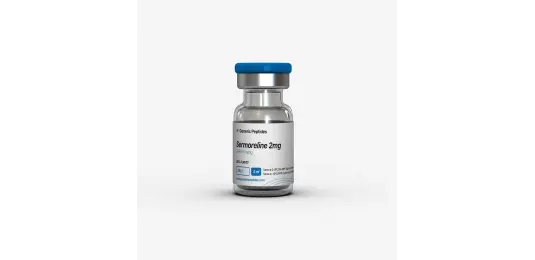
Sermorelin: What It Is, What the Research Shows, and Its FDA Status
By Medical Team of Generic Peptides
Quick answer. Sermorelin is a synthetic copy of the first 29 amino acids of human growth hormone–releasing hormone (GHRH 1-29). It was FDA-approved under the brand name Geref — as a diagnostic in 1990 and as a treatment for children with idiopathic growth hormone deficiency in 1997 [10]. The manufacturer stopped making it in 2008, and in 2013 FDA formally determined that Geref was not withdrawn for reasons of safety or effectiveness [9]. No FDA-approved sermorelin product is marketed in the US today. Sermorelin is not a controlled substance, it was not among the peptides FDA restricted for compounding in 2023 [12], and it is prohibited in sport by WADA [13].
What Is Sermorelin?
Sermorelin is a 29-amino-acid peptide with a C-terminal amide and a molecular weight of about 3,358 Da. Its sequence is identical to residues 1–29 of endogenous human GHRH, the hypothalamic hormone that tells the pituitary to release growth hormone.
The full 44-residue hormone was isolated in 1982 from pancreatic tumors that had caused acromegaly, by the groups of Roger Guillemin and Jean Rivier [6, 7]. Researchers soon found that the first 29 residues carry the full biological activity. That fragment became sermorelin — the shortest fully active form of GHRH.
Sermorelin is sometimes confused with MOD GRF 1-29 (also sold as CJC-1295 without DAC). They share the same 1–29 backbone, but MOD GRF carries four amino acid substitutions that make it resistant to enzymatic breakdown. Sermorelin is the unmodified native sequence.
How Sermorelin Works
Sermorelin binds the GHRH receptor on somatotroph cells of the anterior pituitary. This raises intracellular cAMP and triggers both release of stored growth hormone and transcription of new GH.
Three features shape how it behaves in research:
- It works upstream of GH. Sermorelin does not replace growth hormone; it asks the pituitary to make its own. The response depends on a functioning pituitary.
- Feedback stays intact. GH release still follows the body's pulsatile pattern and remains under the brake of somatostatin and IGF-1 feedback. This is the main pharmacological difference from administering recombinant GH.
- It is short-lived. Native GHRH 1-29 is degraded within minutes by the enzyme DPP-4 and other peptidases. That short half-life is why longer-acting analogs such as MOD GRF 1-29, CJC-1295 with DAC and tesamorelin were developed.
What the Research on Sermorelin Shows
Most sermorelin data come from the 1990s, when it was a licensed drug. The evidence falls into three groups.
Children with growth hormone deficiency (human, the approval data)
The pivotal study was an open-label multicenter trial by the Geref International Study Group. It enrolled 110 prepubertal children with GH deficiency, of whom 86 were analyzed. Once-daily sermorelin roughly doubled mean height velocity at 6 and 12 months, with no significant adverse changes reported [1]. These results supported the 1997 approval. Reviews from the same period noted that recombinant GH produced larger growth responses, which is part of why sermorelin never became a first-line treatment [2].
Older adults (human, small studies)
Ageing is associated with a fall in GH secretion, and several groups asked whether GHRH could restore it.
- Corpas et al., 1992: 10 older men were compared with 9 young men. Fourteen days of twice-daily GHRH 1-29 raised the older men's GH and IGF-1 to levels similar to the young group, with no change in glucose, insulin, blood pressure or blood counts [3].
- Vittone et al., 1997: 11 men aged 64–76 received six weeks of nightly sermorelin in an uncontrolled study. Night-time GH rose, but IGF-1 and body composition measured by DEXA did not change. Two of six strength measures improved, and no adverse events were recorded. The authors concluded that a single nightly dose was less effective than repeated doses [4].
- Khorram et al., 1997: 19 adults aged 55–71 received a closely related GHRH 1-29 analog nightly for 16 weeks after a placebo lead-in. GH, IGF-1 and lean body mass rose in both sexes; bone density did not change [5].
What the evidence does not show
These are small, short studies from a single era, mostly without placebo controls. There is no large randomized trial of sermorelin in adults with muscle mass, strength or long-term safety as the primary endpoint. Reviews of GH secretagogues as a class describe them as generally well tolerated, with a possible effect on blood glucose, and note that long-term controlled data are lacking [8]. Claims about sermorelin for anti-ageing, fat loss or muscle growth in adults go beyond what these studies measured.
Is Sermorelin FDA Approved?
It was — and the approval history matters more than for most peptides.
| Date | Event |
|---|---|
| Dec 28, 1990 | FDA approves Geref 0.05 mg (NDA 19-863) as a diagnostic test of pituitary GH secretion |
| Sep 26, 1997 | FDA approves Geref 0.5 mg and 1 mg (NDA 20-443) to treat idiopathic GH deficiency in children with growth failure |
| 2008 | EMD Serono discontinues Geref; both products move to the Orange Book Discontinued Drug Product List |
| Mar 4, 2013 | FDA determines in the Federal Register that Geref was "not withdrawn for reasons of safety or effectiveness" (78 FR 14095) |
The 2013 determination was issued in response to a citizen petition. Its practical effect is that FDA may approve generic (ANDA) versions referencing Geref if other requirements are met [9]. As of October 2026, no such generic has been approved, and no FDA-approved sermorelin product is on the US market.
So the accurate short answer to "is sermorelin FDA approved" is: it was approved, it was discontinued for non-safety reasons, and it is not currently marketed as an approved drug.
Is Sermorelin Legal? Compounding, Controlled-Substance and Sport Status
Compounding. Under section 503A of the Food, Drug, and Cosmetic Act, a pharmacy may compound with a bulk drug substance only if it has a USP or NF monograph, is a component of an FDA-approved drug, or appears on FDA's 503A bulks list [11]. Compounders and regulatory lawyers generally place sermorelin in the second group because of the Geref approvals. FDA has not issued a sermorelin-specific statement on this point.
Not in the 2023 restrictions. In September 2023 FDA moved 19 peptides — including BPC-157, CJC-1295, ipamorelin, TB-500 and Semax — into Category 2 of its interim bulks policy, which effectively barred their use in compounding. Sermorelin was not on that list or in any other category [12]. It was also not among the peptides reviewed at FDA's advisory committee meeting in July 2026.
Controlled substance. Sermorelin is not scheduled under the US Controlled Substances Act.
Sport. WADA lists growth hormone–releasing hormone and its analogs among prohibited substances at all times, and USADA treats sermorelin accordingly [13].
Regulatory status is a question about drugs for patients. Research-grade sermorelin sold by chemical suppliers is a different category: it is labeled for laboratory research use only and is not intended for human consumption.
Sermorelin vs Other GHRH Analogs
| Peptide | Structure | Regulatory status (US) | Main research use |
|---|---|---|---|
| Sermorelin | Native GHRH 1-29, amidated | Approved 1990/1997 (Geref), discontinued 2008 | GH physiology, pituitary reserve, ageing studies |
| MOD GRF 1-29 (CJC-1295 no DAC) | GHRH 1-29 with four substitutions | Never approved; "CJC-1295" placed in Category 2 (2023) | Longer-acting GHRH signaling |
| CJC-1295 with DAC | MOD GRF + albumin-binding linker | Never approved | Sustained GH/IGF-1 elevation |
| Tesamorelin | Full GHRH 1-44 with trans-3-hexenoyl group | Approved 2010 (Egrifta) for HIV-associated abdominal fat | Visceral fat, body composition |
For the differences in detail, see our guides to MOD GRF 1-29 and tesamorelin.
What to Check on a Research-Grade Sermorelin COA
Because sermorelin and MOD GRF 1-29 share most of their sequence, identity testing matters. A useful certificate of analysis should show the full sequence, a mass-spectrometry result matching about 3,358 Da (MOD GRF 1-29 is about 3,368 Da, so the difference is small and the spectrum should be shown), HPLC purity with the chromatogram, and the lot number that matches the vial. Our guide to reading a research peptide COA explains each section. Research-grade sermorelin from Generic Peptides ships with a lot-specific COA.
FAQ
Is sermorelin FDA approved?
Sermorelin was FDA-approved as Geref in 1990 (diagnostic) and 1997 (treatment of GH deficiency in children). It was discontinued in 2008, and FDA determined in 2013 that it was not withdrawn for safety or effectiveness reasons. No approved sermorelin product is currently marketed in the US.
What is sermorelin?
Sermorelin is the 29-amino-acid active fragment of human growth hormone–releasing hormone. It stimulates the pituitary to release its own growth hormone rather than replacing GH directly.
Is sermorelin a controlled substance?
No. Sermorelin is not scheduled under the US Controlled Substances Act. It is, however, prohibited in sport by WADA.
Is sermorelin the same as MOD GRF 1-29 or CJC-1295?
No. All three share the GHRH 1-29 backbone, but MOD GRF 1-29 carries four amino acid substitutions that slow its breakdown, and CJC-1295 with DAC adds a linker that binds albumin. Sermorelin is the unmodified native sequence.
Why was Geref discontinued?
The manufacturer stopped production in 2008. FDA's 2013 Federal Register determination states the product was not withdrawn for reasons of safety or effectiveness.
References
For research use only. Not for human consumption. This content is for informational purposes and is not medical advice.
[1] Thorner MO, Rochiccioli P, Colle M, et al. Once daily subcutaneous growth hormone-releasing hormone therapy accelerates growth in growth hormone-deficient children during the first year of therapy. J Clin Endocrinol Metab. 1996;81(3):1189–1196. PMID 8772599.
[2] Prakash A, Goa KL. Sermorelin: a review of its use in the diagnosis and treatment of children with idiopathic growth hormone deficiency. BioDrugs. 1999;12(2):139–157. PMID 18031173.
[3] Corpas E, Harman SM, Piñeyro MA, Roberson R, Blackman MR. Growth hormone (GH)-releasing hormone-(1-29) twice daily reverses the decreased GH and insulin-like growth factor-I levels in old men. J Clin Endocrinol Metab. 1992;75(2):530–535. PMID 1379256.
[4] Vittone J, Blackman MR, Busby-Whitehead J, et al. Effects of single nightly injections of growth hormone-releasing hormone (GHRH 1-29) in healthy elderly men. Metabolism. 1997;46(1):89–96. PMID 9005976.
[5] Khorram O, Laughlin GA, Yen SS. Endocrine and metabolic effects of long-term administration of [Nle27]growth hormone-releasing hormone-(1-29)-NH2 in age-advanced men and women. J Clin Endocrinol Metab. 1997;82(5):1472–1479. PMID 9141536.
[6] Guillemin R, Brazeau P, Böhlen P, Esch F, Ling N, Wehrenberg WB. Growth hormone-releasing factor from a human pancreatic tumor that caused acromegaly. Science. 1982;218(4572):585–587. PMID 6812220.
[7] Rivier J, Spiess J, Thorner M, Vale W. Characterization of a growth hormone-releasing factor from a human pancreatic islet tumour. Nature. 1982;300(5889):276–278. PMID 6292724.
[8] Sigalos JT, Pastuszak AW. The safety and efficacy of growth hormone secretagogues. Sex Med Rev. 2018;6(1):45–53. PMID 28400207.
[9] U.S. Food and Drug Administration. Determination that GEREF (sermorelin acetate) injection was not withdrawn from sale for reasons of safety or effectiveness. Federal Register. 2013 Mar 4;78(42):14095–14096. FR Doc 2013-04827.
[10] U.S. Food and Drug Administration. Drugs@FDA: GEREF, NDA 019863 (approved December 28, 1990) and NDA 020443 (approved September 26, 1997).
[11] U.S. Food and Drug Administration. Bulk drug substances used in compounding under section 503A of the FD&C Act. Accessed October 2026.
[12] Alliance for Pharmacy Compounding. 503A categories update, September 2023 (Category 2 additions).
[13] World Anti-Doping Agency. The Prohibited List 2026, Section S2: peptide hormones, growth factors, related substances and mimetics.