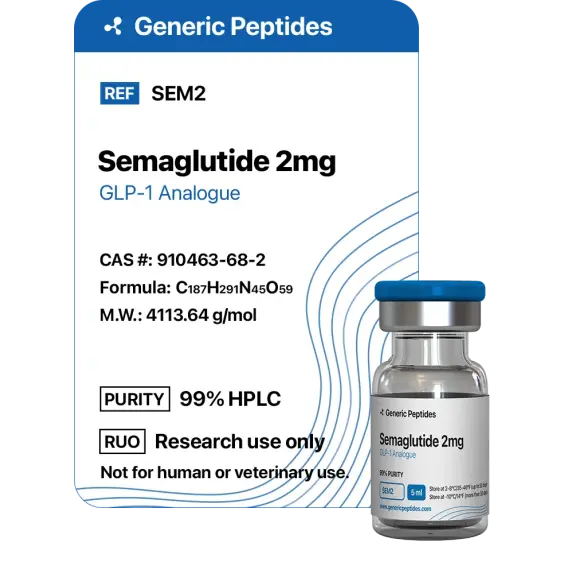
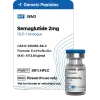
Semaglutide 2mg
Certificate of Analysis available
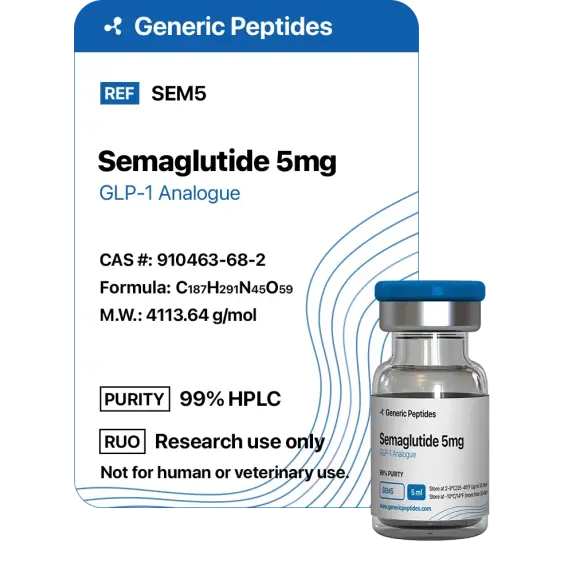
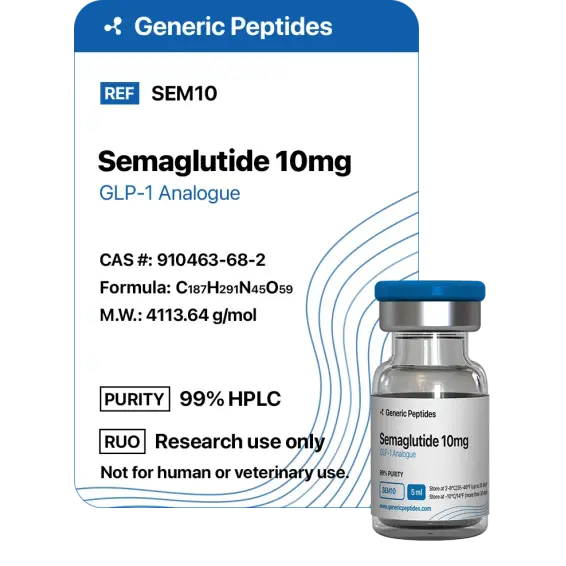
By 2023, semaglutide was the 19th most-prescribed medication in the United States with more than 25 million prescriptions filled in a single year. Pharmacy chains ran out. Patients drove between states looking for vials. Compounding pharmacies stepped in to fill the gap, then got shut down when the shortage officially ended. The single most-watched drug story of the decade — and behind the obesity-medicine politics, behind the Hollywood transformation photos, sits a simple molecular fact: a 31-amino-acid GLP-1 analog with a fatty acid side chain that lasts a week per dose.
Semaglutide is a synthetic 31-amino-acid peptide analog of human GLP-1 (glucagon-like peptide-1) — the natural incretin hormone secreted by intestinal L-cells in response to eating. The molecule has 94% sequence homology with native GLP-1, with two key amino acid substitutions (Aib at position 8 and Arg at position 34) and a critical addition: a C18 fatty acid side chain attached via a glutamic acid linker that binds to serum albumin in circulation.
That fatty acid attachment is the entire reason semaglutide became the drug it became. Native GLP-1 has a half-life of about 2 minutes — too short to be useful as a medication. Liraglutide (the previous-generation GLP-1 analog) extended that to 13 hours through a similar fatty acid strategy. Semaglutide pushes it to about 7 days. Same receptor, same mechanism, fundamentally different pharmacokinetics.
Semaglutide binds GLP-1 receptors throughout the body, but the pharmacologically important targets are concentrated in three places: pancreatic β-cells (glucose-dependent insulin secretion), pancreatic α-cells (glucagon suppression), and appetite-control centers in the hypothalamus and brainstem. The first two effects produce the diabetes management profile. The third produces the weight loss profile that turned semaglutide into a cultural phenomenon.
The receptor is G-protein coupled, activating cAMP-PKA signaling and triggering both insulin synthesis and downstream effects on gastric emptying, satiety signaling, and food reward processing. STEP-1 (the foundational obesity trial) demonstrated approximately 15% mean body weight reduction at 68 weeks with weekly subcutaneous semaglutide vs ~2.4% with placebo. That effect size is substantially larger than any previous obesity pharmacotherapy. The compound was approved as Ozempic (diabetes) in December 2017, Wegovy (chronic weight management) in June 2021, and Rybelsus (oral diabetes) — all from Novo Nordisk.
Here's the uncomfortable truth: semaglutide's gastrointestinal side effects are real and frequent. Nausea (in 44% of patients in some trials), vomiting, diarrhea, abdominal pain, and constipation are dose-dependent and most pronounced during titration. Most subjects tolerate them. Some don't. The compound also has a pancreatitis warning, gallbladder warnings, and a thyroid C-cell tumor warning based on rodent studies. Serious adverse events are uncommon but documented.
What's also true: the magnitude of weight loss in published trials is unprecedented for non-surgical interventions. The cardiovascular outcome data (SELECT trial) demonstrated meaningful reductions in major adverse cardiovascular events. The kidney outcome data (FLOW trial) extended efficacy claims into chronic kidney disease. This is one of the rare drug stories where the underlying science genuinely matches the cultural attention.
Regulatory note: Semaglutide is an FDA-approved prescription drug with multiple indications. The compound was on the FDA's drug shortage list from 2022 through February 21, 2025, when the shortage was declared resolved. 503A compounding pharmacy production of "essentially copies" ended April 22, 2025; 503B outsourcing facility production ended May 22, 2025. On April 30, 2026, the FDA proposed permanently excluding semaglutide from the 503B bulks list, with a public comment period through June 29, 2026. As of May 2026, semaglutide is available only through FDA-approved channels (Ozempic, Wegovy, Rybelsus) for human use, with limited 503A compounding for documented patient-specific clinical need. Sales as a research compound continue legally for laboratory use. WADA's Prohibited List does not currently include semaglutide.
Here's a sourcing problem that's specific to semaglutide: it's a 31-amino-acid peptide with a complex C18 fatty acid side chain attachment via a γ-glutamic acid spacer. The fatty acid conjugation is the technically demanding, expensive part of the synthesis — and it's exactly what produces semaglutide's defining 7-day half-life. Cheap synthesis routes routinely deliver under-conjugated material with reduced albumin binding affinity, or material with the fatty acid attached at the wrong position. The peptide arrives looking correct on a label, with the right molecular weight within tolerance, but doesn't bind albumin properly — which means the half-life that defines this compound's research utility may not actually be there. The FDA has documented over 455 adverse event reports linked to compounded semaglutide as of early 2025, many reflecting exactly this kind of quality variability in unverified production channels.
Generic Peptides supplies research-grade Semaglutide for sale at 99% purity, manufactured in the USA. Domestic synthesis with verified fatty acid conjugation — the part that determines whether you have semaglutide pharmacokinetics or accidentally-purchased-something-else pharmacokinetics.
Order Semaglutide for sale in the USA — 99% purity, fatty acid conjugation verified, manufactured domestically.
Yes — Semaglutide is legally available for laboratory research use in the United States. As an FDA-approved prescription drug (Ozempic, Wegovy, Rybelsus), it requires a prescription for human use through approved channels. Sales as a research compound for laboratory work exist in a separate regulatory channel. The 2025 shortage resolution and 2026 proposed 503B bulks list exclusion affect compounding pharmacy production specifically.
Same active ingredient (semaglutide), different formulations and indications. Ozempic is a weekly subcutaneous injection FDA-approved for type 2 diabetes. Wegovy is a higher-dose weekly subcutaneous injection FDA-approved for chronic weight management and now MASH (non-cirrhotic). Rybelsus is an oral tablet of semaglutide approved for type 2 diabetes. All three are made by Novo Nordisk.
Two amino acid substitutions (Aib8 and Arg34) and a C18 fatty acid side chain attached via a glutamic acid spacer. Native GLP-1 has a 2-minute half-life because dipeptidyl peptidase-4 (DPP-4) cleaves it rapidly. Semaglutide's substitutions resist DPP-4, and the fatty acid binds serum albumin to extend circulating half-life from 2 minutes to about 7 days.
Brand-name semaglutide (Ozempic, Wegovy) costs over $1,000 per month at full retail; compounded versions historically ranged from $150-300 per month. The price gap reflects pharmaceutical pricing, patent protection, and brand premiums rather than actual production costs. With the FDA's 2026 proposed exclusion of semaglutide from the 503B bulks list, compounded availability is narrowing significantly.
Probably not at the same purity or fatty acid conjugation quality. The FDA documented 455+ adverse event reports linked to compounded semaglutide through early 2025 — many involving dosing errors and quality issues with online-sourced product. The fatty acid attachment chemistry is technically demanding and routinely compromised in cheap production. Without analytical verification, the compound that arrives may not behave like real semaglutide.
Sources
Wilding JPH et al. — "Once-Weekly Semaglutide in Adults with Overweight or Obesity (STEP-1)." New England Journal of Medicine, 2021. The foundational obesity trial documenting ~15% weight loss. https://pubmed.ncbi.nlm.nih.gov/33567185/
Marso SP et al. — "Semaglutide and Cardiovascular Outcomes in Patients with Type 2 Diabetes (SUSTAIN-6)." NEJM, 2016. Foundational cardiovascular outcomes data. https://pubmed.ncbi.nlm.nih.gov/27633186/
Knudsen LB, Lau J — "The Discovery and Development of Liraglutide and Semaglutide." Frontiers in Endocrinology, 2019. Documents the GLP-1 analog engineering and fatty acid conjugation strategy. https://pubmed.ncbi.nlm.nih.gov/31031702/
FDA — "Drug Shortages: Semaglutide Injection Products" and the February 21, 2025 declaratory order resolving the shortage. Documents the regulatory status of compounded semaglutide. https://www.fda.gov/drugs/drug-safety-and-availability/fdas-concerns-unapproved-glp-1-drugs-used-weight-loss
A 31-amino-acid peptide with a fatty acid attachment that defines its half-life. Sourcing determines whether the pharmacology is real.
Semaglutide ships as a white lyophilized powder in a sealed glass vial, freeze-dried to preserve this GLP-1 analog and extend its shelf life. With a few simple habits — cold, dark, dry — the sealed vial stays in perfect condition for its full shelf life. Here's exactly how to store it.
| Parameter | Details | Notes |
|---|---|---|
| Storage Temperature | Freezer at −20°C (−4°F) for long-term storage up to 24–36 months. Refrigeration at 2–8°C (36–46°F) is fine for short-term use up to ~12 months. | Original sealed vial in the freezer is the safest default. |
| Light Sensitivity | Yes — protect from direct light and UV exposure to prevent photodegradation. | Keep in the original box or an opaque, amber container. |
| Freezing | Allowed and recommended for the unreconstituted powder. −20°C is standard for long-term storage; −80°C extends stability further if available. Never freeze a reconstituted solution — that damages the peptide. | Freeze from the start if you won't use it within 3 months. |
| Signs of Degradation | Healthy powder is white to off-white and loose or cake-like. Watch for yellowing, browning, clumping, visible moisture, or a sticky texture. | Any color change, clumping, or moisture = discard the vial. |
| Common Mistakes | Leaving the vial at room temperature after delivery, storing in a humid kitchen or bathroom, or opening a cold vial and letting condensation form inside. | Put it in the freezer on arrival, and let sealed vials warm to room temperature before opening. |
Every order is processed quickly and shipped with full tracking. All products come directly from the official Generic Peptides supply chain — in original manufacturer packaging, carefully handled from warehouse to your door.
| Destination | Delivery Time | Notes |
|---|---|---|
| USA Domestic | 2–5 business days | Faster when local warehouse stock is selected at checkout |
| International | 10–15 business days | Tracking included; update frequency may vary by destination country |
| Order Processing | 24–48 business hours | Processing begins after payment confirmation |
| Tracking | Provided on all orders | Tracking number sent after dispatch; multiple warehouses may result in separate shipments |
This product is supplied through the official Generic Peptides distribution chain and shipped in original manufacturer packaging. Orders are packed securely to protect the contents during transit and to respect customer privacy as a standard practice.
Outer packaging is neutral and does not display product details on the exterior — a common approach to protect shipments from damage, tampering, and unnecessary exposure during delivery.
Every order includes full authenticity assurance: official Generic Peptides presentation, batch-linked lab documentation, and sealed original packaging — giving customers confidence in every purchase.
| Authenticity Feature | Details |
|---|---|
| Packaging | Original manufacturer packaging — sealed and unaltered |
| Lab Documentation | Batch-linked certificate of analysis available on request |
| Supply Chain | Sourced exclusively through official Generic Peptides distribution |
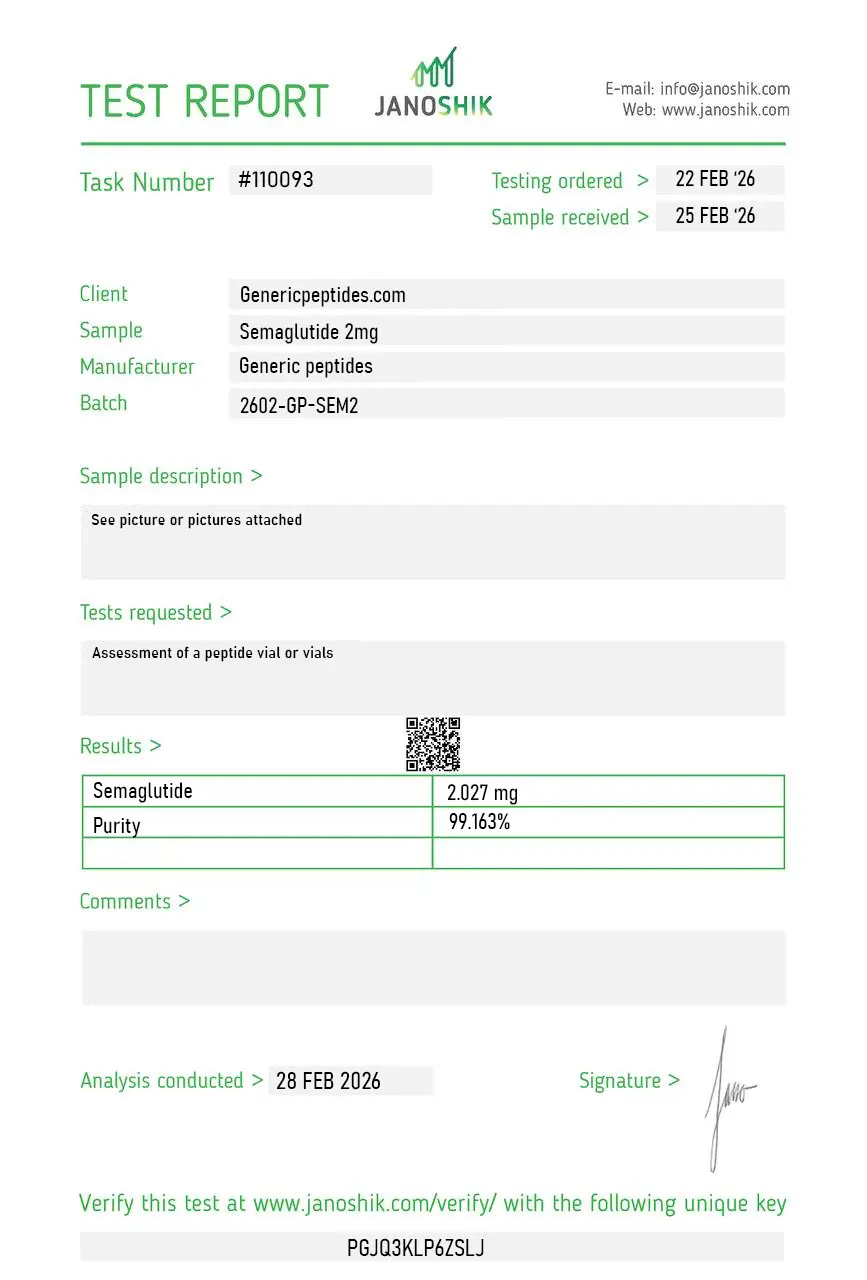
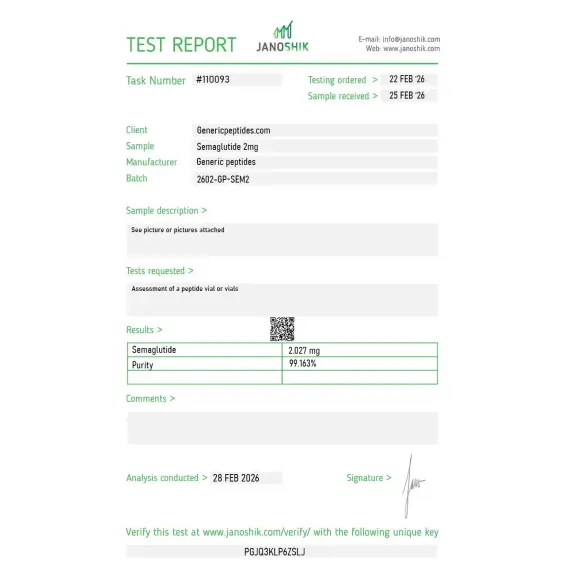
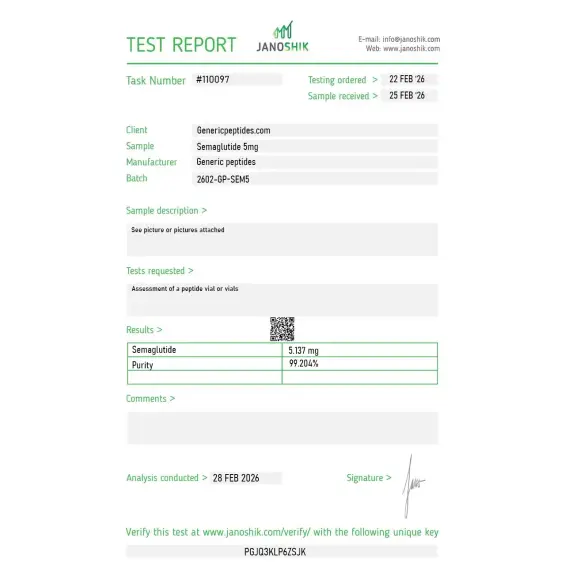
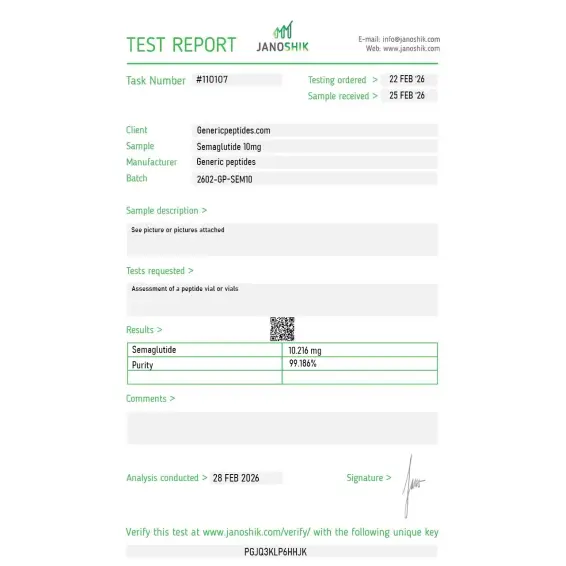
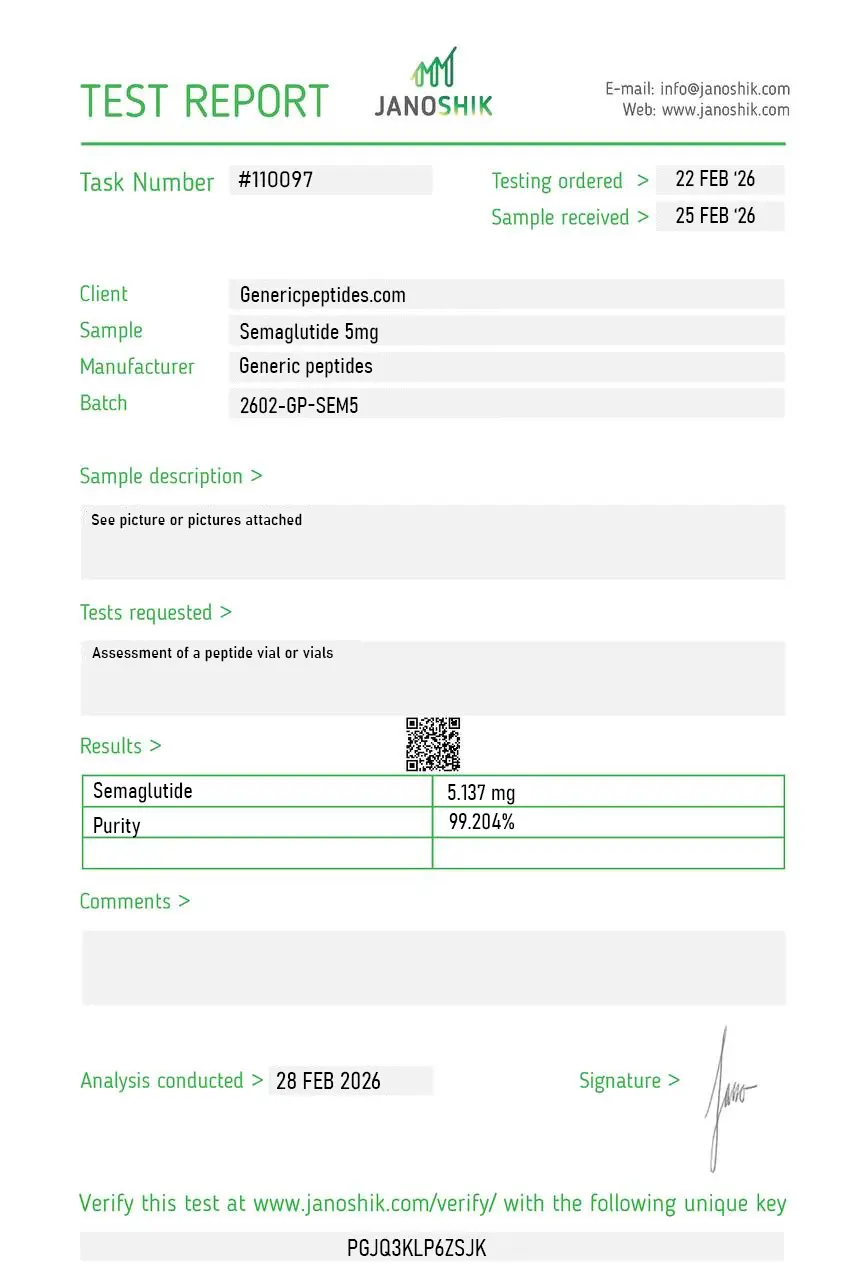
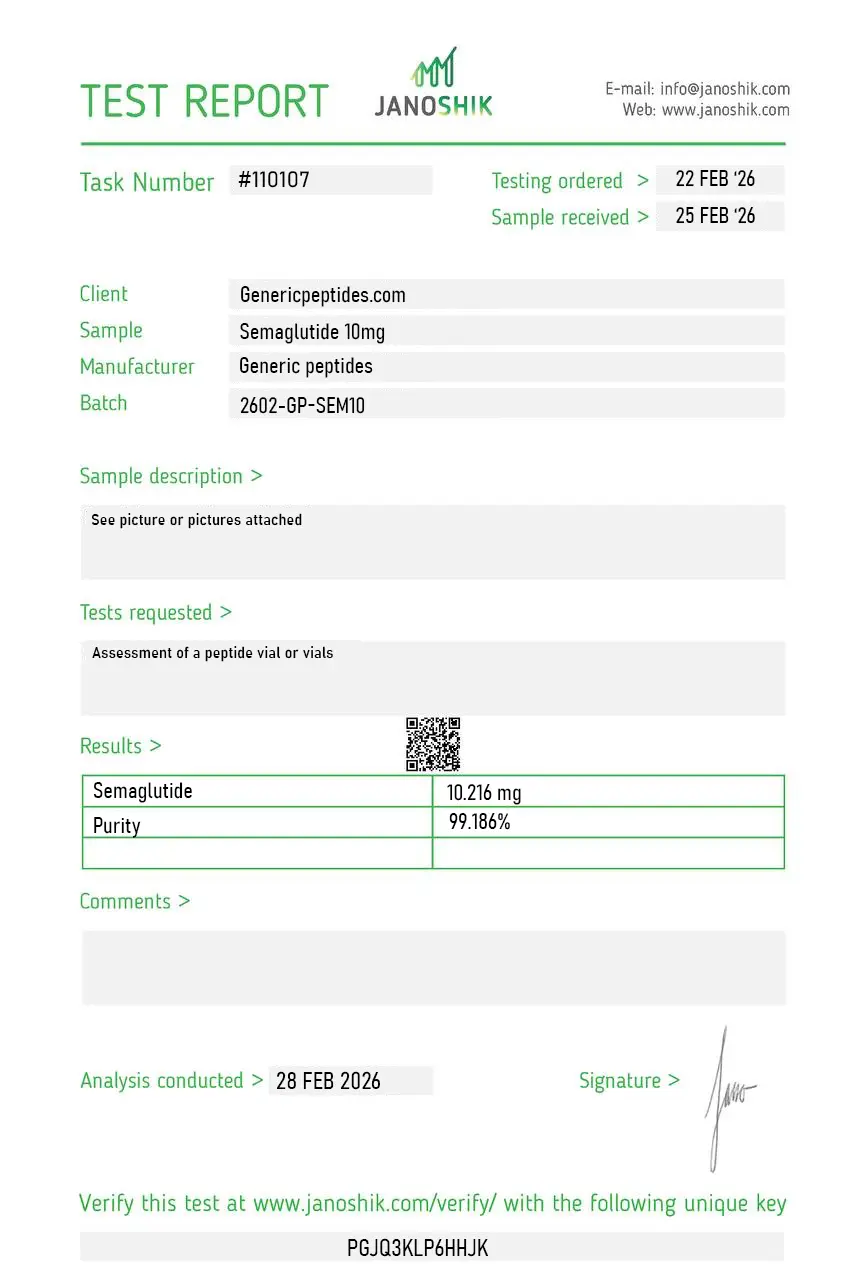
Independent lab test reports are available for Semaglutide 2mg, 5mg, and 10mg batches. Each certificate provides batch-level verification details, including measured content, purity result, analysis date, and report documentation.
The albumin-binding mechanism through the fatty-acid side chain is the genuinely clever part of this molecule's design — Lau and Knudsen's characterization papers are worth reading before working with it. Nice that the listing points toward the mechanism literature. Performed as expected in our binding assays.
We run it in INS-1 β-cell cultures for glucose-stimulated insulin secretion characterization. Consistent across the conditions we tested. The lipidated peptide handling is unremarkable, which for once is a compliment — dissolves, stays soluble, behaves.
What I appreciate is the listing doesn't dress this up as anything other than a research reference compound — receptor pharmacology framing, no consumer language, none of the marketing that surrounds this particular molecule everywhere else online. For a compound this heavily hyped, the restraint in the product description was the reason I trusted the vendor enough to order.
For hypothalamic POMC-neuron work we needed the selective GLP-1R agonist to compare central signaling against the dual agonist. Both from here, matched documentation, clean enough activation differences to interpret. Single-source sourcing is what keeps that kind of comparison from being muddied by vendor variability.
The Aib substitution at position 8 is what gives this DPP-IV resistance, the same engineering logic that runs through the whole modern incretin class. Working with semaglutide as the reference helps make sense of why all these compounds share that modification. Material behaved as the pharmacology predicts.
Performs in receptor binding work. Reconstituted cleanly. Minor note for others: I verify vial mass on receipt as routine now after a slightly-light fill on an unrelated order elsewhere, and this one checked out accurately against the stated quantity. Nothing wrong here — just a habit I'd recommend for any quantitative receptor work regardless of supplier.
Semaglutide binds GLP-1 receptors in three key locations: pancreatic β-cells (glucose-dependent insulin secretion), pancreatic α-cells (glucagon suppression), and appetite control centers in the hypothalamus and brainstem. The central appetite effect is what drives the weight loss profile — semaglutide reduces hunger signaling, increases satiety, and slows gastric emptying, which together produce sustained reduction in caloric intake. The diabetes management effect comes from the pancreatic actions.
Semaglutide is a single-receptor agonist targeting GLP-1R only. Tirzepatide is a dual receptor agonist hitting both GLP-1R and GIP (glucose-dependent insulinotropic polypeptide) receptors. The dual mechanism produces somewhat larger weight loss in head-to-head comparisons (SURMOUNT trials show ~22-26% weight loss for tirzepatide vs ~15% for semaglutide), but with a different side effect profile. Different research tools for different mechanistic questions.
Three engineering changes combine. First, the Aib8 substitution resists DPP-4 cleavage at the most vulnerable site. Second, the C18 fatty acid side chain (attached via a γ-glutamic acid spacer) binds serum albumin, dramatically reducing renal clearance. Third, the Arg34 substitution further stabilizes the molecule. Together they extend half-life by roughly 5,000-fold compared to native GLP-1.
The fatty acid conjugation chemistry is technically demanding — the C18 chain has to be attached at the correct position via the glutamic acid spacer with proper stereochemistry. Cheap synthesis routinely produces under-conjugated material, conjugation at wrong positions, or peptide impurities. FDA documented over 455 adverse event reports linked to compounded semaglutide through early 2025, many reflecting quality issues that aren't visible without analytical verification.
Semaglutide was developed by Novo Nordisk based on the company's earlier liraglutide work. The compound's discovery and development paper from Knudsen and Lau (2019) details the engineering strategy. FDA approval came in December 2017 as Ozempic for diabetes, June 2021 as Wegovy for chronic weight management, with continued indication expansion since. The compound has roughly two decades of pharmaceutical development history.
Semaglutide is not currently named on the WADA Prohibited List. The compound's mechanism — GLP-1 receptor agonism affecting glucose and appetite regulation — doesn't fit standard performance-enhancing categories. However, athletes subject to drug testing should consult their governing body's specific rules, as anti-doping rules can include unspecified substances under broad metabolic modulator categories.
Ozempic (diabetes injection brand), Wegovy (weight management injection brand), Rybelsus (oral tablet brand), all from Novo Nordisk. Generic name is semaglutide. Development codes included NN9535 and NN9924. CAS number 910463-68-2. There is no generic semaglutide available in the US as of 2026, with patent protection extending into the late 2020s.
Obesity pharmacology and metabolic disease research lead by volume — appetite regulation, energy balance, GLP-1 receptor signaling, and incretin biology. There's also extensive work in cardiovascular outcomes (SELECT trial), kidney disease (FLOW trial), liver disease (MASH trials), and emerging research in neuroprotection (Alzheimer's prevention studies), addiction (alcohol and opioid use disorder research), and PCOS treatment.
Both are GLP-1 receptor agonists from Novo Nordisk using fatty acid attachment for half-life extension. Liraglutide (Saxenda for weight loss, Victoza for diabetes) was the predecessor with a 13-hour half-life requiring daily dosing. Semaglutide extended that to weekly dosing through structural improvements. The same engineering principles, optimized further for the next-generation product.
Researchers investigating GLP-1 receptor pharmacology, incretin-based metabolic therapy, and obesity biology consistently examine Semaglutide alongside compounds that target overlapping or complementary metabolic pathways. Tirzepatide is the most direct clinical comparison — the SURMOUNT-5 head-to-head trial established tirzepatide's 47% greater relative weight loss over semaglutide, making the two the defining pharmacological comparison in modern obesity research; researchers studying incretin receptor pharmacology examine both to isolate the contribution of GIP receptor co-activation to metabolic outcomes beyond pure GLP-1 agonism. Retatrutide extends the comparison to triple receptor agonism — adding glucagon receptor activation on top of GLP-1 and GIP produces Phase 3 weight loss data of 28.7% vs semaglutide's ~15%, and researchers studying the dose-response relationship between receptor breadth and metabolic effect examine all three compounds across the single/dual/triple agonist spectrum. AICAR activates AMPK through a completely different mechanism — cellular energy sensing rather than incretin receptor signaling — making it a useful mechanistic contrast compound in metabolic research designs that need to distinguish hormonal from enzymatic approaches to fat oxidation. HGH Fragment 176-191 and AOD 9604 target lipolysis through growth hormone-derived mechanisms, providing a non-incretin fat metabolism reference when researchers need to isolate GLP-1 specific vs general lipolytic effects.