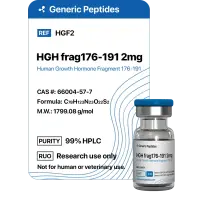
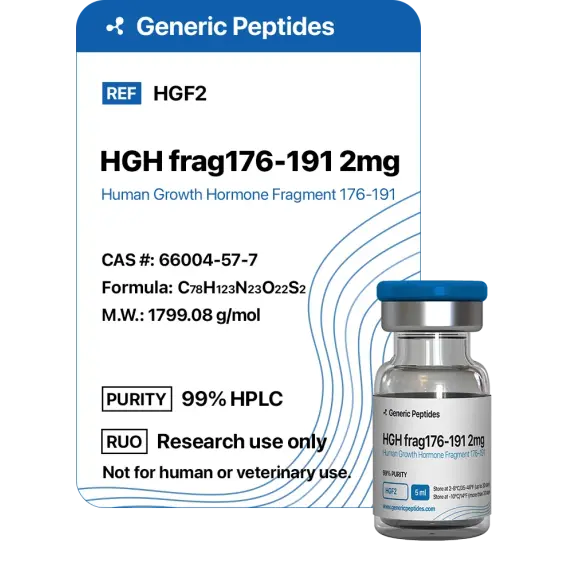
HGH Fragment 176-191 2mg
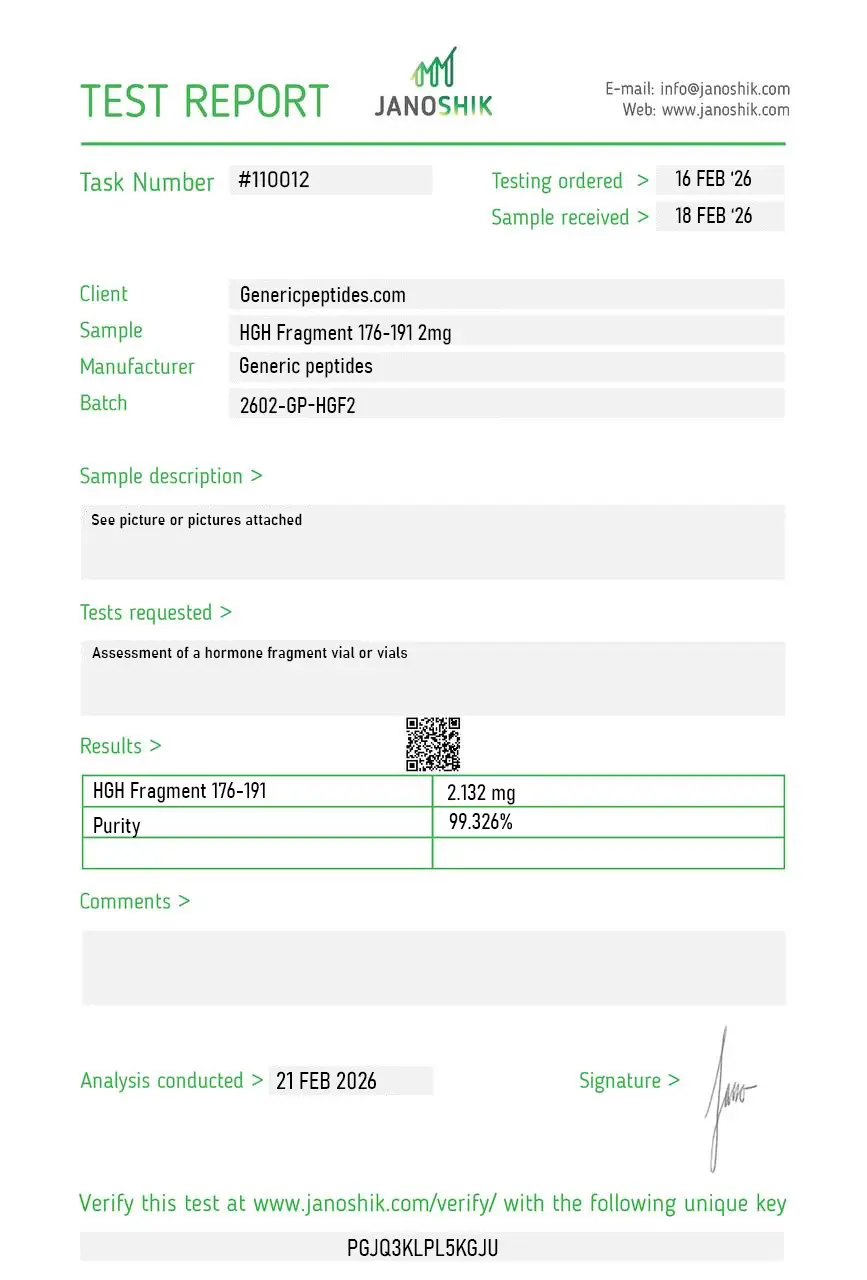
Certificate of Analysis available
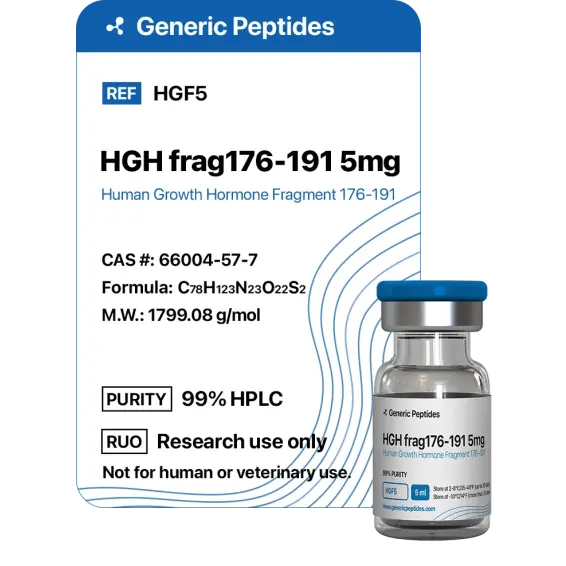
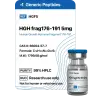
Researchers in the early 1990s asked a strange question: human growth hormone makes you grow and burns fat — what if those two functions live in different parts of the molecule? They scanned the 191-amino-acid HGH protein looking for the fat-burning fragment. They found it in the last 16 residues. Cut off at position 176, the molecule still burned fat. It just didn't grow anything.
HGH Fragment 176-191 is exactly what the name says: a 16-amino-acid peptide corresponding to the C-terminal tail of full-length human growth hormone (residues 176-191). It's the lipolytic portion of HGH isolated as a standalone peptide, with no modifications. The sequence is Phe-Leu-Arg-Ile-Val-Gln-Cys-Arg-Ser-Val-Glu-Gly-Ser-Cys-Gly-Phe.
The discovery was clean: full HGH does many things — promotes growth via IGF-1, raises blood sugar, enhances insulin resistance, and breaks down fat. The 176-191 fragment retains the fat-burning activity. The IGF-1 effects, the growth signaling, the blood sugar disruption — all gone. That selectivity is what made the fragment interesting. It's HGH's metabolism module isolated from its growth module.
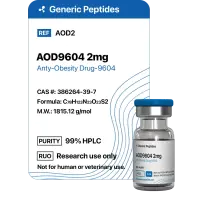
This is where the confusion lives. AOD-9604 is the same 16-amino-acid fragment with a single modification: a tyrosine residue added to the N-terminus to improve stability. AOD-9604 is essentially HGH Fragment 176-191 with one extra amino acid bolted on. The Australian biotech Metabolic Pharmaceuticals made that modification specifically to extend half-life and improve potency before running their clinical trials.
That single tyrosine addition matters. Comparative research suggests AOD-9604 has stronger lipolytic activity per dose than the unmodified fragment, and a more characterized clinical profile because it was the version that actually went through six human trials. The unmodified 176-191 fragment is the original sequence — chemically simpler, structurally identical to what HGH naturally produces, and what most early mechanistic research used. Different research applications, same biological mechanism.
The mechanism research is real. The 176-191 fragment activates fat breakdown through pathways that include β3-adrenergic receptor signaling, though the exact mechanism is still being mapped. Animal studies consistently show fat oxidation increases and reduced fat mass without IGF-1 elevation or blood sugar effects.
The honest part: the unmodified 176-191 fragment has never been tested in humans — all six clinical trials were conducted on AOD-9604 specifically. The two compounds share a mechanism but are not the same molecule. Anyone selling 176-191 with guaranteed human weight-loss outcomes is going far beyond what the published research supports.
Regulatory note: HGH Fragment 176-191 is not separately listed on the FDA's 503A bulks list as of May 2026. Its closely related modified version AOD-9604 was placed in Category 2 in 2023 and removed in September 2024, then PCAC voted against Category 1 inclusion at the December 2024 meeting. WADA prohibits HGH Fragment 176-191 for athletes in tested sports as a growth hormone fragment under category S2. As a research compound, it remains commercially available.
Here's a sourcing problem that's specific to this peptide: the sequence contains two cysteine residues that form an internal disulfide bond essential for activity. That bond is fragile during synthesis and storage — improper handling produces material with the wrong oxidation state, broken disulfide, or scrambled structure. The result is a peptide that looks like 176-191 on a label but doesn't bind the way the literature describes. Cheap synthesis routes routinely skip the steps needed to form and protect the correct disulfide configuration.
Generic Peptides supplies research-grade HGH Fragment 176-191 for sale at 99% purity, manufactured in the USA. Domestic synthesis with correct disulfide formation verified — the part that determines whether your peptide actually behaves like the published research describes.
Order HGH Fragment 176-191 for sale in the USA — 99% purity, correct disulfide configuration, manufactured domestically.
Almost — they share the same 16-amino-acid core sequence (residues 176-191 of HGH). The difference: AOD-9604 has an extra tyrosine residue added to the N-terminus for stability, making it a 17-amino-acid peptide. Same biological mechanism, slightly different pharmacokinetics, dramatically different clinical research base.
Yes — it's legally available as a research compound in the United States. It's not a separate FDA bulks-list nominee like AOD-9604 was, but as an unmodified fragment of HGH, it occupies similar regulatory space. Not FDA-approved for human use. WADA prohibits it for tested athletes.
The unmodified 176-191 fragment has never been tested in humans — not a single clinical trial. All clinical data comes from AOD-9604, which failed to demonstrate statistically significant weight loss in its largest 24-week Phase 2b trial. Animal data is consistent and impressive. Anyone selling guaranteed human fat-loss results is going beyond what the published research supports.
No — and that's the entire reason researchers isolated this specific fragment. The 176-191 sequence retains HGH's lipolytic activity while losing the growth-promoting (IGF-1) effects and the diabetogenic blood sugar effects. Multiple human trials with AOD-9604 confirmed this separation in vivo.
Probably not at the same purity or with the correct disulfide structure intact. The two cysteine residues in the sequence make this peptide more difficult to synthesize correctly than its size suggests. Cheap production routinely produces material with broken or scrambled disulfides, which loses bioactivity even when the linear sequence is correct.
Sources
Heffernan M et al. — "The effects of human GH and its lipolytic fragment (AOD9604) on lipid metabolism following chronic treatment in obese mice." Endocrinology, 2001. Establishes the comparative lipolytic profile of the 176-191 region. https://pubmed.ncbi.nlm.nih.gov/11564668/
FDA — "Bulk Drug Substances Nominated for Use in Compounding Under Section 503A," updated April 22, 2026. Documents current 503A bulks list status for HGH-related fragments. https://www.fda.gov/media/94155/download
A 16-amino-acid sequence with two cysteines that have to fold correctly. Sourcing isn't optional.
HGH Fragment 176-191 ships as a white lyophilized powder in a sealed glass vial, freeze-dried to preserve the C-terminal growth hormone fragment and extend its shelf life. With a few simple habits — cold, dark, dry — the sealed vial stays in perfect condition for its full shelf life. Here's exactly how to store it.
| Parameter | Details | Notes |
|---|---|---|
| Storage Temperature | Freezer at −20°C (−4°F) for long-term storage up to 24 months. Refrigeration at 2–8°C (36–46°F) is fine for short-term use up to ~3 months. | Original sealed vial in the freezer is the safest default. |
| Light Sensitivity | Yes — protect from direct light and UV exposure to prevent photodegradation. | Keep in the original box or an opaque, amber container. |
| Freezing | Allowed and recommended. −20°C is standard for long-term storage; −80°C extends stability further if available. | Freeze from the start if you won't use it within 3 months. |
| Oxidation Sensitivity | The fragment contains two cysteine residues, which are prone to oxidation if the vial seal is broken or the powder is exposed to air. | Keep the aluminum crimp cap intact until ready to reconstitute. |
| Signs of Degradation | Healthy powder is white to off-white and loose or cake-like. Watch for yellowing, browning, clumping, visible moisture, or a sticky texture. | Any color change, clumping, or moisture = discard the vial. |
| Common Mistakes | Leaving the vial at room temperature after delivery, storing in a humid kitchen or bathroom, or opening a cold vial and letting condensation form inside. | Put it in the freezer on arrival, and let sealed vials warm to room temperature before opening. |
Every order is processed quickly and shipped with full tracking. All products come directly from the official Generic Peptides supply chain — in original manufacturer packaging, carefully handled from warehouse to your door.
| Destination | Delivery Time | Notes |
|---|---|---|
| USA Domestic | 2–5 business days | Faster when local warehouse stock is selected at checkout |
| International | 10–15 business days | Tracking included; update frequency may vary by destination country |
| Order Processing | 24–48 business hours | Processing begins after payment confirmation |
| Tracking | Provided on all orders | Tracking number sent after dispatch; multiple warehouses may result in separate shipments |
This product is supplied through the official Generic Peptides distribution chain and shipped in original manufacturer packaging. Orders are packed securely to protect the contents during transit and to respect customer privacy as a standard practice.
Outer packaging is neutral and does not display product details on the exterior — a common approach to protect shipments from damage, tampering, and unnecessary exposure during delivery.
Every order includes full authenticity assurance: official Generic Peptides presentation, batch-linked lab documentation, and sealed original packaging — giving customers confidence in every purchase.
| Authenticity Feature | Details |
|---|---|
| Packaging | Original manufacturer packaging — sealed and unaltered |
| Lab Documentation | Batch-linked certificate of analysis available on request |
| Supply Chain | Sourced exclusively through official Generic Peptides distribution |
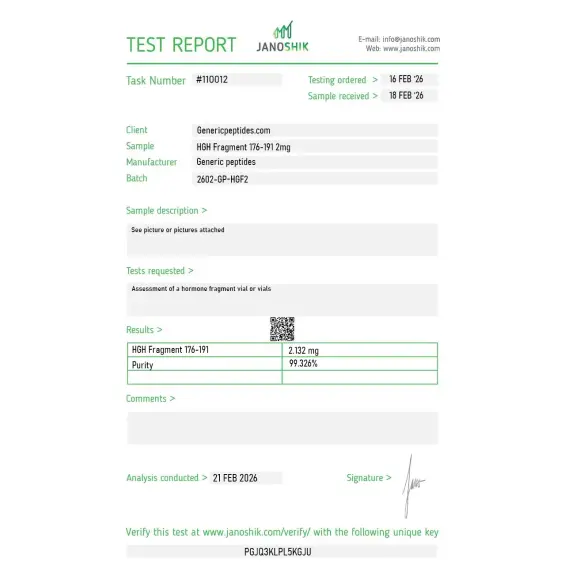
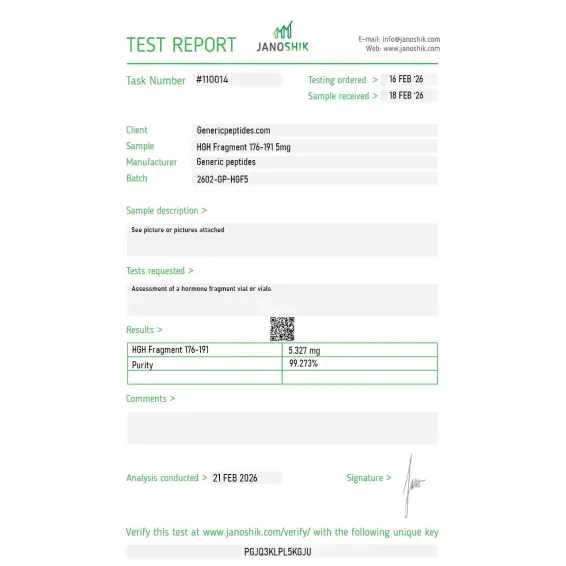
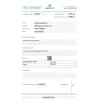
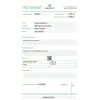
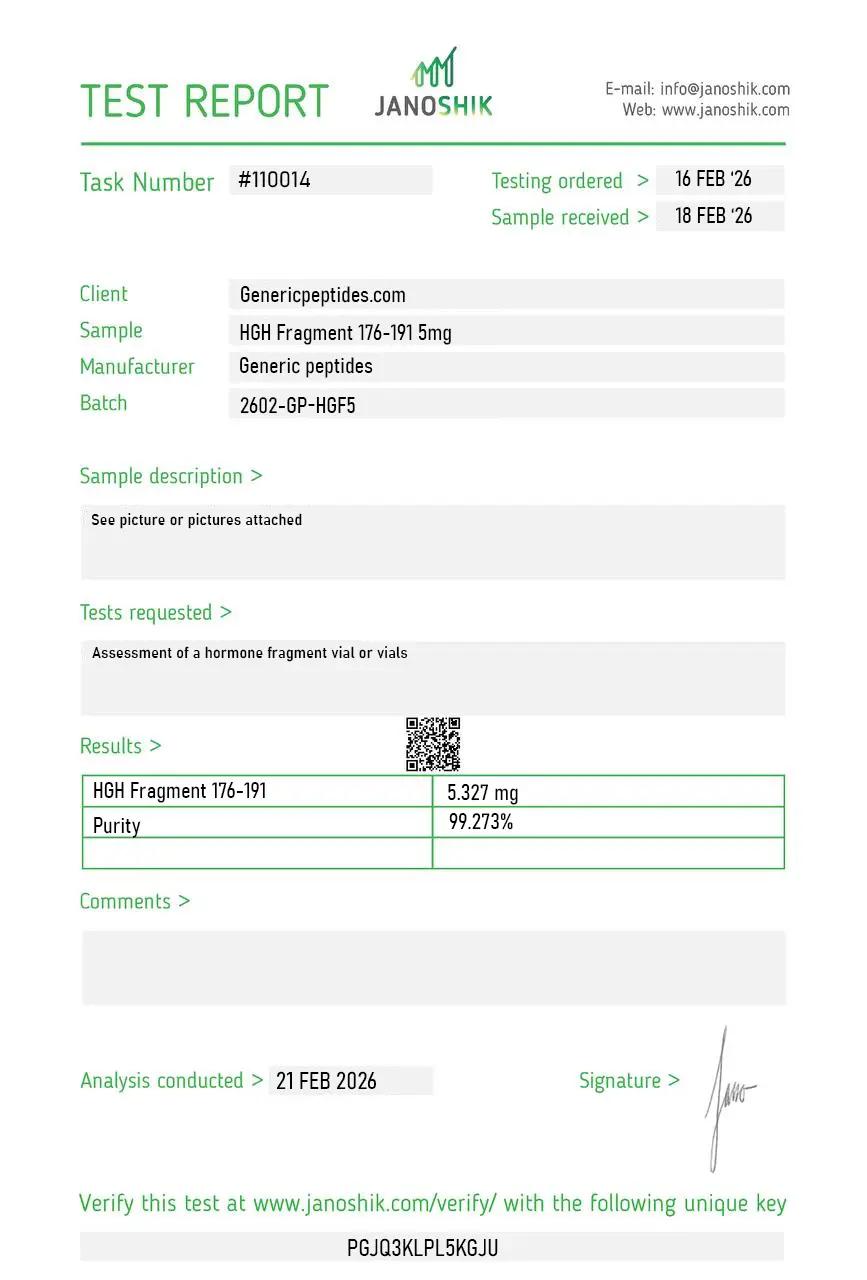
Independent lab test reports are available for HGH Fragment 176-191 2mg and 5mg batches. Each certificate provides batch-level verification details, including measured content, purity result, analysis date, and report documentation.
Lipolysis-pathway signaling in adipocyte culture — we needed the unmodified 176-191 fragment, not the AOD 9604 variant with the N-terminal tyrosine. The product page distinguishes them, which most don't. Material behaved consistently in our pathway assays.
The Monash/Frank Ng origin is the real heritage — the lipolytic fragment was isolated there in the nineties, and Metabolic Pharmaceuticals built AOD 9604 on top of it. Nice the listing references that lineage rather than the marketing mythology. Material gave consistent results in our lipolysis assays.
We run it specifically as the parent-fragment comparator against AOD 9604 — characterizing how the N-terminal tyrosine modification on AOD changes stability and receptor interaction versus the bare 176-191. Sourcing both from one catalog makes that modification comparison clean. The unmodified-versus-modified contrast is the whole experiment.
What I value is the listing acknowledging the failed clinical history — Metabolic Pharmaceuticals ran trials on this fragment and AOD 9604, neither reached approval, the Phase IIb on AOD failed in 2007. A vendor that states the fragment never proved out clinically rather than implying efficacy is one I trust more for honest research procurement. Material consistent.
The fragment chemistry is the interesting part — it's the 176-191 region of growth hormone, which retains the lipolytic signaling without the broader somatogenic and IGF-1-stimulating activity of the full hormone. That functional separation is precisely why it's a useful research tool for isolating the lipolysis pathway. Material behaved as that biology predicts.
C-terminal lipolytic fragment as our pathway-research reference. Consistent batches, repeated orders. Covers it.
Reasonable but I confirmed the exact residue range before ordering — "HGH fragment" gets used loosely for several variants, and I needed 176-191 specifically. Support confirmed the residue boundaries. For a fragment family this prone to ambiguity, the exact range should be unmistakable on the listing rather than requiring confirmation.
The functional dissociation interests us — the fragment retains lipolytic pathway activity but, lacking the receptor-binding regions of full hGH, doesn't trigger the somatogenic effects. For studying lipolysis signaling isolated from GH-receptor activation, that separation is exactly the tool you want. Material held its profile across conditions.
The peptide's lipolytic activity appears to involve β3-adrenergic receptor signaling, though research suggests the mechanism is indirect — the fragment doesn't bind β3 receptors directly but increases their expression in adipose tissue, which enhances lipolytic sensitivity to other signals. It also suppresses lipogenesis (new fat synthesis). The exact pathway is still being mapped in current literature.
Full HGH is a 191-amino-acid hormone that does multiple things — growth, fat metabolism, blood sugar regulation, IGF-1 stimulation. Fragment 176-191 is only the last 16 amino acids, which carry just the fat-burning activity. The growth, IGF-1, and blood sugar effects all live in the rest of the molecule that the fragment doesn't include.
The native HGH protein has multiple disulfide bonds that hold its three-dimensional structure. Within the 176-191 region, two cysteine residues (positions 182 and 189) form an internal disulfide bond that's preserved in the fragment. That bond is essential for the peptide's biological activity — without correct disulfide formation, the molecule loses its lipolytic function.
Two reasons: synthesis quality and disulfide formation. The peptide can be synthesized as a linear chain easily, but forming the correct internal disulfide bond requires specific oxidation steps that cheap producers skip or perform poorly. Many commercial vials of "176-191" contain partially reduced or scrambled-disulfide material that doesn't behave like the literature describes.
The lipolytic properties of the C-terminal HGH region were investigated in the late 1980s and early 1990s. Wu and colleagues published foundational work on the 176-191 fragment's antilipogenic activity in "Endocrinology" in 1993. Australian researchers at Monash University then took the fragment forward into clinical development as AOD-9604 in the late 1990s.
Yes. WADA prohibits HGH fragments under category S2 (Peptide Hormones, Growth Factors, Related Substances and Mimetics). The classification covers HGH and its fragments collectively, including 176-191 and AOD-9604. Athletes subject to drug testing should avoid the compound regardless of how it's obtained.
HGH Frag 176-191, hGH 176-191, GH Fragment, Lipolytic Fragment of Growth Hormone, AOD (sometimes used loosely though technically referring to AOD-9604). The sequence Tyr-Leu-Arg-Ile-Val-Gln-Cys-Arg-Ser-Val-Glu-Gly-Ser-Cys-Gly-Phe identifies it unambiguously.
Fat metabolism and lipolysis research lead by volume — adipocyte biology, β3-adrenergic signaling, and body composition models. There's also active work in cartilage research, where some studies have suggested chondroprotective effects of HGH fragments alongside their lipolytic activity.
Completely different mechanisms. Semaglutide and other GLP-1 agonists work centrally on appetite regulation and incretin signaling. HGH Fragment 176-191 works peripherally on adipose tissue lipolysis. Magnitude of weight loss in clinical trials also differs substantially — GLP-1s produce double-digit percentage weight loss in trials; the HGH fragment's documented effects are much more modest.
Most fat-loss compounds either suppress appetite (centrally acting) or interfere with metabolism systemically (with side effects on blood sugar, hormones, etc.). HGH Fragment 176-191 specifically targets the lipolytic pathway of HGH while leaving the metabolic and growth pathways intact — it's a pharmacological proof-of-concept for separating those functions, even if the magnitude of human translation has been disappointing in clinical trials.