TB-500: Thymosin Beta-4 Fragment With Distinct Clinical Evidence Limits
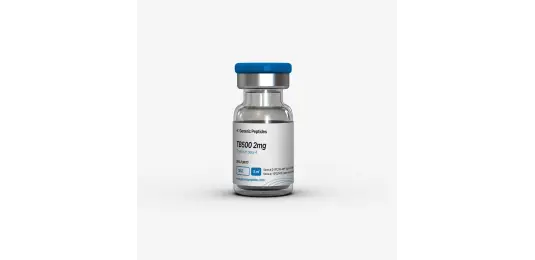
TB-500 Peptide: Thymosin Beta-4 Research Overview
By Medical Team of Generic Peptides
Quick answer. TB-500 is the research-market name for a synthetic peptide derived from thymosin beta-4 (Tβ4), a 43-amino-acid protein present in nearly every mammalian cell. Tβ4's best-understood job is to bind monomeric actin and regulate how cells build and remodel their cytoskeleton, which is why it has been studied in wound healing, corneal repair, and cardiac injury. Most of the animal and all of the human data come from full-length Tβ4; "TB-500" products on the research market may contain either the full protein or a shorter fragment built around the LKKTETQ actin-binding sequence, and the certificate of analysis is the only way to tell which. In July 2026, an FDA advisory committee voted 8–6 to recommend TB-500 for the pharmacy-compounding bulks list for wound healing; that recommendation is advisory and, as of autumn 2026, the FDA has not completed rulemaking.
This article explains the molecule, the mechanism, what the studies in animals and humans actually measured, the regulatory position, and how to read a TB-500 COA.
What TB-500 Is
Thymosin beta-4 was isolated from bovine thymus by Allan Goldstein's laboratory in the 1970s and later found to be one of the most abundant small proteins in human cells, present in platelets, wound fluid, and most tissues [1]. It is 43 residues long, about 4,963 Da, highly conserved across mammals, and has no stable tertiary structure in solution.
The functionally critical region is a seven-residue sequence, Leu-Lys-Lys-Thr-Glu-Thr-Gln (LKKTETQ, residues 17–23), which binds G-actin [2]. Synthetic peptides containing this motif reproduce some of Tβ4's actin-related activity in cell assays, which is the basis for the shorter "fragment" versions sold under the TB-500 name.
In practice, the label "TB-500" is applied inconsistently:
- some research suppliers sell full-length synthetic Tβ4 (43 residues, ~4,963 Da) as TB-500;
- others sell a fragment of 7 to 27 residues containing the LKKTETQ core.
The FDA's 2026 review materials treated TB-500 as a Tβ4-derived substance in free-base and acetate forms. For a researcher, the distinction matters because the published evidence is almost entirely about the full 43-residue protein. The mass on the certificate of analysis tells you which molecule is in the vial.
Mechanism of Action
Tβ4 is the main actin-sequestering protein in cells. By binding G-actin monomers it controls the pool available for polymerization into filaments, and through that it influences cell shape, migration, and the cytoskeletal remodeling that tissue repair depends on [1, 2]. Several downstream effects have been reported in cell and animal models:
- Cell migration. Tβ4 promotes migration of keratinocytes, fibroblasts, and endothelial cells in culture and in wound models [3].
- Angiogenesis. Increased endothelial sprouting and vessel formation in several assays [4].
- Anti-inflammatory signaling. Reduced expression of inflammatory cytokines in injured tissue in animal studies [1].
- Cardiac cell survival and progenitor activation. In mice, Tβ4 promoted survival of cardiomyocytes after ischemia and activated epicardial progenitor cells [5].
- Corneal epithelial repair. Faster re-epithelialization and lower inflammation after chemical injury in rodent eyes [6].
Which of these actions a short LKKTETQ fragment retains is less clear. The actin-binding activity is reproducible with the heptapeptide; the receptor-independent effects on inflammation and angiogenesis have been characterized mainly with the full protein.
What the Research Shows
| Study | Model | What was measured | Key finding |
|---|---|---|---|
| Malinda et al., 1999, J Invest Dermatol [3] | Animal (rat full-thickness wounds) | Wound closure, re-epithelialization, collagen | Topical and systemic Tβ4 accelerated closure and increased keratinocyte migration |
| Sosne et al., 2002, Exp Eye Res [6] | Animal (rat corneal alkali injury) | Epithelial healing, inflammatory cell infiltration | Tβ4 speeded corneal healing and reduced inflammation |
| Bock-Marquette et al., 2004, Nature [5] | Animal (mouse coronary ligation) | Cardiomyocyte survival, cardiac function | Tβ4 improved cardiac function after myocardial infarction; Akt-dependent survival signaling |
| Philp et al., 2004, Mech Ageing Dev [4] | Animal (mouse) and in vitro | Angiogenesis, hair follicle growth | Tβ4 promoted vessel formation and follicle growth |
| Guarnera et al., 2010, Ann N Y Acad Sci [7] | Clinical, Phase II, 73 adults with venous stasis ulcers | Ulcer healing at 3 months | Topical Tβ4 well tolerated; healing rates higher at a mid-dose than placebo in exploratory analysis |
| Sosne & Ousler, 2015, Clin Ophthalmol [8] | Clinical, Phase II, 72 adults with dry eye | Corneal staining, symptoms | Tβ4 eye drops (RGN-259) improved signs and symptoms vs. placebo at some time points |
| Treadwell et al., 2012, Ann N Y Acad Sci [9] | Clinical, Phase II, stasis and pressure ulcers (review of two trials) | Safety, wound closure | Tβ4 gel well tolerated; healing signal in small cohorts |
Three points are worth drawing out.
The human trials are of full-length Tβ4, topical, and small. RegeneRx's RGN-259 (ophthalmic) and RGN-137 (dermal) programs reached Phase II; no Phase III has been completed, and no Tβ4 product is approved anywhere. None of the human studies used an injected fragment or anything labeled "TB-500."
The animal literature is consistent on wound and corneal healing. Across rodent models, full-length Tβ4 reproducibly accelerates epithelial closure. This is the evidence the FDA committee had in front of it for the wound-healing indication.
Fragment-specific data are scarce. Studies of LKKTETQ-containing peptides exist for actin binding and some cell-migration assays, but there are no controlled animal efficacy studies comparing a short fragment with the full protein on healing endpoints, and no human data at all. A 2024 analytical paper established methods to quantify TB-500 in rat plasma and reported rapid clearance, but did not test efficacy [10].
Regulatory Status in 2026
TB-500's regulatory history concerns pharmacy compounding, not drug approval.
- September 2023. The FDA placed TB-500 in Category 2 of its evaluation of bulk substances for 503A compounding, citing lack of safety data [11].
- April 2026. Following an HHS directive, the FDA removed TB-500 and other peptides from Category 2 pending advisory review and scheduled a Pharmacy Compounding Advisory Committee (PCAC) meeting for July 23–24, 2026 [12].
- July 23, 2026. The PCAC reviewed TB-500 free base and acetate for wound healing. The FDA briefing noted that no clinical studies or human exposure data existed for either form and raised questions about aggregation, impurities, and immunogenicity. The committee nonetheless voted 8–6 (one abstention) to recommend both forms for the 503A Bulks List [13].
- Status as of autumn 2026. The vote is advisory. Adding a substance to the 503A list requires formal FDA rulemaking, which had not been completed as of September 2026; TB-500 does not yet appear in 21 CFR §216.23 [13].
- Sport. The World Anti-Doping Agency prohibits Tβ4 and its derivatives, including TB-500, under class S2 at all times [14].
For researchers the material remains research-use-only. The committee's concerns — aggregation, impurities, immunogenicity — map directly onto what a good COA for TB-500 should address.
TB-500 and BPC-157: Why They Are Studied Together
TB-500 is frequently paired with BPC-157 in regenerative research because the two act on different parts of the repair process: Tβ4 on cytoskeleton and cell migration, BPC-157 on angiogenic and growth-factor signaling in animal models. Both were reviewed at the same July 2026 PCAC meeting. The two are compared side by side in BPC-157 vs TB-500, and the studies that tested them together are reviewed in BPC-157 and TB-500 Together: What the Research Shows; this guide stays with TB-500 on its own.
Reading a TB-500 Certificate of Analysis
Because "TB-500" can mean two different molecules, the COA is not a formality.
- Mass spectrometry — identify the molecule. An observed mass near 4,963 Da means full-length Tβ4 (43 residues). A mass in the ~890–3,000 Da range indicates a fragment; 889 Da corresponds to the N-acetylated LKKTETQ heptapeptide (847 Da without the acetyl group). The certificate should state the sequence it is certifying.
- Acetylation. Native Tβ4 is N-terminally acetylated (+42 Da). Synthetic versions may or may not be; the COA should say which.
- HPLC purity. For a 43-residue peptide, deletion impurities are common; a chromatogram with method conditions and purity of 98% or higher is typical for research grade. Shorter fragments should reach higher purity.
- Aggregation and salt form. The FDA review flagged aggregation and the free-base/acetate distinction. Look for the salt form and, ideally, a note on solution behavior.
- Endotoxin. Relevant if the material will contact cell cultures; a LAL value in EU/mg should be present.
- Lot traceability. Lot number, analysis date, and storage conditions must match the vial.
Generic Peptides publishes a lot-specific COA for research-grade TB-500 with mass spectrum and chromatogram. For a general walkthrough, see how to read a research peptide COA.
Open Questions in the Research
- Fragment versus full protein. Whether an LKKTETQ-based fragment reproduces the healing effects of full-length Tβ4 in vivo has not been tested in a controlled study.
- Route and exposure. Human trials used topical Tβ4; pharmacokinetics of systemically administered Tβ4 or fragments in humans are unpublished.
- Long-term effects of a pro-migratory, pro-angiogenic protein. The same actions that aid wound healing are theoretically relevant to tumor biology; no long-term animal study with tumor endpoints has been published.
- Immunogenicity of synthetic Tβ4. Raised by the FDA; not yet answered.
FAQ
Is TB-500 the same as thymosin beta-4?
Not always. TB-500 is a market name for Tβ4-derived material. Some products are the full 43-residue protein; others are shorter fragments containing the LKKTETQ actin-binding sequence. The molecular weight on the COA identifies which.
What does TB-500 do in research models?
In rodent studies full-length Tβ4 accelerated skin and corneal wound closure, promoted angiogenesis, and improved cardiac function after experimental infarction. The mechanism runs through actin binding and cell migration.
Has TB-500 been tested in humans?
Full-length Tβ4 has been tested in small Phase II trials as eye drops and as a topical gel. No trial of an injected fragment or of any product labeled TB-500 has been published, and no Tβ4 product is approved.
What did the FDA decide about TB-500 in 2026?
On July 23, 2026, the Pharmacy Compounding Advisory Committee voted 8–6 to recommend TB-500 free base and acetate for the 503A compounding list for wound healing. The recommendation is advisory; FDA rulemaking was still pending as of September 2026, and TB-500 remains research-use-only.
What should a TB-500 COA show?
The sequence being certified, a mass spectrum that distinguishes full-length Tβ4 (~4,963 Da) from a fragment, acetylation and salt form, an HPLC chromatogram with purity ≥98%, an endotoxin value if relevant, and a lot number matching the vial.
References
For research use only. Not for human consumption. This content is for informational purposes and is not medical advice.
[1] Goldstein AL, Hannappel E, Kleinman HK. Thymosin β4: actin-sequestering protein moonlights to repair injured tissues. Trends Mol Med. 2005;11(9):421–429. PMID 16099219.
[2] Crockford D, Turjman N, Allan C, Angel J. Thymosin beta 4: structure, function, and biological properties supporting current and future clinical applications. Ann N Y Acad Sci. 2010;1194:179–189. PMID 20536467.
[3] Malinda KM, Sidhu GS, Mani H, et al. Thymosin β4 accelerates wound healing. J Invest Dermatol. 1999;113(3):364–368. PMID 10469335.
[4] Philp D, Goldstein AL, Kleinman HK. Thymosin β4 promotes angiogenesis, wound healing, and hair follicle development. Mech Ageing Dev. 2004;125(2):113–115. PMID 15037013.
[5] Bock-Marquette I, Saxena A, White MD, DiMaio JM, Srivastava D. Thymosin β4 activates integrin-linked kinase and promotes cardiac cell migration, survival and cardiac repair. Nature. 2004;432(7016):466–472. PMID 15565145.
[6] Sosne G, Szliter EA, Barrett R, Kernacki KA, Kleinman H, Hazlett LD. Thymosin beta 4 promotes corneal wound healing and decreases inflammation in vivo following alkali injury. Exp Eye Res. 2002;74(2):293–299. PMID 11950239.
[7] Guarnera G, DeRosa A, Camerini R. The effect of thymosin treatment of venous ulcers. Ann N Y Acad Sci. 2010;1194:207–212. PMID 20536470.
[8] Sosne G, Ousler GW. Thymosin beta 4 ophthalmic solution for dry eye: a randomized, placebo-controlled, Phase II clinical trial conducted using the controlled adverse environment (CAE) model. Clin Ophthalmol. 2015;9:877–884. PMID 26056426.
[9] Treadwell T, Kleinman HK, Crockford D, Hardy MA, Guarnera GT, Goldstein AL. The regenerative peptide thymosin β4 accelerates the rate of dermal healing in preclinical animal models and in patients. Ann N Y Acad Sci. 2012;1270:37–44. PMID 23050815.
[10] Rahaman KA, Muresan AR, Min H, et al. Simultaneous quantification of TB-500 and its metabolites in in-vitro experiments and rats by UHPLC-Q-Exactive orbitrap MS/MS and their screening by wound healing activities in-vitro. J Chromatogr B. 2024;1235:124033. PMID 38382158.
[11] U.S. Food and Drug Administration. Certain bulk drug substances for use in compounding that may present significant safety risks. September 29, 2023.
[12] U.S. Food and Drug Administration. Federal Register notice: Pharmacy Compounding Advisory Committee meeting, July 23–24, 2026. Docket FDA-2025-N-6895. April 16, 2026.
[13] U.S. Food and Drug Administration. Pharmacy Compounding Advisory Committee, July 23, 2026: briefing document and meeting summary for TB-500 (free base and acetate); 21 CFR §216.23 as of September 2026.
[14] World Anti-Doping Agency. The Prohibited List 2026, Section S2.