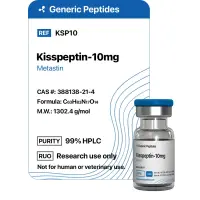
Kisspeptin-10
Certificate of Analysis available
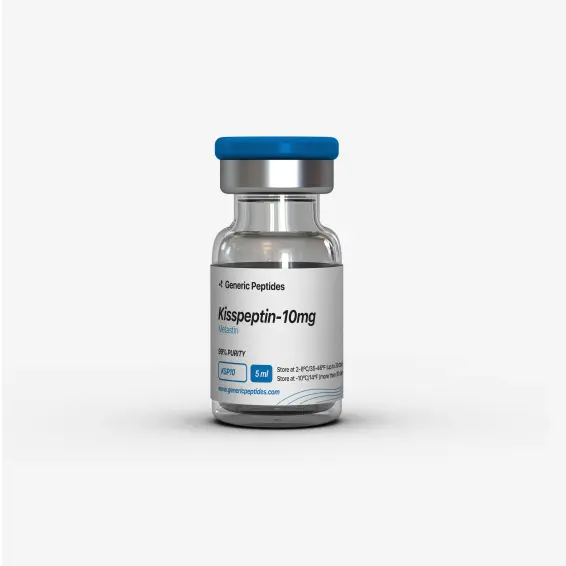
In 2003, two independent research teams — Seminara at Harvard and de Roux in Paris — published in the same month a finding that rewrote reproductive endocrinology textbooks. People with loss-of-function mutations in a gene called GPR54 fail to enter puberty. The receptor's natural ligand turned out to be kisspeptin, encoded by the KISS1 gene. Suddenly the entire reproductive cascade had a master upstream regulator nobody knew existed before.
Kisspeptin-10 (KP-10) is a synthetic 10-amino-acid peptide — the minimal bioactive C-terminal fragment of the natural KISS1 gene product. Native kisspeptin exists in several lengths (kisspeptin-54, -14, -13, and -10), but the final 10 residues retain full agonist activity at the GPR54 receptor (also called KISS1R). The shorter sequence makes KP-10 the most synthetically accessible and most-used kisspeptin variant in research.
What makes the compound mechanistically remarkable: kisspeptin sits one step upstream of GnRH in the hypothalamic-pituitary-gonadal axis. Kisspeptin neurons in the arcuate nucleus and anteroventral periventricular area release kisspeptin onto GnRH neurons. GnRH then drives LH and FSH release from the pituitary. LH and FSH drive gonadal steroid production. Activate kisspeptin signaling, and the entire cascade fires. Block it, and reproductive function shuts down.
The KISS1 gene was originally identified as a metastasis suppressor in melanoma research — hence the unusual name (the "KI" prefix acknowledges Hershey, Pennsylvania where it was discovered, the "SS" stands for suppressor sequence, and "Kisses" refers to the famous Hershey's chocolates). Nobody connected it to reproduction until those 2003 papers showed that GPR54 mutations cause hypogonadotropic hypogonadism. The same gene that suppresses cancer metastasis also turns out to be the master regulator of fertility.
Multiple human clinical trials have followed. KP-10 has been tested in idiopathic hypogonadotropic hypogonadism, IVF triggering protocols, hypothalamic amenorrhea, and sexual desire disorders. The 2017 Imperial College trial and subsequent work demonstrated KP-10's ability to stimulate LH release in human subjects and showed effects on brain regions involved in sexual processing — the latter finding generated significant research interest in kisspeptin's potential role beyond pure reproductive endocrinology.
Here's the uncomfortable truth: chronic kisspeptin administration causes tachyphylaxis — the response diminishes rapidly with repeated dosing. Continuous KP-10 exposure desensitizes the GPR54 receptor and can actually suppress gonadotropin output rather than stimulate it. Some studies of repeated kisspeptin-54 injections over two weeks reported reduced LH/FSH and sex steroid levels. That paradoxical effect is biologically interesting (it's potentially useful in hormone-dependent cancer research) but it makes KP-10 a difficult tool for sustained reproductive axis stimulation. Pulsatile dosing matters here in ways that don't apply to most other peptides.
The plasma half-life of KP-10 is short — approximately 4 minutes intravenously, longer with subcutaneous administration — which is why most published research uses continuous infusion or carefully timed pulse protocols rather than single bolus dosing. That short half-life is one reason the KP-54 variant has competed with KP-10 in some clinical trial work.
Regulatory note: Kisspeptin-10 was reviewed by the FDA's Pharmacy Compounding Advisory Committee on October 29, 2024, alongside Ipamorelin and Ibutamoren. The FDA's pre-meeting analysis recommended against 503A Bulks List inclusion, and the PCAC voted accordingly. As of May 2026, Kisspeptin-10 is not on the Category 1 bulks list and cannot be compounded by 503A pharmacies. It also was not part of the recent April 2026 reclassification activity affecting BPC-157, Epitalon, DSIP, and others. Sales as a research compound continue legally. WADA prohibits kisspeptin and analogs for athletes in tested sports.
Here's a sourcing problem that's specific to Kisspeptin-10: it's an amidated peptide at the C-terminus, and the C-terminal amide is essential for GPR54 receptor binding. Cheap synthesis routinely produces material with a free carboxyl group instead of the amide — and that single difference dramatically reduces receptor affinity. The peptide arrives looking right on a label, with the right molecular weight within tolerance, but doesn't bind GPR54 the way the literature describes. Without HPLC-MS verification specifically checking for C-terminal amidation, this defect is invisible to buyers and ruins the experiment.
Generic Peptides supplies research-grade Kisspeptin-10 for sale at 99% purity, manufactured in the USA. Domestic synthesis with verified C-terminal amidation — the part that determines whether your KP-10 actually behaves like KP-10 in receptor binding studies.
Order Kisspeptin-10 for sale in the USA — 99% purity, C-terminal amide verified, manufactured domestically.
Yes — Kisspeptin-10 is legally available as a research compound in the United States. It was reviewed by the PCAC on October 29, 2024, which voted against Category 1 bulks list inclusion. It cannot currently be compounded by 503A pharmacies. Sales as a research compound continue legally. Not FDA-approved for human use.
KP-10 is the minimal bioactive 10-amino-acid C-terminal fragment; KP-54 is the longer 54-amino-acid form (sometimes called metastin). Both bind GPR54 with similar potency. KP-10 is smaller, easier to synthesize, and more affordable. KP-54 has a significantly longer half-life. Researchers choose between them based on protocol requirements.
The 10-amino-acid peptide is rapidly cleaved by peptidases in plasma — approximately 4 minutes intravenously, longer subcutaneously. That short duration is actually an advantage in some research designs (controlled, time-limited GnRH activation) but a limitation in others. Some research protocols use continuous infusion to maintain steady-state exposure rather than bolus dosing.
Yes — that's the most reliably reproduced finding in human kisspeptin research. KP-10 administration triggers measurable LH release in healthy subjects, in patients with hypothalamic amenorrhea, and in idiopathic hypogonadotropic hypogonadism studies. The magnitude varies by dose, route, and patient population, but the LH response is a robust pharmacological signature of kisspeptin activity.
Probably not. The C-terminal amide modification is essential for GPR54 receptor binding, and cheap synthesis routinely delivers material with a free acid group instead. The peptide looks correct on a label but has dramatically reduced bioactivity. Without HPLC-MS verification of C-terminal amidation, the defect is invisible until your binding assay produces nothing.
Sources
Seminara SB et al. — "The GPR54 gene as a regulator of puberty." New England Journal of Medicine, 2003. Foundational discovery linking GPR54 mutations to hypogonadotropic hypogonadism. https://pubmed.ncbi.nlm.nih.gov/14573733/
de Roux N et al. — "Hypogonadotropic hypogonadism due to loss of function of the KiSS1-derived peptide receptor GPR54." PNAS, 2003. Independent confirmation of the GPR54-puberty connection. https://pubmed.ncbi.nlm.nih.gov/14523145/
Oakley AE, Clifton DK, Steiner RA — "Kisspeptin signaling in the brain." Endocrine Reviews, 2009. Comprehensive review of kisspeptin's HPG axis regulation. https://pubmed.ncbi.nlm.nih.gov/19549826/
FDA — "Bulk Drug Substances Nominated for Use in Compounding Under Section 503A," PCAC review October 29, 2024 documentation. Documents Kisspeptin-10 review and negative recommendation. https://www.fda.gov/media/185412/download
10 amino acids. One C-terminal amide that determines receptor binding. Sourcing matters at this scale.
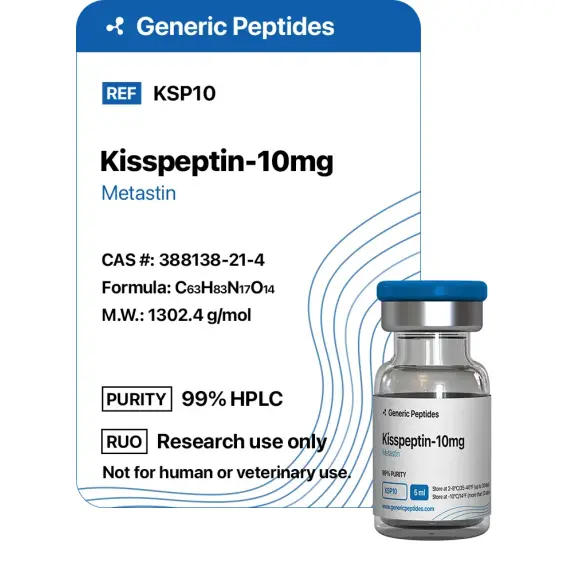
Kisspeptin-10 ships as a white lyophilized powder in a sealed glass vial, freeze-dried to preserve its 10-amino-acid structure and extend its shelf life. With a few simple habits — cold, dark, dry — the sealed vial stays in perfect condition for its full shelf life. Here's exactly how to store it.
| Parameter | Details | Notes |
|---|---|---|
| Storage Temperature | Freezer at −20°C (−4°F) for long-term storage up to 24 months. Refrigeration at 2–8°C (36–46°F) is fine for short-term use up to ~3 months. | Original sealed vial in the freezer is the safest default. |
| Light Sensitivity | Yes — Kisspeptin-10 contains a tryptophan residue that's particularly prone to photodegradation. | Always keep in the original box or an opaque, amber container. |
| Freezing | Allowed and recommended. −20°C is standard for long-term storage; −80°C extends stability further if available. | Freeze from the start if you won't use it within 3 months. |
| Oxidation Sensitivity | The tryptophan residue also makes Kisspeptin-10 susceptible to oxidation if the vial seal is broken or the powder is exposed to air. | Keep the aluminum crimp cap intact until ready to reconstitute. |
| Signs of Degradation | Healthy powder is white to off-white and loose or cake-like. Watch for yellowing, browning, clumping, visible moisture, or a sticky texture. | Any color change, clumping, or moisture = discard the vial. |
| Common Mistakes | Leaving the vial at room temperature after delivery, storing in a humid kitchen or bathroom, or opening a cold vial and letting condensation form inside. | Put it in the freezer on arrival, and let sealed vials warm to room temperature before opening. |
Every order is processed quickly and shipped with full tracking. All products come directly from the official Generic Peptides supply chain — in original manufacturer packaging, carefully handled from warehouse to your door.
| Destination | Delivery Time | Notes |
|---|---|---|
| USA Domestic | 2–5 business days | Faster when local warehouse stock is selected at checkout |
| International | 10–15 business days | Tracking included; update frequency may vary by destination country |
| Order Processing | 24–48 business hours | Processing begins after payment confirmation |
| Tracking | Provided on all orders | Tracking number sent after dispatch; multiple warehouses may result in separate shipments |
This product is supplied through the official Generic Peptides distribution chain and shipped in original manufacturer packaging. Orders are packed securely to protect the contents during transit and to respect customer privacy as a standard practice.
Outer packaging is neutral and does not display product details on the exterior — a common approach to protect shipments from damage, tampering, and unnecessary exposure during delivery.
Every order includes full authenticity assurance: official Generic Peptides presentation, batch-linked lab documentation, and sealed original packaging — giving customers confidence in every purchase.
| Authenticity Feature | Details |
|---|---|
| Packaging | Original manufacturer packaging — sealed and unaltered |
| Lab Documentation | Batch-linked certificate of analysis available on request |
| Supply Chain | Sourced exclusively through official Generic Peptides distribution |
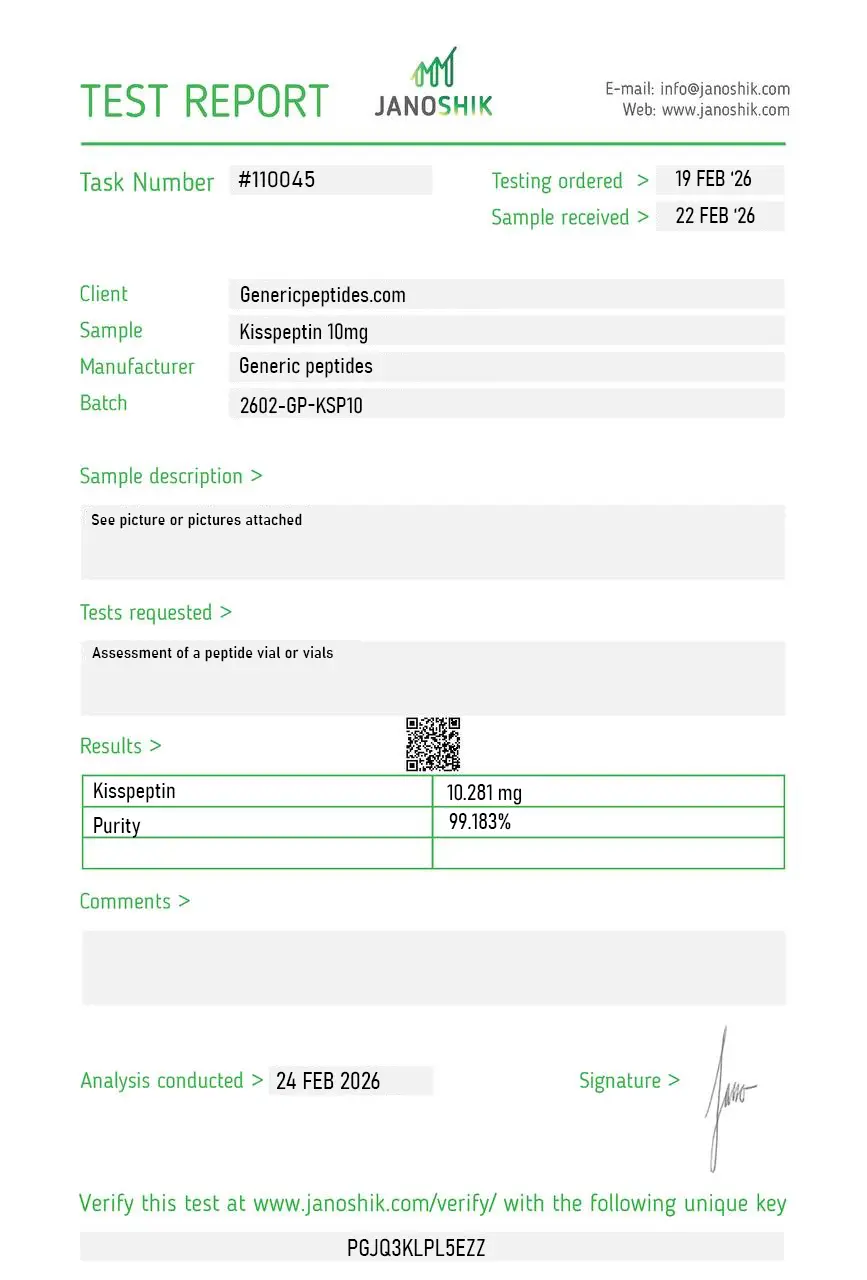
An independent lab test report is available for Kisspeptin-10. The certificate provides batch-level verification details, including measured content, purity result, analysis date, and report documentation.
GnRH pulse-generator characterization in hypothalamic slice culture. The KP-10 fragment gave the GnRH release response we expected from the GT1-7 line. Consistent.
Buyers need to specify which kisspeptin fragment they want — KP-10, KP-13, KP-14, or the full KP-54 metastin. They're all bioactive but differ in pharmacokinetics. This vendor labels the 10-mer clearly. Star off because the explicit decapeptide sequence wasn't on the COA, only the molecular weight — and for a compound with this many fragment variants, sequence confirmation matters.
The KISS1 gene story is one of the odder ones in the field — discovered in Hershey, Pennsylvania, named after the chocolate, originally identified as a metastasis suppressor before anyone knew it ran the reproductive axis. Nice that the listing acknowledges that dual heritage. Material performed in our GnRH-release assays.
The pulsatile-versus-continuous distinction is what makes this compound demanding to work with — continuous exposure desensitizes the GnRH neurons the same way GnRH agonists do, so your administration mode determines whether you're studying stimulation or downregulation. The listing actually flags that, which is rare. Material behaved predictably once we matched the protocol to the question.
We work the oncology angle, not the reproductive one — KISS1 was a metastasis suppressor before it was a reproductive regulator, and that anti-invasion biology is still a live research area. KP-10 gives a handle on the suppressor signaling. Material consistent across our migration-assay conditions.
For HPG-axis comparative work we run KP-10 upstream against the GnRH analogs downstream — kisspeptin drives the GnRH neurons, the GnRH agonists hit the pituitary directly. Sourcing the upstream and downstream compounds from one catalog keeps the axis comparison clean. That positional contrast is the experiment.
The Seminara and de Roux work establishing that GPR54 loss-of-function causes hypogonadotropic hypogonadism is the genetic validation that makes kisspeptin biology so solid — this isn't a speculative target, it's confirmed essential for the reproductive axis by human genetics. KP-10 is the active fragment of that system. Material behaved as the receptor pharmacology predicts.
KP-10 as our standard kisspeptin fragment for GnRH-neuron work. Consistent batches, repeated orders. Covers it.
KP-10 binds GPR54 (KISS1R) on hypothalamic GnRH neurons, activating Gq/11-coupled signaling that drives calcium mobilization, ERK1/2 phosphorylation, and p38 MAPK activation. The downstream effect is GnRH release from hypothalamic neurons, which then triggers LH and FSH release from pituitary gonadotropes. The mechanism operates one step upstream of GnRH, making KP-10 an unusually high-leverage tool for studying the entire HPG axis.
Kisspeptin-10 acts upstream of GnRH — it stimulates GnRH-producing neurons rather than mimicking GnRH itself. GnRH analogs (like Gonadorelin) act directly at the pituitary to trigger LH/FSH release. Kisspeptin's mechanism preserves the natural pulsatile pattern of GnRH release, which is why it became interesting for fertility research where GnRH analogs sometimes produce different downstream effects than the natural cascade.
The original KISS1 gene was discovered as a metastasis suppressor in cancer research before its reproductive function was identified. The longer 54-amino-acid form was originally named metastin for its anti-metastatic activity. KP-10 is the bioactive C-terminal fragment of metastin/kisspeptin-54. Same molecular family, different research literatures depending on which application is being studied.
The C-terminal amide modification is essential for GPR54 receptor binding affinity. Cheap synthesis frequently produces material with a free carboxyl group instead of the amide, which dramatically reduces receptor binding. The peptide looks structurally correct on basic analytical methods but doesn't function pharmacologically. HPLC-MS specifically checking C-terminal amidation is required to verify proper synthesis.
The KISS1 gene was discovered in 1996 as a metastasis suppressor. The reproductive function was established in 2003 by the Seminara and de Roux papers showing GPR54 mutations cause hypogonadotropic hypogonadism. KP-10 entered active research as the most synthetically accessible bioactive fragment, with hundreds of preclinical and multiple clinical trials following over the next two decades.
Athletes subject to drug testing should consult their governing body's specific rules. WADA's Prohibited List includes substances that affect the HPG axis, and kisspeptin-related compounds may fall under broader categories targeting hormones and growth factors. The compound's mechanism — directly stimulating LH and testosterone release — places it in a regulatory category of concern for anti-doping authorities.
KP-10, Kisspeptin (110-119) (the position numbering within the larger kisspeptin precursor), Metastin (45-54), and various commercial designations. CAS 374675-21-5. The amino acid sequence YNWNSFGLRF-NH2 with its C-terminal amide identifies the compound unambiguously.
Reproductive endocrinology and HPG axis pharmacology lead by volume — fertility research, IVF triggering protocols, hypogonadotropic hypogonadism models, and pubertal development studies. There's also active work in sexual function research (KP-10 has shown effects on brain regions involved in sexual processing), oncology research from the original metastasis suppressor angle, and emerging research in metabolic/energy balance regulation.
Most reproductive research peptides act at or below the pituitary level — GnRH analogs at the pituitary, gonadotropins at the gonads, sex steroids at peripheral tissues. Kisspeptin-10 is unique in acting one step above GnRH, at the hypothalamic level where reproductive signaling is initially integrated. That upstream position makes it a more fundamental research tool for understanding how the entire reproductive axis is controlled.
Researchers investigating hypothalamic reproductive regulation, GnRH pulse generation, and HPG axis biology consistently examine Kisspeptin-10 alongside compounds that target overlapping or complementary reproductive and neuroendocrine pathways. HCG and HMG are the most natural downstream pairings — Kisspeptin-10 sits upstream of the entire HPG axis activating GnRH release, while HCG and HMG are the gonadotropins that GnRH drives; researchers studying the full regulatory cascade from hypothalamic pulse generation to gonadal response typically examine all three to map which regulatory level drives a given phenotype. PT-141 (Bremelanotide) addresses a related but distinct aspect of reproductive biology — central melanocortin signaling affecting sexual desire rather than HPG axis hormone production — and researchers studying neuroendocrine regulation of sexual function sometimes examine both compounds when the research design requires distinguishing hormonal from neurogenic components. Semax occasionally appears in the same research context given its ACTH-derived mechanism and documented effects on hypothalamic signaling pathways that intersect with GnRH regulation. Each represents a different regulatory level of the hypothalamic-pituitary-gonadal biology that Kisspeptin-10 research addresses.