CJC-1295/Ipamorelin: Popular Duo-Blend in 2026 Regulatory Limbo
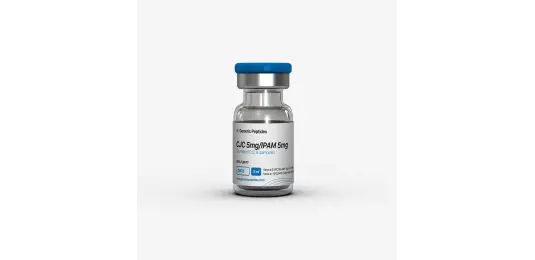
CJC-1295 / Ipamorelin Duo-Blend Mechanism, Side Effects, FDA Status in 2026: Complete Clinical Review of the 5mg/5mg Combination Stack, 10x Synergistic GH Release, and PCAC Reclassification Path
By Medical Team of Generic Peptides
The CJC-1295/Ipamorelin Duo-Blend in a 5 mg / 5 mg vial format is the most widely used combination peptide preparation in the off-label compounding pharmacy and research-chemical landscape. The blend pairs a GHRH (growth hormone-releasing hormone) analog with a selective ghrelin receptor agonist, producing growth hormone release through two mechanistically distinct but synergistic pathways. CJC-1295 (used in the no-DAC form, also called Modified GRF 1-29, in this combination) provides GHRH receptor activation. Ipamorelin provides GHS-R1a (ghrelin receptor) activation. Combined, they produce roughly 10-fold greater GH release than either compound alone — a documented synergy that explains the combination's clinical popularity through more than a decade of compounding pharmacy practice.
The blend has had a complicated regulatory journey. Both component peptides were placed on FDA Category 2 in September 2023, removed from Category 2 in September 2024 for procedural PCAC review, and both received unfavorable PCAC votes in late 2024 (Ipamorelin at the October 29, 2024 PCAC meeting; CJC-1295 in all forms — free base, acetate, and DAC — at the December 4, 2024 meeting). The February 27, 2026 Kennedy Rogan announcement included both compounds among approximately 14 peptides intended for reclassification to Category 1. Neither compound is on the July 23-24, 2026 PCAC review agenda because both already received their PCAC reviews with negative outcomes. The path back to legal compounding pharmacy availability requires either FDA action overriding the December 2024 PCAC recommendations through formal rulemaking, or bringing both compounds back to PCAC for re-review — a process whose specific procedural mechanism hasn't been fully clarified as of mid-2026.
What makes the Duo-Blend genuinely interesting beyond the regulatory drama is the combination pharmacology. Most peptide combinations don't produce true synergy — they produce additive effects where the combined response equals the sum of individual responses. CJC-1295 + Ipamorelin produces actual synergy, where the combined GH release substantially exceeds what would be expected from adding individual responses. The mechanism is well-characterized: GHRH receptor activation (CJC-1295) and ghrelin receptor activation (Ipamorelin) operate through distinct second messenger systems but converge on enhanced somatotroph activation, with each pathway amplifying the other's effect on GH release.
The 5 mg / 5 mg vial format reflects standardized compounding pharmacy and research-chemical preparation. Each vial contains 5 mg of CJC-1295 (no-DAC form) and 5 mg of Ipamorelin, typically in lyophilized form requiring reconstitution with bacteriostatic water before subcutaneous injection. Off-label dosing protocols typically use 100-300 mcg of each peptide per injection, administered once or twice daily, with cycles of 8-12 weeks followed by breaks.
This article walks through what the Duo-Blend actually is, the synergistic mechanism between the two peptide pathways, the off-label clinical use that built up over more than a decade, the specific regulatory situation in 2026 (more complicated than for individual peptides on the July 2026 PCAC agenda), the safety profile combining considerations from both component peptides, and how to think about the compound honestly given the unusual position of being both the most popular peptide stack in off-label practice and the subject of negative PCAC votes in 2024.
What the Duo-Blend Is: The Two Peptides and Why They're Combined
The combination involves two specific peptides with distinct mechanisms that complement each other in producing growth hormone release.
CJC-1295 component (no-DAC form, also called Modified GRF 1-29).
This is the 30-amino-acid GHRH(1-29) analog with four amino acid stability substitutions (D-Ala²-Gln⁸-Ala¹⁵-Leu²⁷) plus a lysine at position 30, but without the DAC (Drug Affinity Complex) modification that creates the long-acting albumin-conjugated form. Half-life approximately 30 minutes — similar to native GHRH. Daily or multiple-times-daily dosing is required for sustained activity.
This is critically different from CJC-1295 with DAC (covered separately in this article series). The DAC version has 8-day half-life, weekly dosing, and was the pharmaceutical candidate ConjuChem developed through Phase IIb. The no-DAC version used in the Duo-Blend is the short-acting form designed for use in combination protocols where pulsatile rather than sustained signaling is desired.
Ipamorelin component.
Ipamorelin is a synthetic pentapeptide with the structure Aib-His-D-2-Nal-D-Phe-Lys-NH2. Molecular weight approximately 711 Da. Developed by Novo Nordisk in the 1990s as a selective ghrelin receptor (GHS-R1a) agonist. The compound's distinctive feature is selectivity — Ipamorelin activates GHS-R1a strongly (releasing GH from somatotrophs) without significantly affecting cortisol, prolactin, ACTH, or other pituitary hormones. This selectivity differentiates Ipamorelin from earlier ghrelin analogs (GHRP-2, GHRP-6, hexarelin) which have broader hormonal effects.
Half-life is approximately 2 hours. Dosing typically involves 100-300 mcg per administration, 1-3 times daily. The compound's selectivity profile and clean pharmacology made it appealing for combination use where specific GH stimulation without broader hormonal disruption was the goal.
The pharmacological logic for combining the two compounds is the synergy between GHRH and ghrelin receptor pathways. The two pathways operate through distinct mechanisms. GHRH receptor activation (by CJC-1295 no-DAC) operates primarily through cAMP/PKA second messenger signaling, increasing somatotroph proliferation, enhancing GH gene transcription, and triggering GH release through Ca²⁺-dependent exocytosis. Ghrelin receptor (GHS-R1a) activation (by Ipamorelin) operates primarily through PLC/IP3/Ca²⁺ signaling, directly triggering GH release through different intracellular pathways, suppressing somatostatin release (which normally inhibits GH), and amplifying the somatotroph response to GHRH stimulation.
Combined, the two pathways produce GH release that's roughly 10-fold greater than either compound alone — substantially more than additive. The synergy reflects the underlying physiological design of GH regulation: in normal physiology, GHRH and ghrelin signaling converge on coordinated GH release, with somatostatin providing inhibitory feedback. The CJC-1295/Ipamorelin combination essentially activates both stimulatory pathways simultaneously while Ipamorelin's somatostatin-suppressing effect removes the inhibitory brake.
Importantly, the combination produces pulsatile GH release rather than sustained elevation. Each injection produces a GH pulse lasting 1-2 hours, mimicking the natural pulsatile pattern of physiological GH secretion. This pulsatile pattern is considered advantageous because physiological GH pulses are believed to drive distinct biological effects compared to sustained elevation, pulsatile signaling preserves somatotroph responsiveness (avoiding tachyphylaxis), the pulse pattern allows somatostatin's normal inhibitory function to operate between pulses, and the combination doesn't suppress endogenous GH-axis signaling the way exogenous hGH does.
The 5 mg / 5 mg vial format is the standardized compounding pharmacy and research-chemical preparation. With 100-300 mcg per injection of each peptide and daily dosing, a single vial typically lasts 17-50 days depending on individual protocol. The fixed 1:1 ratio reflects the balanced synergy approach — neither compound dominating the combined effect.
CJC-1295/Ipamorelin Duo-Blend Mechanism of Action: Synergistic Pulsatile GH Release
The mechanism deserves detailed treatment because the synergy is what distinguishes this combination from individual peptide use.
The lyophilized blend is reconstituted with bacteriostatic water and administered via subcutaneous injection, typically in the abdomen or thigh. Both peptides are absorbed efficiently from subcutaneous tissue. They circulate to the pituitary gland through standard plasma distribution. CJC-1295 has approximately 30-minute half-life; Ipamorelin has approximately 2-hour half-life. The longer Ipamorelin half-life means GHS-R1a stimulation persists somewhat after CJC-1295's GHRH effect declines, extending the GH pulse duration.
Pituitary somatotrophs (GH-producing cells) express both GHRH receptors and GHS-R1a receptors. The two peptides activate their respective receptors simultaneously. CJC-1295 binds the GHRH receptor and activates the cAMP/PKA pathway leading to GH release machinery. Ipamorelin binds GHS-R1a and activates the PLC/IP3/Ca²⁺ pathway, also triggering GH release machinery while suppressing somatostatin. The two pathways converge on GH release with amplified effect. The GH pulse produced by combination dosing typically reaches plasma concentrations 5-10 fold greater than either compound alone. This is genuine pharmacological synergy rather than simple addition.
The released GH circulates to liver and peripheral tissues, triggering hepatic IGF-1 production through JAK2-STAT5 signaling, direct GH effects on muscle (protein synthesis enhancement), adipose tissue effects (lipolysis stimulation), bone effects (mineral metabolism modulation), cellular regeneration and recovery effects, and sleep architecture effects (some users report improved sleep quality).
As both peptides clear, the GH pulse subsides. Somatostatin, which had been suppressed by Ipamorelin, returns to inhibitory function. The somatotrophs reset for the next pulse. This pulsatile cycle preserves the natural rhythm of GH-axis signaling.
The 10-fold GH release amplification translates to measurable IGF-1 elevation that's challenging to achieve with monotherapy. CJC-1295 alone (no-DAC) produces modest IGF-1 effects because of the short half-life. Ipamorelin alone produces clean GH pulses but lower amplitude. The combination produces clinically detectable IGF-1 elevation with each pulse cycle, accumulating to measurable IGF-1 levels in blood work over weeks of consistent use.
The dose-response is generally linear in the typical 100-300 mcg range for each component. Higher doses don't produce proportionally greater effects — somatotrophs have ceiling responses to receptor stimulation, and exceeding the ceiling produces minimal incremental benefit while increasing side effect potential.
Timing matters for the GH-axis effects. Most off-label protocols use evening or pre-bed injections to align GH pulse with natural sleep-related GH secretion. Some protocols use multiple daily injections to produce multiple daily pulses. Empty stomach administration (avoiding food consumption for 1-2 hours before injection) is typically recommended because elevated insulin levels can blunt GH release.
CJC-1295/Ipamorelin Duo-Blend Clinical Applications and Off-Label Use
The combination has been used extensively in off-label compounding pharmacy practice for over a decade for various indications. None of these applications has FDA approval — these are off-label uses based on physician judgment about clinical benefit.
The primary use case is body composition optimization. Patients seeking lean muscle preservation or development with concurrent fat reduction find the combination's GH-axis effects produce gradual but measurable changes over 8-12 week cycles. Effect size is typically modest (1-3% body fat reduction, comparable lean mass preservation) compared to more aggressive interventions but clinically meaningful for many patients. The mechanism involves protein synthesis enhancement, lipolysis stimulation, and improved nitrogen balance through the pulsatile GH-IGF-1 amplification.
Recovery and tissue repair enhancement is another major application. Athletes (outside WADA-tested contexts), post-surgical patients, and patients with chronic injuries use the combination for accelerated healing. The GH and IGF-1 effects on tissue repair, collagen synthesis, and cellular regeneration provide mechanistic rationale, though clinical evidence is largely anecdotal rather than from controlled trials.
Sleep quality and architecture effects have been reported by many patients. GH secretion is normally tied to slow-wave sleep, and chronic GH-axis decline is associated with sleep architecture deterioration in aging. Some patients report improved sleep quality with evening combination dosing, though the effect is variable and not universal.
Anti-aging and longevity protocols incorporate the combination because GH-axis decline with aging contributes to multiple aspects of biological aging — sarcopenia, increased adiposity, reduced bone density, decreased recovery capacity, altered sleep patterns. The combination provides a pharmacological approach to GH-axis maintenance that doesn't require the much higher doses and more aggressive intervention of recombinant hGH replacement.
Adult growth hormone deficiency patients (clinical and subclinical) sometimes use the combination as an alternative to recombinant hGH for those who can't access or don't tolerate hGH therapy. Patients with subclinical GH-axis decline (declining IGF-1 with aging but not meeting strict GHD diagnostic criteria) sometimes use the combination based on individual physician judgment.
Cognitive support and well-being effects are reported by some patients. The mechanism for cognitive effects isn't fully clear — possibly mediated through IGF-1 effects on neurogenesis, sleep quality improvement, or general physiological optimization.
Skin and connective tissue effects develop gradually with sustained use. GH-axis effects on collagen synthesis and connective tissue maintenance produce gradual improvements in skin quality, joint comfort, and connective tissue resilience that some patients report over months of consistent use.
The compounding pharmacy ecosystem that built up around the Duo-Blend through 2010-2023 represented a substantial patient population with prescribed access through aesthetic medicine, men's health, anti-aging, longevity, and functional medicine practices. This wasn't research-only or fringe use — it was mainstream off-label medicine through licensed pharmacies with physician oversight. The September 2023 FDA Category 2 placement abruptly ended this clinical access pathway.
CJC-1295/Ipamorelin Duo-Blend Regulatory Status: The Complicated 2026 Position
The regulatory situation for the Duo-Blend is more complicated than for individual peptides on the July 2026 PCAC review agenda because both component compounds already had unfavorable PCAC reviews in 2024.
On September 29, 2023, FDA placed both CJC-1295 (all forms) and Ipamorelin acetate on Category 2 of the 503A bulks list as part of the 19-peptide action. The Duo-Blend, being a combination preparation of these two peptides, became effectively prohibited from compounding pharmacy preparation. Stated rationale included immunogenicity concerns, manufacturing impurity considerations, and limited safety data.
On September 20, 2024, FDA announced that CJC-1295 (free base, acetate, and DAC forms), Ipamorelin acetate, AOD-9604, Thymosin Alpha-1, and Selank acetate were being removed from Category 2 for procedural PCAC review. The removal became effective September 27, 2024. This was a procedural step toward formal evaluation rather than reinstatement to Category 1.
At the October 29, 2024 PCAC meeting, Ipamorelin acetate and Ipamorelin (free base) were reviewed alongside Ibutamoren mesylate, L-theanine, and Kisspeptin-10. FDA's preliminary analysis recommended against inclusion of Ipamorelin in the 503A Bulks Regulation, citing limited safety information and immunogenicity concerns. The PCAC committee voted in line with FDA's recommendation. This was an unfavorable outcome for Ipamorelin.
At the December 4, 2024 PCAC meeting, CJC-1295 in all forms (free base, acetate, DAC free base, DAC acetate, DAC trifluoroacetate) was reviewed alongside AOD-9604 and Thymosin Alpha-1. The committee voted against inclusion of CJC-1295 in the 503A Bulks Regulation. This was an unfavorable outcome for CJC-1295 in all forms including the no-DAC form used in the Duo-Blend.
So by end of 2024, both component peptides of the Duo-Blend had received unfavorable PCAC votes. This is the worst possible procedural outcome for compounding pharmacy access — the formal advisory committee that FDA relies on for compounding pharmacy decisions had voted against both compounds.
The February 27, 2026 Kennedy Rogan announcement on The Joe Rogan Experience #2461 declared intent to reclassify approximately 14 of 19 peptides back to Category 1, including both CJC-1295 and Ipamorelin. The announcement was political/policy direction rather than procedural — it didn't specify the regulatory mechanism that would override the 2024 PCAC negative votes.
The April 16, 2026 Federal Register notice published the announcement of the July 23-24, 2026 PCAC meeting reviewing seven peptides for 503A inclusion. Notably, CJC-1295 and Ipamorelin are not on the July 2026 PCAC agenda because both already received their PCAC reviews in 2024 with negative outcomes. The July 2026 meeting reviews compounds at first PCAC consideration (BPC-157, KPV, TB-500, MOTS-c on Day 1; Emideltide/DSIP, Semax, Epitalon on Day 2).
For these compounds to return to legal compounding pharmacy preparation, FDA would need to take one of several procedural pathways. The agency could override the 2024 PCAC recommendations through formal notice-and-comment rulemaking — unusual but procedurally possible, particularly with Kennedy administration political support. FDA could bring CJC-1295 and Ipamorelin back to PCAC for re-review based on new data, changed circumstances, or political directive. The Evexias/Farmakeio APA litigation that specifically named both compounds could resolve the issue through judicial pathway. Or the agency could use different procedural pathways such as 503B outsourcing facility considerations or other regulatory frameworks.
As of mid-2026, the specific procedural mechanism hasn't been clarified in publicly available regulatory guidance. The Kennedy announcement suggested reclassification was imminent but the formal regulatory action implementing that intent hasn't yet been published.
Combination compounded preparations like the 5 mg / 5 mg Duo-Blend present additional regulatory complexity beyond individual component status. Compounding pharmacies preparing combination products from two component bulk drug substances must have legal pathway for both components. Even if individual component reclassification occurs, combination preparations may face additional scrutiny under USP standards for compatibility, stability, and dose accuracy of multi-peptide preparations. The 5 mg / 5 mg standardized vial format reflects compounding pharmacy practice norms that developed over years; its formal regulatory status under any future Category 1 reclassification would need specific FDA clarification.
The favorable scenario involves the Kennedy administration achieving formal reclassification of both CJC-1295 and Ipamorelin to Category 1 through rulemaking, possibly bringing both back to PCAC for re-review with stronger evidence packages. Combination preparations like the Duo-Blend would become legally compoundable. Expected timeline runs 12-24 months at minimum from any procedural movement. The mixed scenario sees one compound reclassified but not the other (e.g., Ipamorelin gets approval pathway but CJC-1295's cardiac concerns from the DAC version Phase IIb continue to weigh against all CJC-1295 forms), keeping combination preparations restricted because both components must have legal status. The unfavorable scenario sees procedural barriers preventing reclassification despite political support, with both compounds remaining in regulatory limbo and combination preparations remaining restricted from legal compounding pharmacy preparation.
Patients and providers seeking CJC-1295/Ipamorelin combination access in mid-2026 have several practical options, none of which represent legitimate FDA-compliant clinical pathways. Research-chemical vendor channels are the largest current source, with associated quality control and purity concerns. International pharmacy channels in jurisdictions where both compounds remain accessible provide another pathway. Mexican or other international clinics maintain access through different regulatory frameworks. Pre-September 2023 stockpiles maintained by some clinical practices represent a limited and dwindling source.
The gray market that has expanded since September 2023 has produced documented quality concerns. Independent testing of research-chemical CJC-1295 and Ipamorelin preparations has found variable purity, incorrect dosing, and occasional contamination — outcomes that would not occur in licensed compounding pharmacy preparation under USP 797 standards.
CJC-1295/Ipamorelin Duo-Blend Safety Profile
The safety profile combines considerations from both component peptides plus combination-specific factors.
Common reported effects in clinical use combine effects from both peptides. Patients commonly experience injection site reactions (redness, mild tenderness, occasional bruising), mild flushing particularly from CJC-1295's vasodilatory effects, mild transient headache occasionally, increased appetite particularly from Ipamorelin's ghrelin-receptor activation, mild fluid retention in some users, hand and foot tingling occasionally (peripheral effects of GH elevation), mild sleep architecture changes, and occasional vivid dreams.
The cardiovascular concerns documented for the DAC version of CJC-1295 (the Phase IIb cardiac death attributed to underlying coronary artery disease with possible plaque rupture trigger) apply less directly to the no-DAC form used in the Duo-Blend because the no-DAC form has 30-minute half-life rather than 8-day half-life. The hemodynamic effects (vasodilation, modest heart rate increase, occasional transient hypotension) are typically mild and transient with the no-DAC form. However, FDA's Category 2 rationale explicitly cited cardiovascular concerns for CJC-1295 generally, and the cardiovascular signal extends to the no-DAC form by extension. Patients with significant cardiovascular risk factors warrant clinical attention.
Ipamorelin's selectivity profile is the primary safety advantage on the ghrelin-receptor side of the combination. Unlike GHRP-2, GHRP-6, and hexarelin (which significantly elevate cortisol, prolactin, and ACTH), Ipamorelin produces minimal effects on these hormones. This selectivity means Ipamorelin doesn't produce the hormonal disruption pattern that limits broader use of other ghrelin analogs. FDA's October 29, 2024 analysis recommending against Ipamorelin inclusion cited limited safety information and immunogenicity concerns rather than specific documented adverse events. The compound has substantial off-label use history without documented serious safety signals at therapeutic doses.
The 10-fold GH release amplification means that the combined dose produces substantially greater GH-axis stimulation than either compound alone. This amplification has both desirable effects (greater body composition and recovery effects) and potentially concerning aspects (greater IGF-1 elevation, more pronounced glucose effects, more substantial overall GH-axis intervention).
GH-axis stimulation produces counter-regulatory effects on insulin signaling. With sustained Duo-Blend use, modest insulin resistance may develop. Glucose tolerance may shift slightly. Diabetic patients on hypoglycemic medications may need monitoring and potentially dose adjustment. Most patients without pre-existing glucose dysregulation tolerate these effects without clinical consequence.
Sustained GH-axis stimulation produces elevated IGF-1 (the desired effect, but also the cancer-relevant concern), modest insulin resistance as described above, generally stable cortisol because of Ipamorelin's selectivity (though some patients may experience modest changes), generally stable thyroid function, and generally stable sex hormones.
Sustained IGF-1 elevation is the primary cancer-relevant concern with the Duo-Blend. IGF-1 is a documented proliferation signal for many tumor types. Chronic elevation in older populations or those with cancer risk factors warrants consideration. The pulsatile pattern produced by the Duo-Blend may be less concerning than sustained IGF-1 elevation from CJC-1295 DAC alone, but the cumulative IGF-1 exposure over months of use is still substantial. For patients with active cancer or significant cancer risk factors, the Duo-Blend should be avoided. For older patients (especially those with strong family history of hormonally-responsive cancers), the IGF-1 elevation considerations become more important and warrant clinical discussion.
Despite extensive off-label use over more than a decade, formal long-term safety data at modern pharmaceutical standards is limited. The off-label patient population has generally been younger, healthier, and at lower cardiovascular and cancer risk than typical pharmaceutical trial populations, which may explain the absence of widespread safety signals without resolving the underlying questions about long-term effects.
Drug interactions span several categories. Insulin and oral hypoglycemics require monitoring and potential dose adjustment given GH-axis effects on insulin signaling. Recombinant hGH represents redundant mechanism — combination doesn't add benefit and amplifies cumulative GH-axis exposure. Other GH secretagogues like GHRP-2, GHRP-6, hexarelin, and ibutamoren are mechanistically redundant with Ipamorelin, and combinations reduce Ipamorelin's selectivity advantage. Corticosteroids antagonize GH effects on protein synthesis and bone metabolism. Sex hormones like testosterone and estradiol are commonly stacked in TRT/HRT protocols without specific interaction concerns. Cardiovascular medications may interact with CJC-1295's vasodilatory effects, potentiating antihypertensives transiently. Antidiabetic medications require monitoring for the modest insulin resistance from sustained GH elevation.
Contraindications include active cancer or recent cancer history (IGF-1 concerns), significant cardiovascular disease or untreated coronary artery disease (CJC-1295 hemodynamic effects), pregnancy and breastfeeding (no safety data), pediatric populations except in supervised growth deficiency contexts, severe liver or kidney dysfunction, hypersensitivity to peptide preparations, diabetes mellitus requiring careful monitoring of glucose effects, and competitive athletes subject to WADA testing (both compounds prohibited).
WADA Status
Both CJC-1295 and Ipamorelin are prohibited by WADA under category S2.2.1 (Peptide Hormones, Growth Factors, Related Substances, and Mimetics — including GH-Releasing Hormones, Growth Hormone Secretagogues, and related compounds). Prohibited at all times, in and out of competition. Detection methods are validated at WADA-accredited laboratories for both compounds. Athletes subject to WADA testing should treat the Duo-Blend (containing both compounds) as definitively prohibited with high detection probability.
The detection window depends on dose, duration, and individual pharmacokinetics. Generally, both peptides clear the system within days of cessation, but accumulated effects on IGF-1 and other markers can persist longer and may also be detectable.
Who Uses the Duo-Blend and How It Compares to Alternatives
The user base for the Duo-Blend in 2026 spans multiple demographics drawn by the combination's clinical effects.
Aesthetic medicine and anti-aging patients seeking body composition improvement and general anti-aging effects through GH-axis support form the largest historical user group, with established compounding pharmacy infrastructure before September 2023. Men's health and TRT-adjunctive use is another major application — patients on testosterone replacement therapy often add the Duo-Blend for the GH-axis effects that complement TRT's androgenic effects, with the combination producing complementary body composition and recovery improvements. Athletes and active people outside WADA-tested contexts use the combination for recovery enhancement, body composition optimization, and performance support, while WADA-tested athletes are excluded because the compounds are clearly prohibited. Post-surgical and injury recovery patients pursue the GH-axis effects on tissue repair and recovery. Adult growth hormone deficiency patients sometimes use the Duo-Blend as an alternative to recombinant hGH, particularly when hGH is unavailable, unaffordable, or not tolerated. Subclinical GH decline patients (aging patients with declining IGF-1 levels but not meeting strict GHD diagnostic criteria) sometimes pursue the combination based on individual physician judgment. Functional medicine and longevity-focused patients pursuing comprehensive hormonal optimization protocols often include the Duo-Blend as part of broader interventions.
Recombinant human growth hormone (somatropin) provides direct GH replacement with Phase III evidence base for FDA-approved indications (pediatric growth deficiency, adult GHD with specific criteria, HIV wasting). Daily injection. More expensive than compounded peptides. Subject to specific federal anti-distribution provisions under 21 U.S.C. § 333(e) for non-approved use. For FDA-approved indications, hGH is the standard of care with substantially more evidence than any peptide combination.
Tesamorelin is the FDA-approved GHRH analog for HIV-associated lipodystrophy, daily injection, with specific FDA approval that gives it a regulatory pathway the Duo-Blend doesn't have. For HIV lipodystrophy specifically, tesamorelin is the established option.
Sermorelin is a short-acting GHRH analog with longer history in compounding pharmacy practice. Daily injection. Less popular than CJC-1295/Ipamorelin combinations because of similar effect profile without the synergy.
Ipamorelin alone is sometimes used as standalone monotherapy. It produces clean pulsatile GH release without CJC-1295's GHRH amplification. Effect size is more modest. Better tolerated for some patients sensitive to CJC-1295's vasodilatory effects.
CJC-1295 with DAC alone is the long-acting weekly version used for sustained GH-axis support rather than pulsatile pattern. Different therapeutic positioning. The Phase IIb cardiac concerns (covered separately) apply more to this version than to no-DAC.
Other GH secretagogues like GHRP-2, GHRP-6, and hexarelin alone or in various combinations are all ghrelin receptor agonists with broader hormonal effects than Ipamorelin's selective profile. Combinations with CJC-1295 produce similar synergy patterns but with the additional cortisol/prolactin elevation that Ipamorelin avoids.
Ibutamoren (MK-677) is an oral ghrelin receptor agonist with longer duration. Different administration route, different pharmacokinetic profile. Was on FDA Category 2 list and reviewed at October 29, 2024 PCAC meeting (also unfavorable vote).
The honest framing: for patients seeking GH-axis stimulation through pulsatile mechanisms, the CJC-1295/Ipamorelin combination represents the most popular and arguably most well-developed combination protocol in off-label practice. It produces clinically meaningful effects that many patients find valuable. The pharmacological synergy is real and the mechanism is well-characterized. What it lacks is FDA approval, current legal compounding pharmacy availability, and the kind of large-scale safety database that would resolve the cancer-related and cardiovascular concerns at population level.
For patients comparing options in 2026: if FDA-approved alternatives meet your clinical needs (tesamorelin for HIV lipodystrophy, sermorelin where compounding remains accessible, hGH for documented deficiency), those represent more established pathways. For patients pursuing the specific combination effect of GHRH analog plus selective ghrelin receptor agonist for general anti-aging or body composition support, the Duo-Blend has historically been the most popular option but currently faces regulatory uncertainty.
What Comes Next for the Duo-Blend
The future for legal CJC-1295/Ipamorelin combination compounding depends on resolution of regulatory questions specific to both component compounds.
For the Duo-Blend to return to legal compounding pharmacy preparation, both component compounds would need to achieve Category 1 status through formal FDA rulemaking. Given the December 2024 unfavorable PCAC vote on CJC-1295 and the October 2024 unfavorable PCAC analysis on Ipamorelin, the path forward requires new PCAC review with different evidence package (new clinical data, updated safety analysis, new political conditions), or FDA rulemaking that proceeds with Category 1 inclusion despite the 2024 PCAC recommendations (unusual but procedurally possible), or resolution through ongoing Evexias/Farmakeio APA litigation, or different regulatory pathway through 503B outsourcing facility provisions or other framework.
Even under favorable scenarios, the regulatory process typically takes 12-24+ months from any procedural movement. The Duo-Blend specifically — being a combination preparation requiring both components to have legal status — adds additional complexity. Realistic earliest formal availability through legal compounding pharmacies runs late 2027 to 2028.
The Kennedy administration's commitment to peptide reclassification, the ongoing compounding pharmacy industry advocacy, the gray market consequences that have been empirically documented (>$300 million in Chinese peptide imports during 2025 reflects the displaced demand), and the litigation landscape all favor eventual reclassification of CJC-1295 and Ipamorelin. Whether the favorable political environment translates to specific procedural action that overcomes the 2024 PCAC negative votes remains uncertain.
Active research on both peptides continues, primarily in academic and basic research contexts. Modern Phase III clinical trials for either compound aren't being conducted by major pharmaceutical sponsors. The compounds' patent situations make commercial pharmaceutical development unattractive. The regulatory question is essentially about compounding pharmacy access rather than drug approval.
I'll be honest about my assessment of the Duo-Blend in 2026. This is the most popular peptide combination in off-label clinical practice for legitimate reasons — the pharmacology is well-characterized, the synergy is real, the clinical effects are meaningful for the indications patients pursue, and the safety profile in selected populations has been generally favorable through more than a decade of compounding pharmacy use. The 2024 PCAC negative votes reflected specific evidence concerns (limited modern clinical trials, manufacturing standardization questions, the cardiovascular signal from CJC-1295's DAC version applied broadly) that have legitimate basis even though they affected a treatment that many patients were using successfully.
The current regulatory situation is genuinely problematic. Patients who had been using physician-prescribed Duo-Blend through compounding pharmacies for years lost legal access in September 2023. The displaced demand has shifted to gray market channels with documented quality concerns. The political signals favor reclassification, but the procedural reality is more complicated than for compounds at first PCAC review. The next 12-24 months will determine whether legal compounding pharmacy access returns or whether the Duo-Blend remains in indefinite regulatory limbo.
For users navigating Duo-Blend decisions in 2026, the framing is: this is a compound combination with substantial clinical track record, meaningful effects for patients pursuing GH-axis stimulation goals, specific safety considerations particularly around cardiovascular risk and IGF-1 elevation in cancer-prone patients, and uncertain regulatory future. Patients with active medical needs that the Duo-Blend addresses (documented or strongly suspected GH deficiency, specific recovery contexts, body composition goals refractory to other interventions) have a defensible mechanistic rationale despite the regulatory uncertainty. Patients pursuing general anti-aging or wellness goals have less specific medical rationale and should weigh the regulatory risks and quality concerns about gray market access more heavily.
The compound combination that became the most popular peptide stack in off-label practice through more than a decade of compounding pharmacy use now sits in an unusual regulatory limbo — politically favored for reclassification but procedurally challenged by 2024 PCAC negative votes. How this resolves over the next 12-24 months will tell us substantial information about how political support, scientific evidence, regulatory caution, and patient access interact in shaping the future of the broader peptide therapy ecosystem in the United States.
References
[1] Teichman SL, Neale A, Lawrence B, Gagnon C, Castaigne JP, Frohman LA. Prolonged stimulation of growth hormone (GH) and insulin-like growth factor I secretion by CJC-1295, a long-acting analog of GH-releasing hormone, in healthy adults. Journal of Clinical Endocrinology and Metabolism. 2006;91(3):799-805. PMID: 16352683. DOI: 10.1210/jc.2005-1536.
[2] Raun K, Hansen BS, Johansen NL, Thøgersen H, Madsen K, Ankersen M, Andersen PH. Ipamorelin, the first selective growth hormone secretagogue. European Journal of Endocrinology. 1998;139(5):552-561. PMID: 9849822.
[3] Hansen BS, Raun K, Nissen KK, Bertelsen J, Johansen PB, Christensen MS, Andersen JV, Madsen K, Sehested A, Christiansen JS. Pharmacological characterisation of a new oral GH secretagogue, NN703. European Journal of Endocrinology. 1999;141(2):180-189.
[4] Sigalos JT, Pastuszak AW. The safety and efficacy of growth hormone secretagogues. Sexual Medicine Reviews. 2018;6(1):45-53.
[5] U.S. Food and Drug Administration. Certain Bulk Drug Substances for Use in Compounding that May Present Significant Safety Risks. September 29, 2023. CJC-1295 and Ipamorelin among 19 peptides placed on Category 2. https://www.fda.gov/drugs/human-drug-compounding/certain-bulk-drug-substances-use-compounding-may-present-significant-safety-risks.
[6] U.S. Food and Drug Administration. September 20, 2024 announcement removing AOD-9604, CJC-1295 (all forms), Ipamorelin acetate, Thymosin Alpha-1, and Selank acetate from Category 2 effective September 27, 2024.
[7] U.S. Food and Drug Administration. Pharmacy Compounding Advisory Committee Meeting, October 29, 2024. Ipamorelin acetate and Ipamorelin (free base) reviewed alongside Ibutamoren mesylate, L-theanine, and Kisspeptin-10. FDA recommended against inclusion. PCAC voted in line with FDA recommendation.
[8] U.S. Food and Drug Administration. Pharmacy Compounding Advisory Committee Meeting, December 4, 2024. CJC-1295 (free base, acetate, DAC free base, DAC acetate, DAC trifluoroacetate) reviewed alongside AOD-9604 and Thymosin Alpha-1. Committee voted against inclusion of all CJC-1295 forms.
[9] Kennedy RF Jr. Public statements regarding peptide reclassification from Category 2 to Category 1, The Joe Rogan Experience #2461, February 27, 2026. Both CJC-1295 and Ipamorelin included among approximately 14 peptides under reclassification consideration despite 2024 unfavorable PCAC outcomes.
[10] U.S. Food and Drug Administration. Federal Register Notice of Pharmacy Compounding Advisory Committee Meeting, published April 16, 2026. PCAC meeting scheduled for July 23-24, 2026. Neither CJC-1295 nor Ipamorelin on this agenda (already had 2024 PCAC reviews).
[11] Evexias Health Solutions and Farmakeio v. FDA. United States District Court, Texas. Administrative Procedure Act lawsuit challenging Category 2 placement of AOD-9604, CJC-1295, Ipamorelin acetate, and Thymosin Alpha-1.
[12] Reed Smith. FDA removes certain peptide bulk drug substances from Category 2. October 2024. Comprehensive legal analysis of September 20, 2024 procedural action and subsequent PCAC review process.
[13] World Anti-Doping Agency. The Prohibited List, 2025 Edition. CJC-1295 (all forms) and Ipamorelin prohibited under S2.2.1 category. Prohibited at all times. https://www.wada-ama.org/en/prohibited-list.
[14] Walker RF. Sermorelin: A better approach to management of adult-onset growth hormone insufficiency? Clinical Interventions in Aging. 2006;1(4):307-308.
[15] Falutz J, Allas S, Mamputu JC, et al. Long-term safety and effects of tesamorelin, a growth hormone-releasing factor analogue, in HIV patients with abdominal fat accumulation. AIDS. 2008;22(14):1719-1728.
[16] Sigalos PC, Pastuszak AW, Khera M. Growth hormone secretagogue treatment in hypogonadal men raises serum insulin-like growth factor-1 levels. American Journal of Men's Health. 2017;11(6):1752-1757.
[17] Smith RG, Van der Ploeg LH, Howard AD, Feighner SD, Cheng K, Hickey GJ, Wyvratt MJ Jr, Fisher MH, Nargund RP, Patchett AA. Peptidomimetic regulation of growth hormone secretion. Endocrine Reviews. 1997;18(5):621-645.
[18] Kojima M, Hosoda H, Date Y, Nakazato M, Matsuo H, Kangawa K. Ghrelin is a growth-hormone-releasing acylated peptide from stomach. Nature. 1999;402(6762):656-660.
[19] U.S. Customs data, 2024-2025. Imports of hormone and peptide compounds from China showing dramatic increase post-September 2023 Category 2 action, reflecting displaced demand from compounding pharmacy restrictions.
[20] Lengea Law analysis. FDA Puts BPC-157, TB-500, and 5 Other Peptides Under the Microscope: What Prescribers Need to Know About the 503A Review. April 2026.
[21] U.S. Food and Drug Administration. Public Docket FDA-2025-N-6895. Public comment period for July 23-24, 2026 PCAC review (does not include CJC-1295 or Ipamorelin which had 2024 reviews).
[22] 503Pharma. CJC-1295: The Complete Guide for Compounding Pharmacies in 2025. Industry analysis of compounding pharmacy considerations for CJC-1295 and combination preparations.
[23] Compounding pharmacy practice references for CJC-1295/Ipamorelin combination protocols, 2010-2023.
[24] Department of Defense Operation Supplement Safety. Advisory pages on CJC-1295, Ipamorelin, and related GH-axis peptides for service member compliance.
[25] U.S. Food and Drug Administration. 503A Categories Update, September 2024. Removal of five peptides from Category 2 procedural documentation.